





Traditional Seascape Wall Painting
Traditional seascape wall painting brings coastal views, ships, and harbours directly into domestic rooms through historic oil and watercolour works.
Traditional Seascape Wall Painting
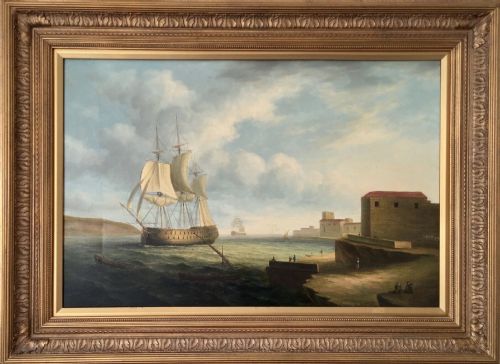
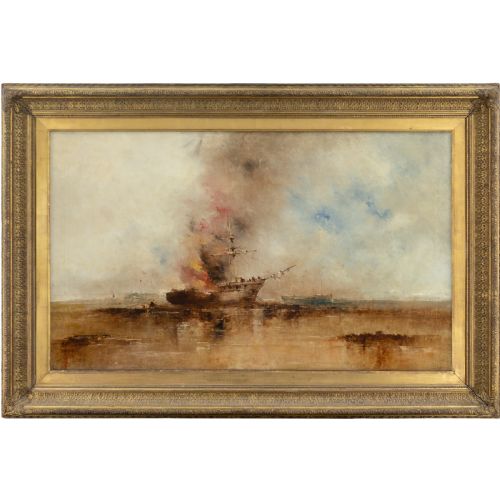
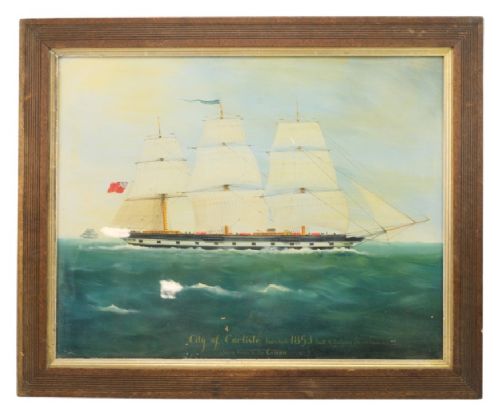
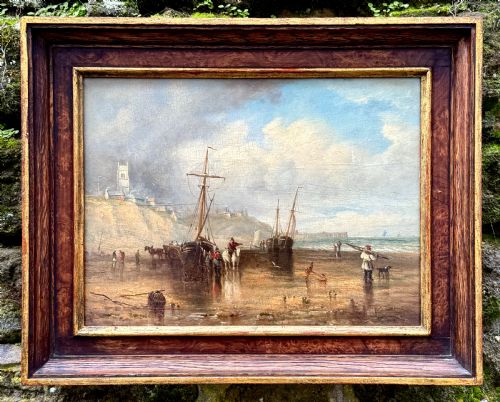
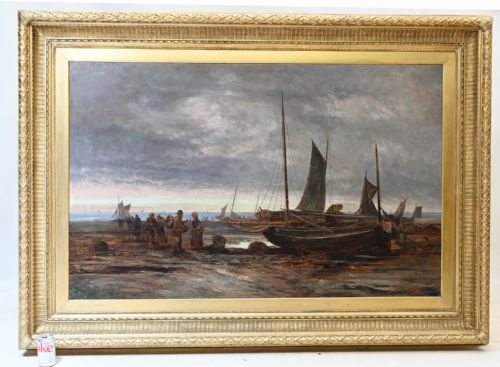
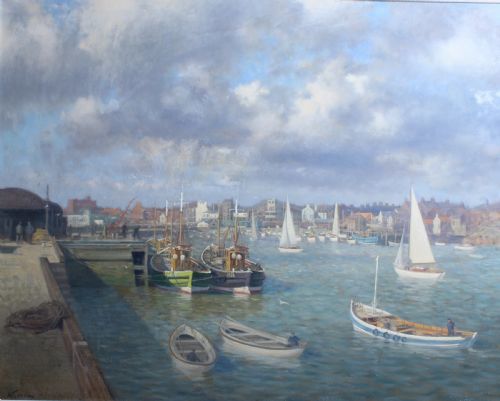
A traditional seascape wall painting captures maritime life, coastal topography, and shipping scenes across the nineteenth and twentieth centuries. These artworks depict specific harbours, naval vessels, and tranquil sea views executed by named artists and regional schools. The selection on this page relies heavily on nineteenth-century Victorian maritime art and subsequent interpretations up through mid-century pieces.
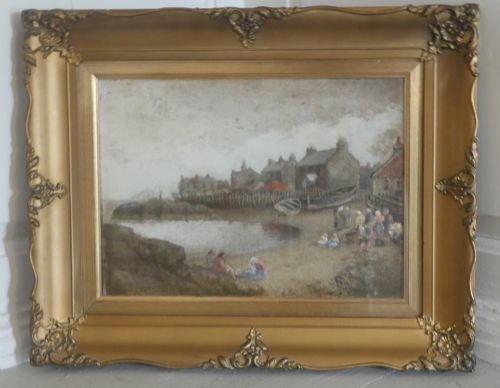
Buyers encounter subjects ranging from bustling fishing trawlers off Brixham and St Ives to dramatic shipwrecks and serene Venetian lagoons. Works appear in both oil and watercolour formats, frequently housed within period wooden or gilded frames that complement the maritime subject matter. The visual focus centres on the interaction between light, water, and coastal architecture or seafaring vessels.
Materials and construction methods
Artists deployed oil paint and watercolour pigments upon prepared canvas, wooden panels, board, and paper supports. Oil on canvas remained the predominant medium for large-scale coastal landscapes and detailed ship portraits, allowing for rich texture and deep colour layering. Watercolours were utilised on paper for lighter atmospheric harbour views, often protected beneath glass within ebonised or gilded surrounds.
Frames form an integral part of these works, constructed from wood and ornamented with giltwood or hand-enamelled polychrome finishes. The application of oil paint involved meticulous brushwork to render the translucent qualities of sea water and the rigging of sailing ships. Support materials like wooden panels and stretched canvas reflect the standard workshop practices of Victorian and early twentieth-century painters.
Listings feature works spanning the 18th, 19th, and 20th centuries, executed in oil on canvas, board, watercolour, and pastel.
Distinctions in artistic execution and preservation
Quality in a traditional seascape wall painting rests upon the confidence of the brushwork and the accuracy of maritime detail. Superior examples demonstrate a secure grasp of perspective, atmospheric light, and the correct rigging of vessels, whereas lesser works display stiff composition and flat water rendering. The handling of the medium distinguishes competent regional painters from master hands.
The integrity of the original support and the framing contribute significantly to the standing of a piece. Canvases retaining their original tension, combined with period giltwood frames that enhance rather than detract from the painted surface, command greater appreciation. Conditioned surfaces free from heavy retouched repairs preserve the intended visual impact of the artist.
James Hardy·William McAlpine·Edward Mills·William Banks Fortescue·Thomas Creswick·Walter Goodin·James Webb·Dion Pears·Ernest F Hill·Jane Vivian·George Henry Knight·John Callow·Ebeneezer Colls·Owen Bowen·Edward Henry Holder·Peter Ghent
The Traditional Seascape Wall Painting Glossary
- Giltwood
- Wood carved and coated with a thin layer of gold leaf. This material frequently appears in nineteenth-century frames designed to showcase important oil paintings.
- Marine Art
- Artistic works that focus primarily on the sea, ships, and coastal views. This genre encompasses both calm harbour scenes and turbulent sea battles.
- Watercolour
- A painting method in which the paints are made of pigments suspended in a water-based solution. These works are typically executed on paper and sensitive to light exposure.
- Panel
- A flat piece of wood used as a rigid support for oil painting. Panels were commonly utilised by artists prior to the widespread adoption of stretched canvas.
Traditional Seascape Wall Painting: Frequently Asked Questions
What periods do these paintings date from?
The works span from the late eighteenth century through the Victorian era and into the mid-twentieth century. Most examples cluster in the nineteenth century, reflecting the height of British maritime painting.
Specific dates on individual listings range from the 1760s naval subjects up to vintage pieces produced around 1960. This timeline captures both traditional Victorian realism and later impressionistic interpretations of coastal life.
How should I hang a large maritime oil?
Large canvases require secure wall anchors capable of supporting the combined weight of the heavy wooden frame and stretcher bars. Position the artwork away from direct sunlight and heat sources to protect the oil paint and giltwood.
Ensure the hanging height places the centre of the canvas at average eye level for optimal viewing. Adequate wall space allows massive coastal scenes, such as six-foot Victorian vistas, to dominate the room properly.
What is the difference between oil and watercolour?
Oil paintings utilise slow-drying pigment suspended in oil, applied to canvas or wood panels to create rich, textured surfaces. These works are robust and traditionally displayed without glass protection.
Watercolours use water-soluble pigments on paper, producing lighter, translucent effects that require framing beneath glass. Maritime watercolours capture atmospheric harbour mists differently from the heavy realism achievable with oils.
How do I identify a Victorian marine painting?
Victorian marine paintings often feature detailed depictions of British shipping, coastal fishing fleets, or naval vessels engaged in historical tasks. The dress of figures on shore and the style of the sailing ships provide primary chronological clues.
Many works carry signatures, artist biographies, or exhibition labels on the reverse of the canvas or frame. The framing style, typically ornate giltwood, also points directly to nineteenth-century workshop aesthetics.