




Vintage Ship Portrait Canvas
These vintage ship portrait canvas works capture maritime history through oil on canvas, offering buyers authentic depictions of historical vessels.
Vintage Ship Portrait Canvas
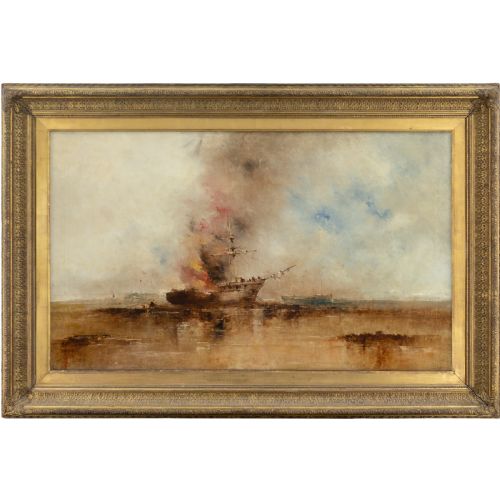
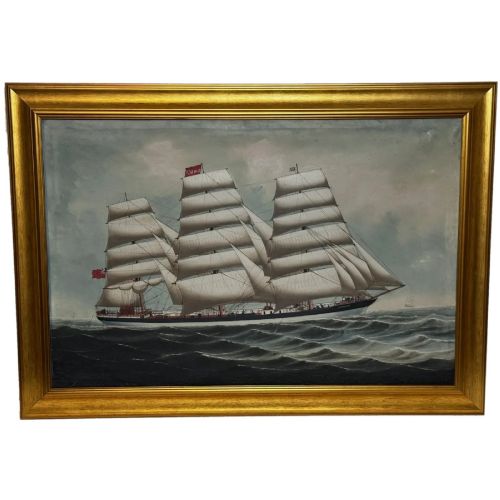
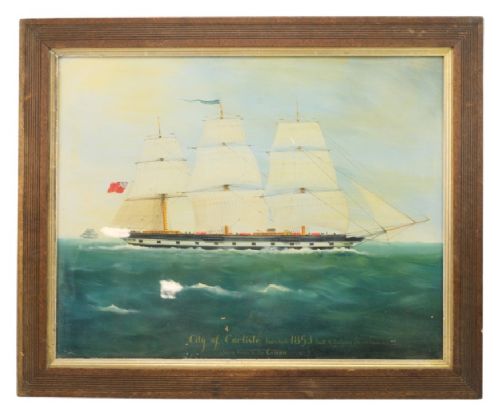
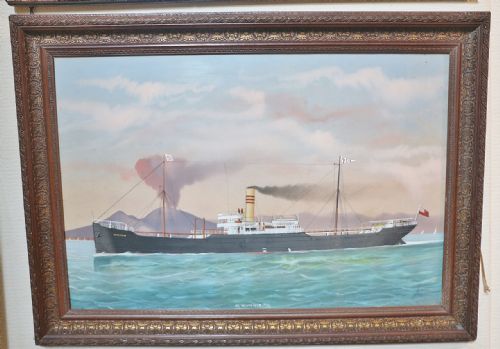
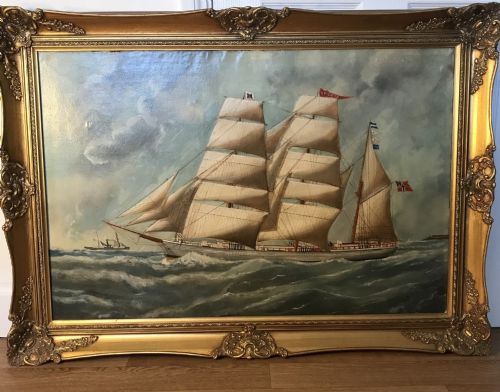
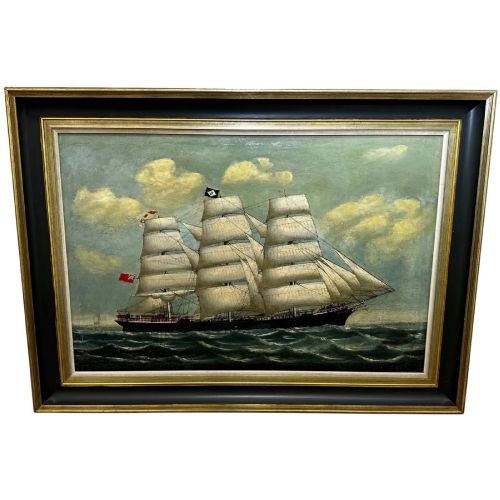
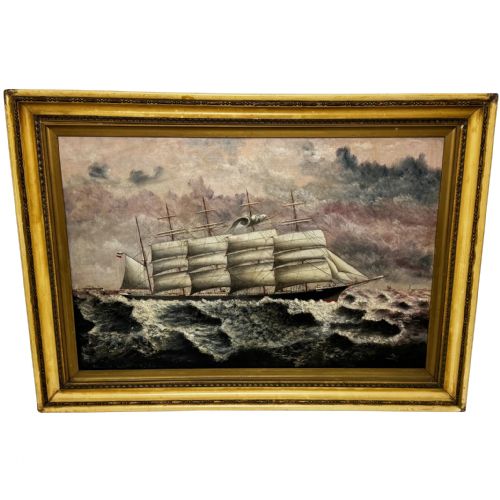
A vintage ship portrait canvas depicts naval vessels, clippers, and steamships rendered in oil paint upon canvas surfaces. These works span periods from the nineteenth century through the Edwardian era, capturing specific vessels like the City of Carlisle and HMS Blenheim.
The most frequent examples on this page are oil paintings framed in wood or giltwood, ranging from Victorian maritime scenes to Anglo Chinese pierhead paintings. They record named ships such as the barque Limbe and the clipper Slieve Roe in various maritime settings.
What varies in quality
Quality in a vintage ship portrait canvas depends upon the precision of the vessel's rigging, hull proportions, and the naturalism of the surrounding sea and sky. Works by identified artists or established regional schools typically demonstrate superior handling of light and maritime architecture.
The preservation of the oil paint layer and the integrity of the original wood or giltwood frame also distinguish finer examples from simpler decorative works.
Listings feature oil on canvas works spanning from the eighteenth century to the mid-twentieth century, including Victorian maritime scenes and Edwardian naval paintings.
William McAlpine·Reginald Arthur Borstel·Lai Fong·Joseph Heard·Johan Jens Neumann
The Vintage Ship Portrait Canvas Glossary
- Pierhead painting
- A genre of ship portraiture traditionally created in port cities to depict specific merchant or naval vessels for captains and owners. These works often show the ship outside a known harbour or lighthouse.
- Barque
- A sailing vessel with three or more masts, having the foremast and mainmast square-rigged and the mizzenmast fore-and-aft rigged. They feature prominently in nineteenth-century maritime art.
- Clipper
- A very fast nineteenth-century merchant sailing ship with multiple masts and a square rig. These vessels are frequently depicted in high seas or rounding notable capes.
- Giltwood
- Wood carved and treated with gold leaf or metallic gilding to create a decorative frame. Many antique oil paintings retain their original giltwood surrounds.
- Maritime realism
- An artistic style focused on accurate depiction of ships, nautical equipment, and sea conditions. It prioritises documentary precision over romantic embellishment.
Vintage Ship Portrait Canvas: Frequently Asked Questions
What is a ship portrait?
A ship portrait is a specialised painting that records the likeness of a specific vessel, often commissioned by its captain, owner, or builder. These works prioritise accurate representation of the ship's rigging, flags, and hull.
They serve as historical documents of maritime trade and naval architecture during the nineteenth and early twentieth centuries.
How do I identify the ship in the painting?
Many ship portraits include the vessel's name painted on the hull, stern, or within the title inscribed on the frame or canvas. Signal flags flying from the masts can also identify the ship or its registry.
Historical records, shipping registers, and naval archives help match the vessel's physical characteristics to specific ships like the Slieve Roe or the Thermopylae.
Where were these maritime paintings made?
Maritime paintings were produced across major port cities in Britain, Europe, America, and China by artists who specialised in coastal and marine subjects. Neapolitan and Anglo Chinese schools were particularly active in creating portraits for visiting merchant crews.
Artists often worked in coastal studios or directly in harbours to observe shipping traffic and naval movements.
How should I display an oil painting on canvas?
Hang canvas oil paintings away from direct sunlight and steady sources of artificial heat to protect the paint and wood stretchers. Maintaining stable room humidity prevents the canvas from slackening and safeguards the wooden frame.
Ensure the wall fixings are secure and appropriate for the weight of the framed canvas piece.