
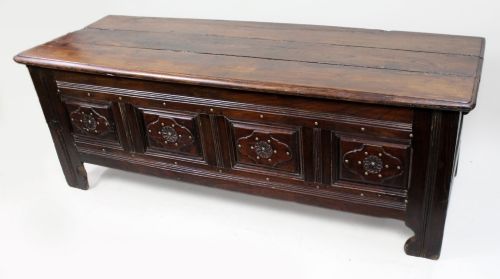
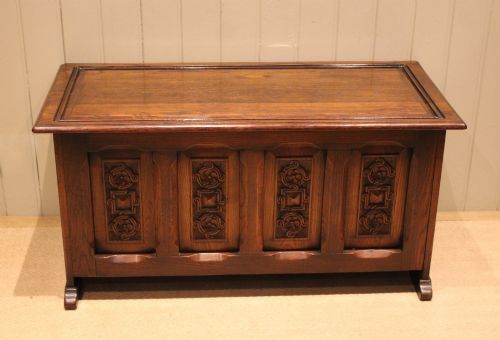
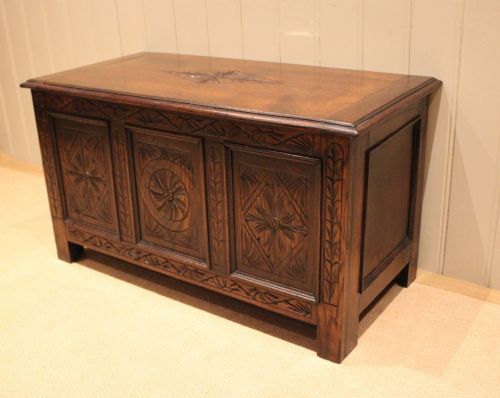
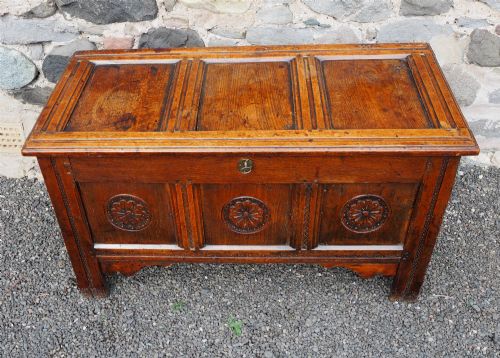

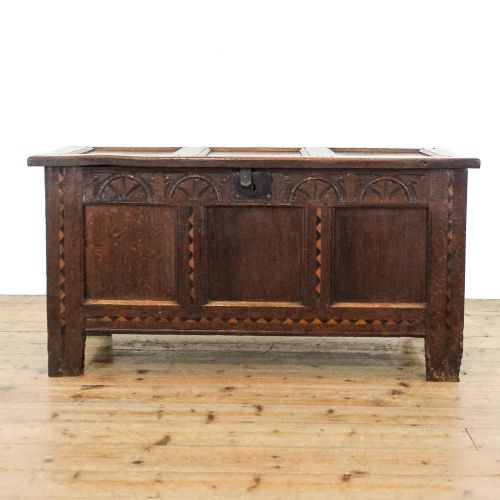
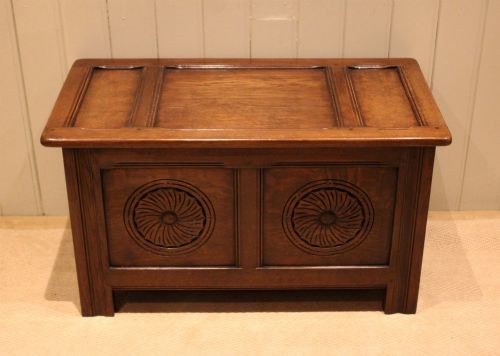
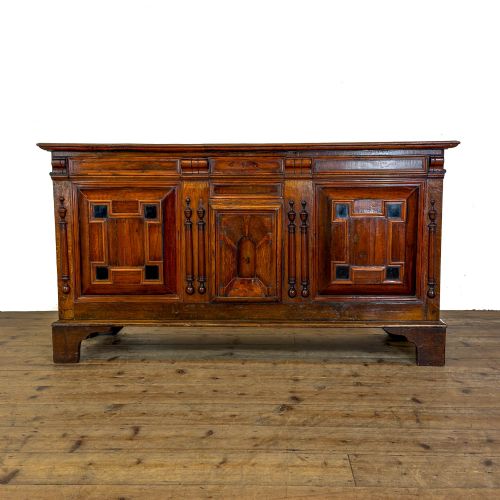
Traditional Oak Coffer Chest
These traditional oak coffer chest pieces are heavy-duty storage items offering centuries of timber character and practical utility.

What these traditional oak coffer chest examples represent
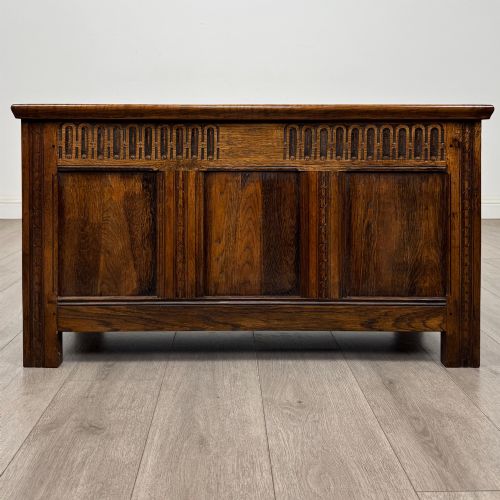
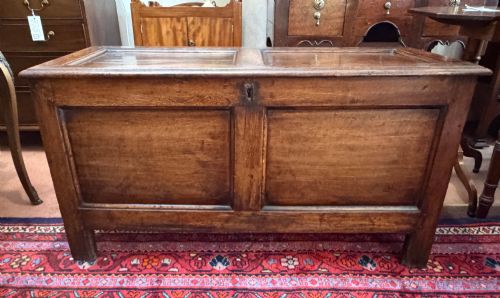
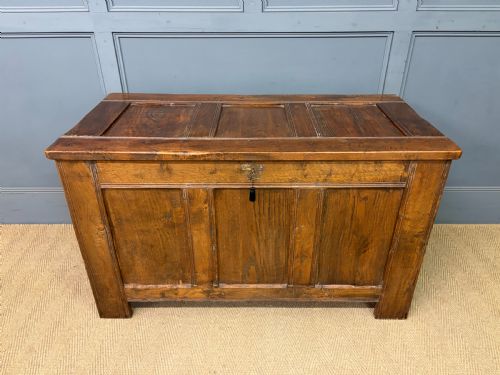
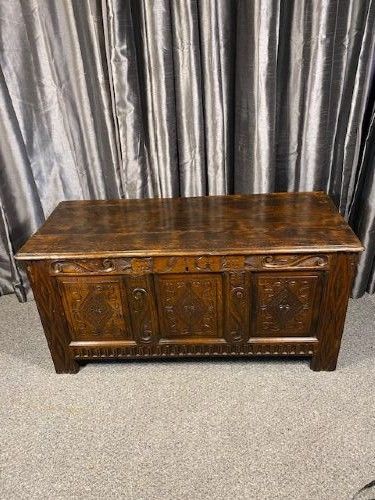
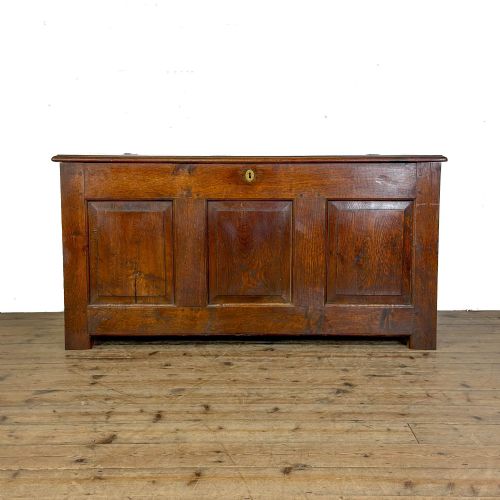
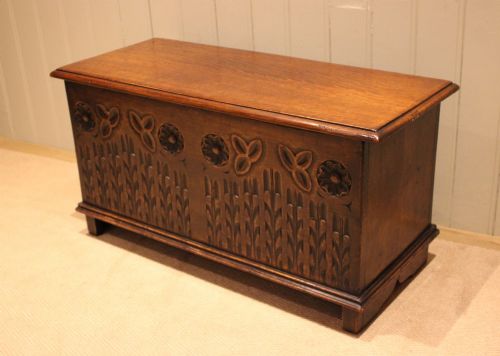
When you search for traditional oak coffer chest items, you encounter robust storage furniture built primarily during the seventeenth and eighteenth centuries. These pieces function as historic blanket boxes and storage chests, serving domestic needs for generations.
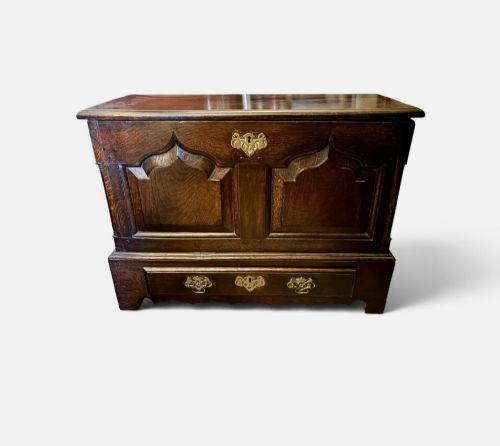
The selections available include standard coffers alongside mule chests which incorporate useful drawers beneath the main compartment. The inventory ranges from plain seventeenth-century plank construction to late Georgian iterations featuring mahogany crossbanding.
Construction and materials
Cabinet makers built these traditional oak coffer chest pieces using solid native timber supplemented by iron hinges and brass elements. The primary material is oak, sometimes seen in stained variations, while later Georgian pieces incorporate mahogany crossbanding for decorative contrast.
Early examples utilise straightforward joinery such as the six-plank method, where vertical and horizontal boards join directly. Over the decades, construction evolved to include panelled frameworks and the addition of functional base drawers in mule chest variants.
Retail Price Guide 2026
Typical UK retail prices for traditional oak coffer chest, calculated from the Sellingantiques database of over a million retail prices indexed since 2003. This retail price guide relies exclusively on Sellingantiques data; no external sources or auction records are used, so the figures do not describe the wider market.
Early makers occasionally hid small interior till boxes inside these chests, perfect for stashing parish tax coins.
Judging the range
The distinction between standard vernacular items and finer examples lies in the refinement of timber selection and secondary woods. Pieces featuring sophisticated mahogany crossbanding and integrated drawer storage demonstrate greater cabinet-making ambition than plain plank constructions.
The integrity of early joinery and the survival of original brass or iron hardware heavily influence the character of each piece. Later modifications and replacement hinges alter the historic standing of seventeenth and eighteenth-century examples.
The Traditional Oak Coffer Chest Glossary
- Coffer chest
- A heavy wooden storage box with a hinged lid, traditionally used for keeping valuables and textiles safe. These items form the backbone of early vernacular domestic furniture.
- Mule chest
- A storage chest featuring one or more drawers built into the base beneath the main compartment. This form bridges the gap between traditional coffers and modern chests of drawers.
- Crossbanding
- A decorative technique where strips of veneer are laid across the grain of the primary wood. This creates a contrasting border frequently observed on Georgian pieces.
- Six-plank chest
- A primitive construction method using six distinct boards pinned together with wooden pegs or nails. It represents some of the earliest surviving chest forms.
Frequently Asked Questions
What is a traditional oak coffer chest?
A traditional oak coffer chest is a sturdy antique storage box made primarily of solid oak during the seventeenth and eighteenth centuries. These pieces were historically used in homes to store blankets, clothing, and household valuables.
They range from simple plank constructions to more elaborate mule chests featuring lower drawers and mahogany detailing.
How do I date a coffer?
Dating relies on examining the construction methods, timber choice, and stylistic details visible on the piece. Seventeenth-century examples often display simpler plank or panel designs, while Georgian pieces incorporate refined elements like crossbanding.
Hardware such as iron hinges and brass fittings also provide clues regarding the period of manufacture.
What is the difference between a coffer and a mule chest?
A standard coffer is a deep box with a lid accessed entirely from the top. A mule chest retains this top-opening compartment but adds one or more drawers beneath.
This evolution provided easier access to stored items without needing to unload the top section.
How should I live with an oak coffer?
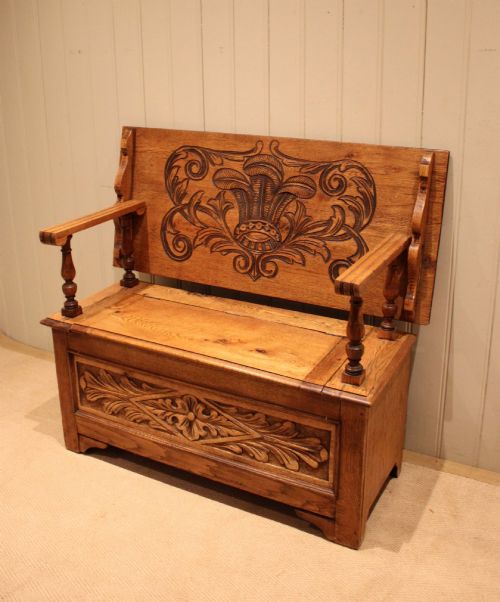
These robust chests function well as living room coffee tables, hallway storage benches, or bedroom blanket boxes. Their heavy timber construction makes them durable additions to modern interiors.
Keep them away from direct heat sources to protect the historic oak from drying out or splitting.