
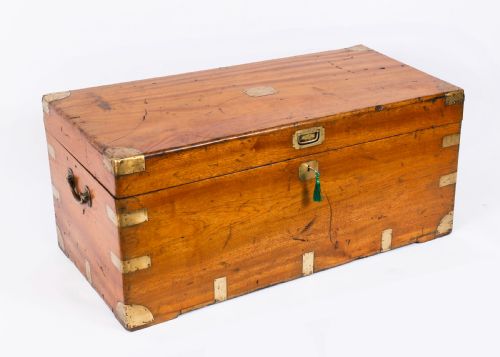


Antique Wooden Coffer Trunk
These heavy timbers and iron straps made an antique wooden coffer trunk the backbone of historic domestic storage.
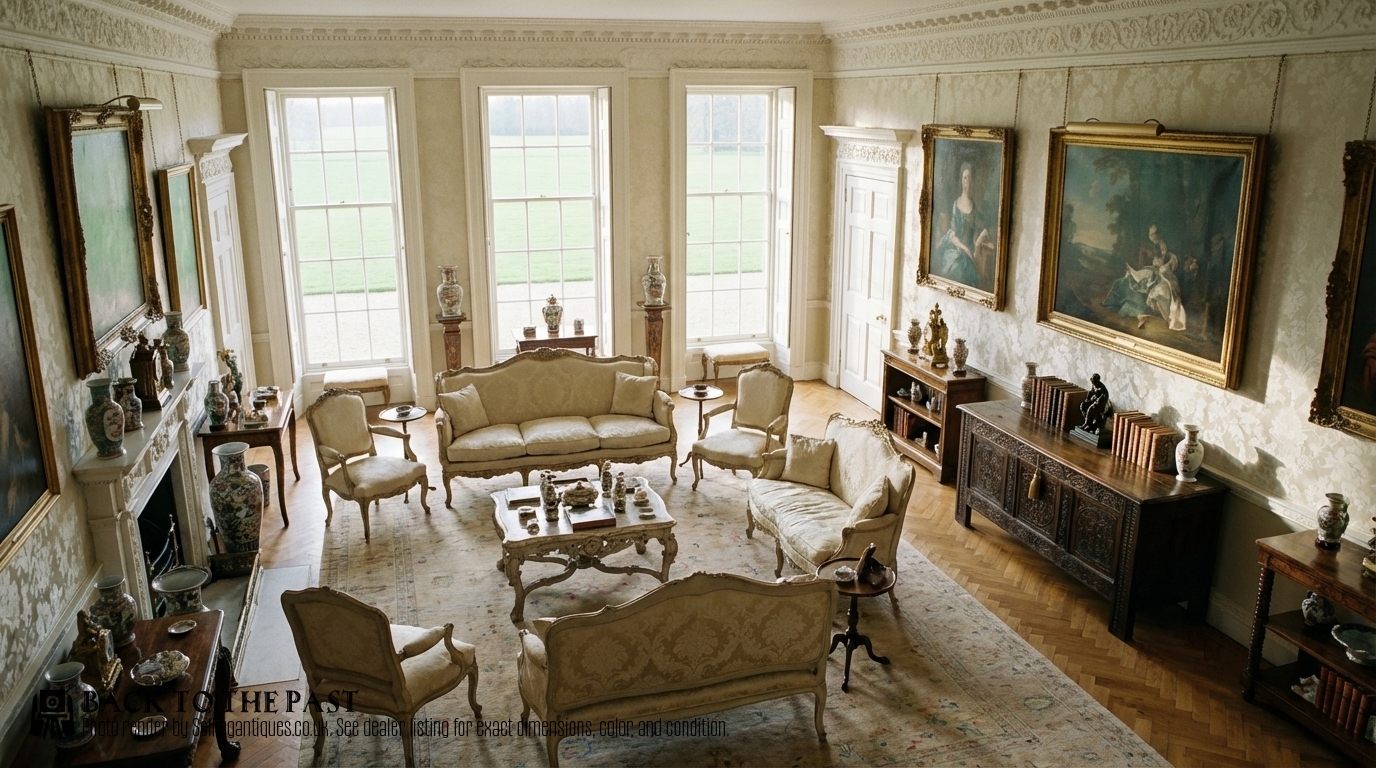
Antique Wooden Coffer Trunk
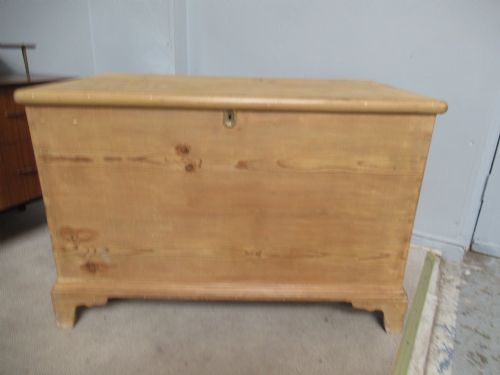
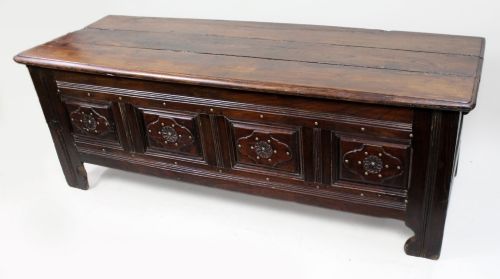
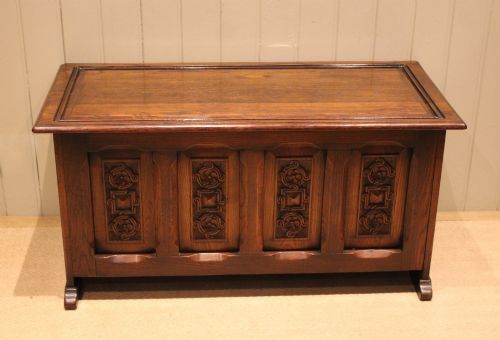
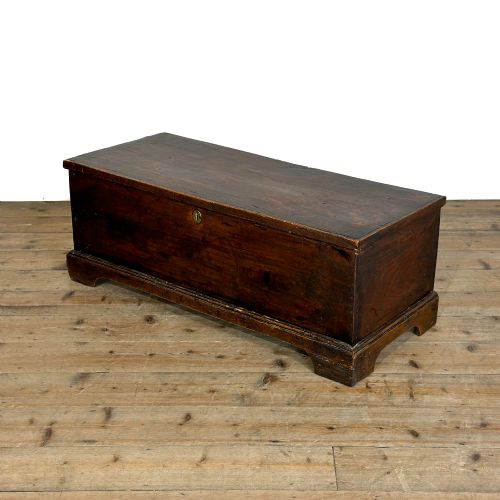
An antique wooden coffer trunk represents a robust lineage of heavy storage furniture spanning several centuries. Buyers searching this phrase encounter substantial boxes constructed for security and transport, ranging from domestic linen repositories to military travel luggage.
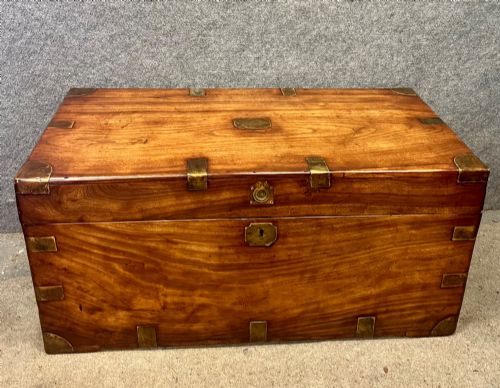
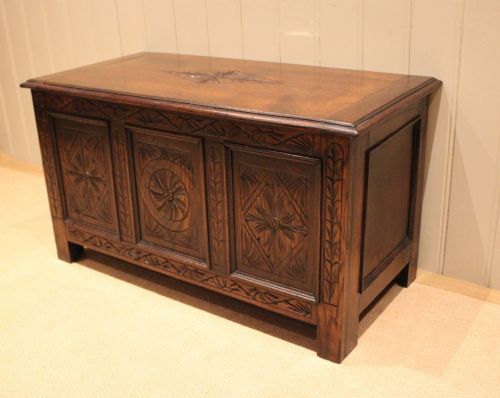
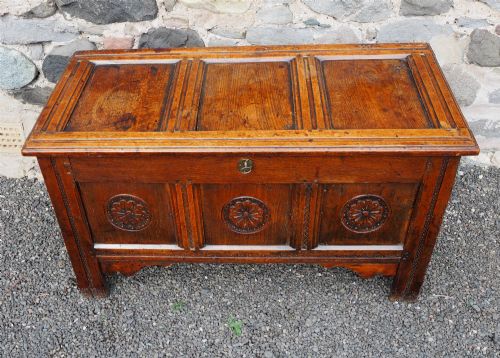
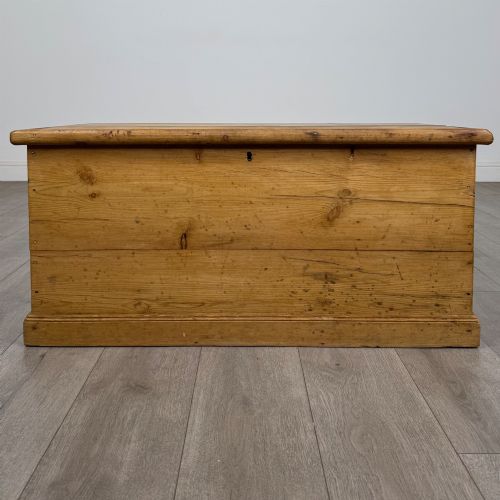
The material record on this page leans heavily towards sturdy native timbers like oak and elm from the seventeenth and eighteenth centuries, alongside nineteenth-century camphor wood and pine travel trunks. Forms vary from simple planked boxes to carved panelled chests and brass-bound campaign pieces.
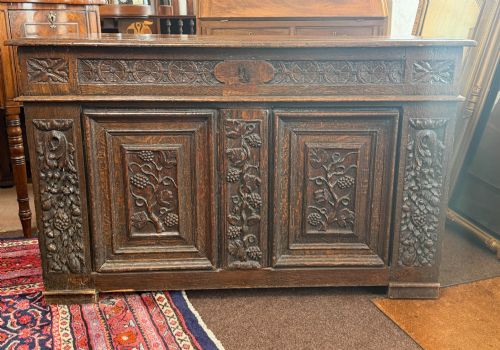
Earlier examples display joined framework and period carving rooted in Jacobean or Georgian domestic life, whilst later Victorian iterations shift towards utilitarian travel containers. Every piece serves as a tactile survivor of domestic or military organisation.
How they were made
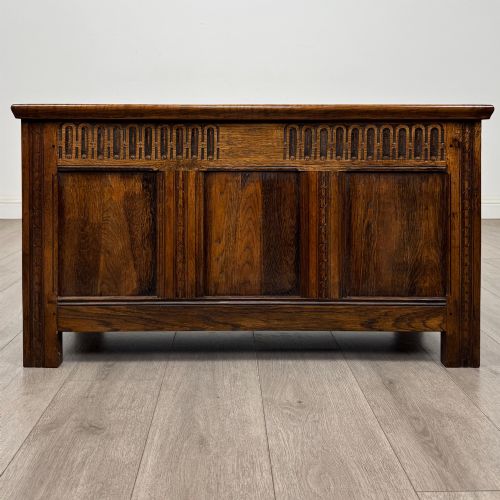
Construction relies primarily on sturdy hardwoods such as oak, elm, and mahogany, joined through traditional pegged mortise and tenon frames or joined planks. Blacksmiths forged the heavy iron straps, hinges, and corner plates that reinforced these boxes against the rigours of transit.
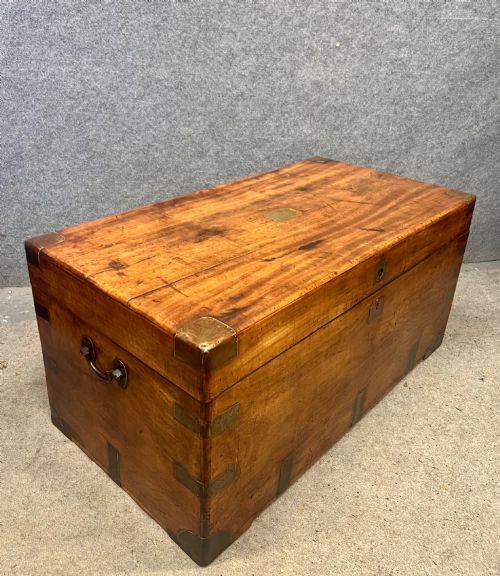
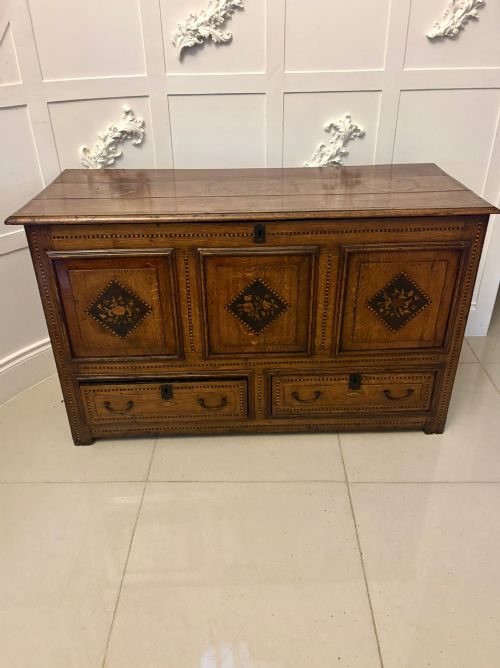
Surface decoration on seventeenth-century pieces often includes geometric chip-carving or applied mouldings, while later examples incorporate marquetry inlay or simply showcase stripped pine and polished camphor. Brass mounts and campaign hardware appear frequently on nineteenth-century travel chests to protect vulnerable edges.
Materials range from native European oak, elm, and mahogany to exotic camphor wood, teak, and padouk.
What varies in quality
Quality rests in the integrity of the original timber and the crispness of the hand-carved panels or dovetail joints. Pieces retaining their original ironwork, locks, and hinges command greater attention than those rebuilt with modern replacements.
Proportion and surface patination dictate the visual hierarchy, with untouched surfaces showing deep wax accumulation over centuries. Provincial Welsh or regional variations exhibit distinct regional construction traits that elevate their interest above standard workshop output.
The Antique Wooden Coffer Trunk Glossary
- Campaign trunk
- A portable storage chest designed for military officers on the move, frequently constructed from camphor wood with brass mounts and recessed carrying handles.
- Mule chest
- A storage box combining the deep lidded compartment of a coffer with one or more lower drawers. This hybrid form gained popularity during the eighteenth century.
- Six-plank coffer
- A primitive box constructed from six distinct boards joined simply at the edges. It represents an early and austere method of domestic furniture making.
- Marquetry
- The art of applying decorative veneer slices to a timber surface to form intricate pictorial patterns. It appears on select high-status seventeenth-century pieces.
Antique Wooden Coffer Trunk: Frequently Asked Questions
What is a coffer bach?
A coffer bach is a small Welsh box, often translated as a little coffer, traditionally made in domestic workshops during the nineteenth century.
These compact repositories frequently feature drawers beneath the main lidded compartment and served for storing personal trinkets or important household papers.
How do I date an oak coffer?
Dating relies on observing construction methods, timber grain, and decorative motifs such as chip-carving or stile framing. Seventeenth-century examples typically employ pegged mortise and tenon joints with hand- cleft oak boards.
Later revival pieces or eighteenth-century chests display different tool marks, standardised fixings, and stylistic cues from the Georgian or Victorian eras.
Why were camphor wood trunks used?
Camphor wood naturally repels insects and moths, making it the preferred material for nineteenth-century military officers travelling through tropical climates. The dense aromatic timber protected woolen uniforms and paper documents from humidity and pests.
These trunks are usually reinforced with brass corners and straps to withstand long sea voyages.
Where were sword chests kept?
Sword chests were functional storage pieces designed to house military sidearms safely within households or institutional buildings. Their long, narrow proportions accommodated blades securely.
Today, these robust oak boxes function well as distinctive coffee tables or hallway storage benches.