
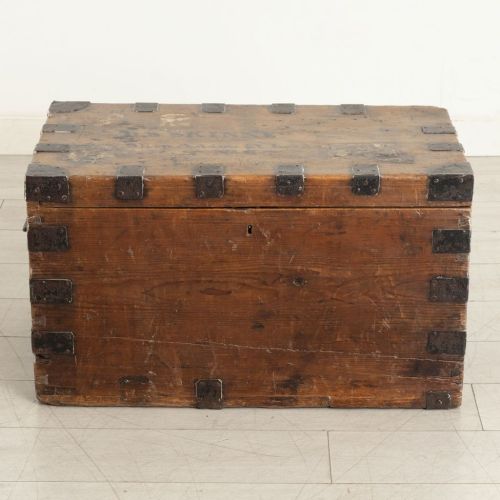
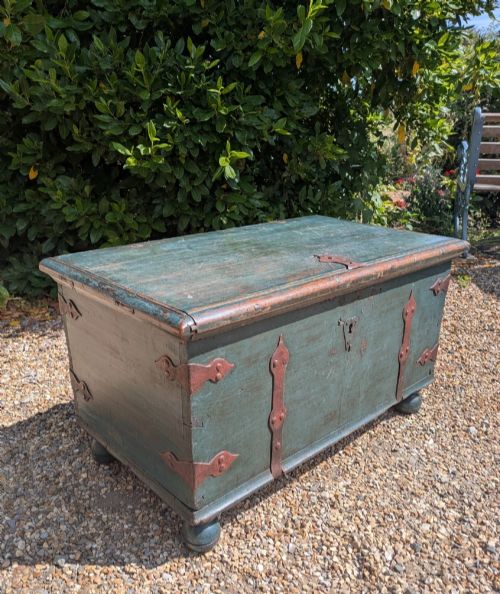
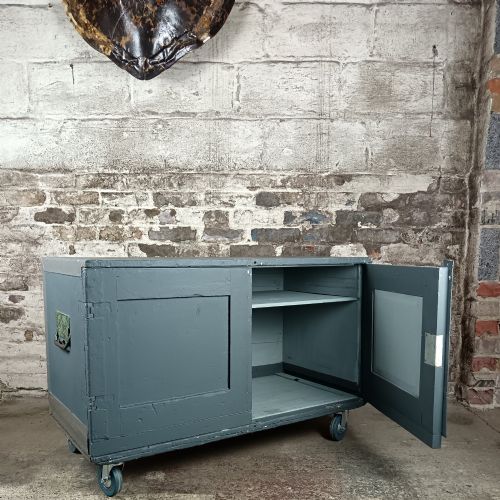
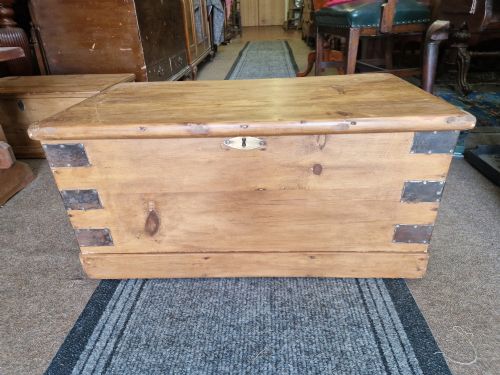
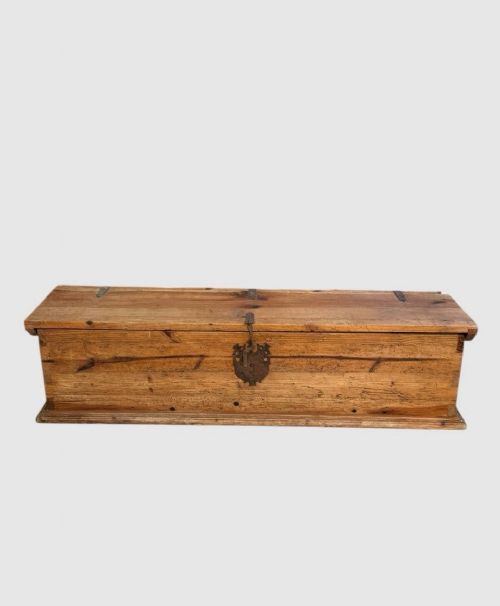
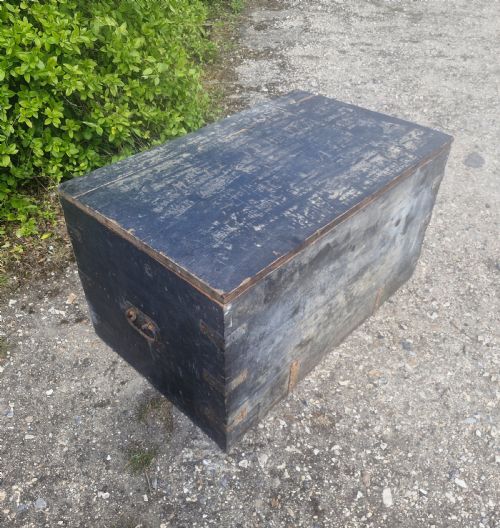

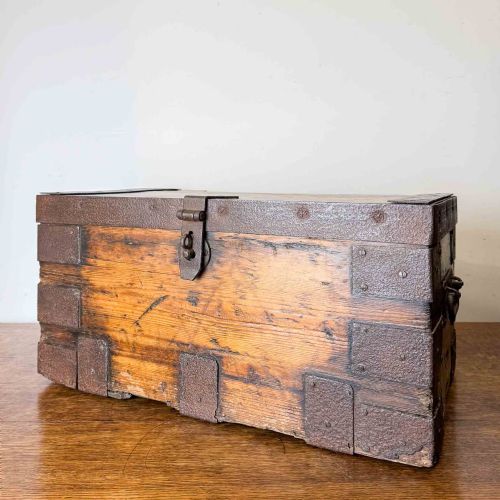


Iron Bound Pine Trunk
An iron bound pine trunk offers robust utility and rustic character, making it a practical storage solution for modern homes.
Iron Bound Pine Trunk
When searching for an iron bound pine trunk, buyers encounter a utilitarian form built for travel, storage, and domestic organisation across past centuries. These pieces function as blanket boxes, travel chests, and strong boxes, serving households, military campaigns, and maritime journeys.
The version most frequently met on this page is the nineteenth-century Victorian or Scandinavian pine chest, often reinforced with hand-forged iron strapwork or metal banding. Examples range from simple rustic farm storage to painted marriage chests and specialised military transport cases.
Origins span English country houses, Scandinavian folk art traditions, and military regiments, resulting in a diverse selection of forms. Buyers find everything from small dome-top strong boxes to large tool trunks and log bins.
How they were made
Construction relies primarily on solid pine timbers, occasionally paired with elm for added durability in high-wear areas. Carpenters joined the main bodies using traditional methods, housing contents securely for domestic or transit use.
Iron provides structural reinforcement through hand-forged strapwork, corner brackets, and metal banding that protects the wooden edges from heavy impact. Brass fittings, leather details, and pigmented paint finishes appear on specific regional and military variants.
Iron Bound Pine Trunk Retail Price Guide 2026
Typical asking prices for iron bound pine trunk among the pieces listed under this phrase on Sellingantiques today, from the lower quarter to the upper quarter. They describe what is for sale here now, not the wider market.
One historical trunk carried the belongings of Jessie Degan Cole to Dawn House in Winchester.
What varies in quality
Quality rests upon the integrity of the original construction and the survival of surface treatments, such as early hand-painted Scandinavian pigments or patinated iron strapwork. Pieces retaining untouched surfaces and functional working locks sit at the upper end of the range.
The subtlety of the blacksmith's work on the iron mounts and the precision of the joinery distinguish utilitarian storage from finer folk art or campaign pieces. Surviving provenance, such as documented military regiment history or named previous owners, elevates historical interest.
Eagle Lock Co
The Iron Bound Pine Trunk Glossary
- Strapwork
- Metal bands fixed across the exterior of a chest to reinforce the wooden structure. These iron straps distribute weight and protect corners during transit.
- Strong box
- A heavy storage chest designed for valuables or documents, typically fitted with robust iron banding and secure locking mechanisms.
- Campaign chest
- Portable furniture built for military officers on active service abroad, often featuring recessed handles and modular construction for transport.
- Marriage chest
- A decorative box commissioned to celebrate a wedding, frequently inscribed with dates, initials, or regional folk art motifs.
- Dome top
- A curved lid profile designed to shed water during travel and increase internal storage capacity for textiles or garments.
Iron Bound Pine Trunk: Frequently Asked Questions
What were iron bound pine trunks used for originally?
These trunks served primarily for transporting personal belongings, military equipment, and household goods during travel. Households also relied on them for storing heavy blankets, linen, and winter provisions.
Over time, robust examples adapted to specialised roles such as carpenter tool storage, log bins, and secure document chests. Their durable construction allowed them to withstand rough handling on carriages, ships, and campaign trails.
How do I care for an antique pine trunk?
Keep the wood conditioned by avoiding direct sunlight and sudden temperature shifts that can dry out the historic pine. Maintain painted or waxed surfaces simply by dusting with a dry cloth.
Protect the iron strapwork from moisture to prevent active oxidation. Applying a microcrystalline wax occasionally helps preserve both the metal and the underlying timber.
How can I tell a Victorian trunk from an 18th-century one?
Eighteenth-century examples often display Scandinavian folk art painting, hand-forged ironwork with distinct tactile irregularities, and earlier construction methods. Labyrinth decorations and deep baroque proportions also point towards this earlier era.
Victorian trunks generally feature more standardised machine-sawn pine boards, mass-produced hardware, and simpler rectangular or domed profiles associated with nineteenth-century travel.
Are these trunks suitable for daily coffee table use?
Many large pine trunks provide an ideal surface and internal capacity for living room storage. Their flat tops accommodate books and decorative objects while concealing household clutter underneath.
Buyers should check the height and stability of the chosen piece to ensure comfortable clearance before placing drinks or resting feet.