




Traditional Mahogany Wall Clock
A traditional mahogany wall clock brings domestic punctuality and warm wood grain to a room, spanning Georgian elegance down to 1930s utility.
Traditional Mahogany Wall Clock
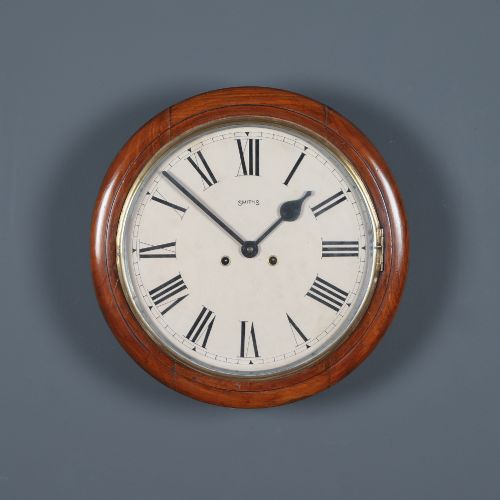
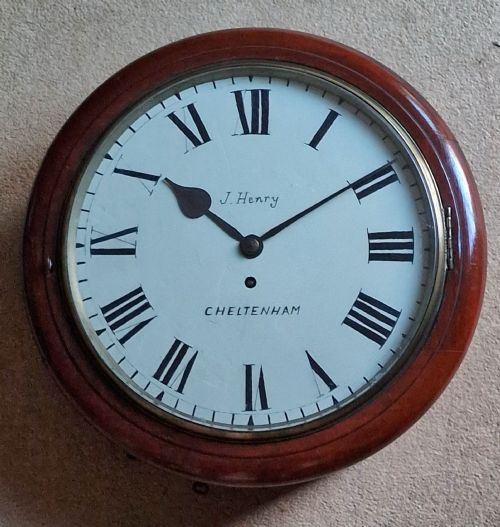
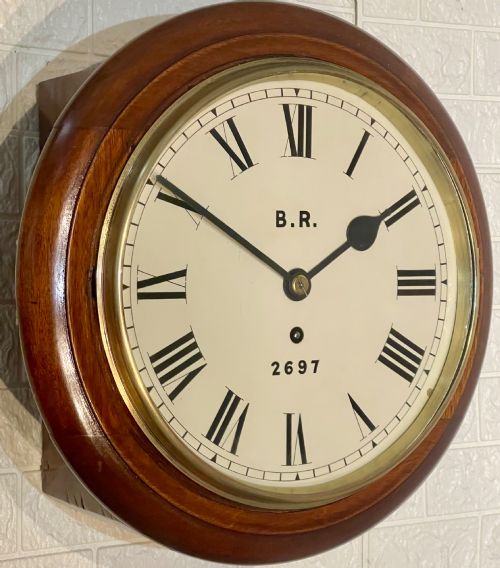
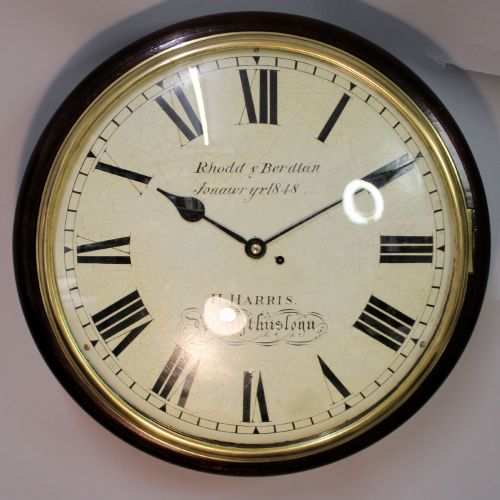
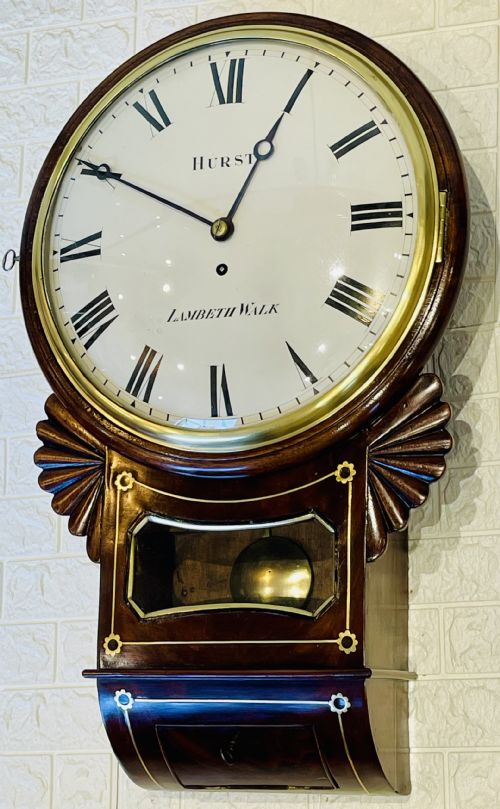
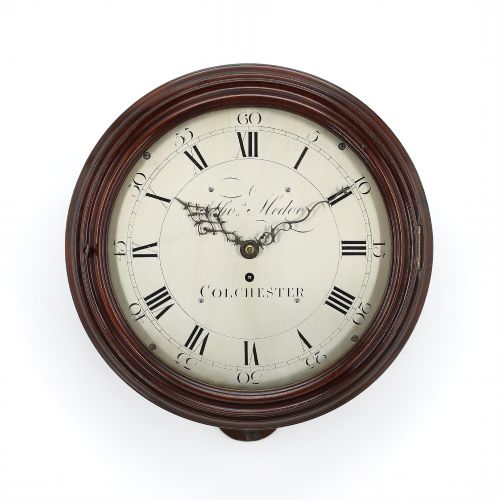
A traditional mahogany wall clock serves as both a reliable timekeeper and a functional wall hanging, originating from periods such as the Georgian, Regency and Victorian eras. The selection here leans heavily toward round dial designs, drop-dial fusee models and school clocks enclosed in rich mahogany timber cases.
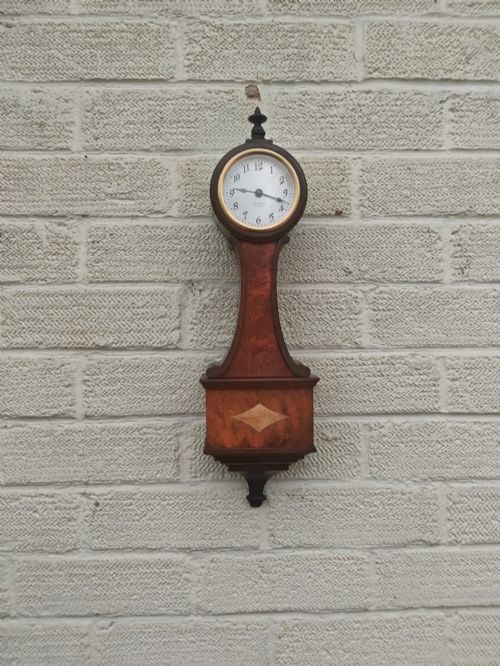
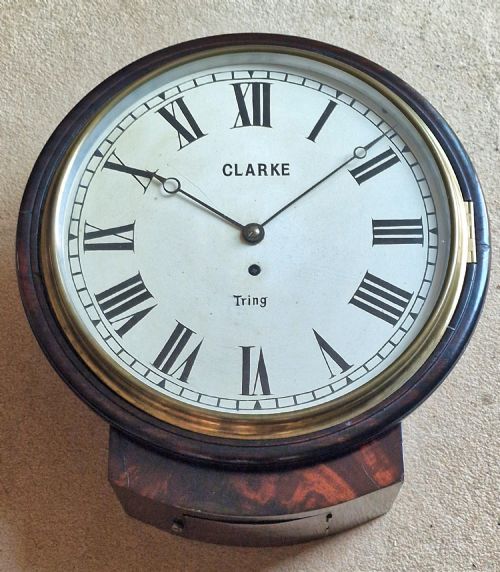
Makers from various towns and cities across Britain signed these dial faces, ranging from provincial makers in Tring and Stroud to prominent London clockmakers. Alongside standard round dials, variants include double fusee regulators, striking tavern clocks, and banjo wall clocks dating from the nineteenth and early twentieth centuries.
These timepieces hung in railway stations, schools, offices and private homes, fulfilling a need for clear timekeeping in communal spaces. The dial formats generally feature painted metal, enamel or convex glass fronts protecting Roman or Arabic numerals.
Materials and construction
Cabinetmakers constructed the circular or drop-down cases primarily from solid mahogany, often housing the movement within a trunk secured by a side or bottom door. Brass components feature significantly in the internal gear trains, bezels and pendulum assemblies, while iron and gilt metal appear in select movements and dial rings.
The mechanical heartbeat relies on fusee movements or eight-day spring drives, designed to maintain even tension as the mainspring unwinds. Dials comprise painted metal, wood or convex iron plates, finished with hand-painted numerals and fitted behind glazed brass bezels.
Railway clerks relied on these heavy mahogany faces to keep trains running on time while passengers checked their pocket watches.
Distinctions in quality
The refinement of the brass movement and the crispness of the hand-engraved or painted dial signature establish the standard of the piece. Master makers invested greater care into the deadbeat or verge escapements and the proportional harmony of the mahogany drop case.
Timber selection and cabinet joinery separate standard utility clocks from high-end pieces, visible in the depth of the mahogany grain and the precision of the brass bezel hinges. Original signed dial plates matched to their original matching case movements hold greater integrity than marriage clocks assembled from disparate parts.
Henry Harris of Monythusloyn·Joseph Bird of Stroud·Thomas Hedge of Colchester·John Walker·Cording of London
The Traditional Mahogany Wall Clock Glossary
- Fusee
- A conical pulley used with a cord or chain to equalise the torque of the mainspring as it runs down. This mechanism ensures consistent force is delivered to the gear train for accurate timekeeping.
- Drop dial
- A wall clock featuring a circular dial mounted above an extended wooden trunk or box that houses the pendulum. The lower case often takes a round, octagonal or bracket shape.
- Railway clock
- A robust timekeeper built for high legibility in stations and offices, frequently driven by a fusee movement. These clocks often bear company initials on the dial face.
- Verge
- An early type of escapement controlling the release of the gear train via a crown wheel and pallet arrangement. It represents an older form of timekeeping technology found in Georgian examples.
- Regulator
- A precision clock designed to keep exceptionally accurate time, often featuring a double fusee or deadbeat movement. They are housed in tall or large wall cases with calibrated dials.
Traditional Mahogany Wall Clock: Frequently Asked Questions
How do I wind a fusee wall clock?
A small key fits onto the winding square located on the dial face, turning clockwise until the mechanism meets resistance. Care must be taken not to overwind the spring.
Most traditional examples run for eight days on a single wind, requiring a steady, measured hand to preserve the historic train.
Where were these clocks originally hung?
These clocks hung in railway station platforms, school assembly halls, commercial offices and domestic hallways where everyone needed to see the time. Their clear dials and sturdy mahogany cases suited high-traffic public rooms.
In homes, they typically occupied central living spaces or kitchens, serving as the primary household timekeeper.
How do I tell a Victorian clock from a Georgian one?
Georgian clocks generally exhibit earlier movement types such as verge escapements and simpler dial layouts associated with provincial makers of the eighteenth century. Mahogany cases from this period often display rich, dark patination.
Victorian pieces frequently incorporate fusee movements with wider dial surrounds, and their maker signatures often reflect expanded industrial railways and urban offices.