

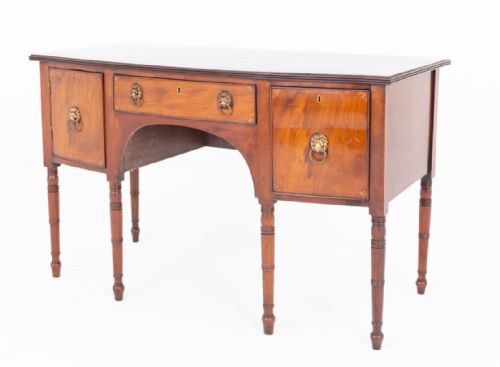
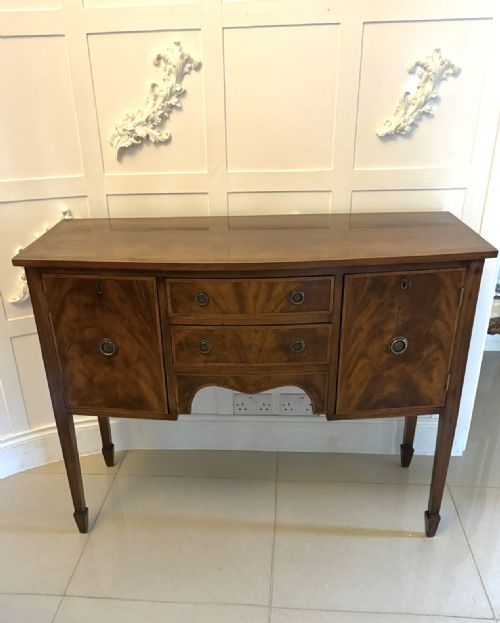
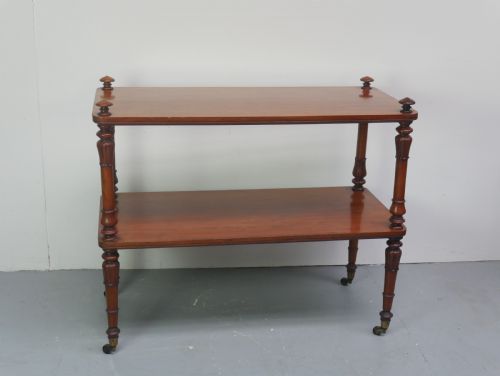
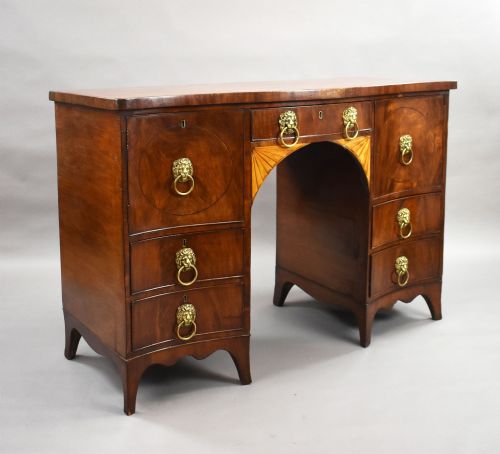
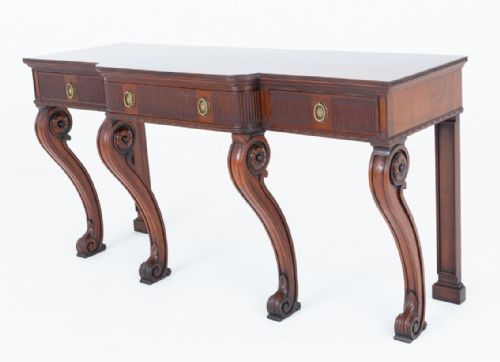


Traditional Mahogany Server Table
A traditional mahogany server table offers disciplined storage and noble grain, anchoring a dining room with practical surface space.
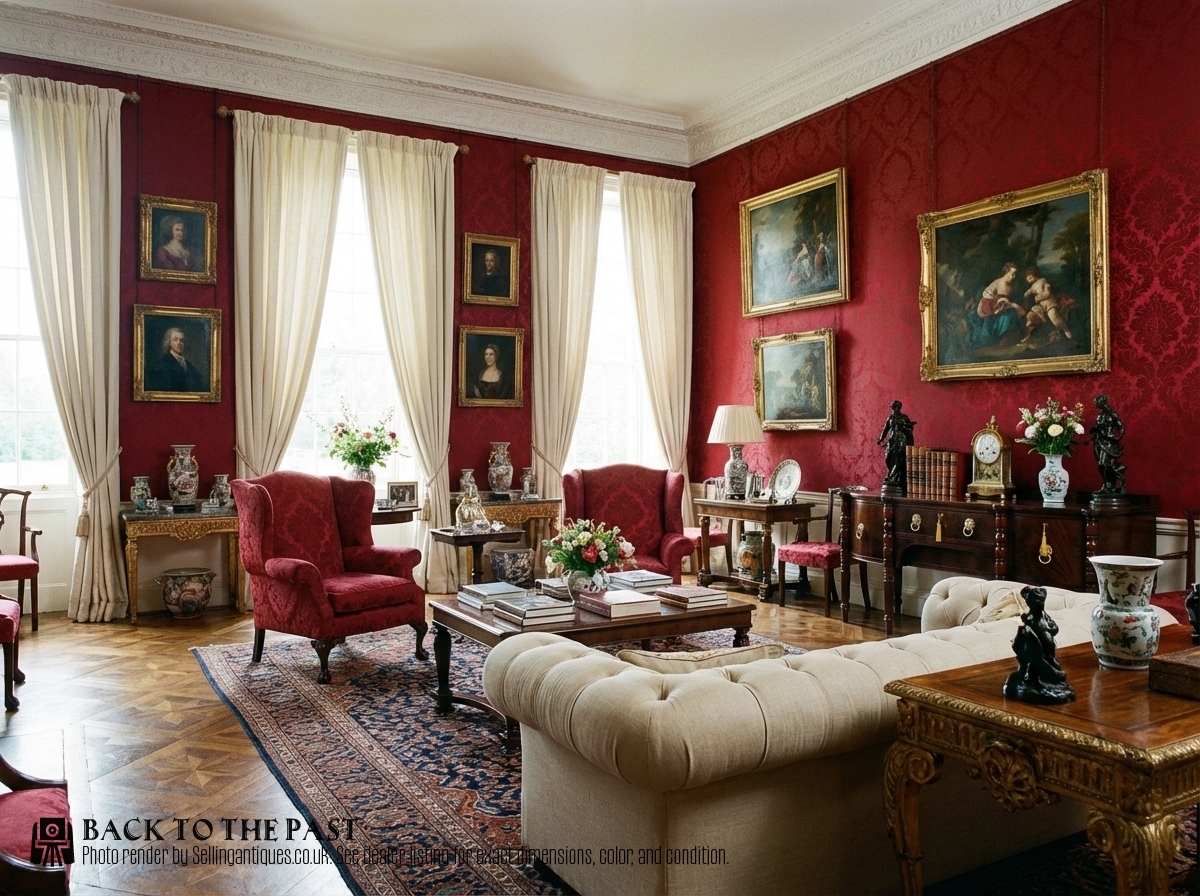
Traditional Mahogany Server Table
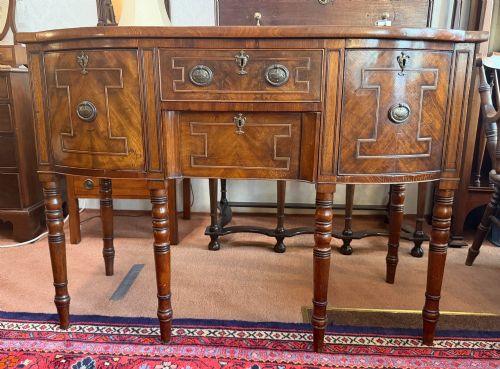
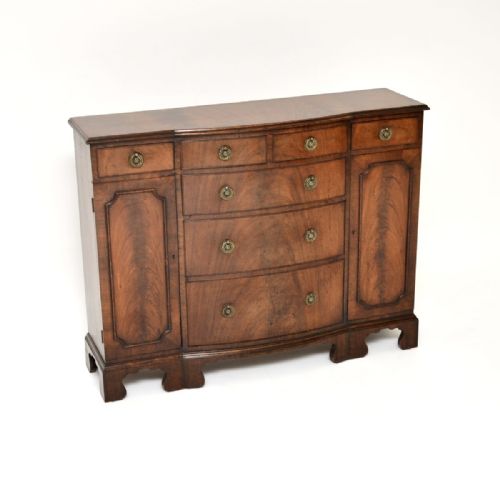
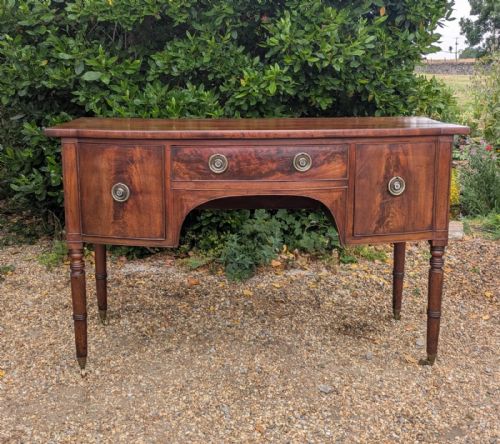
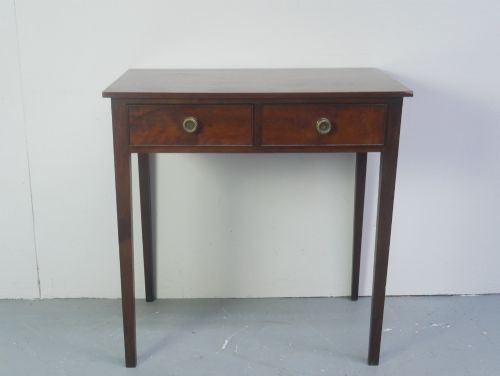
A traditional mahogany server table serves dining spaces through a mix of deep timber and long surface tops designed for holding dishes and silver. These pieces appear in forms ranging from neat console tables and side tables to bow-front sideboards, buffets, and dedicated serving tables.
The versions most commonly found here date from the eighteenth century through the Edwardian period, encompassing Georgian, Regency, and Victorian aesthetics. Makers constructed them to stand against dining room walls, providing discrete storage drawers alongside generous serving surfaces.
The markers of distinction
Quality rests in the selection of the timber and the crispness of any inlay or carved detail, where superior examples exhibit deep, natural lustre without heavy modern intervention. The handling of flame mahogany veneer and the precision of boxwood stringing indicate the workshop standard.
Proportion and structural harmony separate the finest examples from heavier, utilitarian pieces, with well-balanced legs and smooth-running drawers commanding greater appreciation. Makers who invested time in matched veneers and subtle mouldings produced work of enduring stability.
The inventory includes diverse utilitarian forms such as side tables, console tables, dumb waiters, and tea trolleys alongside formal sideboards.
Whytock & Reid·Maple & Co
The Traditional Mahogany Server Table Glossary
- Bow-front
- A curved convex cabinet front that softens the room's geometry. This shape appears frequently on nineteenth-century sideboards and servers.
- Stringing
- Thin inlaid lines of contrasting wood used to outline panels and borders. Boxwood and satinwood provide the pale contrast against dark mahogany.
- Breakfront
- A piece of furniture where the central section projects forward from the flanking wings. This architectural arrangement adds depth and formal presence.
- Dumb waiter
- A tiered revolving stand placed beside a dining table to hold dishes. These practical pieces allow service without constant servant attendance.
Traditional Mahogany Server Table: Frequently Asked Questions
How do I style a server table?
Position the piece against a principal dining room wall to act as a anchor for lamps, silver trays, and seasonal displays. Keep the surface uncluttered to honour the grain of the wood.
Allow enough clearance around the piece for dining chairs and foot traffic. Use lower shelves or cupboards for storing table linen and serving dishes.
What is the difference between a sideboard and a server?
Sideboards generally incorporate extensive cupboard space and multiple drawers designed for storing heavy dinner services and cutlery. They provide substantial enclosed storage alongside surface utility.
Servers often feature a more slender profile, prioritising open floor clearance and top surface area over deep cupboards. They function primarily for presenting food and drink during meals.
How do I care for mahogany furniture?
Protect the timber from direct sunlight and sudden temperature shifts to prevent the veneer from drying or cracking. Dust regularly with a soft, dry cloth.
Apply high-quality beeswax sparingly to nourish the grain and maintain the natural sheen. Avoid silicone-based polishes that build up a cloudy residue over time.
How do I identify a Georgian piece?
Examine the proportions for classical restraint, structural balance, and fine linear inlays using boxwood or satinwood. Drawer linings often utilise secondary woods like oak or pine.
Look for hand-cut dovetails and period brass hardware that show signs of genuine age. The joinery should demonstrate the methodical hand methods of eighteenth-century workshops.