
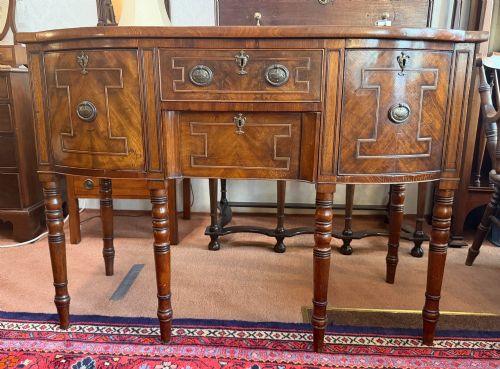
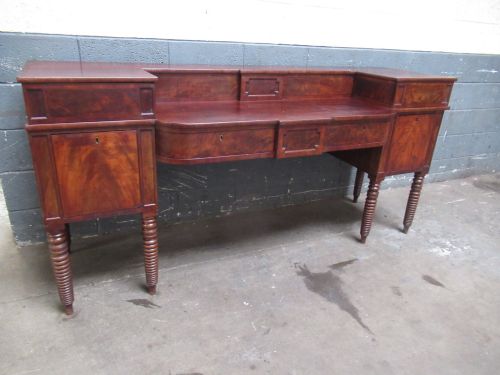
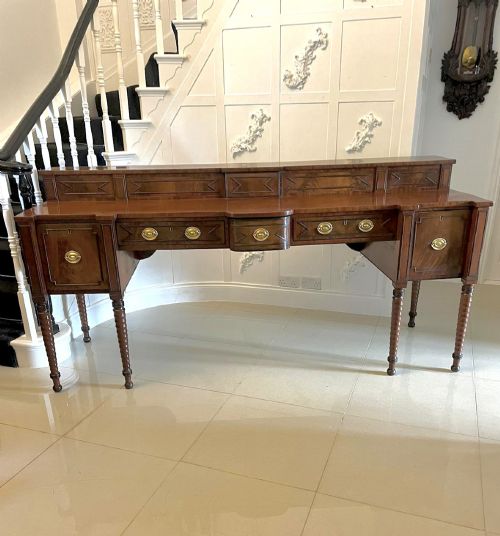
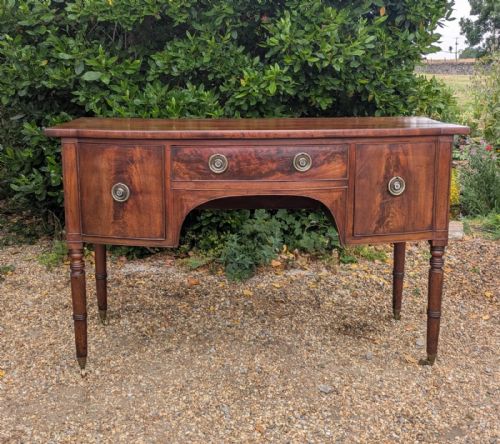
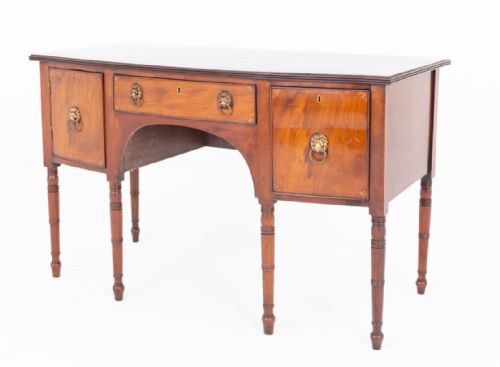
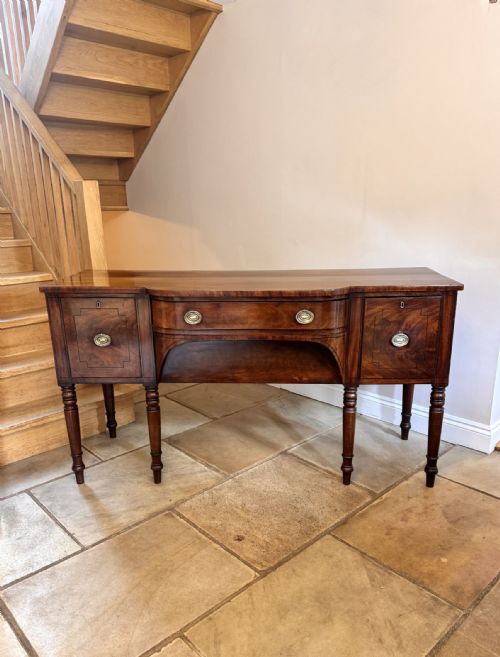


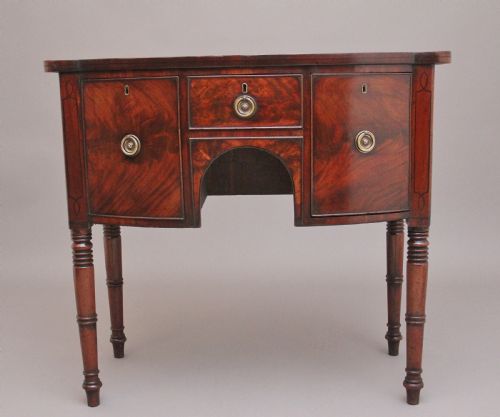


Turned Leg Mahogany Server
A turned leg mahogany server brings understated dining room utility, featuring solid mahogany timber and graceful support.
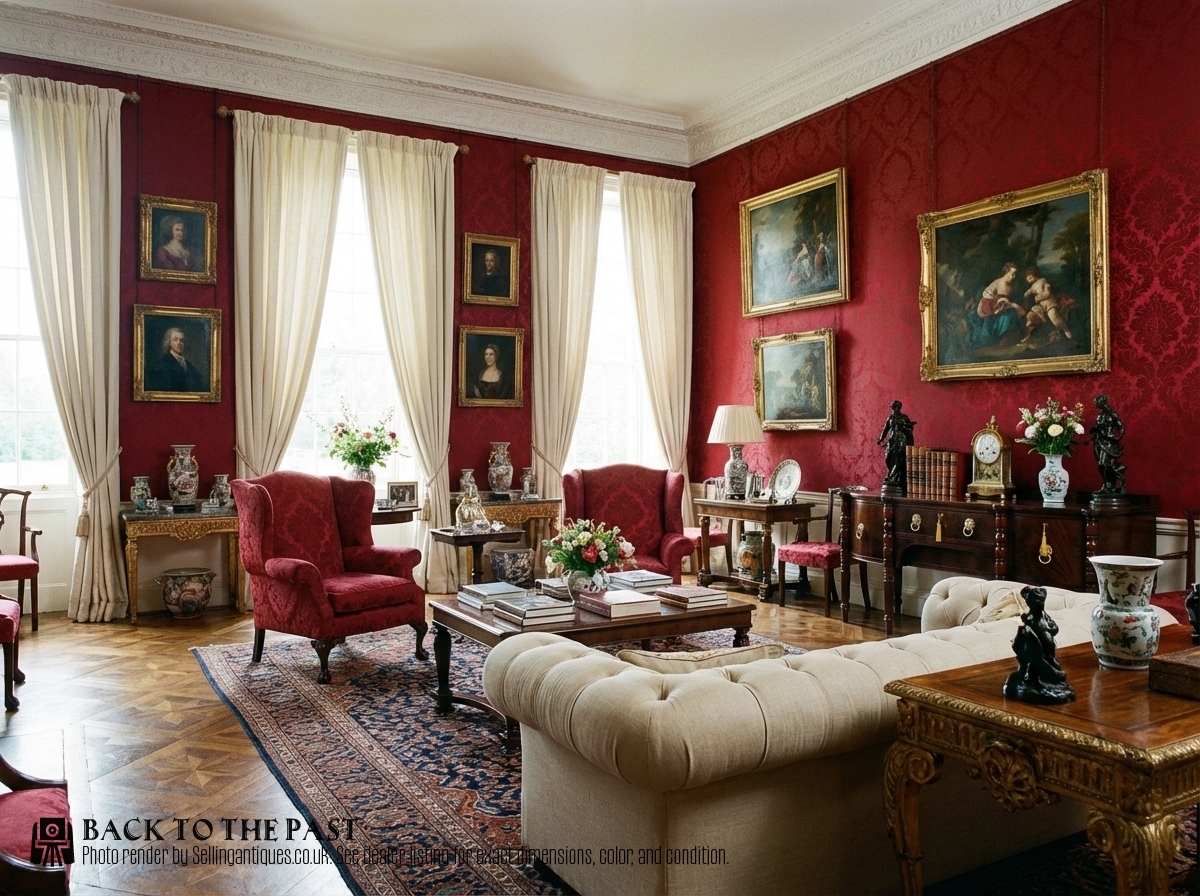
Turned Leg Mahogany Server
A turned leg mahogany server encompasses sideboards, console tables, side tables, and serving tables found across the eighteenth and nineteenth centuries. These dining and reception room pieces appear in Georgian, Regency, William IV, and Victorian periods.
The most common forms on this page include bow-fronted sideboards and side tables featuring turned supports. Makers from these eras utilised rich timbers to create functional furniture for serving and storage.
Originating largely from British workshops, these tables and sideboards reflect classic stylistic shifts from George III designs through to Victorian interpretations.
Distinguishing quality factors
Quality in these tables rests upon the selection of timber figures, such as matched flame mahogany veneers across drawer fronts, alongside precise brass inlay or ebony stringing. Superior examples display thoughtful proportions and refined turning on the legs.
The integration of secondary woods like oak for drawer construction indicates higher grade cabinet making. Clean lines and crisp carving separate finer dining and serving furniture from simpler utility pieces.
One side table carries a later hotel sign for the Midland Grand.
W Williamson & Sons of Guildford
The Turned Leg Mahogany Server Glossary
- Mahogany
- A durable tropical hardwood prized for its rich reddish-brown tone and stability in furniture construction. It served as the primary material for high-end dining furniture throughout the Georgian and Regency periods.
- Flame mahogany veneer
- A thin slice of timber cut from the fork of the mahogany tree to produce a distinctive flickering flame pattern. Cabinet makers applied this to drawer fronts and tabletops for visual impact.
- Bow-front
- A convex curved furniture front that softens the rectangular profile of sideboards and serving tables. This shape gained popularity during the late eighteenth century.
- Stringing
- Narrow inlaid lines of contrasting wood, such as ebony, embedded into the surface of mahogany furniture. It provides delicate linear decoration along edges and borders.
- Breakfront
- A piece of furniture featuring a central section that projects forward from the flanking cabinets or pedestals. This architectural arrangement creates depth and shadow on larger sideboards.
Turned Leg Mahogany Server: Frequently Asked Questions
What is a turned leg mahogany server?
A turned leg mahogany server is a dining room or hallway table designed for serving food or displaying objects, constructed from mahogany with distinctive circular-turned legs.
These versatile forms include sideboards, console tables, and serving tables originating primarily from the Georgian and Regency eras.
How do I identify a Regency period table?
Regency period pieces often display classical restraint, incorporating brass inlay, ebony stringing, and flame mahogany veneers upon clean architectural lines.
Turned supports on these tables tend to be crisp and refined, reflecting early nineteenth-century design influences.
Were these pieces used only for dining?
While primarily utilised in dining rooms for serving dishes and storing silverware, smaller examples functioned as hall tables or dressing tables.
Adaptability in size allowed these tables to serve multiple domestic purposes across different rooms of the house.
What is the difference between a sideboard and a console table?
Sideboards generally incorporate functional storage compartments such as drawers and cupboards for dining room tableware.
Console tables and serving tables focus primarily on a table surface supported by legs, lacking extensive enclosed cabinet space.