
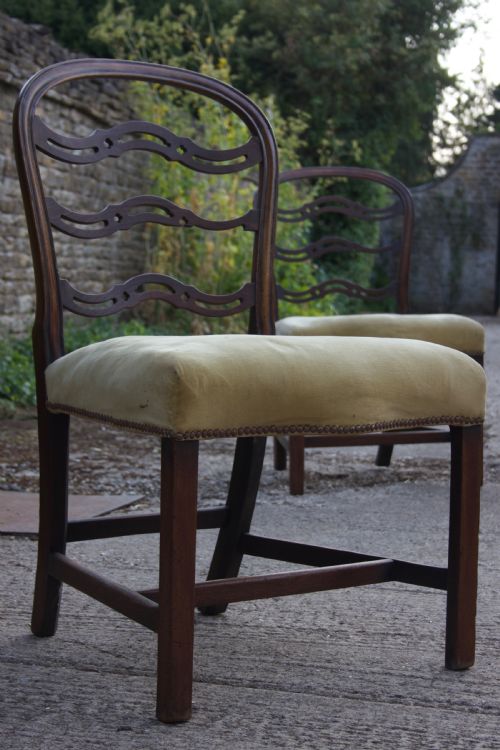
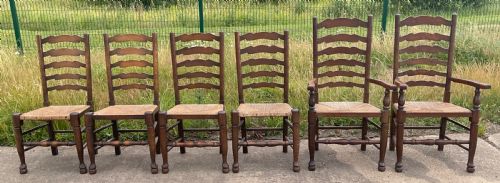
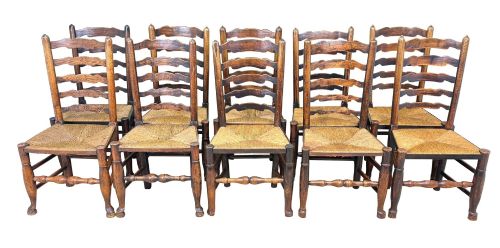
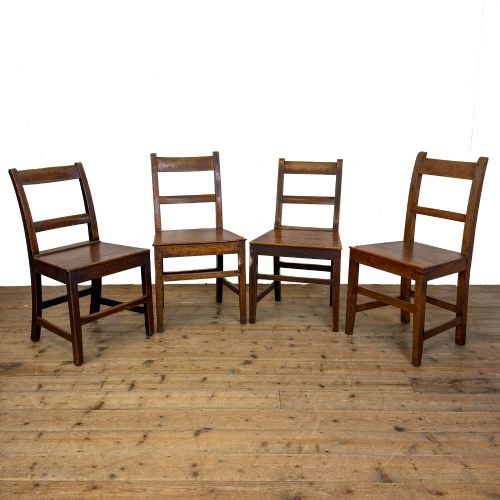




Traditional Ladderback Dining Chairs
Traditional ladderback dining chairs bring centuries of country craftsmanship and sturdy seating to a dining room.
Traditional Ladderback Dining Chairs
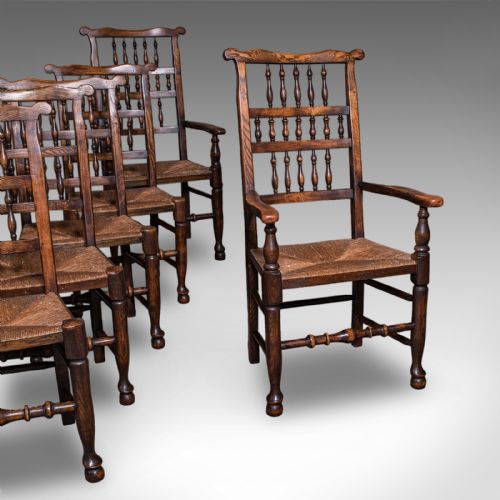
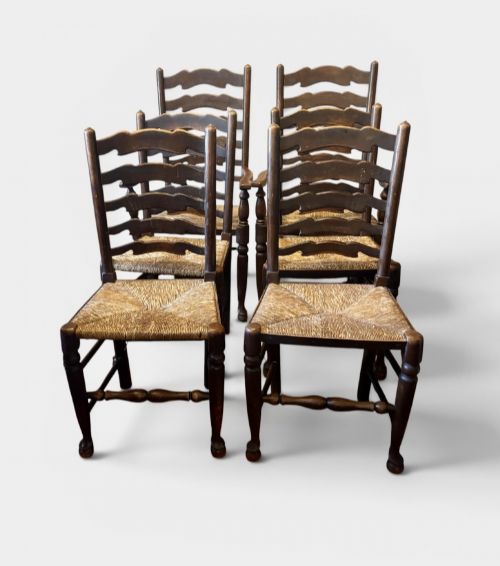
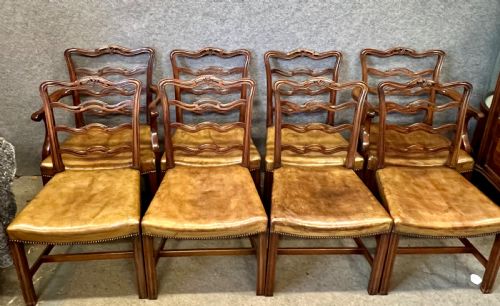
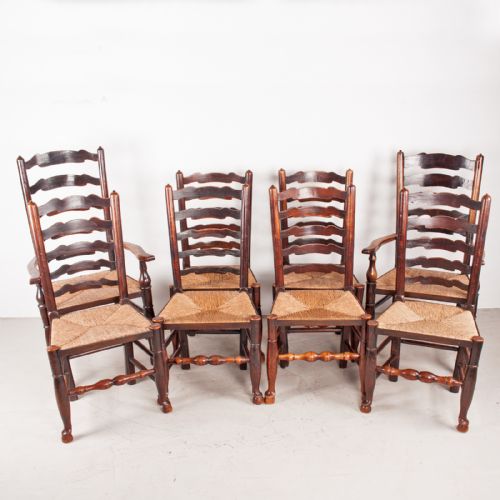
Traditional ladderback dining chairs are classic seating options featuring horizontal slats, known as rungs or ladders, set between the upright posts of the backrest. When searching for traditional ladderback dining chairs, buyers encounter various configurations ranging from large sets suitable for formal dining tables to smaller country gatherings.
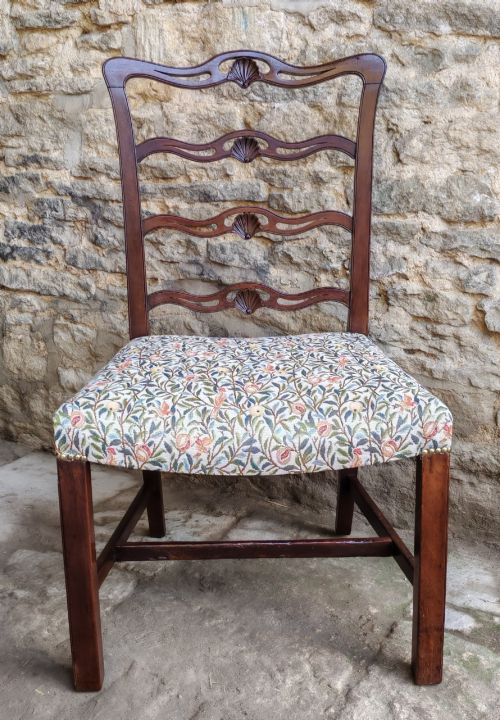
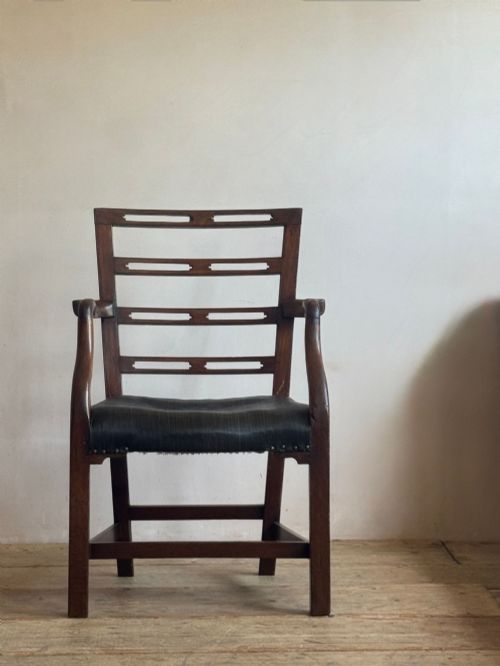
The pieces appearing on this page span several centuries, including 18th-century, Georgian, and 19th-century examples alongside later 1930s interpretations. Forms vary from simple side chairs and carver armchairs to high chairs and desk chairs, originating from English, Welsh, and Irish workshops.
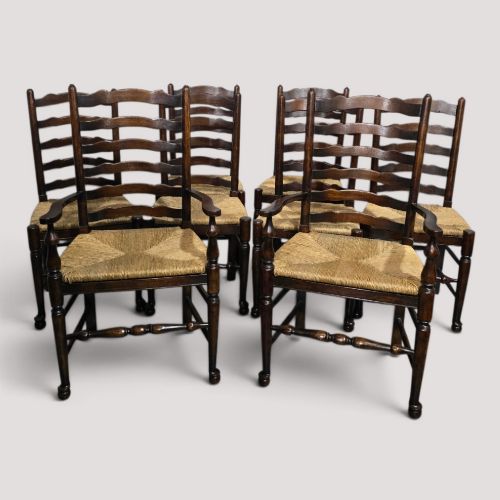
Most examples found here lean towards vernacular country styles, Arts and Crafts movements, and Georgian formal designs. Buyers frequently discover sets of four, six, eight, or even larger quantities of ten and eighteen chairs.
How they were made
Traditional ladderback dining chairs rely heavily on solid timbers such as oak, mahogany, ash, beech, elm, and walnut for their frames and turned uprights. Woodworkers turned legs and spindles on lathes, joining components using traditional mortise and tenon construction.
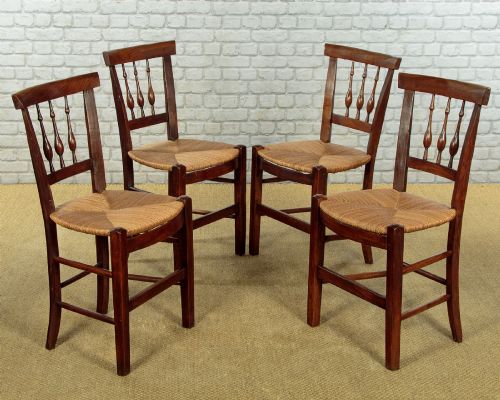
Seats often consist of woven rush, plaited straw, or fabric upholstery fitted directly into the wooden framework. Certain regional styles incorporate curved wooden slats or wavy ladders shaped by hand to fit the contour of the back.
Listings feature woods including ash, beech, elm, oak, and mahogany paired with rush or fabric seats across multiple centuries.
What varies in quality
The quality of traditional ladderback dining chairs rests upon the selection of timber and the tightness of the joinery across the frame. Heavier, solid woods like oak and mahogany with crisp hand-turned details command greater respect than simpler utility builds.
The condition and tightness of the rush or woven seating foundation dictate the longevity and daily usability of the chair. Matching sets that retain their original proportion, uniform colour, and honest patina represent the higher tier of surviving examples.
Dicon Nance·Lawrence Neal·Edward Gardener
The Traditional Ladderback Dining Chairs Glossary
- Ladderback
- A chair back constructed with multiple horizontal wooden slats or rails between the vertical rear posts. This design dates back centuries and remains common in vernacular seating.
- Rush seat
- A seating surface woven from natural marsh rushes twisted into cords. It provides a durable, slightly springy texture found on many country chairs.
- Carver
- An armchair, typically designed to sit at the head of a dining table. These often match a set of smaller side chairs.
- Súgán
- An Irish term for a twisted straw rope used to form the seat of vernacular chairs. It offers a rustic alternative to traditional woven rush.
- Harlequin set
- A collection of dining chairs that match in style and general form but were assembled from different sources over time. They share common traits like ladderbacks while displaying subtle variations.
Traditional Ladderback Dining Chairs: Frequently Asked Questions
How do I care for rush seats?
Keep rush seats dry and away from direct heat sources to prevent the natural fibres from becoming brittle over time. Regular gentle dusting helps maintain the material.
Avoid sitting on them with sharp objects that might snap the twisted straw cords. Professional re-weaving is available if the seating wears through.
Can I mix these with modern tables?
Traditional ladderback dining chairs pair easily with contemporary dining tables due to their clean linear slats and simple wooden frames. The organic textures of wood and rush soften modern interior spaces.
Matching heights carefully ensures comfortable seating clearance beneath different table designs.
What is the difference between ash and oak chairs?
Ash timber offers exceptional flexibility and shock resistance, making it ideal for the steam-bent components and spindles of country chairs. Oak provides a heavier, more rigid structure with a prominent grain pattern.
Both woods endure generations of daily dining use when properly maintained.
How do I spot a matched set?
Examine the turning details on the front legs and the exact spacing of the horizontal back rungs across the chairs. Minor hand-carved discrepancies often reveal older handmade production methods.
Larger sets sometimes combine original chairs with later additions to make up counts of eight or ten.