


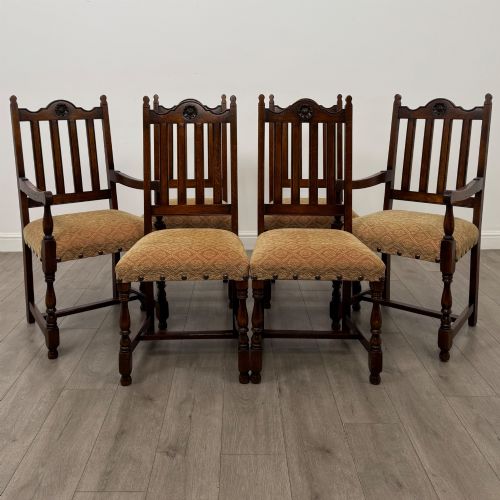
Turn of Century Oak Chairs
Turn of century oak chairs bring robust timber character and regional craft into a room, offering sturdy seating with deep historical roots.
Turn of Century Oak Chairs
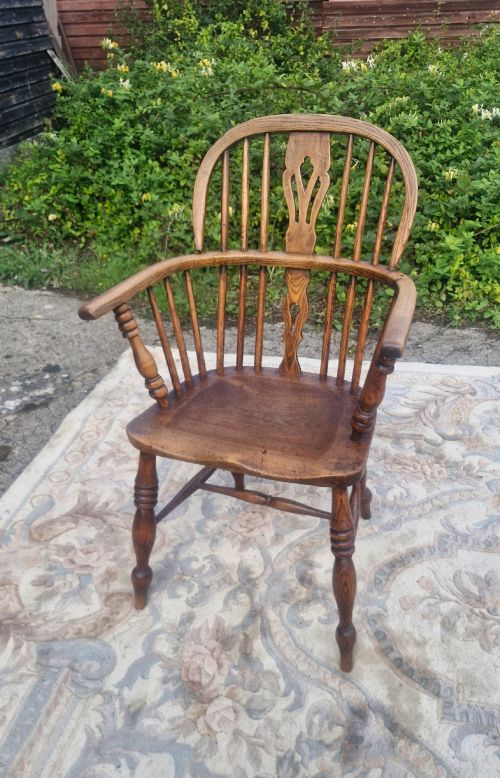
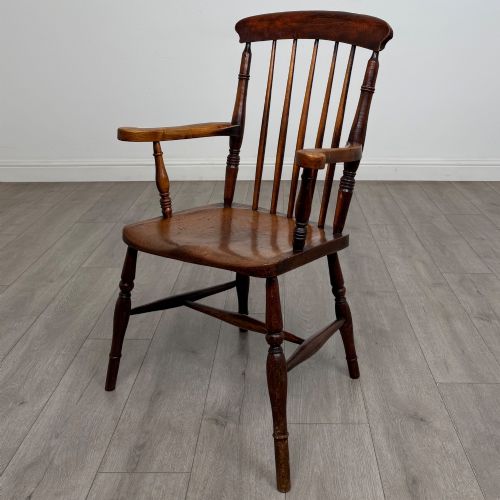
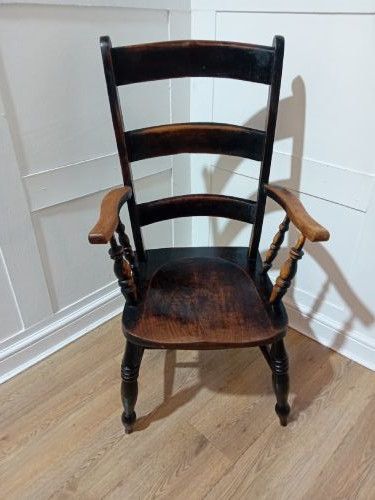
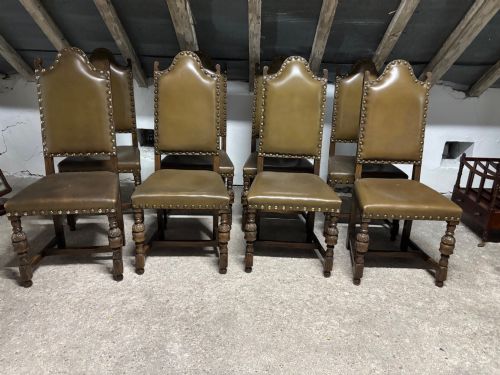
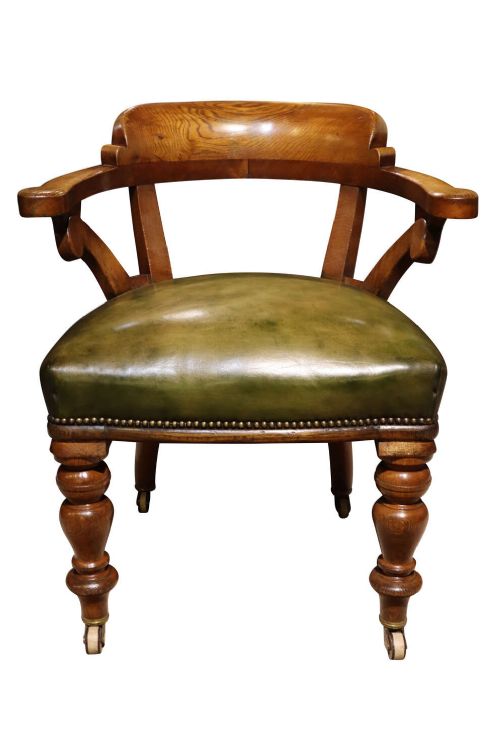
Turn of century oak chairs encompass a diverse selection of seating, ranging from substantial library armchairs to matched sets of dining chairs and vernacular Windsor designs. Buyers searching this phrase most frequently encounter 19th-century and Edwardian examples alongside earlier revival styles.
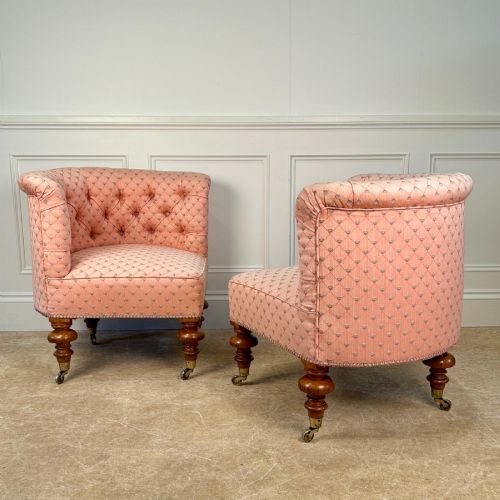
The assortment includes specialised forms such as smokers bows, corner chairs, rocking chairs, and hall chairs. These pieces emerge from various periods including Victorian, Edwardian, and earlier centuries, often reflecting regional English and continental workshop traditions.
Gradations in Quality
Quality diverges between utilitarian vernacular seating and pieces exhibiting finer joinery, distinctive regional turning, or maker stamps. Substance in the timber stock and the integrity of the structural joints dictate the durability and longevity of each chair.
The presence of original upholstery materials, period surface patination, and decorative details like carved heraldic crests or bobbin frames elevate certain examples. Consistency across a matched set rather than an individual piece also influences the character of the group.
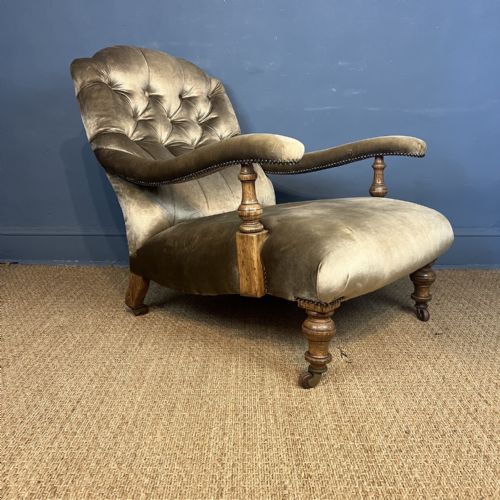
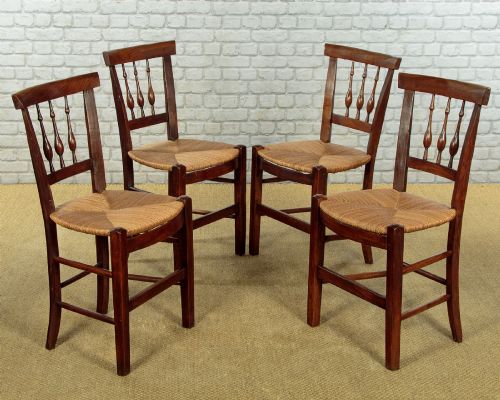
Seating forms range from library armchairs and wingbacks to kitchen chairs, hall chairs, and rocking variants.
Strahan·Liberty and Co
The Turn of Century Oak Chairs Glossary
- Windsor chair
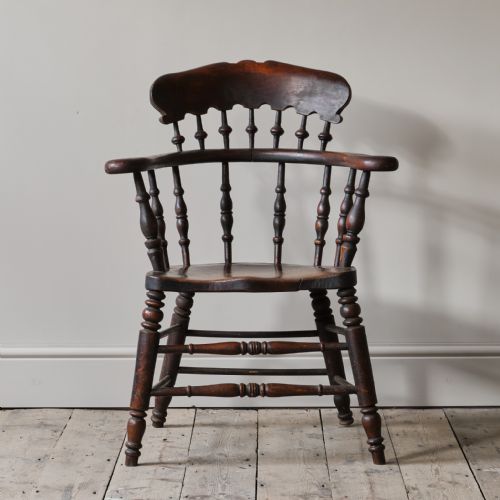
- A wooden chair built with a solid saddle-shaped seat into which the back and legs are bored directly. These vernacular pieces frequently employ mixed timbers such as oak, ash, and elm.
- Smokers bow
- A sturdy, low-backed Windsor armchair featuring a rounded continuous arm and spindle rail. This form gained popularity in domestic and tavern settings during the nineteenth century.
- Bobbin turning
- A form of woodturning characterised by a series of rounded, spool-like shapes carved along the length of a chair leg or stretcher. The technique appears frequently on seventeenth-century style and nineteenth-century revival frames.
- Wainscot chair
- An early heavy wooden armchair constructed primarily from oak with panelled backs and solid seats. These monumental seats reflect high-status domestic interiors of earlier centuries.
- Corner chair
- A square-seated chair designed to fit into the corner of a room, featuring a diagonal seat plan and a curved backrest supported by turned columns.
Turn of Century Oak Chairs: Frequently Asked Questions
How do I identify a Windsor chair?
Windsor chairs are identifiable by their thick, sculpted wooden seats into which the legs and back spindles are fitted independently. They often combine different woods like oak and ash for structural strength.
Look for traditional construction methods where components are wedged and pinned rather than glued in modern fashion. Regional variations often display distinct bow shapes and arm designs.
Are oak dining chairs sold in sets?
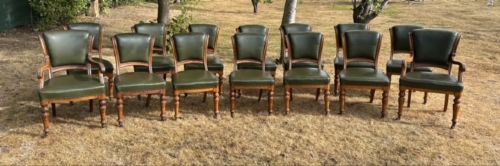
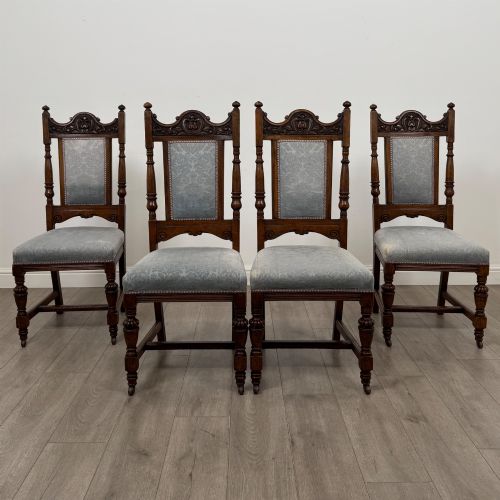
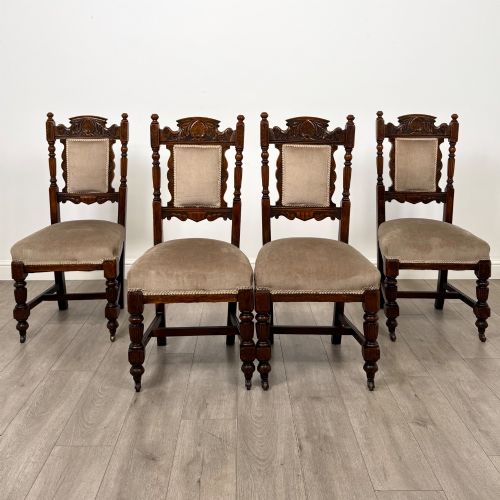
Many oak dining chairs appear in matched sets ranging from four to fourteen pieces, often dating from the Victorian and Edwardian periods. These collections suit traditional dining spaces and conference rooms.
Sets may be period originals or later matched groupings assembled to maintain uniform style and timber tone. Checking the turnings and joinery helps confirm consistency across the group.
How should I care for antique oak furniture?
Maintain antique oak by keeping chairs away from direct heat sources and dramatic humidity fluctuations, which can cause timber to split. Regular dusting with a soft, dry cloth preserves the surface.
Avoid modern silicone polishes that build up residue, opting instead for traditional beeswax applied sparingly. Leather and fabric upholstery require gentle cleaning appropriate to their specific textile type.