




Oak Rush Dining Chairs
Oak rush dining chairs combine sturdy hardwood frames with woven natural seats, bringing enduring country utility and traditional craftsmanship into modern dining spaces.
Oak Rush Dining Chairs
Oak rush dining chairs unite traditional country seating forms with durable natural materials spanning from the eighteenth century through the Arts and Crafts movement and the early twentieth century. Buyers seeking this phrase encounter formats ranging from single side chairs and carvers to large matching sets intended for farmhouse and vernacular kitchens.
The material combination typically pairs solid timber framing with woven marsh grass seating, appearing across English country, French provincial, and regional vernacular styles. Surviving examples reflect domestic utility, utilitarian design, and workshop production from periods including the Georgian era, the Victorian decades, and the 1920s and 1930s.
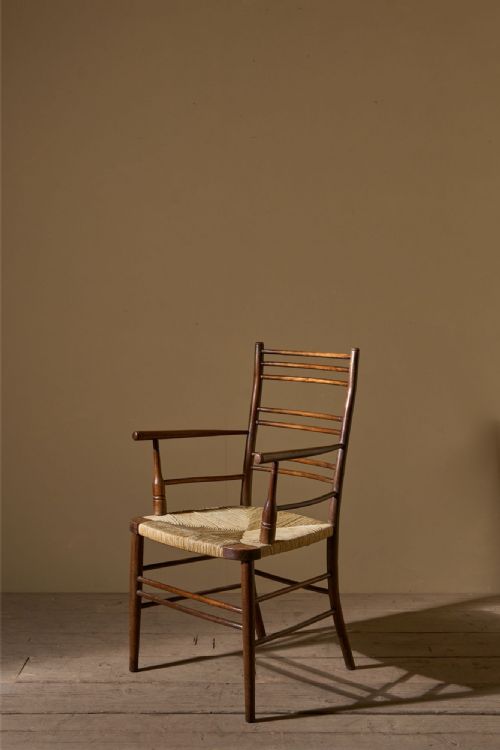
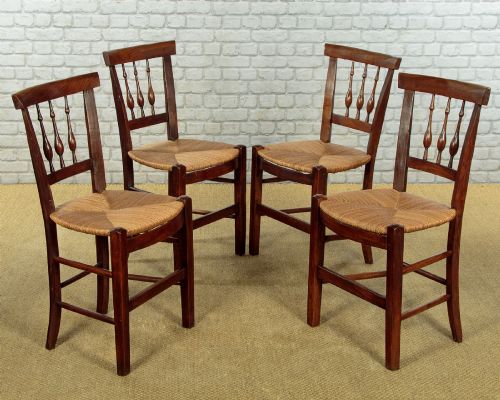
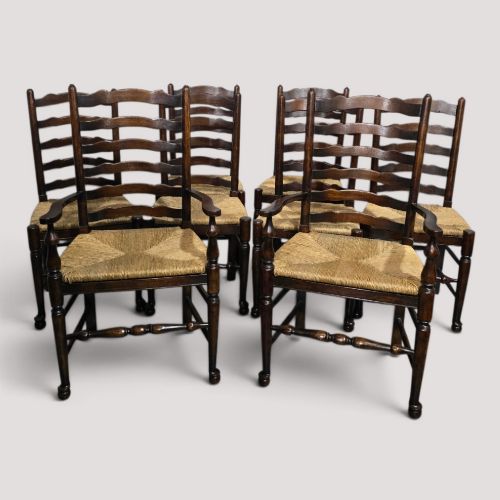
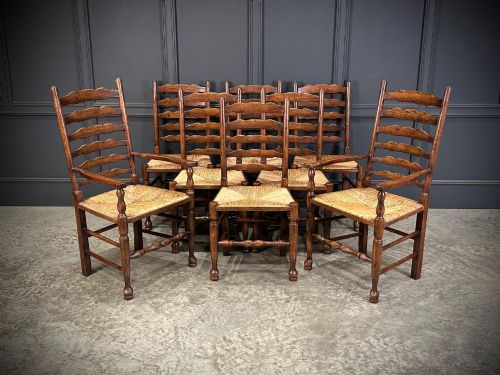
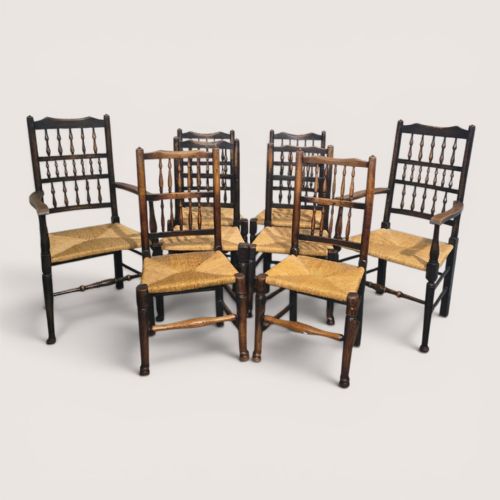
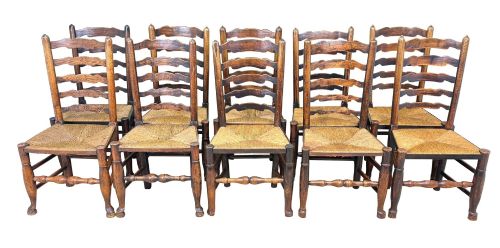
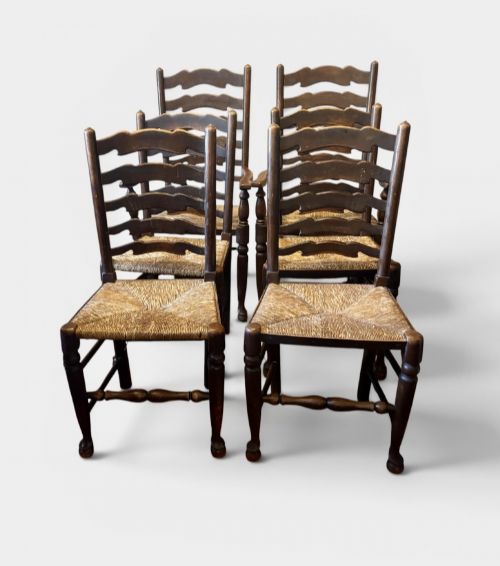
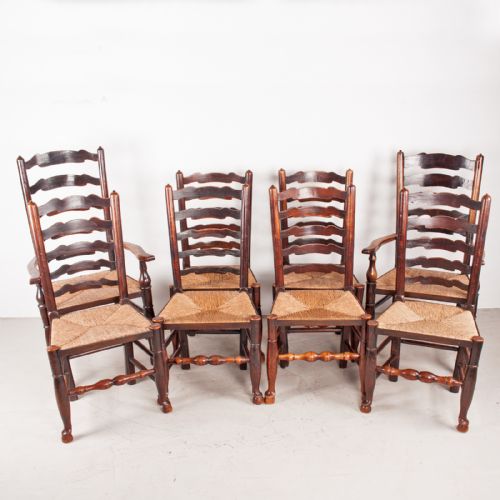
Most examples rely on ladder back or spindle back structural arrangements to support the woven seating surface. These robust dining seats serve everyday domestic dining or provide rustic character within traditional and modern interiors alike.
How they were made
Makers utilised solid timbers such as oak, elm, ash, and beech to construct the upright frames, rails, and stretchers of these chairs. Joinery relied on traditional mortise and tenon techniques to ensure rigidity across high-stress kitchen and dining environments.
Seats were hand-woven using natural rush or marsh grass twisted into cords and tightly wrapped around the seat rails in concentric patterns. Secondary woods like elm and beech frequently appeared in vernacular frames, paired with oak for primary structural components.
The inventory records regional English and French provincial forms, including ladder back, spindle back, and bar back configurations.
What varies in quality
Quality rests upon the structural integrity of the timber frame and the tightness of the woven rush. Heavier scantlings and thicker gauge oak provide superior stability, whereas thinner or replacement rails indicate lower durability.
The precision of the ladder rails, spindle turnings, and hand-woven seating density separate standard utilitarian workshop output from exceptional studio pieces. Uniformity across larger sets demonstrates the skill of the original maker.
William Morris·Dicon Nance St.Ives Studio·Lawrence Neal·Edward Gardener·Heals·Titchmarsh & Goodwin
The Oak Rush Dining Chairs Glossary
- Rush
- Marsh grass utilised for hand-weaving durable natural seating surfaces. It provides a flexible yet resilient texture that tightens as it ages.
- Ladder back
- A chair back featuring horizontal wooden slats arranged between two upright posts. This design supports the sitter and distributes weight evenly.
- Spindle back
- A chair back constructed with multiple thin, turned vertical wooden rods. These components offer lightweight strength to country and vernacular seating.
- Carver
- An armchair designed with low wooden armrests for dining table use. These pieces often matched larger sets of side chairs for the head of the table.
- Vernacular
- Regional furniture built by local craftsmen following traditional local patterns rather than formal stylistic rules. These objects prioritise practical domestic utility above fashionable ornament.
- Stretcher
- A horizontal wooden rail connecting the legs of a chair to increase structural rigidity. They prevent the frame from loosening under daily movement.
Oak Rush Dining Chairs: Frequently Asked Questions
How do I care for rush seats?
Keep natural rush seats dry and away from excessive moisture to prevent the marsh grass fibres from weakening over time. Regular gentle dusting preserves the material without degrading the woven tension.
Avoid harsh liquid cleaners, using a dry brush to clear debris from between the woven cords. Proper humidity control prevents the natural fibres from becoming brittle.
Can I mix different chair styles?
Harlequin sets combining slightly different ladder back or spindle back profiles offer an authentic historical approach to country dining arrangements. Nineteenth-century kitchens frequently accumulated seating organically over many years.
Matching seat heights and consistent timber tones help unify mixed groupings around a single dining table. Similar slat counts or wood grains maintain visual balance across the collection.
What is a carver chair?
A carver is an armchair equipped with low wooden armrests designed to sit at the head or foot of a dining table. These pieces paired with matching side chairs to complete large country dining sets.
They provided additional comfort for the head of the household while maintaining the same ladder back or spindle back construction as the surrounding chairs.
How do I date oak rush chairs?
Dating relies on examining the turning style of the legs, the profile of the ladder slats, and the tool marks left by early woodworking methods. Georgian and early nineteenth-century pieces often feature heavier hand-turned members.
Twentieth-century Arts and Crafts revivals exhibit cleaner vernacular lines and documented workshop stamps. Comparing joint construction methods helps distinguish older hand-built frames from later reproductions.