


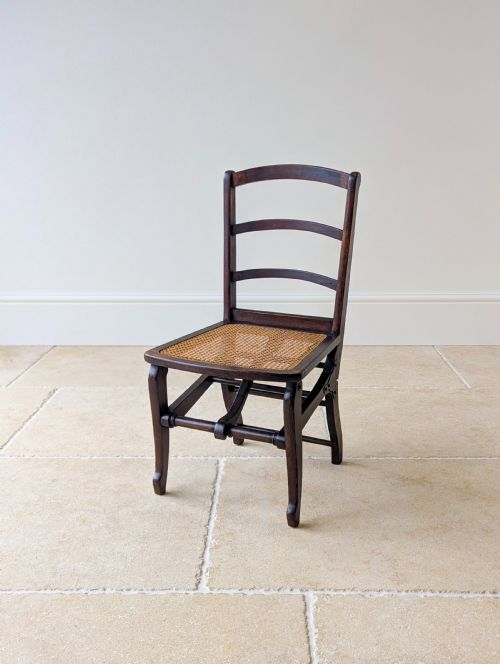


Ladder Back Side Chairs
Ladder back side chairs bring centuries of practical domestic seating into modern rooms through their distinctive horizontal slats.
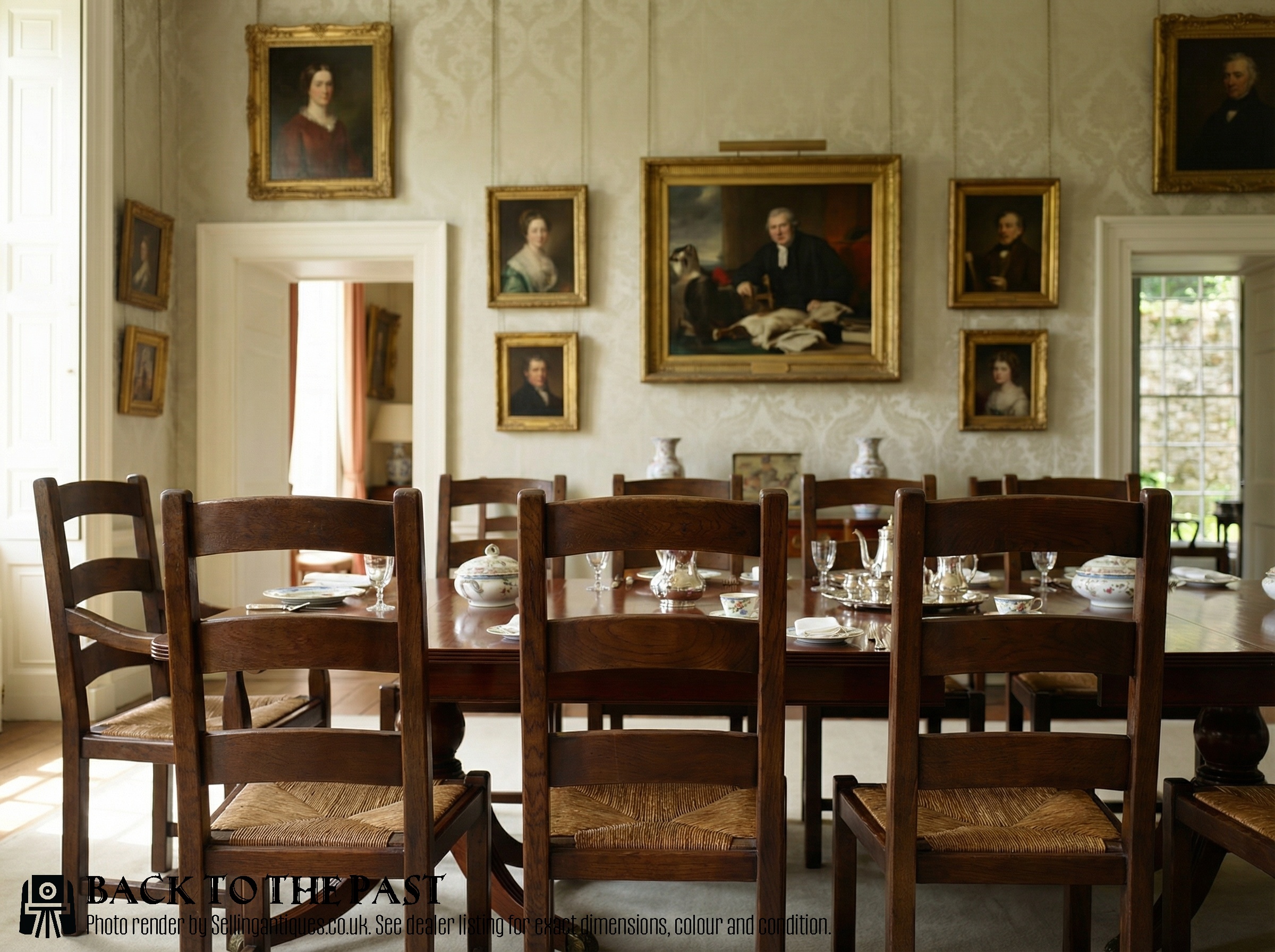
Ladder Back Side Chairs
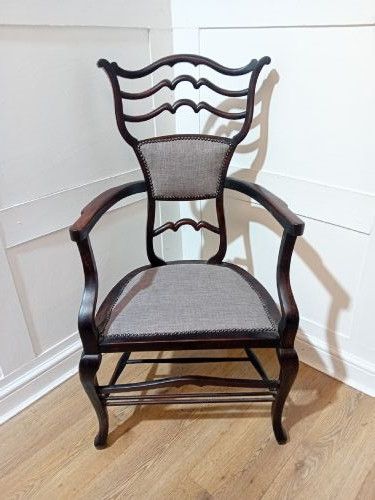
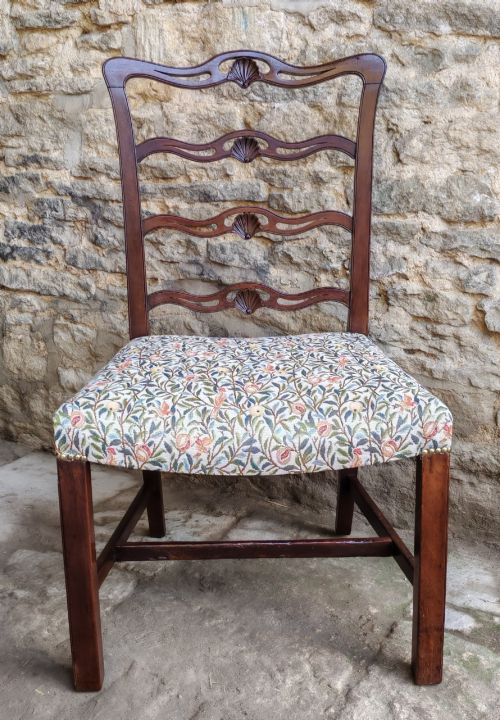
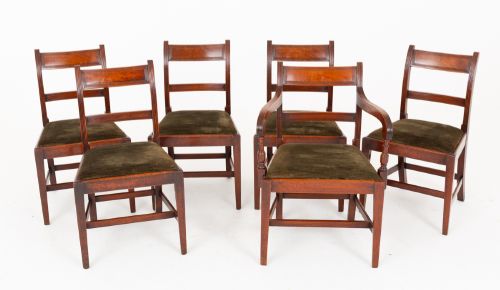
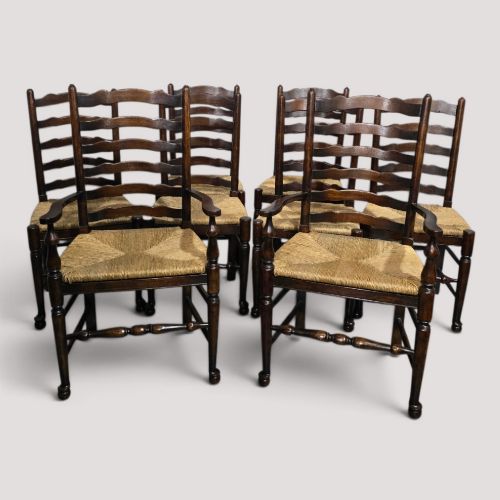
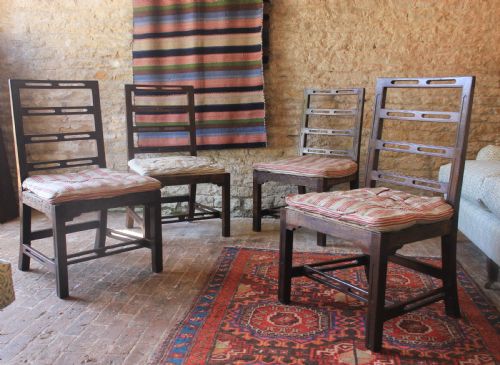
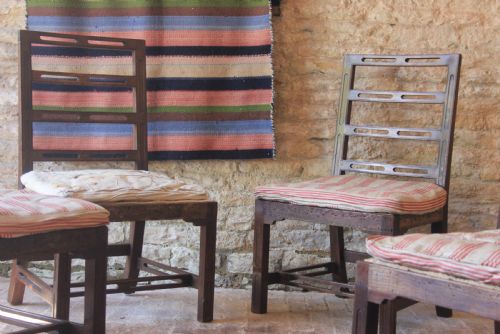
Ladder back side chairs form a distinct category of domestic seating defined by horizontal rails set between the upright posts of the back frame. Buyers seeking ladder back side chairs encounter forms originating across the eighteenth, nineteenth, and early twentieth centuries, spanning formal mahogany dining sets to vernacular country seating in oak, ash, and elm.
The versions most commonly met on this page range from robust oak and elm farmhouse chairs to refined mahogany examples influenced by Georgian and Chippendale aesthetics. Makers across England, Ireland, France, Sweden, and America produced these seats for kitchens, dining rooms, and studies, utilising local hardwoods and traditional construction methods.
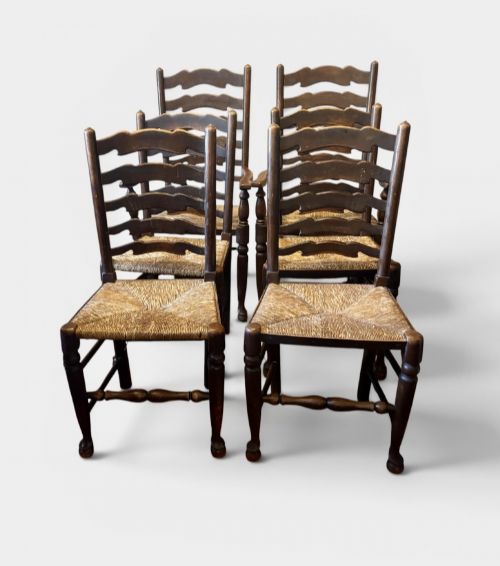
Beyond standard single chairs, the evidence shows sets numbering from pairs up to twelve, alongside desk chairs and folding campaign formats. Regional variations appear clearly, from Dutch ash designs and Swedish painted frames to Irish mahogany pieces and Arts and Crafts interpretations.
How they were made
Makers constructed these chairs primarily using solid hardwoods including oak, mahogany, ash, elm, and hardwood variants, selected for regional availability and structural strength. Joinery relied on turned posts and stretcher rails pegged together to withstand daily domestic use.
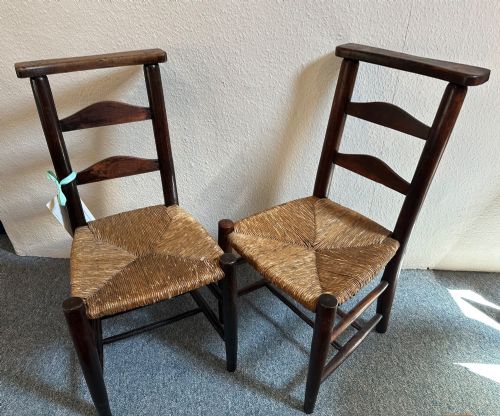
Seats utilised woven rush, plain timber panels, or upholstered pads finished in fabric, velvet, or leather, secured directly to the frame or drop-in seat rails. Surface finishes ranged from plain waxed hardwood to polished mahogany and painted or applied surface treatments.
Period examples span from the eighteenth century through the Georgian, Victorian, and Arts and Crafts eras.
What varies in quality
Quality in these chairs rests upon the selection of timber and the precision of the joinery connecting the back rails to the upright posts. Heavier solid construction and balanced proportions distinguish robust dining seating from lighter utility pieces.
The refinement of the carving on the horizontal slats and the integrity of original rush or upholstered seats determine the overall standard. Greater fidelity to period design styles, such as Georgian or Chippendale forms, marks the distinction between standard provincial utility seating and finer workshop production.
Lawrence Neal·Edward Gardener·Heals
The Ladder Back Side Chairs Glossary
- Ladder back
- A chair back featuring multiple horizontal wooden slats or rails positioned between the vertical rear stiles. This traditional design provides sturdy back support.
- Rush seat
- A seating surface tightly woven from dried marsh grass or rushes around a wooden frame. This technique is frequently found on country and Arts and Crafts chairs.
- Stile
- The upright vertical side post forming the main structural support of a chair back. Stiles run from the top rail down to the seat or floor.
- Campaign chair
- A portable folding chair originally designed for military officers on active service. These pieces incorporate clever hinges and joints for compact transport.
Ladder Back Side Chairs: Frequently Asked Questions
How were rush seats made?
Makers wove dried marsh grasses tightly around an internal wooden frame to create a resilient, textured seating surface. This traditional method provided flexibility and durability for everyday use.
Over time, these woven surfaces acquire a smooth patina from use while maintaining their underlying tension.
Are these chairs suitable for daily dining?
Solid hardwood construction and supportive horizontal slats make these chairs well-suited for regular dining use. Many historical examples were built specifically for heavy kitchen and dining environments.
Matching sets allow buyers to furnish larger dining tables with uniform historical seating.
How do I identify a Georgian chair?
Georgian examples typically feature refined mahogany frames with shaped slats and balanced proportions. They reflect the formal design standards of the eighteenth century.
Cabinetmakers of this period focused on elegant lines and precise joinery rather than rustic simplicity.
What is an Arts and Crafts chair?
Arts and Crafts chairs emphasise honest construction, visible materials, and traditional handcraft techniques. They often showcase plain oak or elm frames paired with woven rush seats.
This movement rejected industrial mass production in favor of simpler, vernacular forms.