
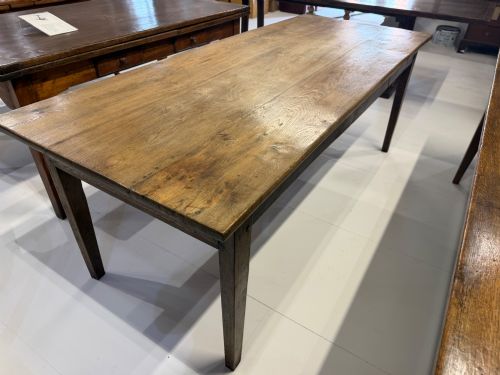
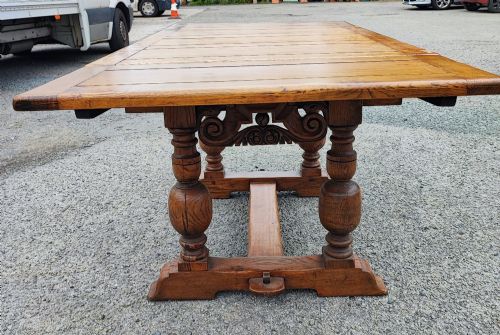
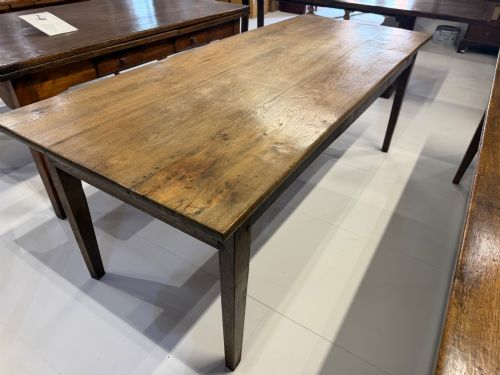
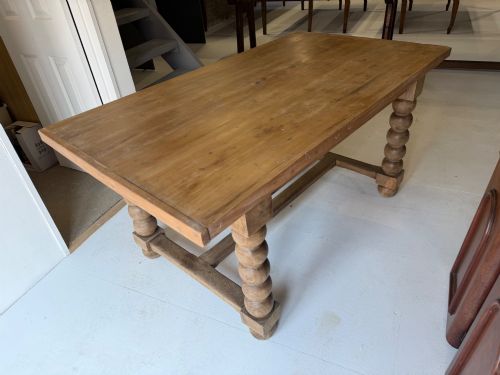

Traditional Kitchen Dining Table
A traditional kitchen dining table anchors the room with sturdy timber and honest utility, offering a gathering place for daily meals.

Traditional Kitchen Dining Table
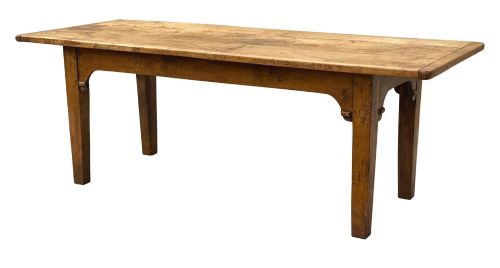
A traditional kitchen dining table is a functional centrepiece designed for communal eating and domestic work, drawing on centuries of domestic craft. These pieces serve as the heart of the kitchen or dining space, constructed to endure daily use through robust timber frames and straightforward joinery.
The versions most commonly met on this page span the eighteenth, nineteenth, and early twentieth centuries, reflecting periods such as the Victorian and Edwardian eras. Buyers encounter formats ranging from simple farmhouse boards to substantial refectory tables and extendable designs.
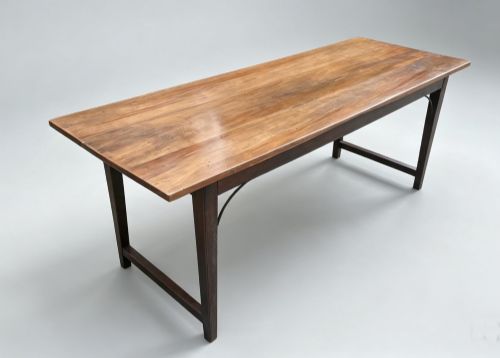
Origin influences form significantly, with English styles favouring oak and pine alongside French provincial pieces utilising fruitwood and sycamore. Regional variations dictate leg shapes, from tapered and bobbin supports to shaped trestle ends.
Materials and Construction Techniques
Solid timber forms the foundation of every traditional kitchen dining table, with oak, pine, beech, and fruitwood dominating the construction. Artisans selected these woods for density and grain durability, often pairing durable oak tops with softer beech or pine bases.
Construction relies on traditional joinery methods such as mortise and tenon frames, single plank surfaces, and mechanical draw leaf extensions. Wrought iron occasionally appears in structural braces or hardware, supporting heavy extension mechanisms and refectory frames.
Several tables show stubborn ink spots left by nineteenth-century ledger keepers who worked late into the evening by candlelight.
Assessing Quality and Build
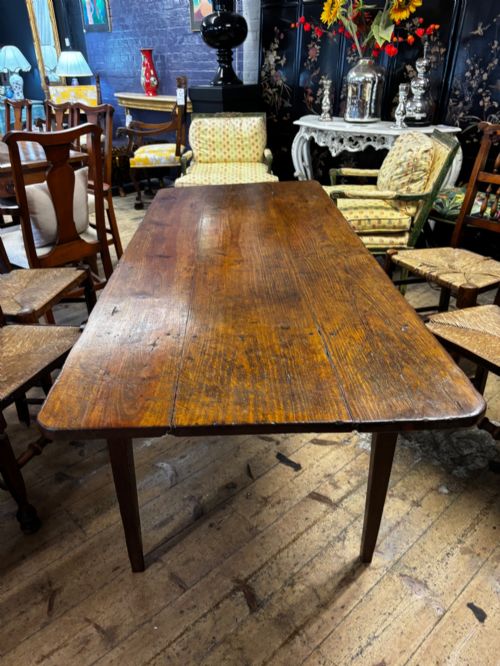
Quality separates through timber selection and the integrity of the primary working surface, particularly whether a top uses a single wide plank or multiple joined boards. Superior examples display tight, stable grain patterns in oak, sycamore, or fruitwood that withstand seasonal humidity shifts without excessive warping.
Joinery execution dictates longevity, distinguishing tables assembled with pegged mortise and tenon joints from those relying on basic fasteners. The sophistication of mechanisms, such as smooth-running draw leaves or solid refectory trestles, marks the distinction between standard utility furniture and finer craftsmanship.
The Traditional Kitchen Dining Table Glossary
- Refectory table
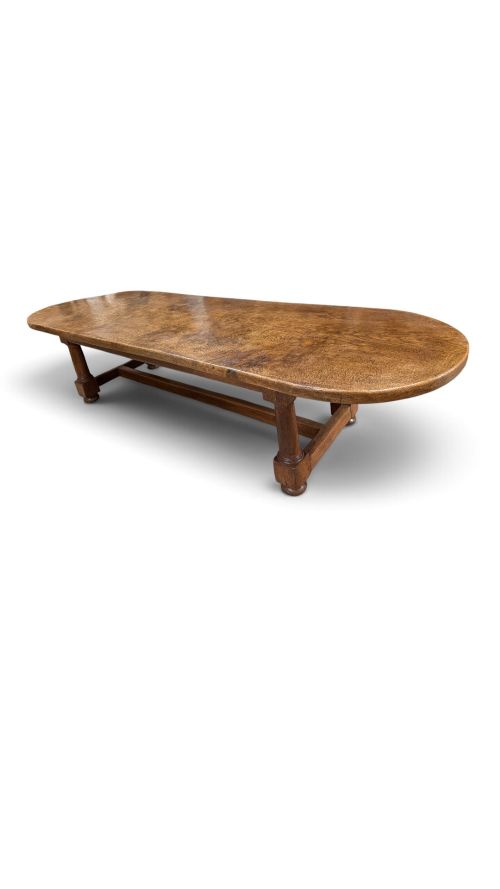
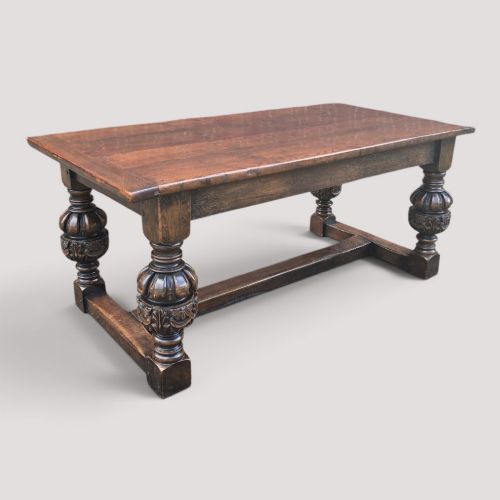
- A long, narrow dining table traditionally used in monasteries and large halls, characterised by substantial legs connected by a central longitudinal stretcher. This format provides immense stability for large seating capacities.
- Draw leaf table
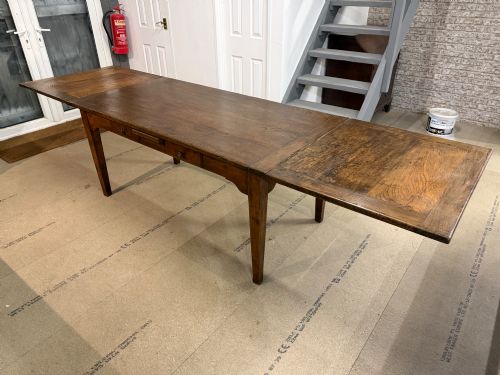
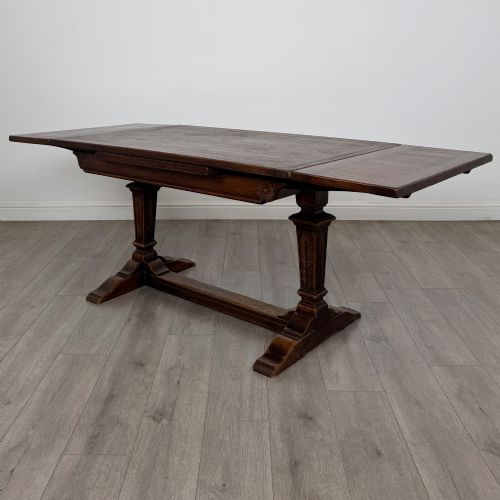
- An expandable table featuring two hidden leaves stored beneath the main top that pull out from the ends to extend the surface area. It allows the table length to adjust quickly for guests.
- Single plank
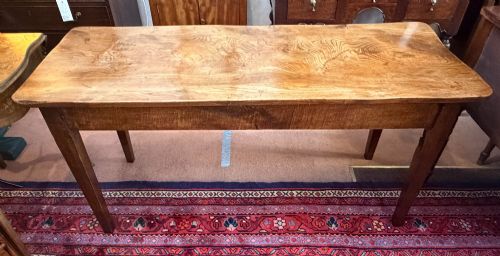
- A tabletop constructed from one wide piece of timber sawn from a single tree trunk. This feature indicates substantial age and a mature tree.
- Bobbin leg
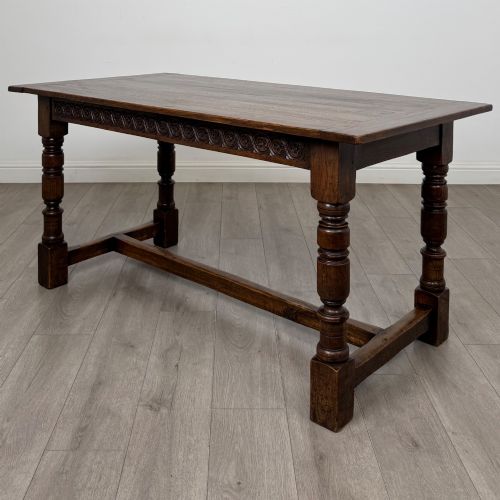
- A turned furniture leg shaped with a series of rounded, spool-like swellings carved along its length. It adds decorative texture to seventeenth and nineteenth-century framework.
- Fruitwood
- Timber sourced from fruit-bearing trees such as cherry, pear, or apple, prized for a fine, warm grain and smooth texture. Cabinetmakers utilised it extensively in regional French provincial furniture.
Traditional Kitchen Dining Table: Frequently Asked Questions
How do I seat eight people?
Look for refectory tables or extendable draw leaf designs that measure sufficient length to accommodate chairs along both sides and ends. Tables featuring inset trestle bases offer more legroom for diners.
Check the clearance beneath the apron or skirts to ensure chair arms and seats slide underneath comfortably.
Are pine tables durable enough?
Pine provides a resilient surface that absorbs the marks of daily domestic life while maintaining structural integrity. Its softer composition develops a distinct patina through regular use.
Properly waxed or oiled pine resists everyday moisture and cleans easily with a damp cloth.
What is a draw leaf table?
A draw leaf table incorporates two auxiliary leaves positioned beneath the main central top. When guests arrive, these leaves pull outwards and drop into alignment to lengthen the surface.
This mechanism expands the seating capacity without requiring separate storage leaves kept elsewhere.
How do I care for an oak top?
Maintain finished oak surfaces by applying beeswax or mineral oil periodically to nourish the grain and repel liquid spills. Avoid placing hot dishes directly onto the bare wood to prevent heat rings.
Clean surfaces using a soft cloth and mild soap solution, avoiding harsh chemical sprays that strip historic finishes.