
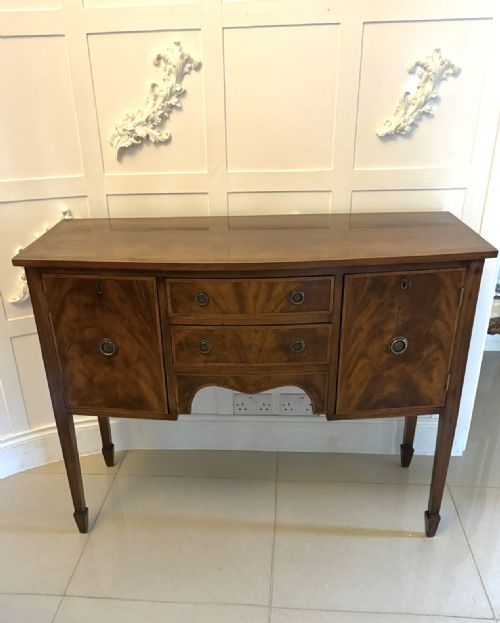


Traditional Dining Room Credenza
A traditional dining room credenza provides a sturdy and handsome surface for serving food and storing silver.
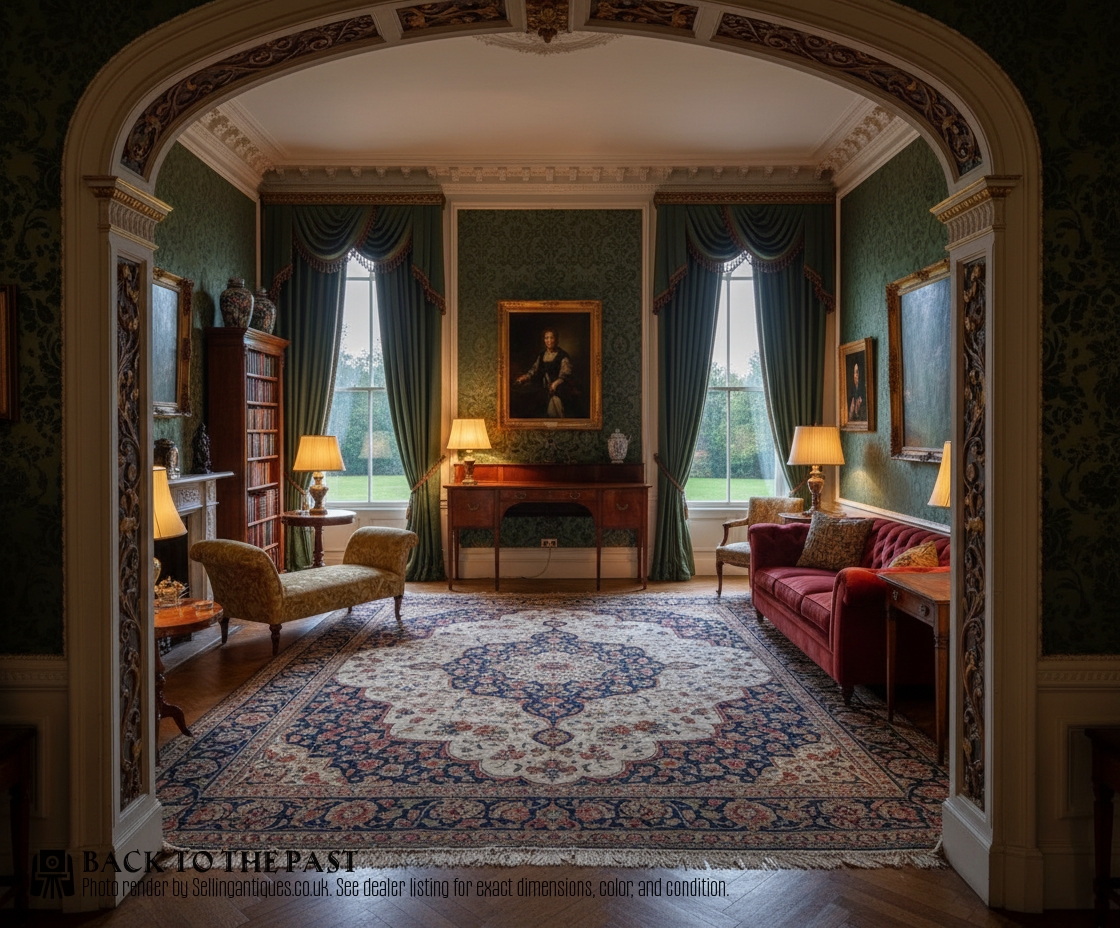
Traditional Dining Room Credenza
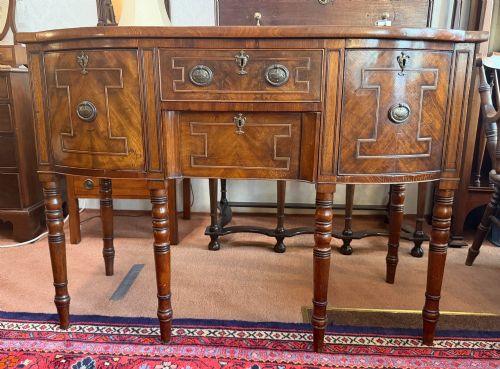
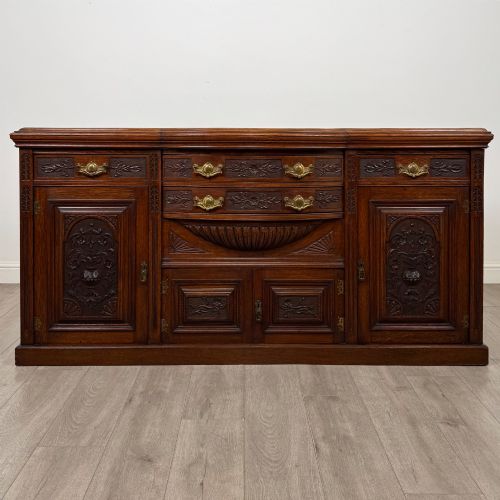
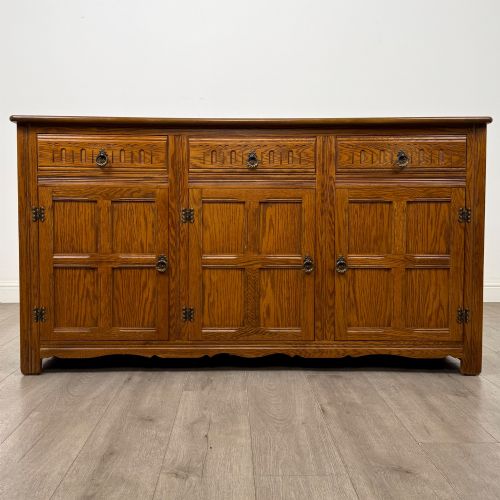
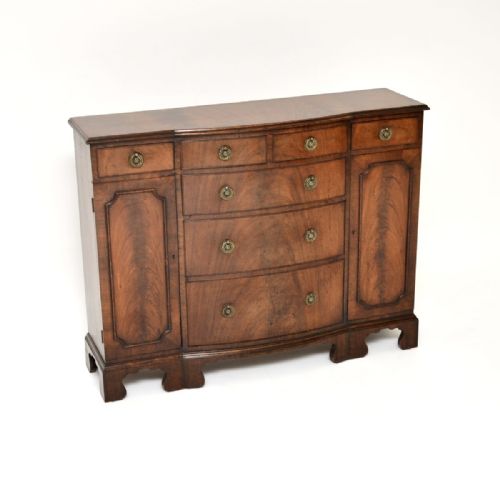
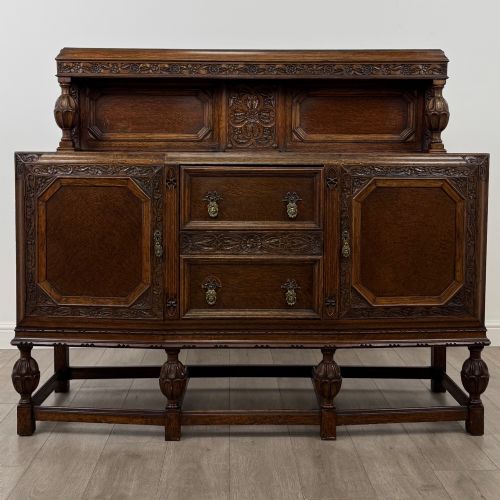
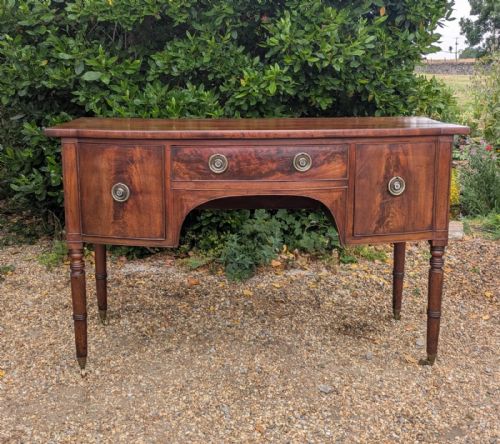
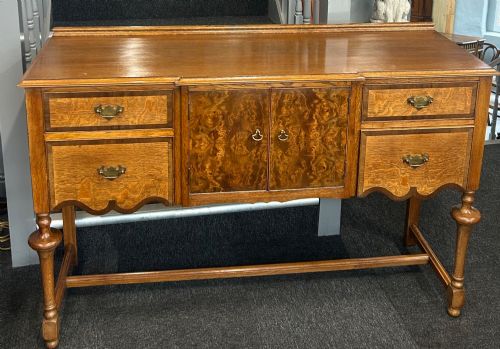
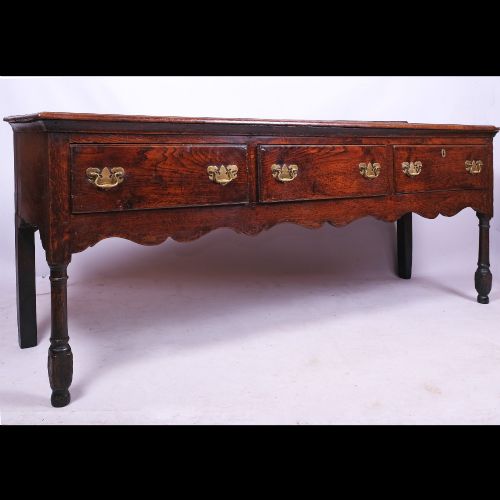
When searching for a traditional dining room credenza, buyers encounter a variety of substantial timber serving furniture originating from the eighteenth, nineteenth, and early twentieth centuries. These pieces encompass forms such as sideboards, chiffoniers, buffet servers, and dresser bases designed to anchor a dining room.
The selection on this page relies heavily on mahogany, oak, and walnut constructions, ranging from compact bow-front shapes to large breakfront pedestals. Examples span distinct periods including the Georgian, Regency, Victorian, and Edwardian eras, offering varied storage capacities from three-door cupboards to fitted cellarets.
Materials and construction techniques
Cabinet makers utilised dense native and imported timbers, notably solid mahogany and oak, often enhancing surfaces with figured mahogany veneer, flame mahogany veneer, or burr walnut. These primary woods provided the structural integrity required for heavy serving furniture while allowing for decorative grain patterns.
Detailing frequently involved brass hardware, glass panels, and carved motifs executed during the Victorian and Edwardian periods. Joinery techniques ensured sturdy pedestals, bow-fronts, and breakfront configurations capable of withstanding daily dining room use.
Listings span the 18th, 19th, and early 20th centuries, featuring solid mahogany, oak, burr walnut, and flame mahogany veneer.
Quality variations across periods
The distinction between standard examples and superior pieces rests on the choice of timber and the precision of the cabinet work. Finely figured veneers, intricate carvings, and well-matched drawer linings indicate a higher standard of manufacture.
Proportion and architectural balance also separate workshops, as seen in the careful execution of bow-fronts, breakfronts, and integrated mirror backs. Superior items retain original brass fittings and exhibit smooth, unwarped operation in doors and drawers.
Maple & Co
The Traditional Dining Room Credenza Glossary
- Breakfront
- A cabinet design where the central section projects forward from the flanking outer sections. This configuration adds architectural depth to large dining room servers.
- Pedestal sideboard
- A heavy dining room piece featuring a central serving surface flanked by two floor-standing cupboards or pedestals. These often incorporate internal cellaret drawers for bottles.
- Chiffonier
- A low sideboard or cabinet, typically Victorian, frequently fitted with a shelfed mirror back for displaying glassware and china. It serves as a more compact alternative to the formal dining room sideboard.
- Dresser base
- An early form of heavy wooden storage furniture featuring rows of drawers above lower cupboards or open racks. These pieces originate predominantly from the oak and walnut periods.
- Flame mahogany veneer
- Thin slices of mahogany cut from the branch junction to produce a distinctive flickering flame pattern. Cabinet makers applied these to drawer fronts and doors for visual richness.
Traditional Dining Room Credenza: Frequently Asked Questions
What is a traditional dining room credenza used for?
These pieces serve as functional dining room furniture designed for holding serving dishes, cutlery, and glassware during meals. They also provide a solid top surface for laying out food and drinks.
Historically, larger variations included internal compartments to store wine bottles and heavy porcelain. Today, they remain practical storage items that anchor the design of a traditional dining room.
How do I distinguish a Victorian sideboard from a Georgian one?
Georgian pieces generally display lighter proportions, simpler bracket feet, and restrained mahogany veneers with subtle stringing lines. They date from the eighteenth and very early nineteenth centuries.
Victorian examples tend to be heavier and more heavily carved, often featuring large pedestals, gallery backs, or mirrored superstructures. They frequently utilise darker figured mahogany or oak timbers.
What is the difference between a sideboard and a chiffonier?
A sideboard is typically a long, substantial piece built explicitly for dining rooms to store heavy serving platters, silver, and wine. They often feature multiple doors and drawers in a low, wide format.
A chiffonier is generally smaller and more compact, frequently incorporating a raised mirror back with display shelves. They originated as versatile living and dining room cabinets for smaller spaces.
How do I clean and maintain antique wood furniture?
Maintain the finish by dusting regularly with a soft, dry cloth and avoiding modern silicone-based polishes that build up over time. Natural beeswax applied sparingly helps nourish dry timber and preserve the patina.
Keep wooden furniture away from direct heat sources and strong sunlight to prevent the timber from splitting or the veneer from lifting. Consistent indoor humidity levels protect both the structural joints and the surface polish.