
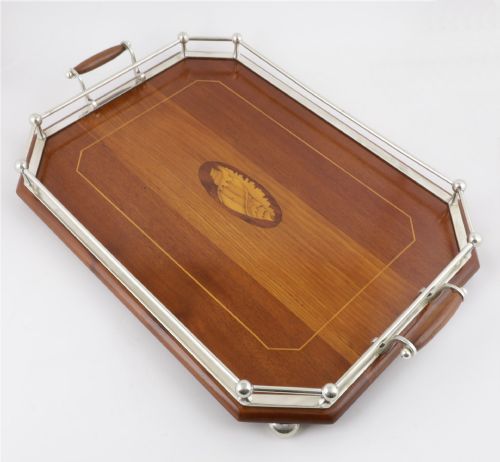
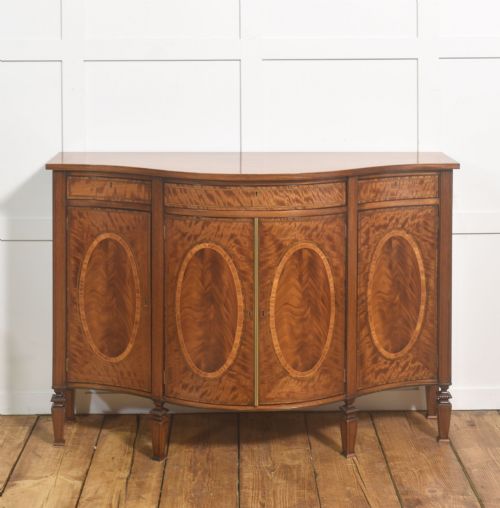
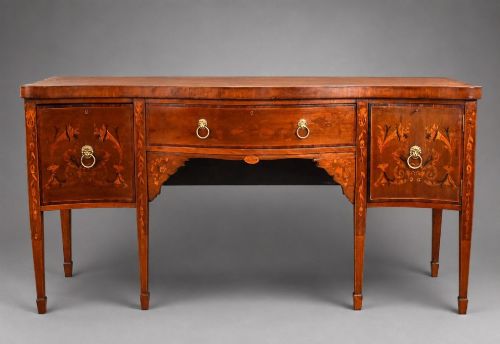
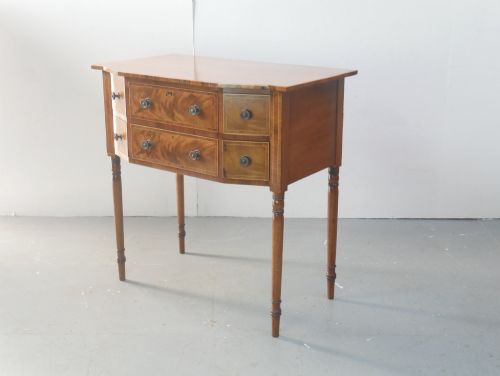


Edwardian Inlaid Server
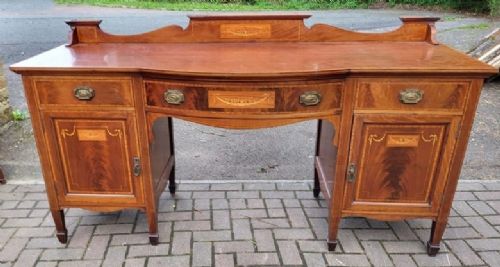
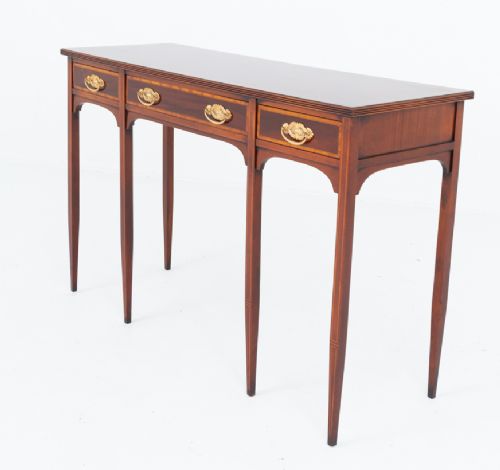
An edwardian inlaid server brings refined timber and crisp stringing into a dining room, offering both surface space and discreet storage.
Edwardian Inlaid Server
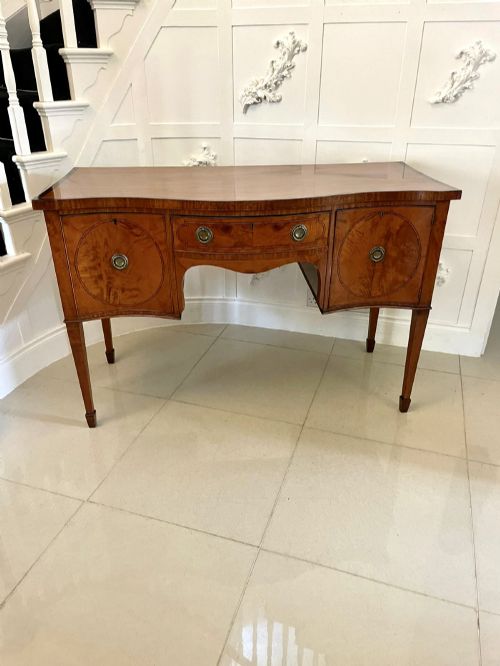
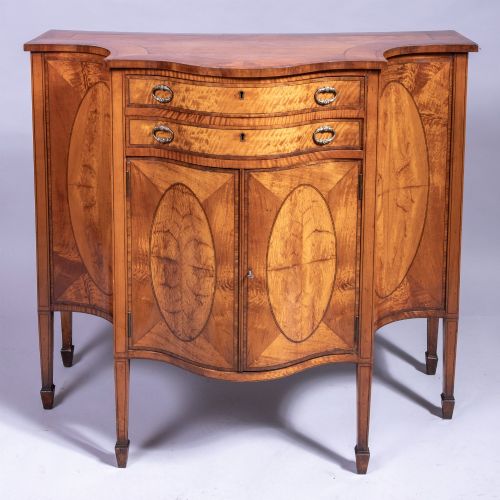
When searching for an edwardian inlaid server, you are looking at substantial dining furniture designed for serving food and displaying silver or glass. The pieces on this page span the Edwardian period alongside earlier Victorian, George III, and Regency eras, reflecting a strong revival of Sheraton styles.
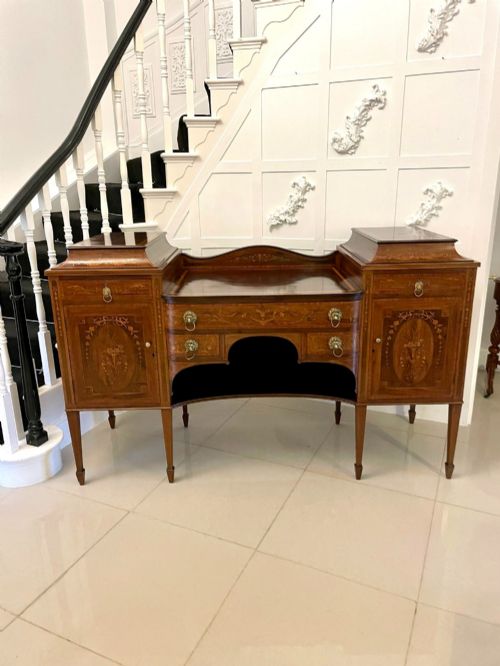
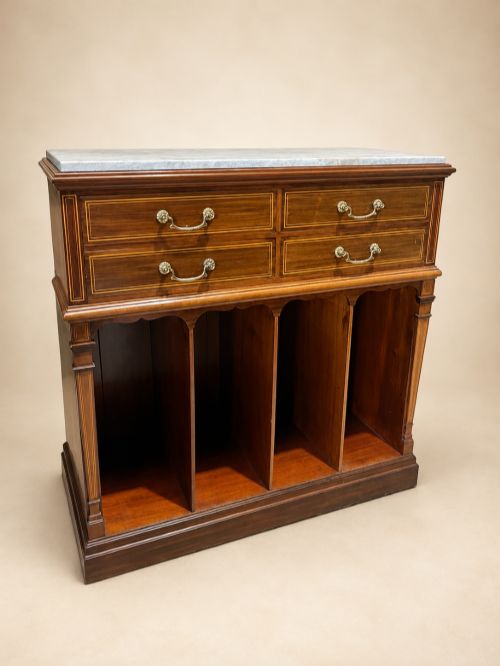
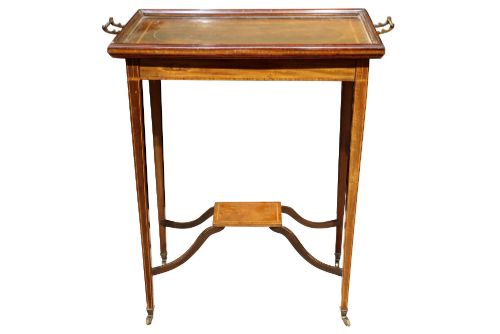
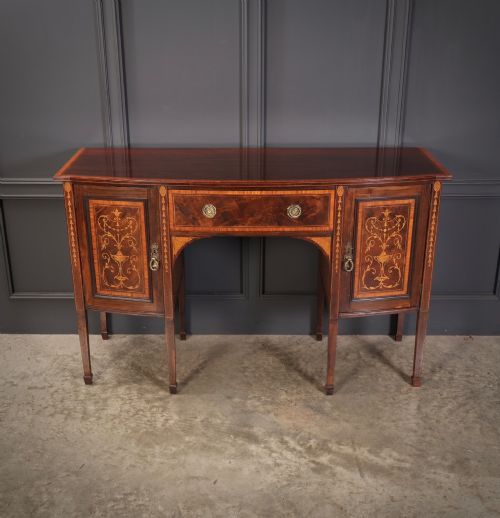
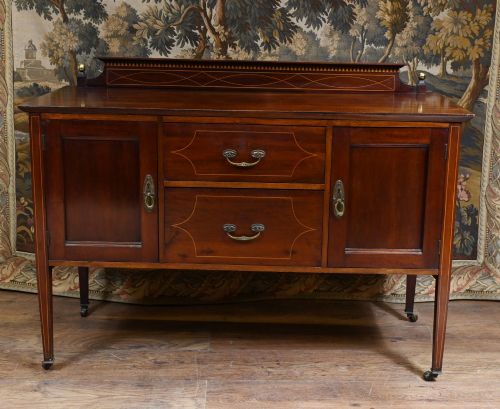
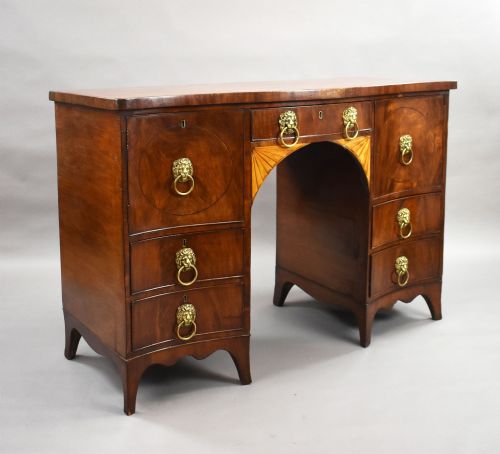
You will most commonly meet sideboards and servers constructed from mahogany, often enhanced with satinwood or boxwood inlay. These items range from neat side cabinets and occasional tables to large serpentine and bow-fronted sideboards.
Origins include specific London makers like Hewetsons alongside West Country workshops such as Shapland and Petter. The unifying thread is the use of contrasting wood inlay and formal proportions derived from eighteenth-century design vocabulary.
How they were made
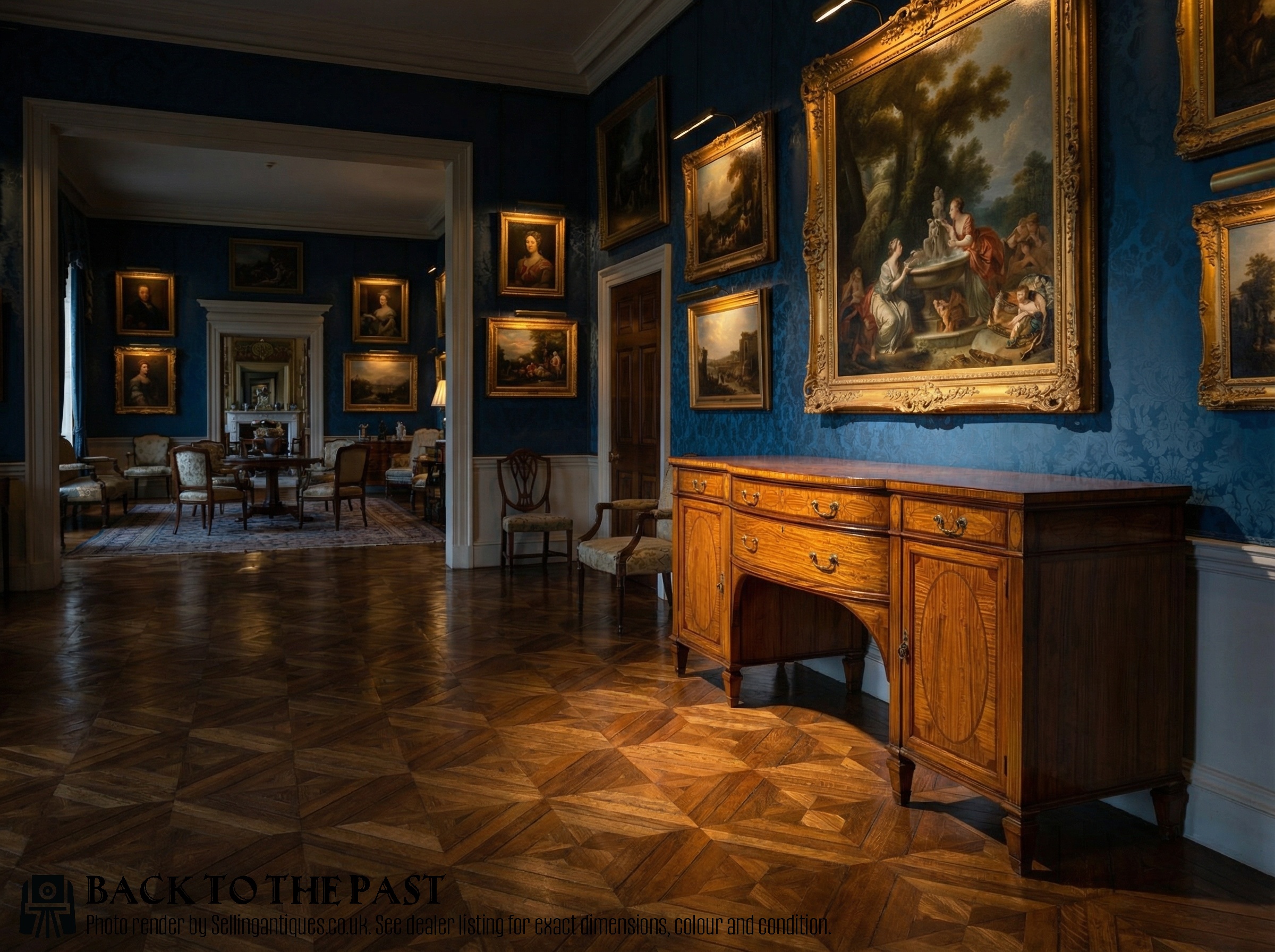
Makers built the primary carcasses of these servers using solid mahogany and flame mahogany veneers, selected for deep grain patterns and warm colour. Workshops applied contrasting stringing and banding in lighter timbers like satinwood and boxwood to define edges, panels, and drawer fronts.
Marquetry techniques added pictorial or floral motifs into the timber surfaces, requiring precise hand-cutting of different veneers. Brass hardware, such as ring pulls and escutcheons, completed the construction alongside occasional marble tops or silver-plated galleries.
What varies in quality
Quality in these servers rests on the crispness of the cabinetwork and the precision of the wood inlay. Superior examples display tightly fitted serpentine or bow fronts where the grain lines match symmetrically across the drawers and doors.
The choice of secondary timbers and the depth of the marquetry work separate standard production from exceptional pieces. Finer items incorporate nuanced crossbanding and substantial brass fittings rather than stamped or superficial decoration.
Hewetsons London·Shapland and Petter
The Edwardian Inlaid Server Glossary
- Serpentine
- A curved shape featuring a convex centre flanked by concave curves, creating a fluid line across the front of a sideboard.
- Crossbanding
- A strip of veneer applied perpendicularly to the main grain along the border of a tabletop or drawer front to create a framed effect.
- Marquetry
- Decorative patterns formed by fitting together thin slices of various coloured woods and shells into a prepared surface.
- Bow-front
- A convex, outward-curving cabinet front that became popular during the late eighteenth century and saw frequent revival in later periods.
- Stringing
- Thin, narrow lines of contrasting wood inlaid into channels cut into the surface of furniture to form delicate borders.
Edwardian Inlaid Server: Frequently Asked Questions
What is an edwardian inlaid server used for?
These servers function primarily as dining room furniture designed to hold serving dishes, cutlery, and glassware during meals. They provide a broad surface top and cabinet storage beneath.
Historically, households relied on them to stage food before it reached the dining table, keeping the main space uncluttered.
How do I identify a sheraton revival piece?
Sheraton revival items borrow the classical urns, bellflowers, and straight tapered legs popularized in the late eighteenth century. Makers working around nineteen hundred reproduced these light, symmetrical proportions using modern machinery and traditional hand veneers.
Look for delicate satinwood inlay and mahogany frames that echo Georgian elegance without matching the exact eighteenth-century construction methods.
Where should I place a server in my home?
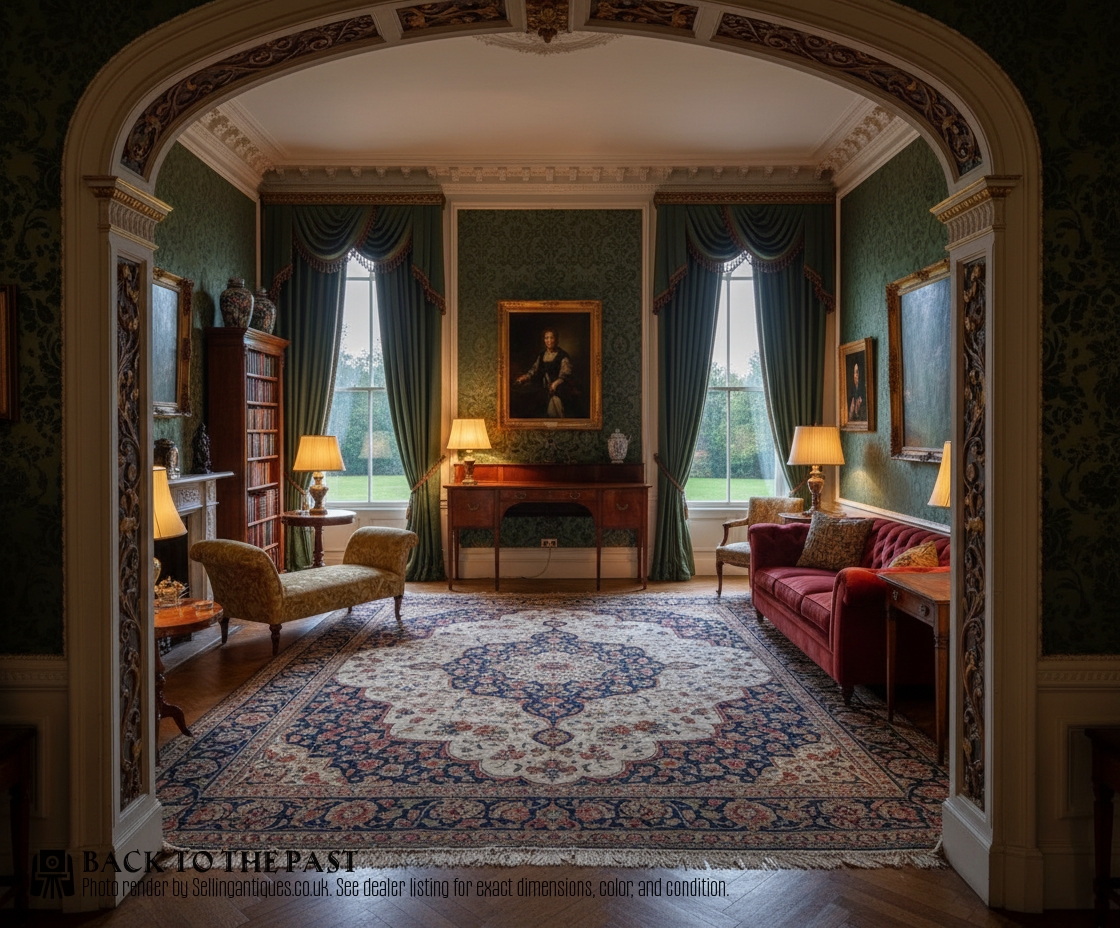
A server fits naturally against the wall of a dining room, hallway, or spacious living area where surface display is useful. Their relatively shallow depth allows them to sit comfortably in rooms without obstructing walkways.
Position them away from direct heat sources and strong sunlight to protect the polished mahogany and delicate satinwood veneers from fading or drying out.
What is the difference between a sideboard and a server?
While both terms describe dining room storage furniture, a server often denotes a slightly more compact or lighter form intended strictly for serving food. Sideboards frequently include larger cupboard spaces and heavier pedestals.
In historical listings, these terms often overlap, describing similar mahogany and inlaid forms built across the nineteenth and early twentieth centuries.