

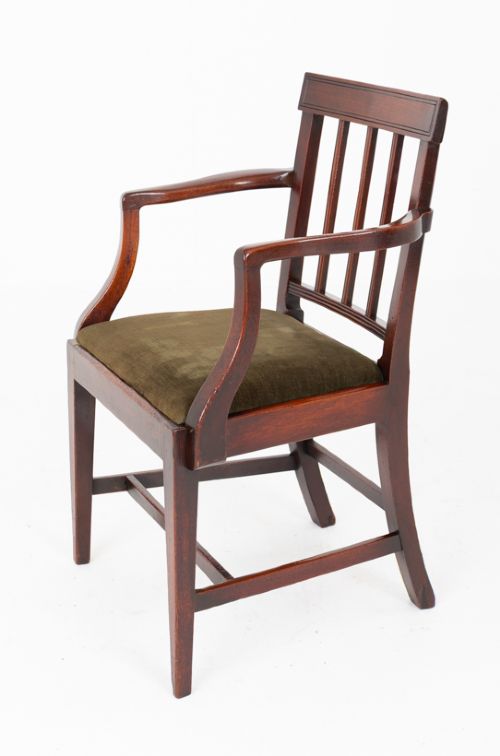
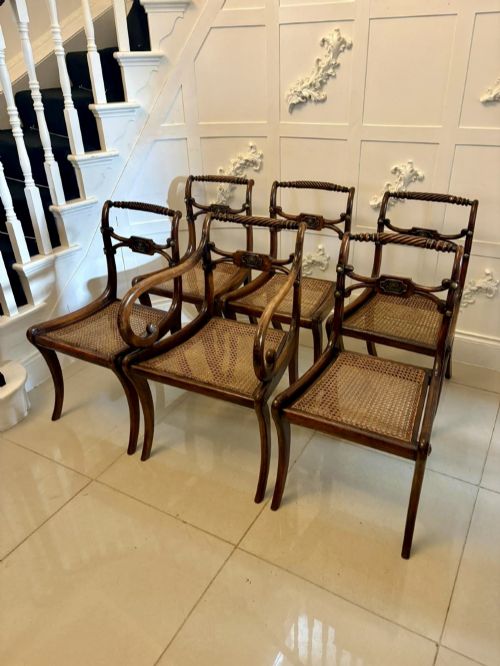
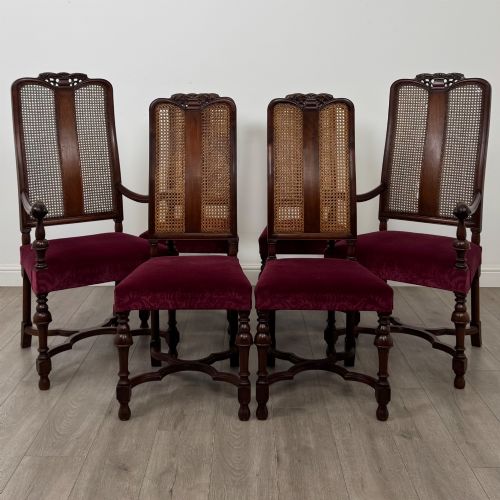
Traditional Carver Dining Chair
A traditional carver dining chair brings substance and architectural presence to the table, offering the comfort of arm supports that standard dining seats lack.
Traditional Carver Dining Chair
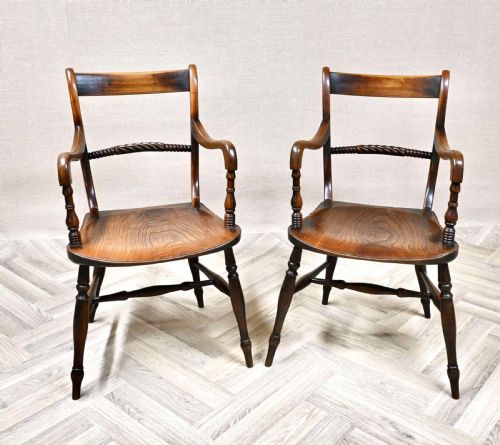
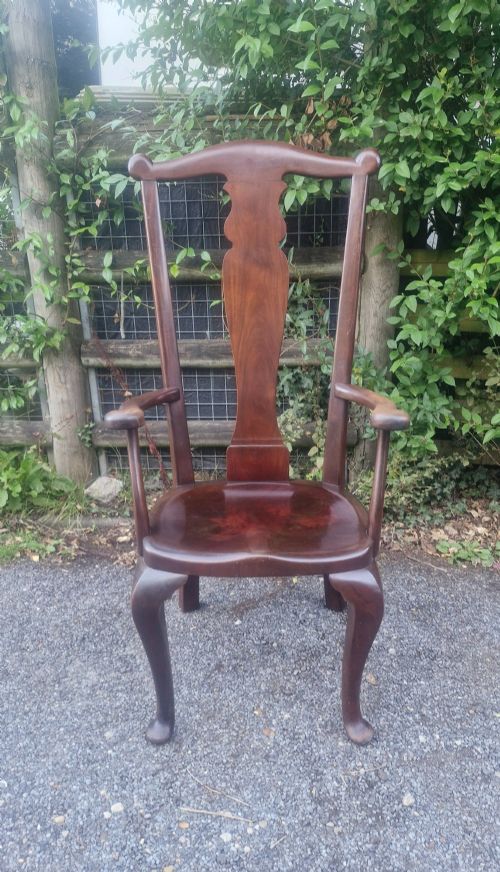
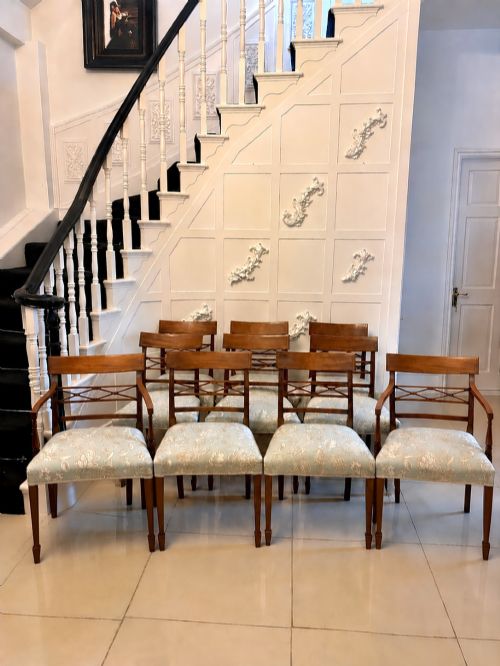
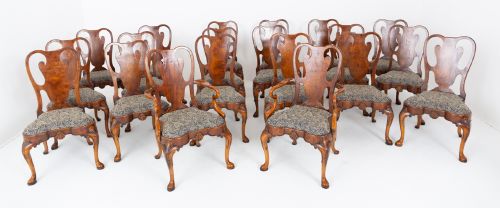
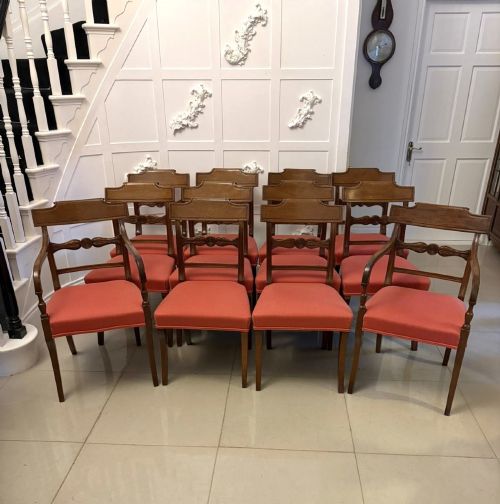
A traditional carver dining chair is a seated armchair designed to sit at the head of a dining table or accompany a matching suite of dining chairs. The pieces found here span from the eighteenth century through the Georgian, Victorian, and Edwardian periods up to the early twentieth century.
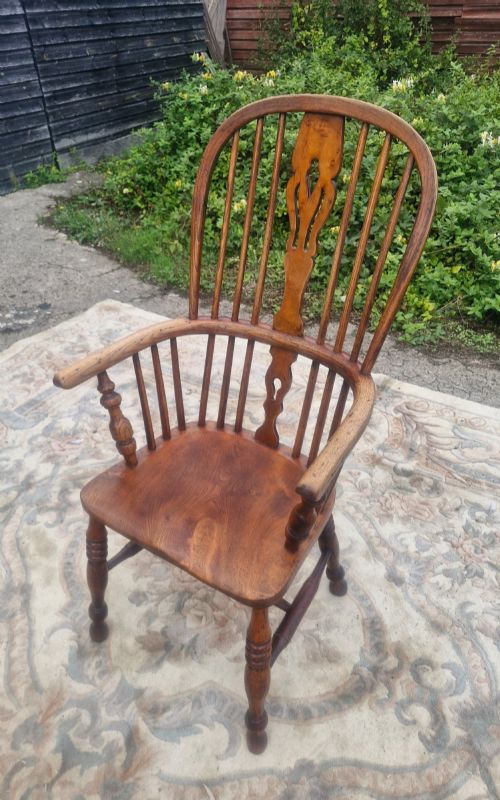
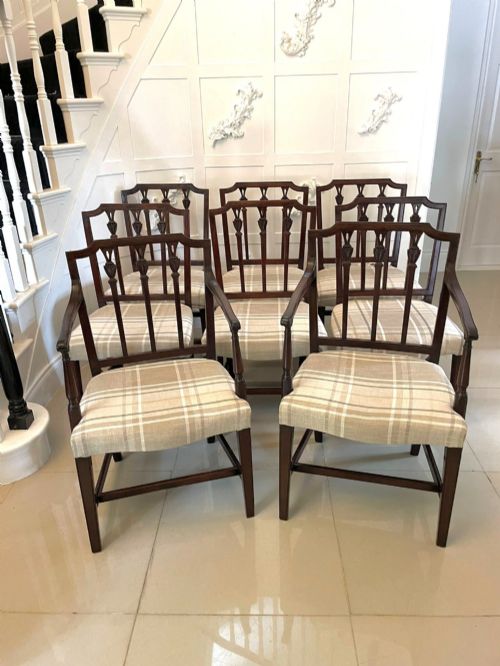
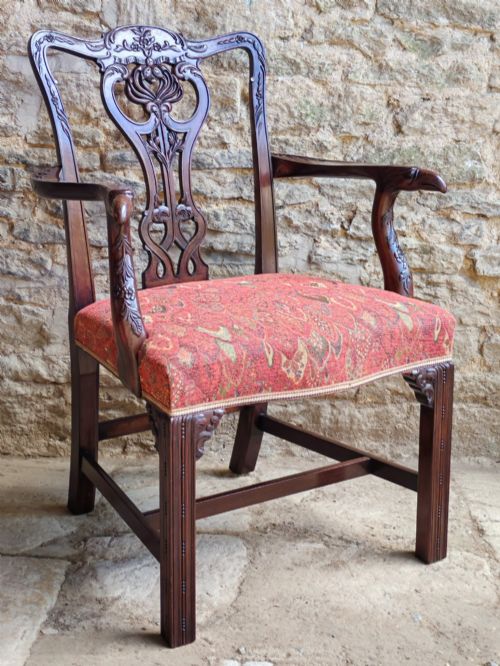
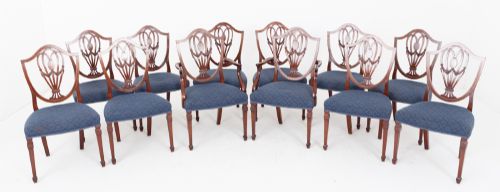
The forms encompass formal revival styles including Chippendale, Hepplewhite, and Regency, alongside vernacular country seating such as Windsor and ladder-back chairs. Mahogany and oak dominate the selection, complemented by ash, elm, and fruitwood.
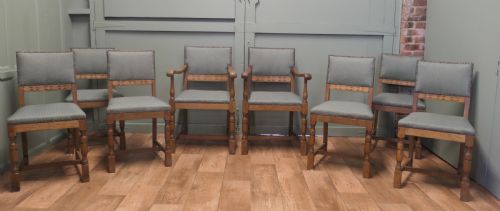
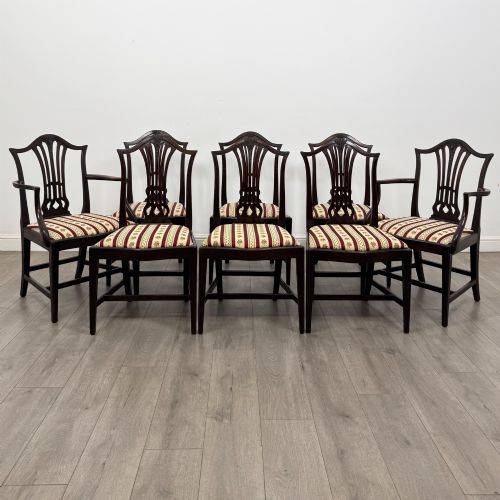
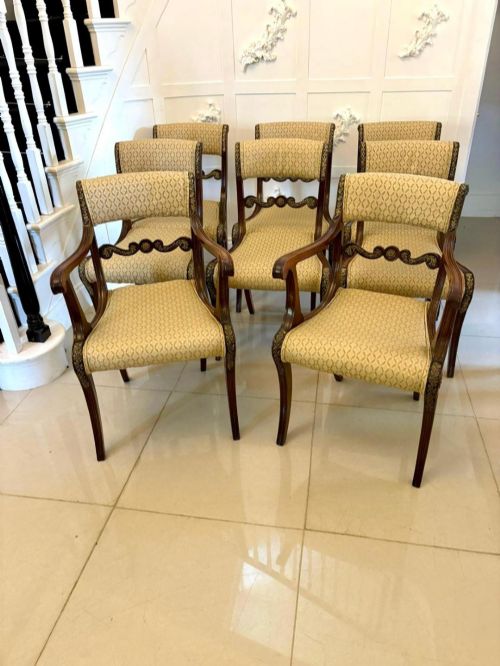
Armchairs appear individually, in pairs, or as part of larger dining sets that include matching single chairs. The structural variety ranges from high-back desk chairs to shield-back and ropeback designs.
How they were made
Cabinet makers and joiners utilised dense hardwoods like mahogany, oak, ash, and elm to build rigid frames that could endure heavy daily use. Turning, carving, and steam-bending allowed makers to shape spindles, crest rails, and sweeping armrests from solid timber.
Joinery techniques relied on mortise and tenon joints to secure the legs, seats, and backrests without modern adhesives. Upholstered drop-in seats and fixed pads used traditional stuffing materials finished with leather, fabric, or velvet.
Some nineteenth-century Windsor armchairs retain the honest wear of farmhouse kitchens where generations sat to carve the Sunday roast.
What varies in quality
The standard of carving and timber selection dictates the distinction between everyday utility chairs and exceptional workshop pieces. Crisp, deep relief work on splats and arm terminals points to skilled hand labour rather than mechanical production.
Proportion and structural integrity define the success of the design. Heavy or clumsy timber sections diminish the visual balance, whereas refined tapering legs and well-joined arm supports reveal proper proportion.
Howard and Sons·Warings·Maple and Co·Alfred Allen of Birmingham
The Traditional Carver Dining Chair Glossary
- Carver
- An armchair designed to match a set of single dining chairs, traditionally placed at the head of the table. The term distinguishes the armed seat from its side chair counterparts.
- Chippendale style
- A decorative design style originating in the eighteenth century characterised by interlaced carved splats, cabriole legs, and elaborate scrollwork. Revival versions appeared frequently in the nineteenth and early twentieth centuries.
- Shield back
- A chair back shaped like a heraldic shield, popularised by designers such as Hepplewhite during the Georgian era. The frame encloses a pierced central splat.
- Windsor
- A wooden chair constructed with a solid shaped wooden seat into which the legs and back spindles are wedged directly. Regional variations include high backs and arm supports.
- Ropetwist
- A carved decorative moulding resembling twisted rope, applied to top rails, stretchers, or arm supports. It adds texture to nineteenth-century mahogany frames.
Traditional Carver Dining Chair: Frequently Asked Questions
What is a carver dining chair?
A carver dining chair is an armchair styled to match a set of dining chairs, traditionally used by the host at the head of the table. These pieces provide extra width and arm supports while maintaining stylistic harmony with the smaller chairs.
They appear across multiple centuries and design movements, from vernacular elm country seating to formal mahogany George III and Regency dining suites.
How do I match carvers with dining chairs?
Matching carvers with dining chairs involves comparing wood species, primary periods, and decorative motifs such as shield backs or ladder backs. Many historical sets were produced with two armchairs and several single chairs intended to be used together.
When exact period matches are unavailable, pieces sharing similar revival styles or timber tones can create a cohesive arrangement around the dining table.
Are carver chairs comfortable for daily use?
Carver chairs offer enhanced support through their integrated armrests and generous proportions compared to standard dining seats. Many examples feature upholstered pads in leather, fabric, or velvet that provide a softer seat.
Seat heights and back angles vary by period, with Georgian and Victorian iterations designed for upright dining postures rather than lounging.
How do I tell different periods apart?
Distinguishing periods relies on observing timber choices, construction methods, and decorative vocabulary. Eighteenth-century pieces frequently employ solid mahogany with hand-carved details, while Victorian and Edwardian examples often incorporate revival elements from earlier eras.
Regional country pieces built from ash and elm exhibit distinct turning and spindle work compared to the formal cabinet-made furniture of urban workshops.