




Embossed Wooden Chair
An embossed wooden chair brings distinct texture and character to an interior, offering practical seating shaped by historic craftsmanship.
Embossed Wooden Chair
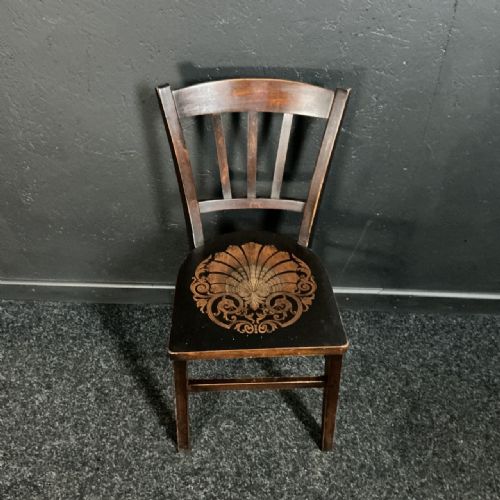
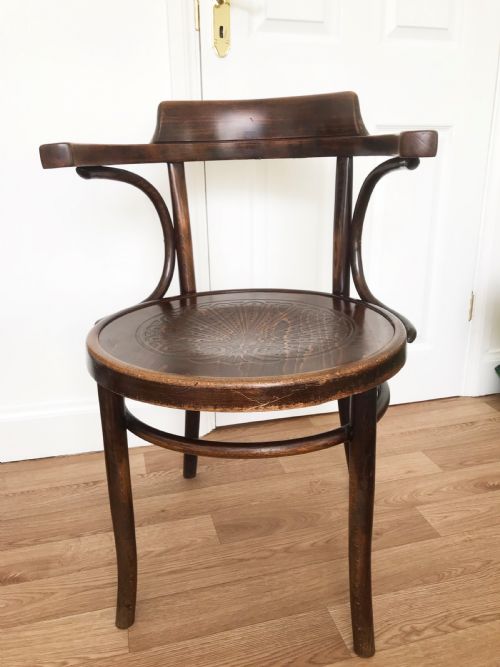
An embossed wooden chair represents a diverse group of seating furniture featuring pressed, carved or textured decorative details on wooden surfaces or upholstered panels. When searching for an embossed wooden chair, buyers encounter various forms including dining chairs, armchairs, rocking chairs and side chairs.
The pieces appearing on this page span several distinct periods from the nineteenth century through the Edwardian era and into the nineteen twenties. Styles range from Art Nouveau and Victorian Gothic Revival to Arts and Crafts and Thonet bentwood designs.
Makers and origins vary widely, encompassing Austrian bentwood production, Black Forest carving traditions, and British domestic workshop output. Beech, oak, mahogany and birch form the primary timber framework for these varied seating options.
How they were made
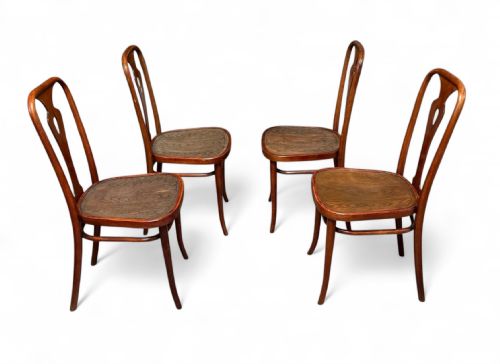
Construction relies on traditional timber selection, utilising beech, oak, mahogany and birch depending on the regional workshop and period style. Steam bending techniques shape the flexible wood into curved frameworks, particularly evident in bentwood production.
Surface ornamentation combines hand carving, stamped detailing and applied leather panels to create the characteristic textured finish. Joinery methods include traditional pegging, framing and mechanical fixing suited to the specific chair type.
Materials recorded across the available selection include beech, oak, mahogany, birch, leather and brass.
What varies in quality
Quality differences lie in the crispness of the carved or pressed surface detailing and the integrity of the underlying timber framework. Pieces retaining sharp, well-defined decorative motifs demonstrate superior execution compared to worn or softened examples.
The structural stability of the joints and the preservation of original materials also distinguish finer specimens. Matching sets and verified workshop attributions elevate the standing of individual pieces within the wider group.
Thonet·J & J Kohn
The Embossed Wooden Chair Glossary
- Bentwood
- Furniture formed by steaming timber until pliable and bending it into curved shapes. This technique defines numerous nineteenth and early twentieth century seating designs.
- Carver
- An armchair, typically designed for the head of a dining table or as a companion piece to side chairs. These chairs feature supportive armrests.
- Bistro chair
- A lightweight, durable chair originally designed for European cafes and dining establishments. They utilise steam bent components for efficient mass production.
- Rocking chair
- A chair mounted on curved rocking feet that allow the sitter to sway backward and forward. Various historical periods produced distinct upholstered and wooden variations.
Embossed Wooden Chair: Frequently Asked Questions
Where were bentwood chairs made?
Bentwood chairs originated primarily in Austrian and European workshops during the nineteenth century, driven by pioneering steam-bending manufacturing methods.
Major firms such as Thonet and J & J Kohn produced these durable seating options for cafes, offices and domestic interiors across the continent.
How do I identify an Edwardian chair?
Edwardian chairs typically display lighter proportions and borrowing from earlier historical styles, reflecting the taste of the early twentieth century.
They frequently utilise beech and feature floral motifs, occasional rocking designs or simplified structural framing.
What is a Black Forest chair?
Black Forest chairs originate from the woodcarving traditions of the mountainous region in Germany and Switzerland, noted for naturalistic animal and foliage motifs.
Pieces often showcase intricate hand-carved details such as dancing bears or woodland elements integrated directly into the wooden structure.
How were rocking chairs used historically?
Rocking chairs served as comfortable household seating for nurseries, parlours and bedrooms, offering gentle motion for relaxation.
Historical examples incorporate various materials, from bentwood frames to birch structures with bobbin and bar back details.