






Thonet Style Chairs
These thonet style chairs bring effortless, lightweight elegance to any room through ingenious bentwood construction.
Thonet Style Chairs
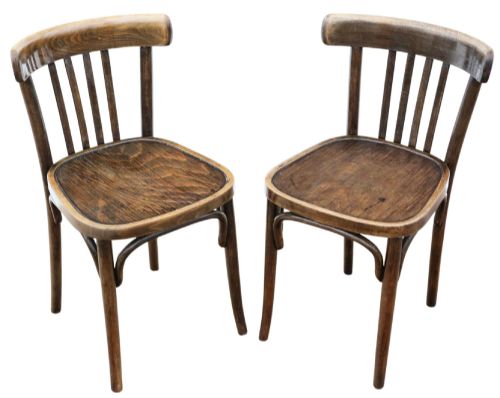
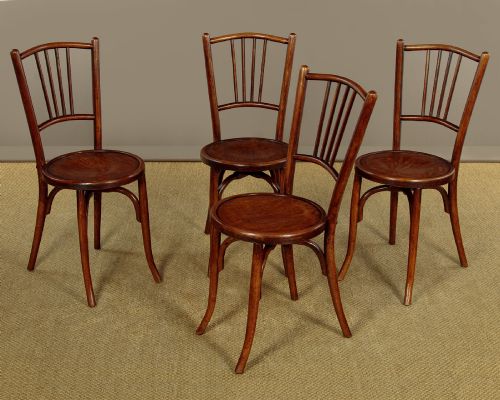
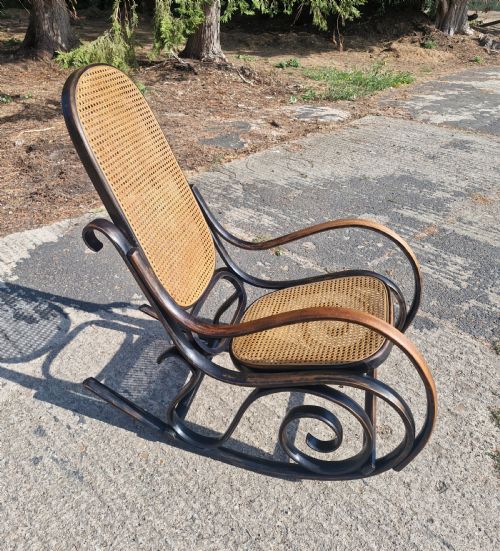
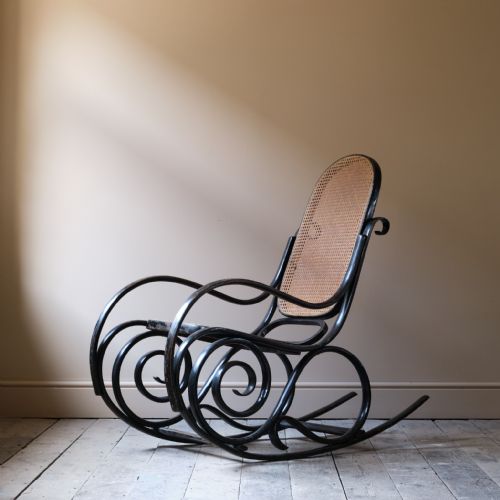
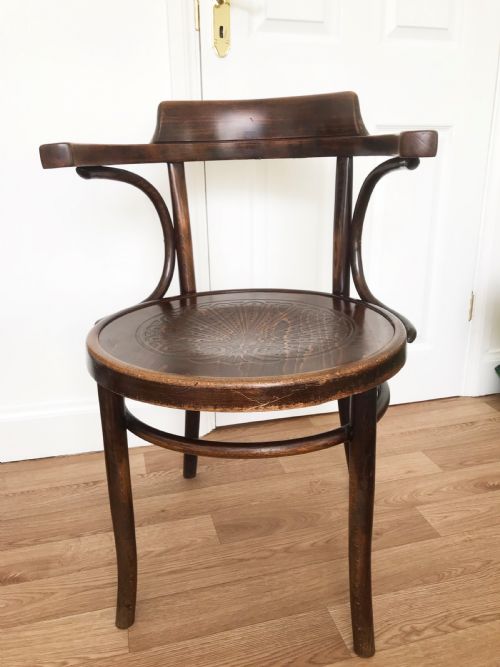
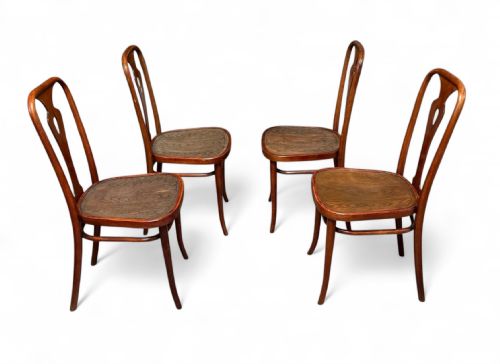
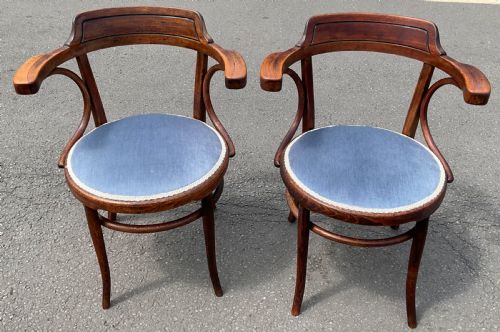
Thonet style chairs represent a revolutionary approach to seating that prioritises curved wooden forms over traditional joinery. When searching for thonet style chairs, buyers encounter diverse forms ranging from dining chairs and bistro chairs to rocking chairs and children's chairs.
The pieces available span multiple periods including the nineteenth century, Edwardian era, nineteen-twentieth, and mid-century. Rocking chairs and dining chairs appear frequently alongside armchairs and carver desks.
Origins and styling reflect broad European design movements, taking in Victorian bentwood, Vienna secession, and art nouveau pieces. Many items show connections to notable makers whilst others remain anonymous café seating.
How They Were Made
Makers utilised solid beech and beech wood, steaming the timber until pliable enough to bend into graceful curves. Plywood also emerges in construction alongside these solid elements.
Seats frequently incorporate cane, rattan cane, fabric, or leather inserts. The resulting frames rely on minimal hardware, depending instead on steam-bent components secured together neatly.
One cheerful set of seven beech bentwood chairs once served patrons inside the bustling Cafe Royal in London.
What Varies in Quality
The sophistication of the steam-bending technique dictates the fluidity of the curves and the overall structural integrity. Earlier pieces and work from prominent makers display superior tension and refinement in the wood.
Seat materials also introduce distinction, where tightly woven cane or high-grade leather upholstery elevates a standard frame. The presence of specific maker attribution or historical provenance distinguishes ordinary utility seating from collector examples.
Jacob and Josef Kohn·Codina·Thonet
The Thonet Style Chairs Glossary
- Bentwood
- Wood shaped by exposure to steam and pressure into curved structural components. This technique defined nineteenth-century furniture production.
- Cane
- Woven material derived from rattan palm used for lightweight seating inserts. It provides flexible and breathable support.
- Carver chair
- An armchair designed with arms suitable for use at a desk or the head of a table. These pieces often feature continuous bentwood arm and back rails.
- Vienna Secession
- An artistic movement focusing on clean lines and modern design principles. It influenced Austrian bentwood production around nineteen-hundred.
Thonet Style Chairs: Frequently Asked Questions
How do I clean a cane seat?
Use a damp cloth to wipe natural cane periodically, allowing it to dry naturally to maintain tension.
Avoid soaking the material completely to prevent the natural fibres from becoming brittle.
Are these chairs suitable for daily dining?
Most bistro and dining variants were originally built for heavy commercial hospitality use. They handle daily domestic seating comfortably.
Lighter rocking variants suit relaxing spaces rather than upright dining tables.
How do I identify a nineteenth-century piece?
Early examples often display specific paper labels, stamp marks, or simpler screw fixings. The tightness and density of the beech wood also offer clues.
Stylistic flourishes tied to Victorian or art nouveau periods help narrow down the decade.
Can I use a bentwood rocker on wooden floors?
The curved wooden runners move smoothly across most hard flooring surfaces. Adding discreet protection prevents scratching if preferred.
Carpets provide a stable base that cushions the rocking motion naturally.