






Beech Bentwood Chairs
These beech bentwood chairs combine steam-bent ingenuity with domestic utility, offering resilient seating shaped by historical craftsmanship.
Beech Bentwood Chairs
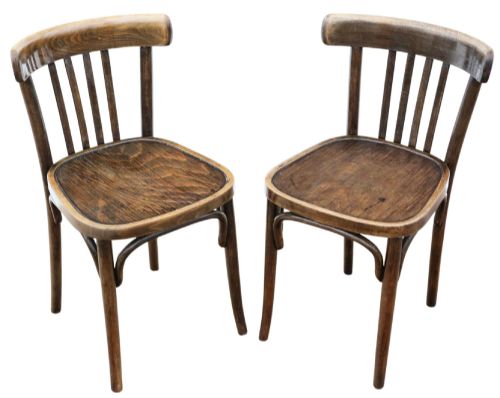
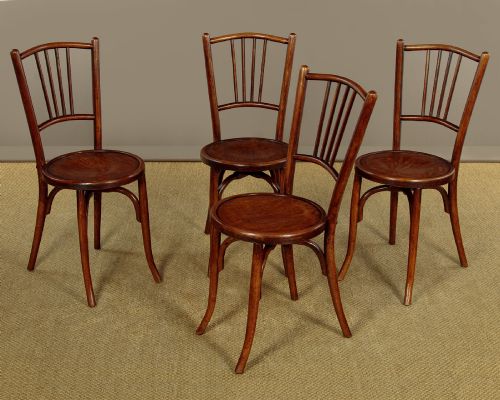
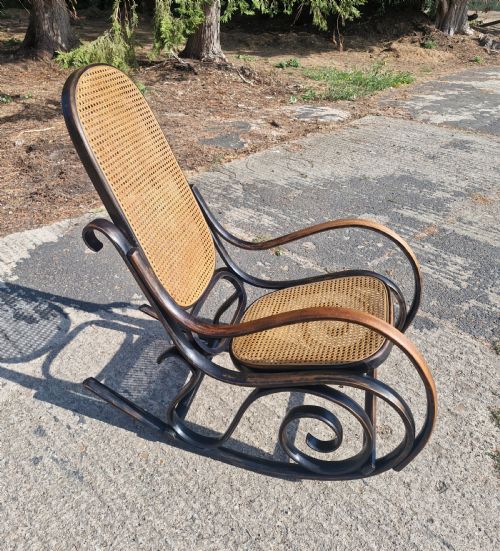
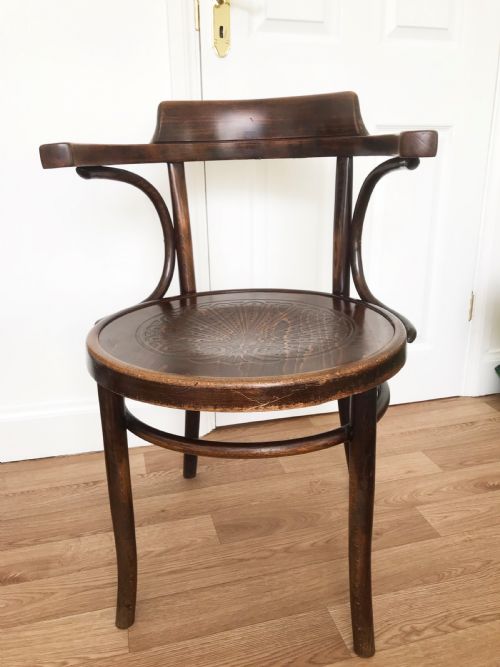
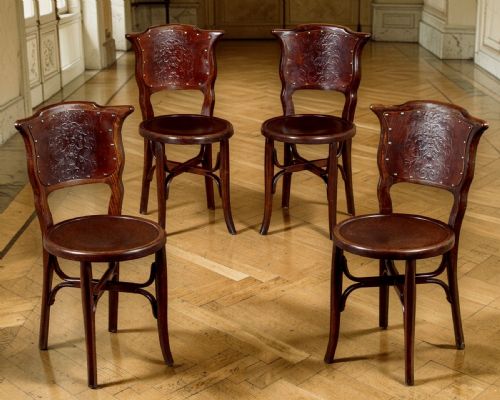
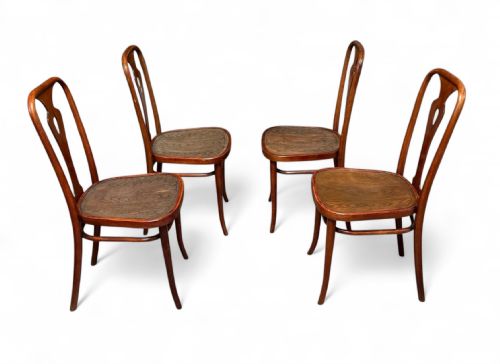
Beech bentwood chairs arrive in forms ranging from dining chairs and armchairs to rocking chairs and carvers, spanning periods from the nineteenth century through the 1960s. The selection commonly includes bistro dining sets originating from café and kitchen settings.
Makers and designers from Victorian, Edwardian, Art Nouveau, and Vienna Secession styles shape the selection, alongside mid-century bentwood productions. Buyers encounter single pieces as well as sets numbering up to twelve chairs.
Origins stretch across European workshops, including pieces attributed to Jacob and Josef Kohn, Thonet, Codina, and Fischel. Utility ranges from desk seating and carvers to rocking armchairs.
Construction and Materials
Solid beech wood is subjected to steam heat, rendering the timber pliable enough to be bent into curves and rounded frameworks. This process produces the signature sweeping lines of the chair backs and frames.
Plywood components, leather upholstery, and rattan cane inserts are integrated into the designs for seats and supportive panels. Stained wood finishes complete the surfaces of these bentwood pieces.
Materials recorded across the listings include beech, bentwood, plywood, leather, rattan cane, and stained wood.
Assessing Quality
The sophistication of the steam bending and the complexity of the frame design determine the distinction of a piece, particularly in Vienna Secession and Art Nouveau iterations. Integrated elements such as embossed details or cane panels further differentiate standard bistro seating from exceptional examples.
Maker attributions, such as marked Thonet or Kohn productions, elevate the standing of individual chairs and sets. The uniformity and preservation of larger sets also influence their standing among collectors.
Jacob and Josef Kohn·Thonet·Codina·Fischel
The Beech Bentwood Chairs Glossary
- Bentwood
- Wood shaped by steaming and bending rather than carving. This technique creates continuous, flowing structural curves.
- Beech
- A hard, fine-grained timber commonly utilised for framing and bending. Its density supports strong, slender chair components.
- Rattan cane
- A flexible material woven to form seat and back inserts. It provides a lightweight, resilient surface.
- Carver
- An armchair featuring arms, often positioned at the head of a dining table or utilised as a desk chair.
- Vienna Secession
- An artistic movement associated with avant-garde design and distinct structural geometry. Pieces from this tradition display refined aesthetic restraint.
Beech Bentwood Chairs: Frequently Asked Questions
How do I identify a Thonet bentwood chair?
Thonet pieces often bear manufacturer stamps, paper labels, or characteristic numbering systems on the underside of the seat frame. The fluidity of the steam-bent beech and distinct joinery provide further visual clues.
Design execution, such as embossed seat patterns or graceful hoop back structures, separates original workshop productions from later reproductions.
Are bentwood chairs strong enough for daily use?
Solid beech framing and steam-bent resilience make these chairs structurally robust for regular dining or desk use. The tension inherent in the bent timber actually contributes to their load-bearing capacity.
Care should be taken with cane inserts and upholstered leather seats, which benefit from gentle treatment and stable indoor humidity.
What is a grotto style bentwood chair?
Grotto style seating incorporates decorative, nature-inspired motifs into the wooden frame construction. These pieces date to the early twentieth century and offer a distinct ornamental profile.
They function well as statement armchairs or carvers within a room scheme.
Can I mix different bentwood chair styles around a table?
Bistro dining chairs and carvers share a cohesive material language of stained beech and curved silhouettes. Combining variations from the same era creates an eclectic yet unified aesthetic.
Matching sets of four, six, or more are also available for a uniform arrangement.