





Bentwood Dining Chairs
Bentwood dining chairs bring light frames and curved forms to the table, offering practical seating shaped by steam.
Bentwood Dining Chairs
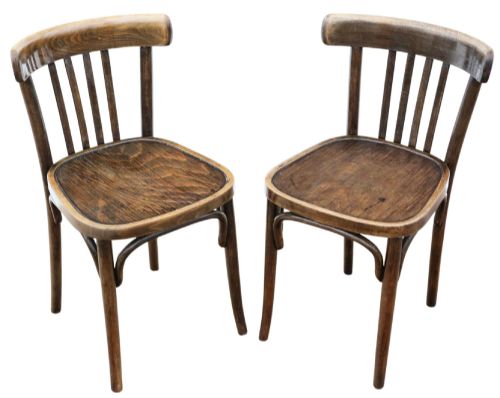
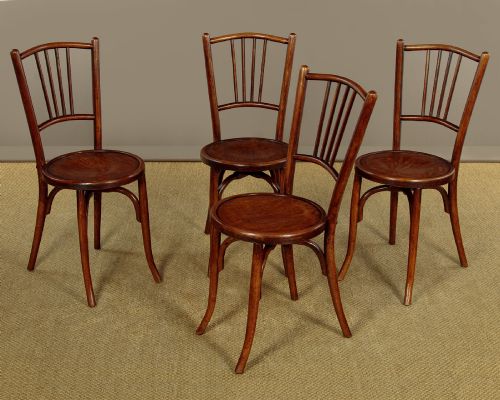
Bentwood dining chairs are lightweight, resilient seats designed for domestic dining and cafe use. When searching for bentwood dining chairs, buyers encounter forms ranging from single carvers to large matching sets spanning the nineteenth century through the mid-twentieth century.
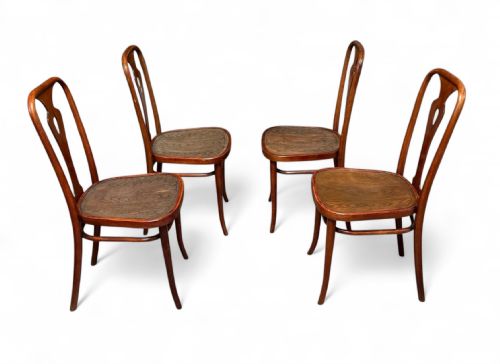
The most common examples on this page date from around nineteen hundred to the nineteen twenties, often taking the form of bistro or cafe chairs with hoop backs. These pieces reflect early production methods developed for commercial spaces and domestic kitchens alike.
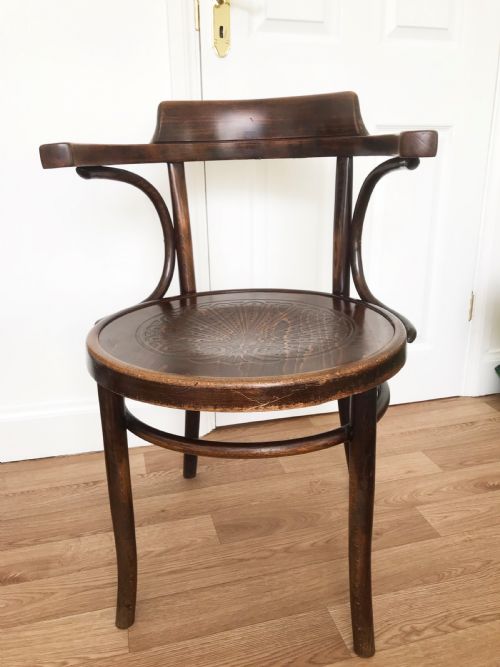
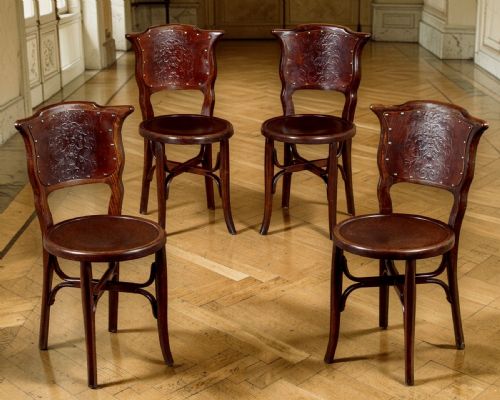
Makers such as Thonet, J & J Kohn, and Fischel dominated this output, producing both plain seats and versions featuring embossed plywood. Alongside standard dining chairs, the selection includes armchairs and desk chairs suited to varied interior layouts.
Materials and steam-bending techniques
Construction relies primarily on beech, beechwood, and ash, which take up moisture and heat well during manufacturing. Timber lengths are placed in steam boxes until pliable, then clamped into iron forms to dry into curves.
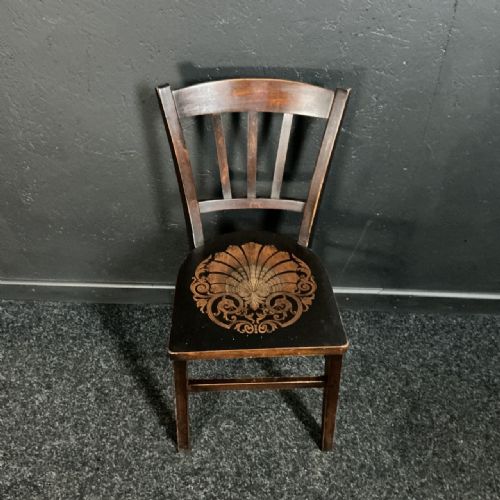
Seats often utilise moulded or embossed plywood, sometimes decorated with pressed floral or geometric patterns. Additional elements like brass studs appear on specific carver and armchair variants, securing upholstery where fitted.
Listings feature beech, ash, and plywood, capturing styles from Art Nouveau and Edwardian to mid-century bentwood.
Distinctions in construction and origin
Quality separates mass commercial output from pieces bearing maker stamps or specific attribution to major Austrian workshops. The crispness of embossed plywood seat patterns and the retention of original branded maker marks indicate higher production standards.
Structural integrity depends on the tightness of the joints and the condition of the steam-bent frame. Sets that remain matched in timber tone and wear show superior care through decades of use.
Thonet·J & J Kohn·Fischel·Mundus·Codina
The Bentwood Dining Chairs Glossary
- Bentwood
- Wood shaped by applying steam to soften the grain before bending it into curves. This process allows for continuous, flowing frames without traditional corner joints.
- Hoop back
- A chair back formed from a single continuous piece of curved timber bent into a loop. It supports the sitter while maintaining a light profile.
- Embossed plywood
- Plywood pressed with metal dies while hot to imprint decorative patterns onto the seat surface. Common in cafe and bistro settings.
- Carver
- An armchair designed with elbow rests, often placed at the head of a dining table. These match simpler side chairs in a set.
- Vase splat
- A central vertical support in a chair back shaped like a classical vase. It provides lumbar support and aesthetic detail.
Bentwood Dining Chairs: Frequently Asked Questions
What periods do these chairs cover?
The pieces span from the nineteenth century through the Edwardian era into the nineteen twenties, nineteen thirties, and nineteen sixties. Most examples date from the early decades of the twentieth century.
Production continued across multiple decades with consistent reliance on steam-bent beech and plywood.
How do I identify a Thonet chair?
Original pieces often carry paper labels, ink stamps, or burned-in signatures on the underside of the seat. The construction uses steam-bent beech with characteristic smooth curves.
These elements distinguish works produced by major Austrian firms from later copies or adaptations.
Were these chairs used in homes or cafes?
Historical records show these designs were supplied to both domestic kitchens and commercial venues such as the Cafe Royal in London. Their durability made them standard seating in public establishments.
Over time, many commercial sets transitioned into domestic dining rooms.
Are large sets difficult to find?
Matching groups of four, six, or more chairs appear alongside pairs and single items. Finding uniform sets requires looking for matching wood tones and seat patterns.
Listings often group pieces by specific cafe provenances or maker attributions.