

Tin Glaze Pottery Dish
When you search for tin glaze pottery dish, you meet earthenware vessels painted in cobalt and other pigments across several centuries.
Tin Glaze Pottery Dish
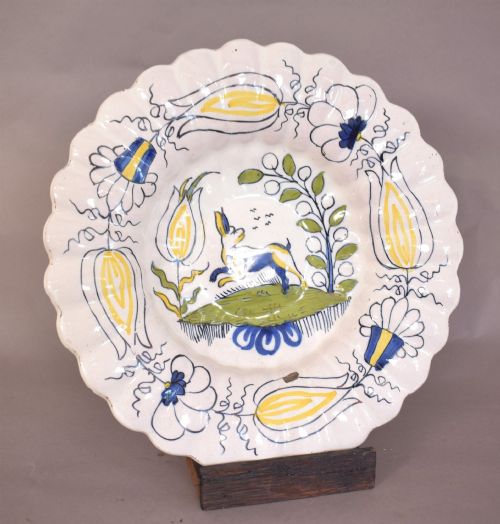
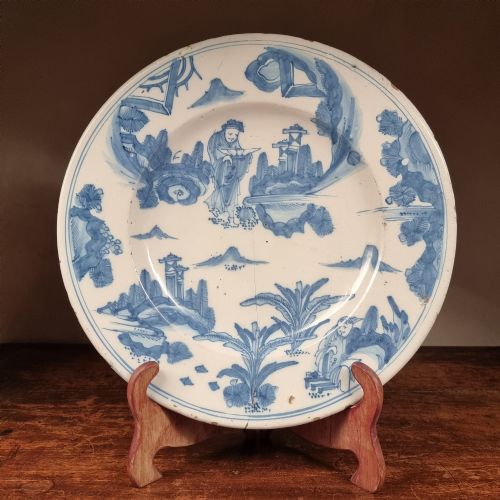
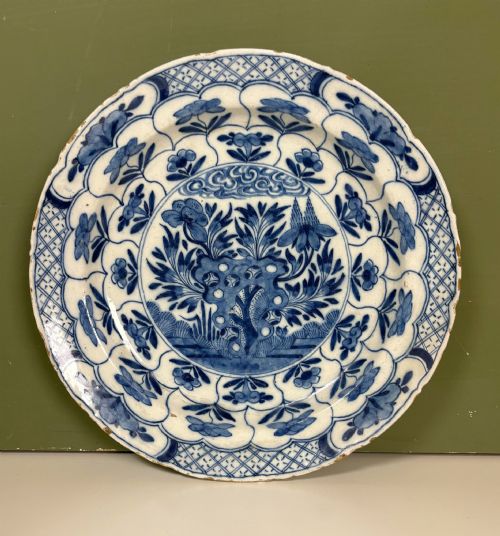
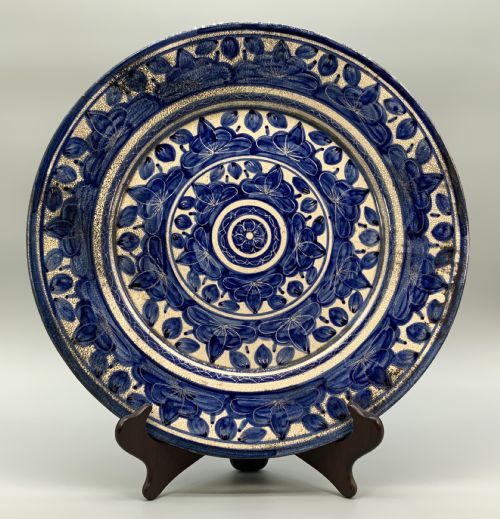
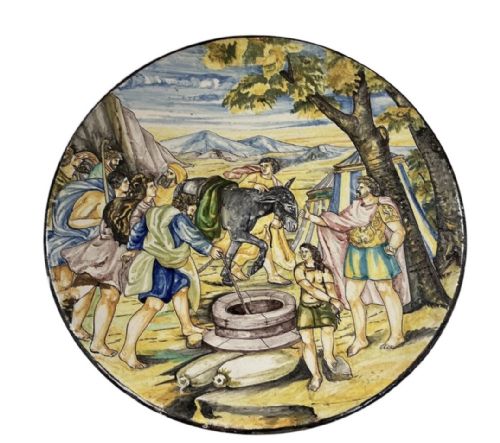
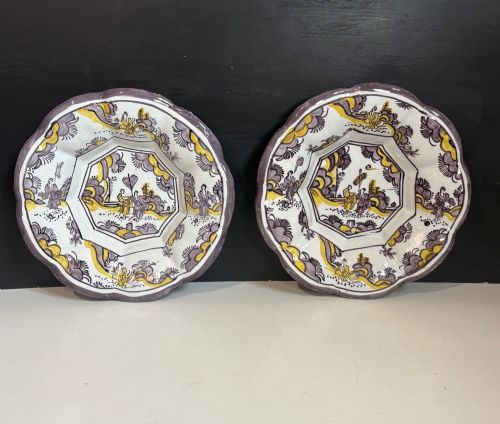
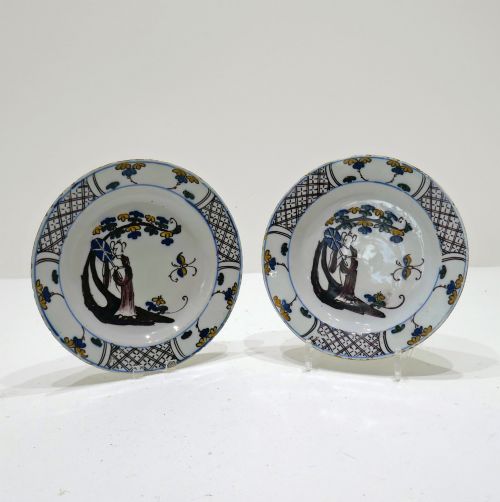
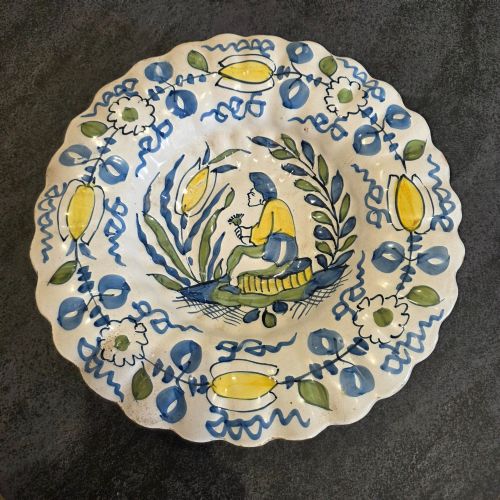
A tin glaze pottery dish encompasses chargers, plates, bowls, and specialist forms like barber's bowls and salt cellars. The selection includes Dutch Delftware, English delft, French faience, and Italian maiolica originating from the seventeenth to the twentieth centuries. Buyers most frequently encounter eighteenth-century English and Dutch examples decorated in blue and white or polychrome palettes.
Forms range from shallow plates and lobed dishes to massive chargers intended for display. Continental pieces show styles from French provincial to Moorish and Urbino revivals, while English examples often feature chinoiserie or floral motifs. Each piece reflects the specific regional traditions of tin-glazed earthenware production.
Materials and Making
Potters shaped earthenware bodies and coated them in an opaque white tin glaze that provided a smooth canvas for painting. Cobalt pigment and other metal oxides were applied directly to the unfired or raw glaze, absorbing into the surface during the second firing.
This technique demanded considerable skill from the painter because the porous glaze absorbed pigment instantly, leaving no room to correct mistakes. The resulting ware was then glazed and fired again to fix the decoration.
Listings feature earthenware pieces spanning from the seventeenth century through to the twentieth century, incorporating English, Dutch, French, and Spanish traditions.
Assessing Quality
Quality rests on the crispness of the hand-painted design and the uniformity of the tin glaze over the earthenware body. Superior pieces demonstrate confident brushwork and well-balanced compositions, whether in simple blue and white or complex polychrome schemes.
The stability of the form during high-temperature firing and the purity of the white glaze ground also distinguish finer examples from more utilitarian production.
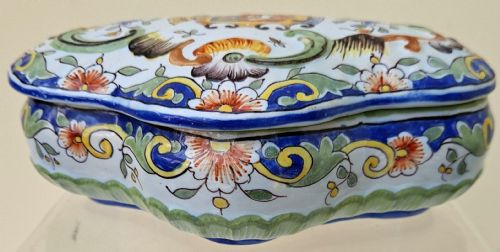
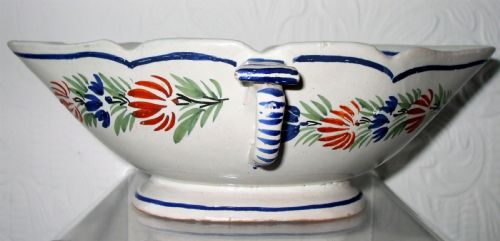
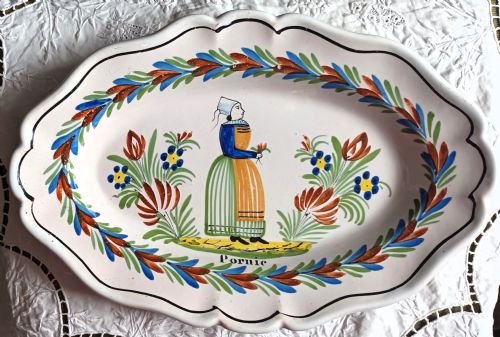
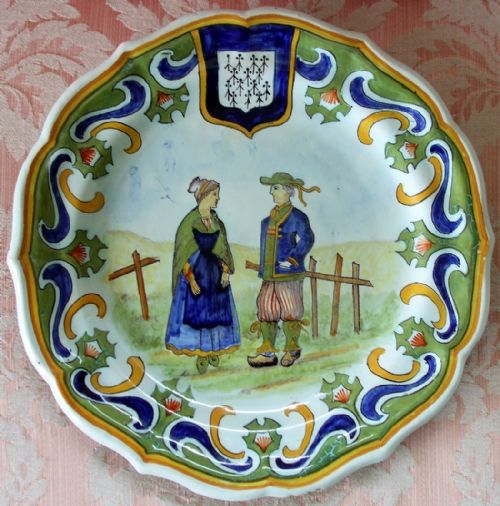
Desvres·Quimper·Gien·Rouen
The Tin Glaze Pottery Dish Glossary
- Charger
- A large decorative plate or dish, typically measuring over thirty centimetres across. These pieces were primarily designed for display on walls or sideboards rather than everyday dining.
- Delftware
- Earthenware covered with a tin-lead glaze and painted with metallic oxides. The term applies to tin-glazed pottery produced in both the Netherlands and England.
- Faience
- The French and continental European term for tin-glazed earthenware. Production centres included Rouen, Desvres, and Quimper.
- Polychrome
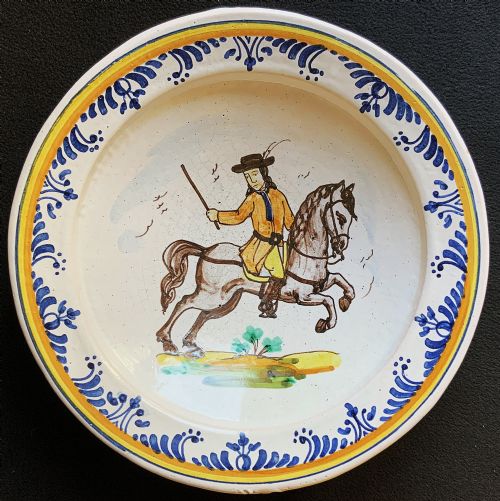
- Decoration utilising multiple colours rather than a single pigment. On these dishes, colours typically include yellow, green, orange, and blue.
- Chinoiserie
- European decorative motifs imitating Chinese artistic styles. This aesthetic appears frequently on eighteenth-century English and Dutch plates.
Tin Glaze Pottery Dish: Frequently Asked Questions
How were tin glazed dishes used?
These pieces served both decorative and functional roles in domestic interiors. Large chargers were displayed on buffets and walls, while smaller plates and bowls held food or specialist items.
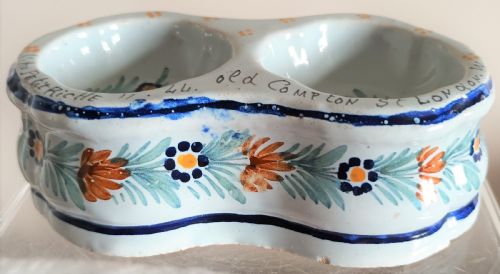
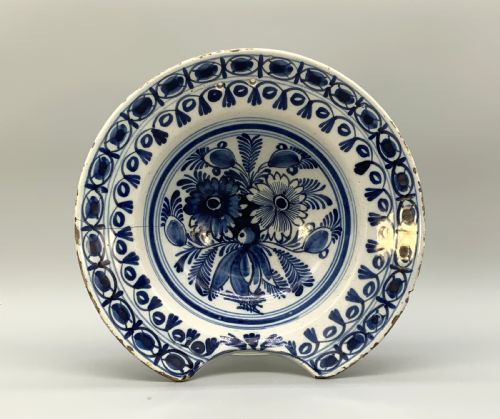
Specialist forms fulfilled specific domestic tasks, such as barber's bowls featuring a cut-out rim for shaving or salt cellars for the dining table.
Where were these pottery dishes made?
Production centred in distinct European regions known for tin-glazed earthenware traditions. Workshops in England, the Netherlands, France, Spain, and Italy produced these wares.
Each region developed local painting styles and forms, ranging from English delft plates to French faience and Dutch Delftware.
How do you date a tin glazed dish?
Dating relies on stylistic evidence, palette, and potting characteristics. Early seventeenth-century pieces often show influence from imported Asian ceramics, while eighteenth-century examples frequently feature English or Dutch floral and chinoiserie designs.
Glaze thickness, foot rim formation, and pigment tones also provide clues to the period of manufacture.
What is the difference between delft and faience?
The terms primarily reflect geography and language rather than a fundamental difference in composition. Delft generally refers to tin-glazed earthenware made in the Netherlands and England.
Faience is the term used for equivalent tin-glazed ceramics produced in France and other continental European workshops.