

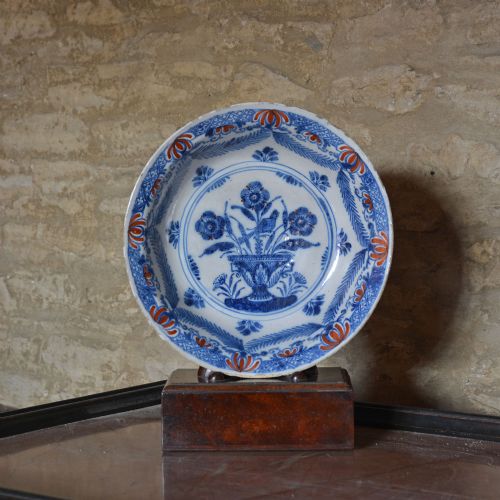
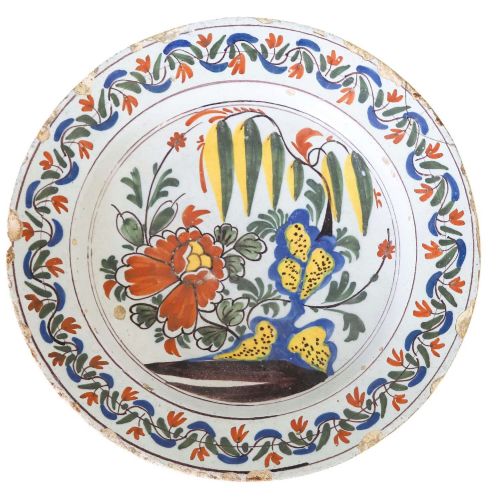


Floral Delftware Charger Plate
These floral delftware charger plate pieces bring tin-glazed earthenware and hand-painted botanical motifs into eighteenth-century interiors.
Floral Delftware Charger Plate
When you search for a floral delftware charger plate, you encounter large decorative earthenwares produced across the eighteenth century in England and the Netherlands. These wide plates and chargers serve primarily as wall display pieces rather than dining ware.
The versions most common on this page span the 1700s, grouping Georgian and Dutch Baroque aesthetics together. They range from small delft plates to large decorative chargers measuring well beyond standard tableware dimensions.
Makers shaped these items from common clay before applying opaque white tin glazes. Painters then decorated the surfaces directly using cobalt pigment and polychrome palettes.
How They Were Made
Potters formed these charger plates using earthenware clay, throwing or pressing the material into wide circular moulds. Once shaped, the bodies underwent an initial firing to create a stable bisque base.
Craftspeople coated the fired clay in a liquid tin glaze to yield an opaque white surface. Pigments containing cobalt or multi-coloured oxides were applied directly onto this absorbent unfired glaze before a final high-temperature kiln firing.
Floral Delftware Charger Plate Retail Price Guide 2026
Typical asking prices for floral delftware charger plate among the pieces listed under this phrase on Sellingantiques today, from the lower quarter to the upper quarter. They describe what is for sale here now, not the wider market.
Listings on this page span the eighteenth century, featuring earthenware bodies finished with tin glaze and cobalt pigment.
What Varies in Quality
Quality rests upon the control of the Grand Feu firing process and the fluidity of the hand-painted floral decoration. Finer pieces display crisp cobalt pigment or balanced polychrome hues without excessive running in the glaze.
The ambition of the potting distinguishes everyday plates from grand chargers. Larger diameters and heavier earthenware bodies require greater technical skill to prevent warping during kiln firing.
The Floral Delftware Charger Plate Glossary
- Tin-glazed earthenware
- Pottery covered with a glaze made opaque by the inclusion of tin oxide. This white surface provides the ground for painted decoration.
- Charger plate
- A large decorative plate used historically for display on sideboards or walls. These items exceed standard dining dimensions.
- Grand Feu
- A ceramic firing technique executed at high temperatures where raw glaze and pigment fuse together in a single heat. This method produces distinct integration of the painted design.
- Polychrome
- Decoration employing multiple distinct colours rather than a single pigment. On these plates, it typically involves combinations of iron red, yellow, green, and blue.
- Cobalt pigment
- A metallic colourant producing deep blue tones under high heat. It remains the primary pigment found on eighteenth-century delftware.
Floral Delftware Charger Plate: Frequently Asked Questions
How were delft chargers displayed?
Eighteenth-century households mounted these large plates on walls or stood them upright on sideboards and dressers. Their broad diameters suited visual presentation rather than service at the dining table.
Today, hanging wires or specialist display stands allow collectors to continue this tradition of vertical presentation without damaging the earthenware edges.
Are these plates safe for food?
Tin-glazed earthenware possesses a porous ceramic body beneath a soft glaze containing metallic oxides. Historic pieces suit decorative display rather than culinary use.
Modern acidic foods can interact with eighteenth-century glazes, making these items strictly suitable for visual appreciation and collection.
How do I distinguish English from Dutch delftware?
Distinguishing the origin relies upon subtle shifts in body weight, glaze tone, and palette preferences. English pieces often display slight variations in the tin glaze composition.
Dutch workshops frequently utilised specific manganese or polychrome formulas associated with regional production centres during the 1700s.
What does grand feu mean on these plates?
Grand feu describes a high-temperature single firing where the pigment sinks directly into the raw tin glaze. This technique causes the colours to soften slightly into the white background.
Plates created this way possess a characteristic visual depth that differentiates them from later overglaze painted ceramics.