


18th Century Delftware Plate
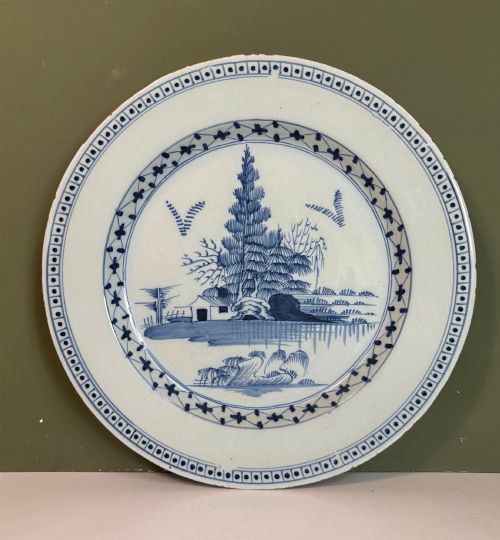
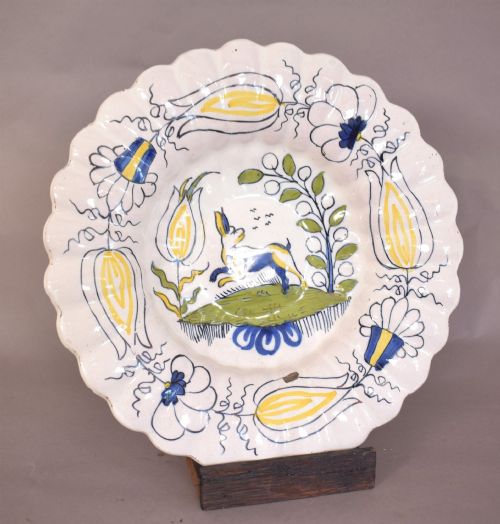
An 18th century delftware plate brings tin-glazed earthenware with hand-painted blue and white or polychrome designs into a room.
18th Century Delftware Plate
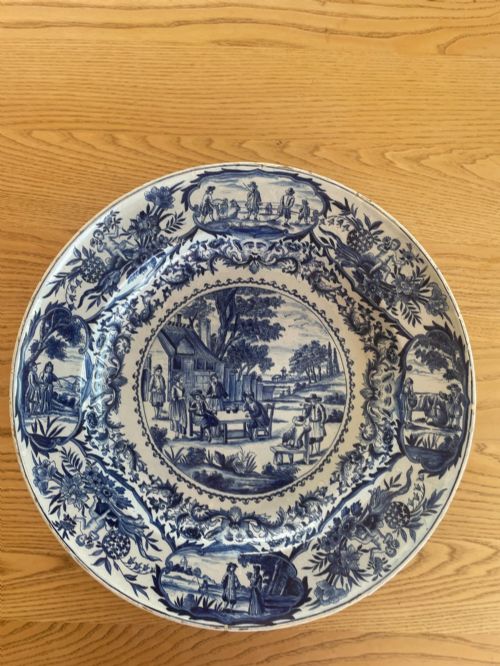
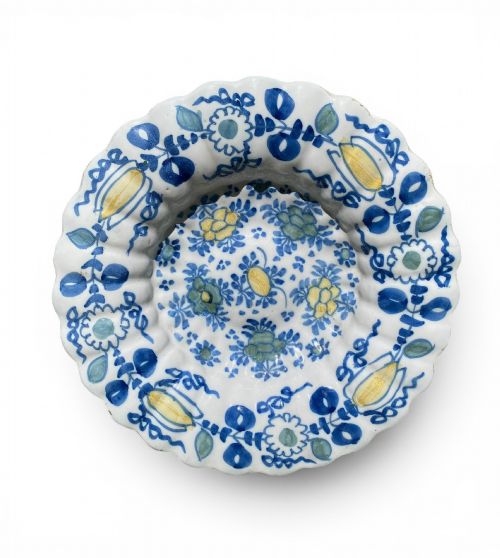
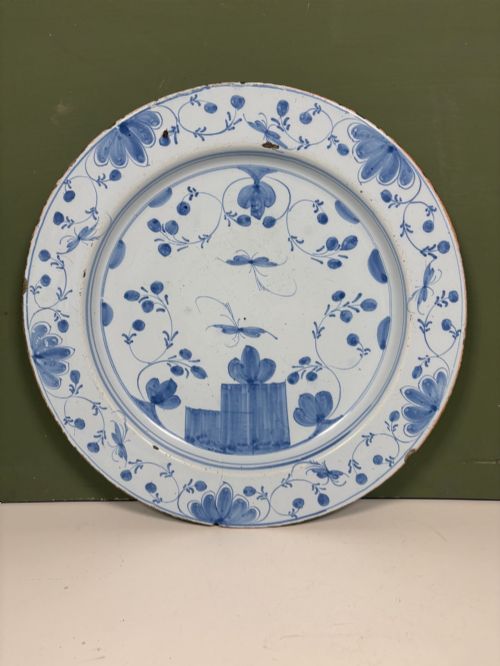
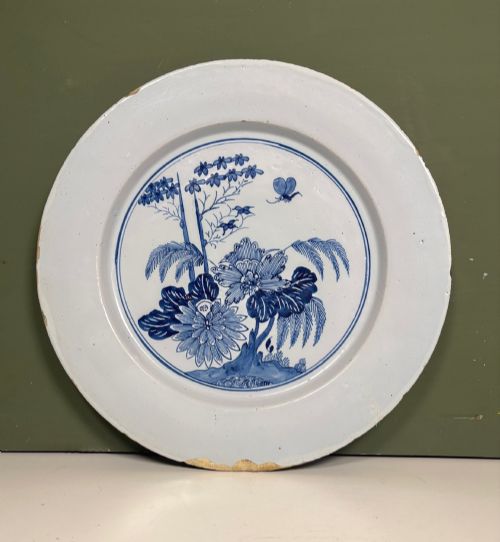
An 18th century delftware plate is a tin-glazed ceramic dish created for domestic display or daily use during the Georgian and Baroque periods. These pieces span chargers, shallow bowls, and decorative dishes originating from English, Dutch, French, and Spanish workshops.
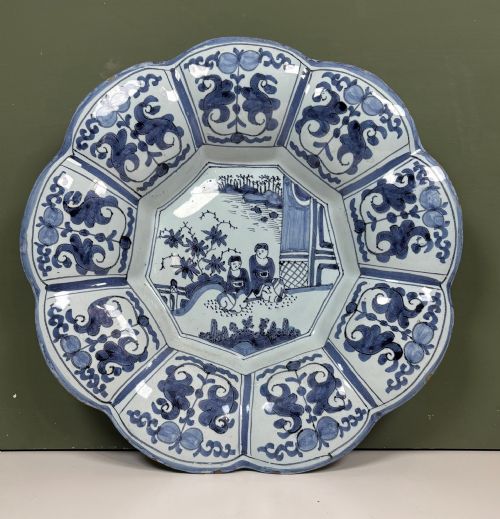
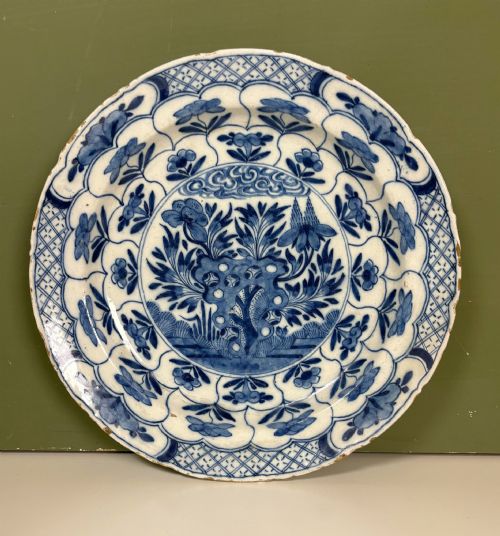
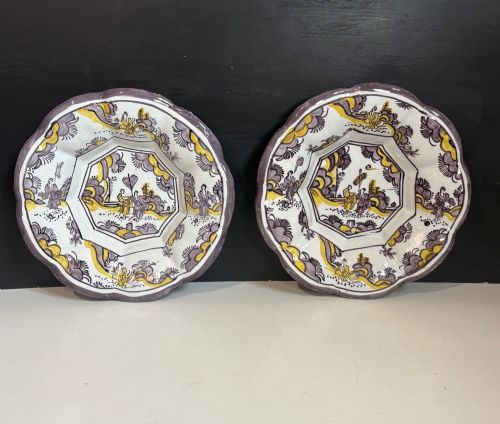
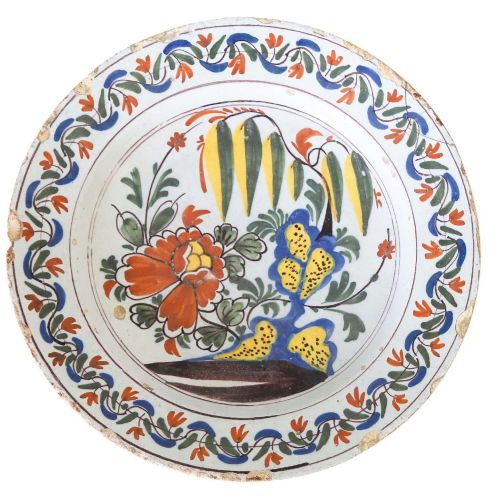
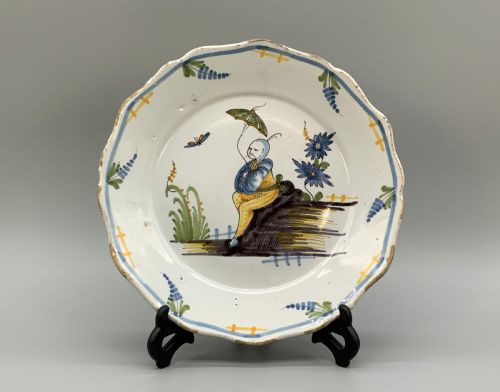
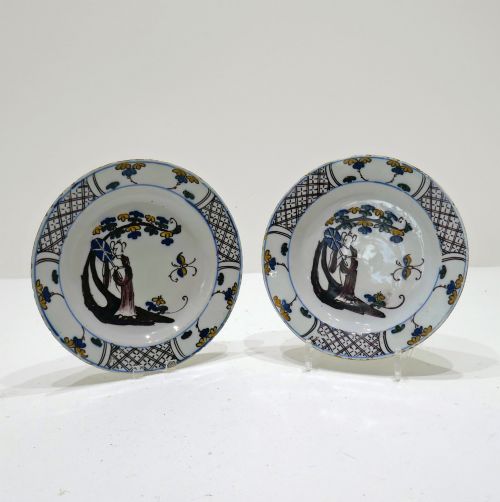
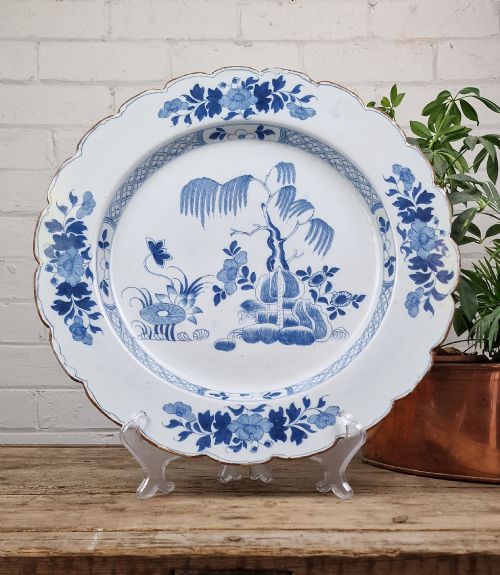
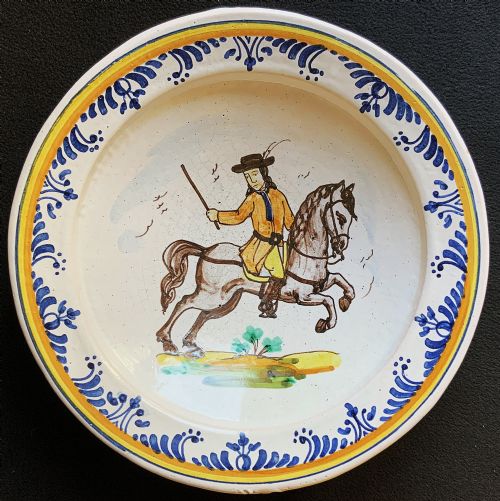
The version most commonly met on this page is the large charger or standard plate, decorated in cobalt blue or polychrome pigments with floral, geometric, or Chinoiserie motifs. English pieces from Bristol and Lambeth appear alongside Dutch, French faience, and Spanish Catalana examples.
Surviving examples range from the early 1700s through to the end of the century, capturing changes in palette from traditional blue and white to manganese, yellow, and multi-coloured enamel painting.
How they were made
Potters shaped earthenware bodies from local clays, firing the pieces before dipping them into an opaque tin glaze that dried to a chalky white surface. Painters applied cobalt oxide or other ceramic pigments directly onto this porous unfired glaze, a technique that required a steady hand because the pigment absorbed instantly.
Grand feu and polychrome techniques allowed workshops to fix multiple colours in the kiln, sealing the decoration beneath a clear lead glaze known as a translucent top coat. This method produced the characteristic glossy finish and soft, slightly blurred edges around brushstrokes.
Object forms on this page range from shallow bowls and standard plates to large decorative chargers created in English, Dutch, French, and Spanish workshops.
What varies in quality
The distinction between standard domestic wares and the finest chargers lies in the ambition of the painted design and the control of the kiln firing. Delicately executed Chinoiserie scenes, crisp geometric borders, and rich polychrome palettes distinguish exceptional pieces from simpler blue and white domestic items.
The purity and evenness of the tin glaze also set individual examples apart, as panels free from excessive pitting or kiln debris display the hand-painted brushwork with greater clarity and visual depth.
Bristol·Lambeth
The 18th Century Delftware Plate Glossary
- Charger
- A large decorative plate, typically exceeding twelve inches in diameter, designed to be hung on a wall or displayed on a dresser. These substantial dishes provide a wider canvas for complex pictorial and floral scenes.
- Tin-Glazed Earthenware
- Pottery covered in an opaque white glaze containing tin oxide, which creates a smooth, pale ground for painting. This method originated in the Near East before spreading through European ceramic centres.
- Polychrome
- Decoration employing multiple colours rather than a single pigment. On these plates, colours such as manganese purple, yellow, green, and blue combine to form floral or figurative compositions.
- Chinoiserie
- European interpretations of Chinese artistic motifs and styles, popular in the decorative arts of the period. These designs depict imagined oriental landscapes, pavilions, and figures.
- Grand Feu
- A high-temperature kiln firing used to bond pigments with the raw tin glaze. This technique demands precise heat control to prevent the colours from running.
18th Century Delftware Plate: Frequently Asked Questions
How were these plates used?
Many of these large chargers and dishes were intended primarily for display on walls or sideboards rather than dining use. Smaller plates saw service at table, while specialised forms like marriage plates marked specific family occasions.
Over time, collectors shifted these domestic items into display cabinets and gallery walls to preserve the fragile tin glaze.
Are English and Dutch pieces different?
English workshops in places like Bristol and Lambeth developed distinct bodies and palette preferences, often utilising softer earthenware fabrics. Dutch delftware from centres like Delft often displays crisp blue and white tin glazes or grand feu polychrome.
Spanish and French faience examples introduce alternative clay bodies and warmer manganese and yellow tones into the tradition.
How do I care for a delft plate?
Tin-glazed earthenware is relatively soft and benefits from stable indoor environments away from direct sunlight and damp conditions. Displaying them on padded hangers or stable stands protects the rim and footring from unnecessary friction.
Gentle dusting with a dry cloth keeps the surface clean without introducing moisture to the porous earthenware body beneath.