

Tilt Top Accent Table
A tilt top accent table provides a practical surface that folds flat when not in use.
Tilt Top Accent Table
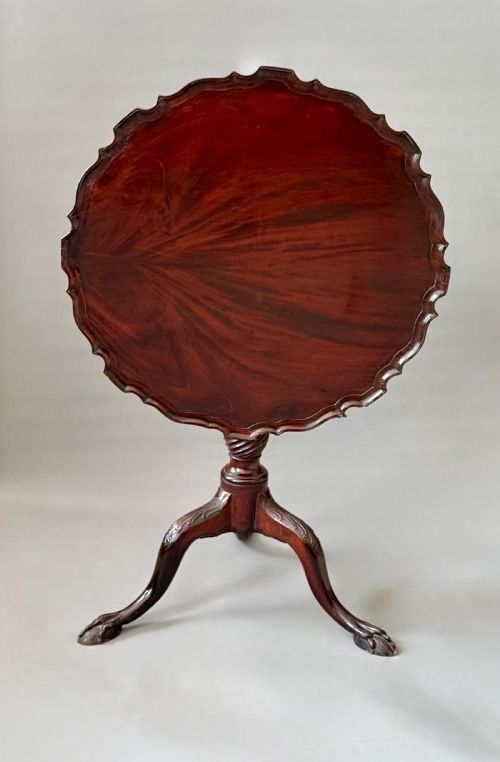
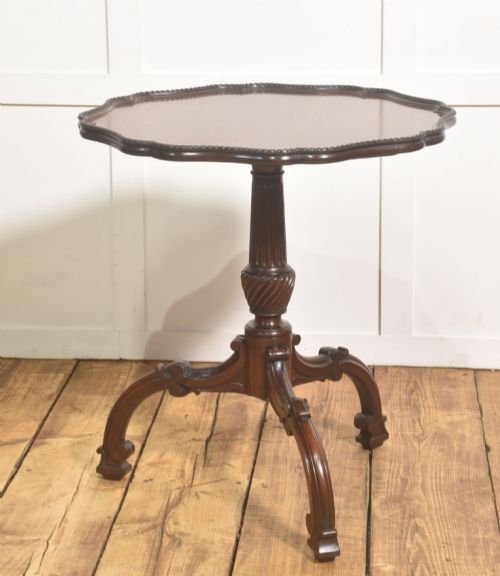
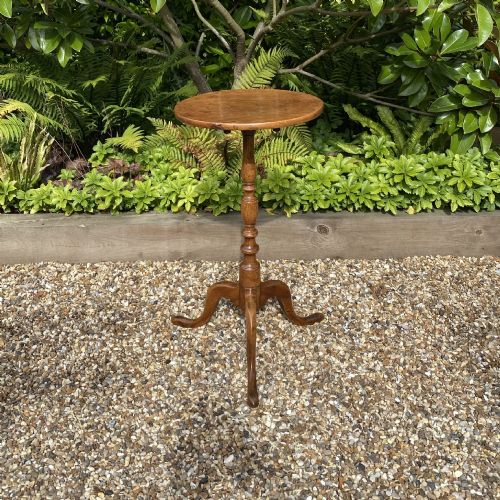
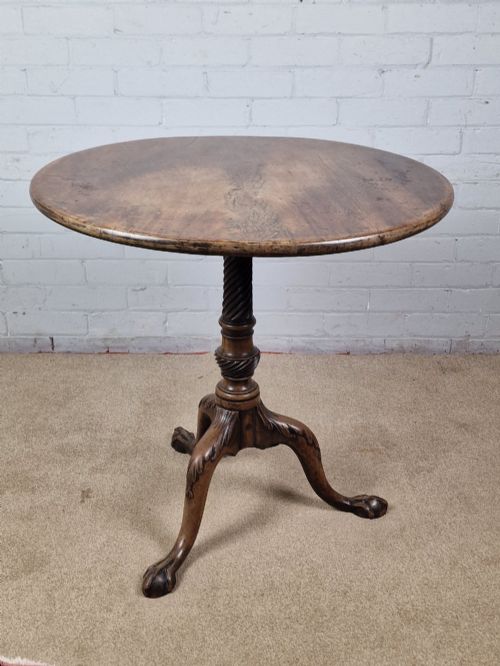
A tilt top accent table is a versatile piece designed for occasional use in domestic spaces, pivoting at the pedestal to save space against a wall. The selections span Georgian, Victorian, and Regency periods alongside later revival examples.
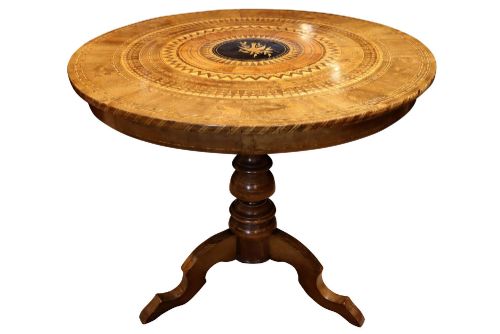
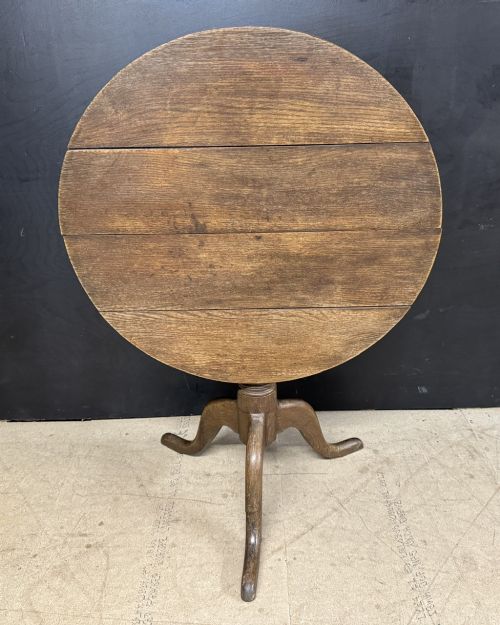
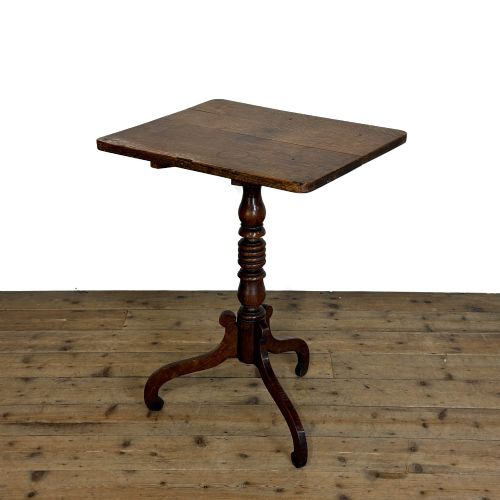
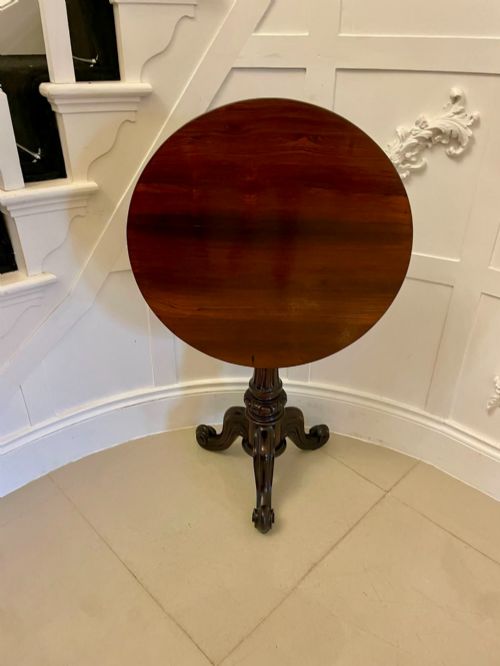
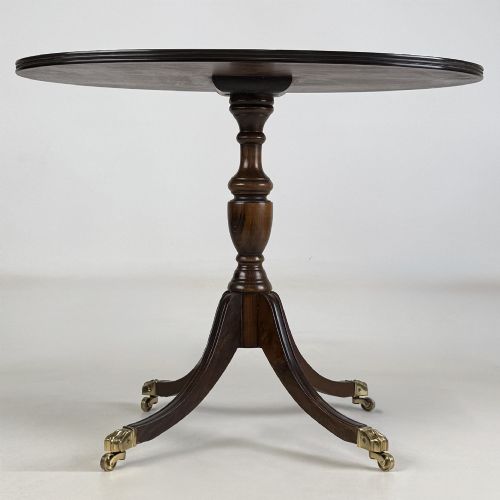
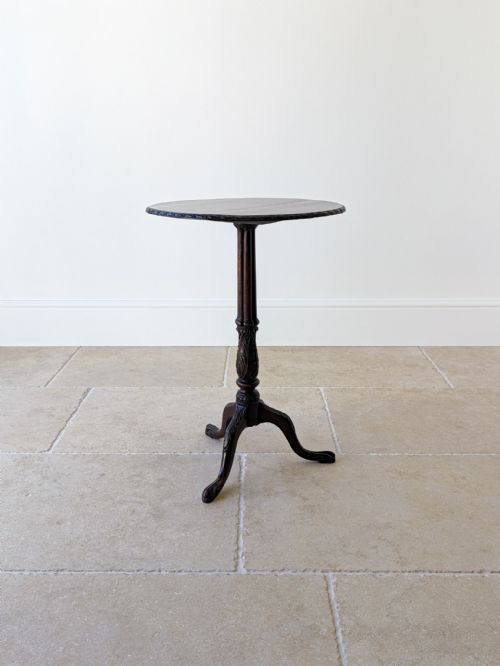
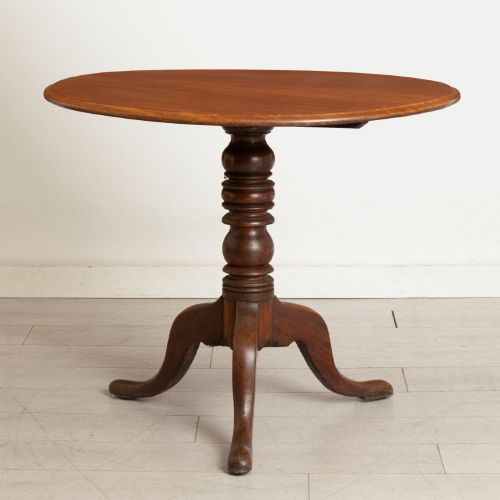
Most entries follow the classic tripod format with a central pillar and three legs, though pedestal and four-legged centre tables also appear. Mahogany remains the most common timber, complemented by rosewood, walnut, oak, and painted surfaces.
Forms range from small wine tables and supper tables to larger lamp and occasional tables. Buyers encounter plain circular tops alongside pie crust edges, birdcage mechanisms, and snap top catches.
How they were made
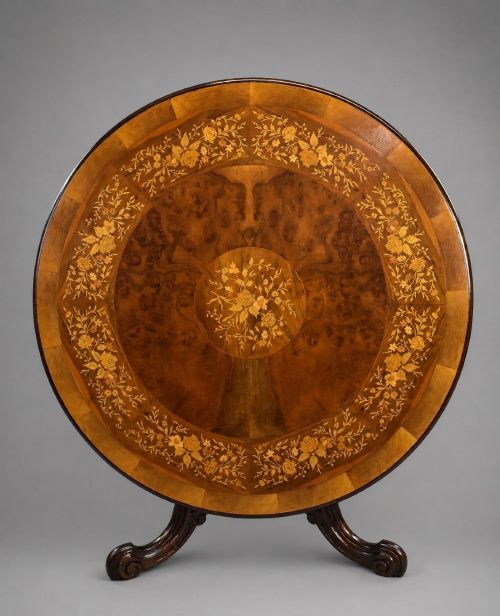
Cabinet makers constructed these tables primarily in solid hardwoods and decorative veneers, utilising mahogany, rosewood, walnut, and oak. Burr walnut and burr oak feature frequently to provide intricate grain patterns on the table surfaces.
Joinery techniques include pegged joints, turned pedestals, and carved tripod legs terminating in pad feet or castors. Specialised mechanisms such as birdcage catches allow the top to rotate and tilt securely.
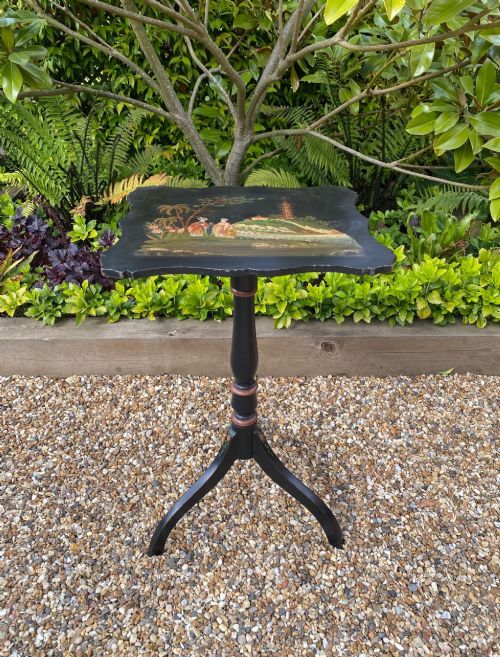
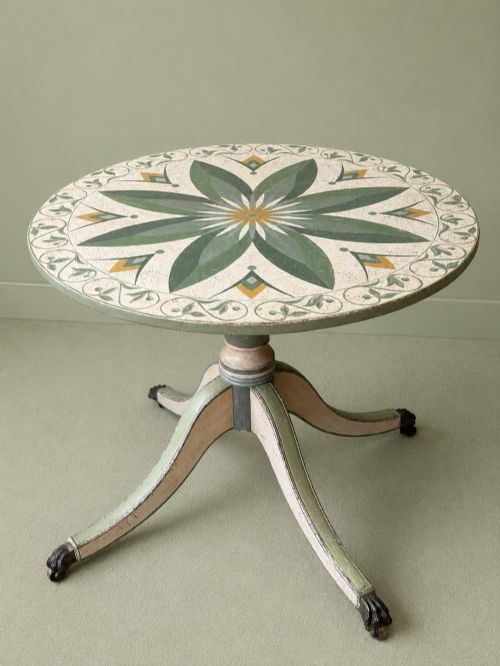
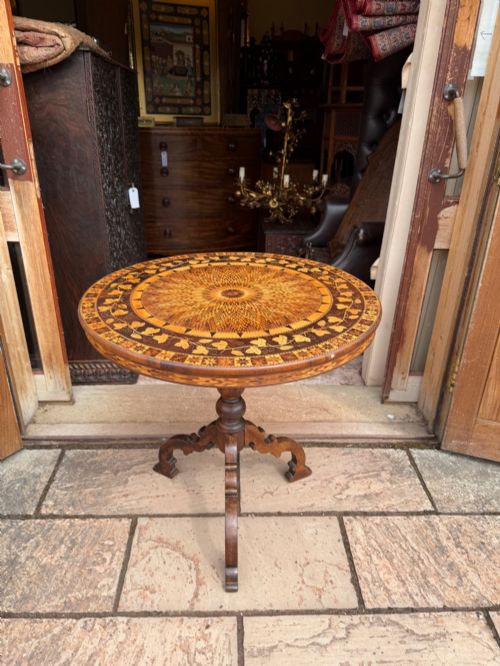
Surface decoration encompasses marquetry inlay, penwork, and painted floral designs executed on timber bases. Some examples incorporate elaborate hand carving, particularly those influenced by the Chippendale taste or Black Forest linden wood traditions.
A fire screen combination proves that some tables worked double shifts when the hearth grew cold.
What varies in quality
The sophistication of the timber selection determines much of the distinction between examples, with highly figured burr walnut and rich mahogany veneers commanding greater visual weight. The crispness of hand-carved details on the knees and feet of tripod tables reveals the skill of the original workshop.
Mechanical integrity defines another layer of quality, particularly the smoothness and stability of the tilting mechanism and the birdcage pivot. A well-constructed hinge mechanism ensures the top sits flat and locks securely without excessive play in the column.
Gillows
The Tilt Top Accent Table Glossary
- Tilt top
- A table mechanism allowing the top to pivot to a vertical position when not in use. This clever design enabled tables to be stored flat against a wall to clear floor space.
- Tripod table
- A small freestanding table supported by a central pillar resting on three legs. This form gained immense popularity during the Georgian period for flexibility in domestic rooms.
- Pie crust
- A decorative raised edge carved or moulded into a circular tabletop in a series of undulations. The profile resembles the crimped crust of a pastry pie.
- Birdcage
- A timber framework beneath the tabletop that allows the surface to both rotate and tilt. This mechanism adds height and complexity to the central column connection.
- Snap top
- A spring-loaded catch or lock securing the tabletop in the horizontal position. It prevents the surface from tipping unexpectedly during use.
Tilt Top Accent Table: Frequently Asked Questions
What is a tilt top accent table used for?
These pieces served originally as wine tables, supper tables, or tea tables in principal rooms. Their folding mechanism allowed servants to clear floor space quickly after meals.
Today, buyers place them beside seating as lamp tables or occasional surfaces. They offer functional utility combined with compact storage capability when folded.
How do I tell a Georgian table from a Victorian one?
Georgian examples often display restrained mahogany construction with slender tripod legs and subtle carving. Proportions tend to focus on classical balance and simpler turned pedestals.
Victorian pieces frequently introduce richer veneers such as burr walnut, heavier carved motifs, and marquetry inlay. The introduction of specific revival styles also marks the later nineteenth-century output.
What is a birdcage mechanism?
The birdcage is a small wooden cage structure fitted between the tabletop and the central pillar. It permits the surface to rotate independently of the base in addition to tilting.
This feature represents a higher level of cabinet making found on finer eighteenth-century tables. It adds structural height and mechanical versatility to the support column.
Are painted tables original?
Many painted surfaces date from the original period of manufacture, particularly Swedish and continental pieces decorated with floral motifs. English examples also feature painted or penwork decoration from the late eighteenth century onward.
Some tables received decorative painting later in their lifespan, such as Victorian updates to older timber. Examining the relationship between the paint layer and the underlying wood helps determine its age.