


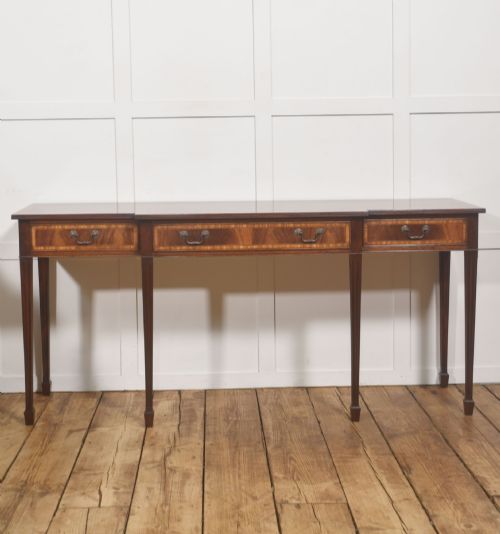
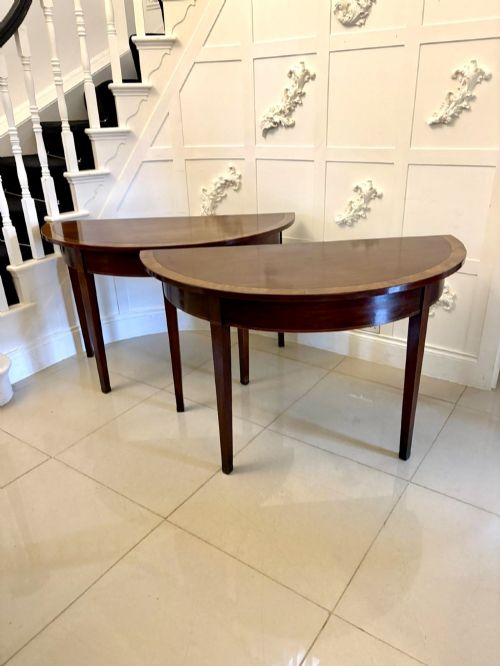
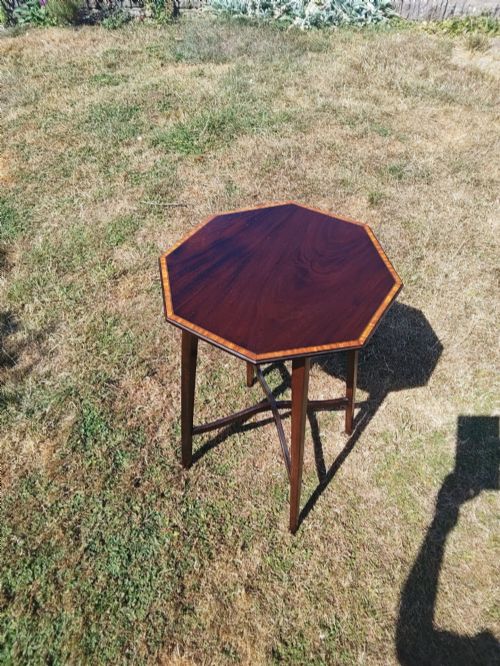
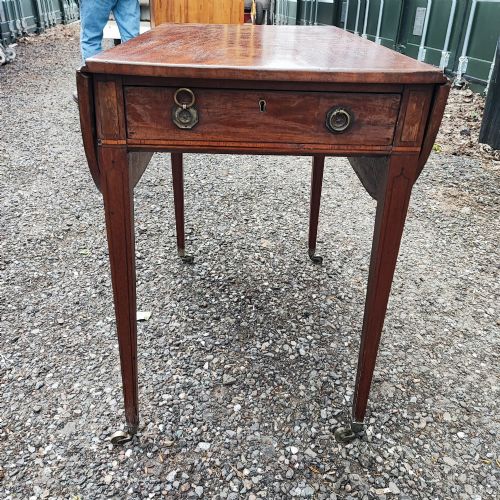


Crossbanded Mahogany Side Table
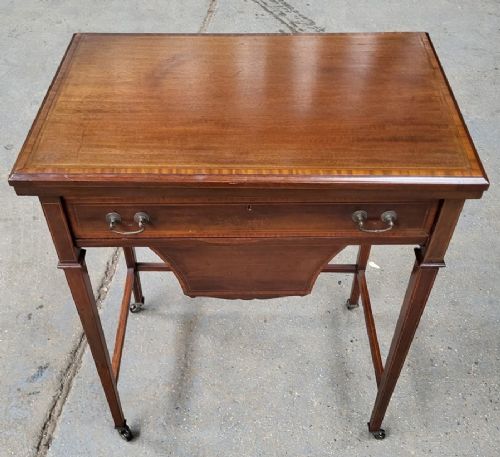
A crossbanded mahogany side table brings disciplined timber figure and crisp geometric framing into a room, serving as a versatile surface for daily use.
Crossbanded Mahogany Side Table
A crossbanded mahogany side table encompasses various utilitarian forms designed for domestic interiors across the eighteenth, nineteenth, and early twentieth centuries.
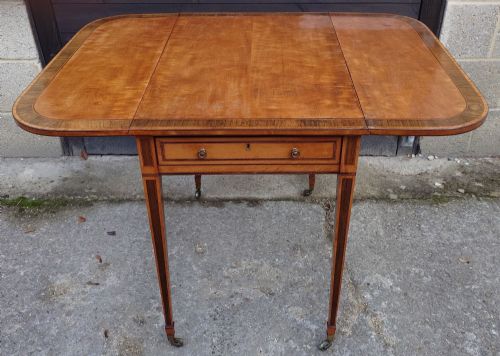
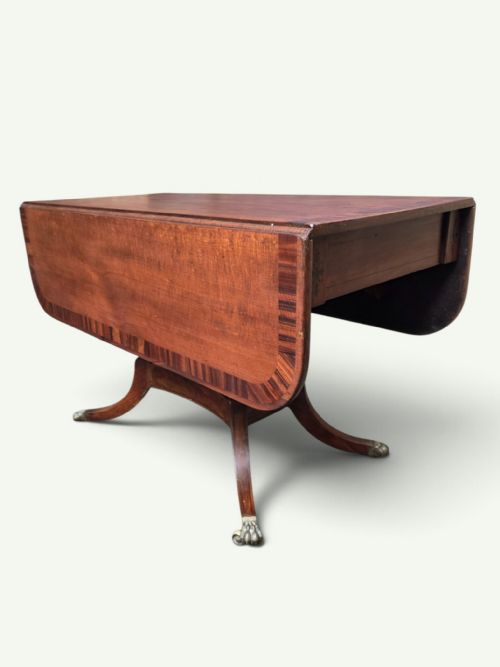
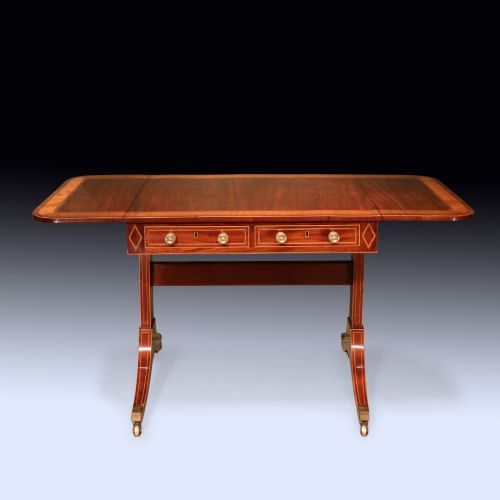
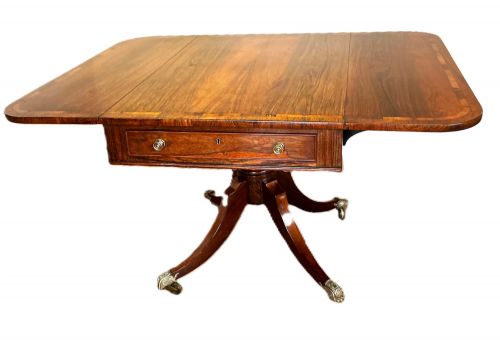
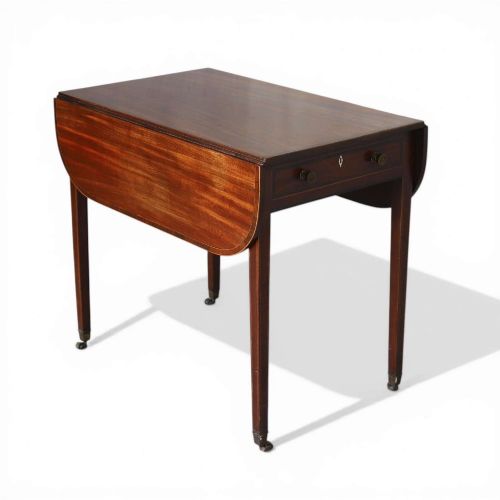
The material record spans George III, Regency, and Edwardian periods, appearing in forms such as sofa tables, Pembroke tables, console tables, and occasional tables.
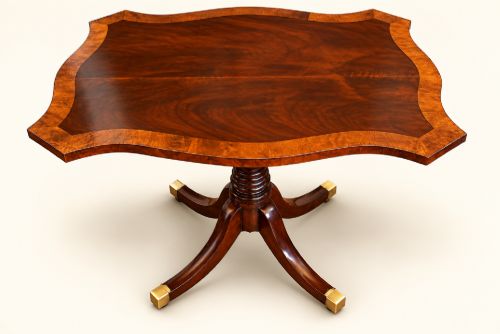
Buyers seeking this specific search phrase encounter variations including drop leaves, satinwood banding, and geometric top shapes ranging from serpentine to octagonal.
Materials and construction
Cabinet makers utilised dense mahogany timber as the primary structural and surface material, valued for its rich grain and stable properties.
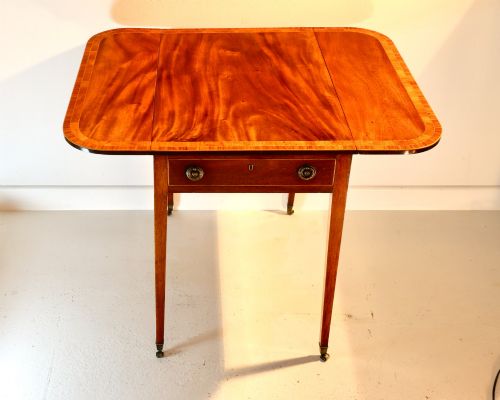
Contrasting timbers such as satinwood, rosewood, boxwood, and partridge wood were applied as veneer borders and banding to frame the primary mahogany fields.
Brass castors, handles, and occasional drop handles provided functional hardware accents to movable tables like sofa tables and Pembroke tables.
Crossbanded Mahogany Side Table Retail Price Guide 2026
Typical asking prices for crossbanded mahogany side table among the pieces listed under this phrase on Sellingantiques today, from the lower quarter to the upper quarter. They describe what is for sale here now, not the wider market.
Listings span Georgian, Regency, and Edwardian periods, uniting mahogany with satinwood, rosewood, and brass hardware across multiple table forms.
Assessing execution
The standard of a piece depends heavily on the precision of the timber matching and the subtlety of the contrasting inlay borders.
Proportion and structural integrity dictate the distinction between everyday utilitarian furniture and finer reception room pieces.
William Trotter of Edinburgh·Willmington and Cope
The Crossbanded Mahogany Side Table Glossary
- Crossbanding
- A strip of veneer laid perpendicular to the grain of the main surface, creating a contrasting border around the edge of a table top.
- Satinwood
- A pale, durable exotic timber native to India and Ceylon, frequently utilised for contrasting inlay and banding.
- Pembroke table
- A small occasional table featuring hinged flaps on either side, supported by pivoting brackets.
- Sofa table
- A rectangular library or occasional table traditionally designed to stand in front of a sofa, often fitted with drawers.
- Quartetto
- A nested set of four tables designed to slide sequentially beneath one another.
Crossbanded Mahogany Side Table: Frequently Asked Questions
Where should a side table go?
These pieces suit placement beside seating in a drawing room or against a hallway wall where surface space is required.
Their compact footprints allow them to integrate easily into existing room layouts without dominating the floor plan.
How do I identify a Regency table?
Regency examples often display bolder brass mounts, sabre legs, and darker mahogany tones characteristic of the early nineteenth century.
They frequently incorporate drop leaves or Pembroke configurations intended for flexible domestic utility.
What is satinwood banding?
Satinwood banding involves laying pale, contrasting strips of wood around the outer perimeter of a darker mahogany table top.
This technique creates a crisp visual frame that highlights the geometry of the piece.
Can these tables hold heavy lamps?
Solid mahogany construction and sturdy leg framing provide ample support for standard lamps, books, and decorative objects.
Care should be taken with drop-leaf mechanisms to ensure the supporting flaps are properly secured before placing weight upon them.