

Georgian Tilt Top Centre Table
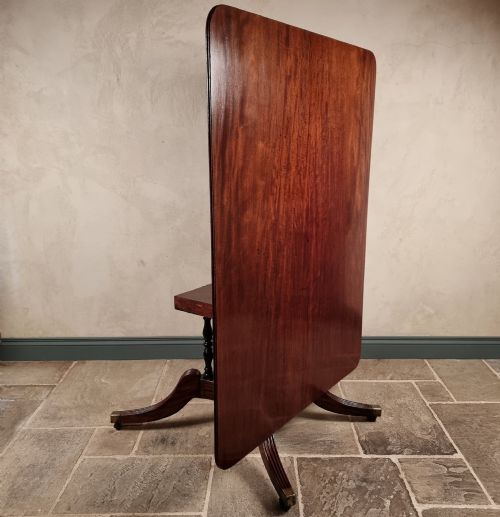
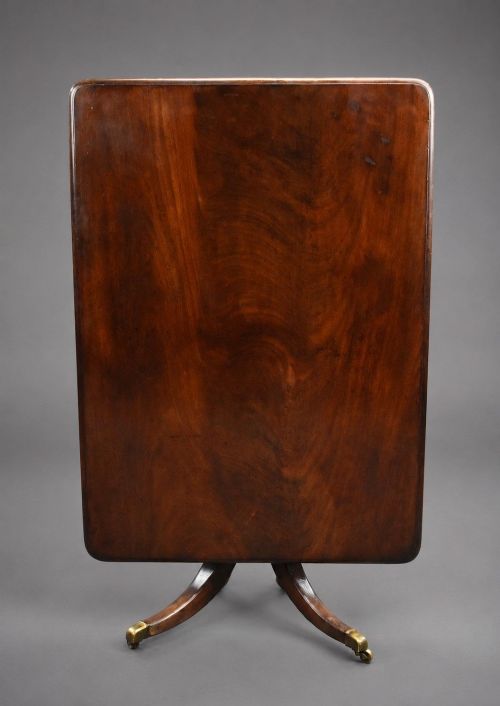
A georgian tilt top centre table brings a clever pivoting mechanism to domestic rooms, offering a stable surface for dining or display that folds flat when floor space matters.
Georgian Tilt Top Centre Table
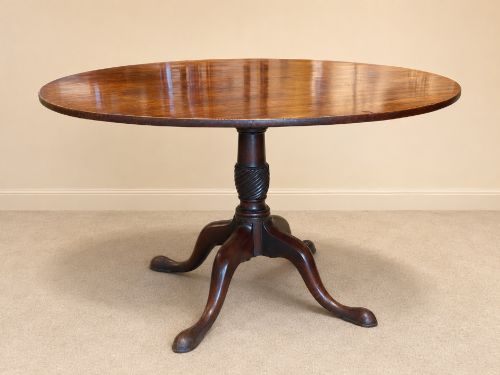
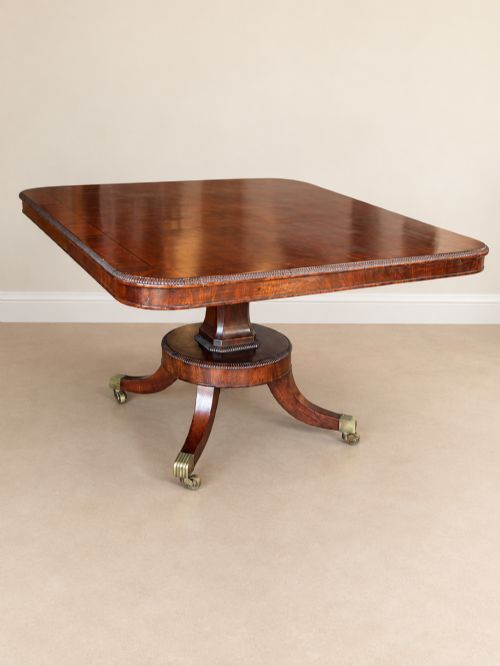
A georgian tilt top centre table combines utility and adaptability, appearing most frequently in forms designed for dining, breakfast, or occasional use in domestic spaces. These pieces emerge predominantly from the Georgian, George III, and Regency periods, alongside later nineteenth-century interpretations.
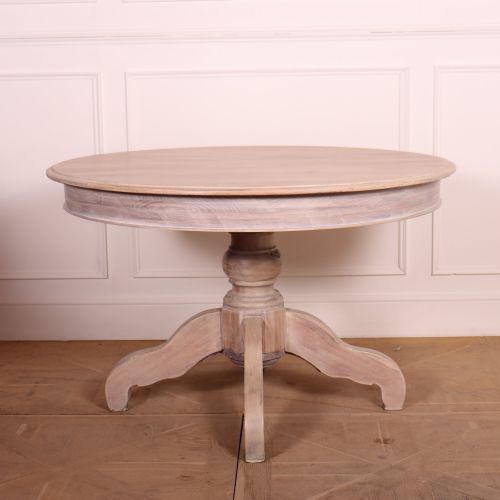
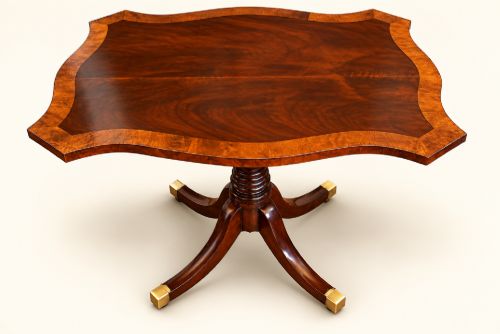
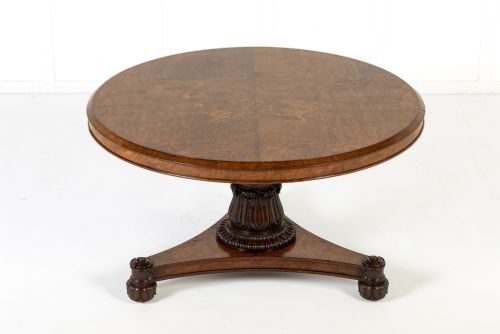
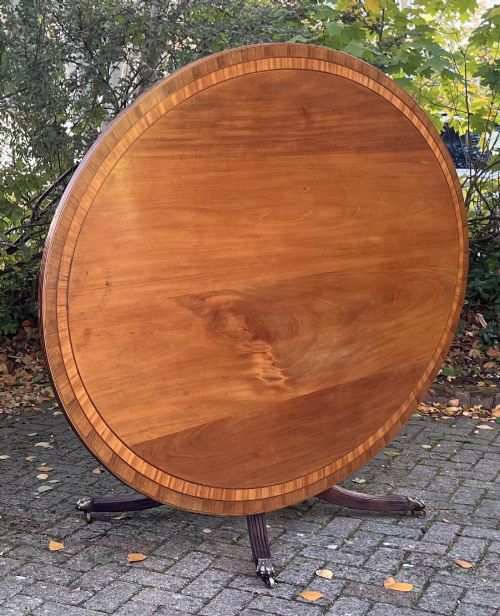
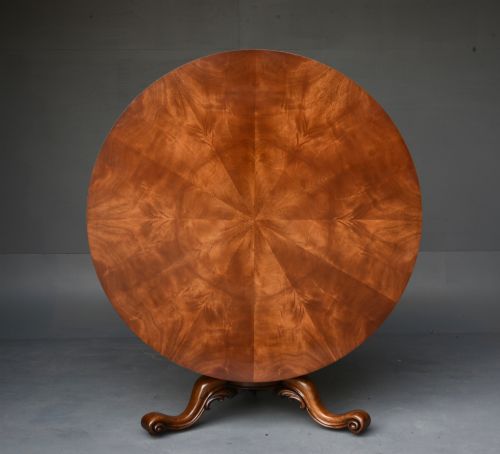
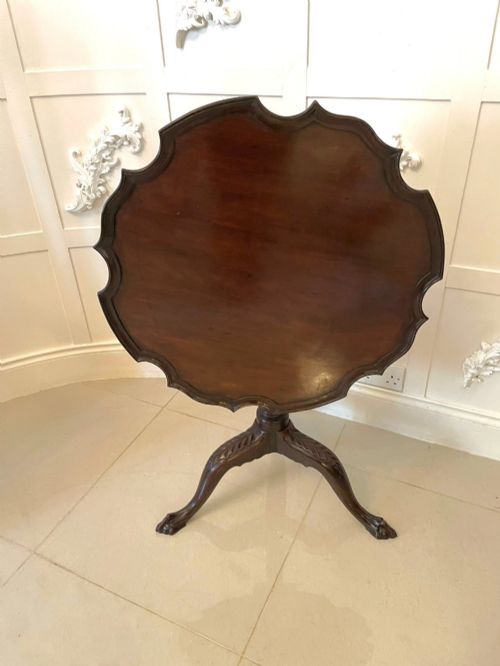
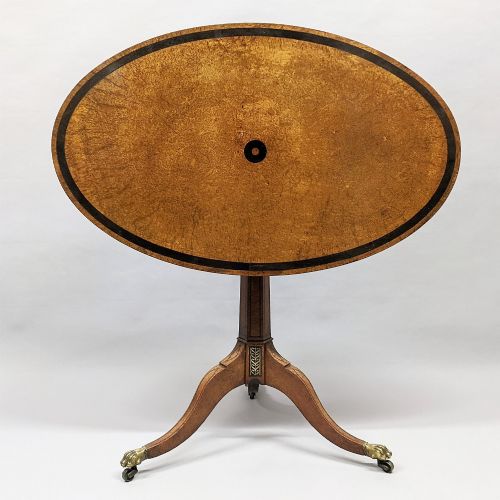
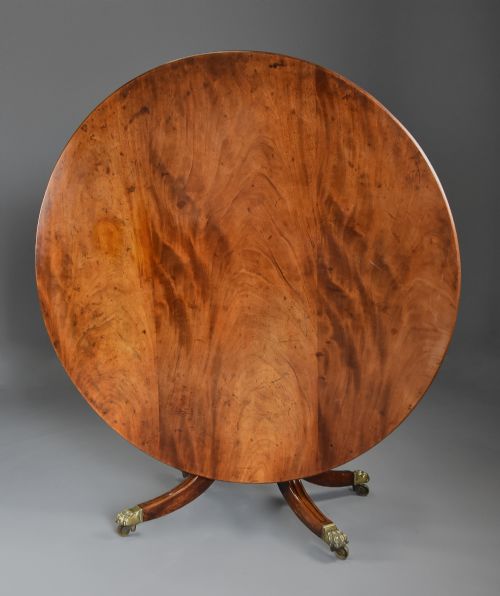
The inventories show circular, oval, and serpentine top shapes supported by pedestal columns and tripod bases. Makers fashioned these tables to function as primary dining surfaces or smaller occasional tables that tilt away against a wall when not in use.
Materials and construction
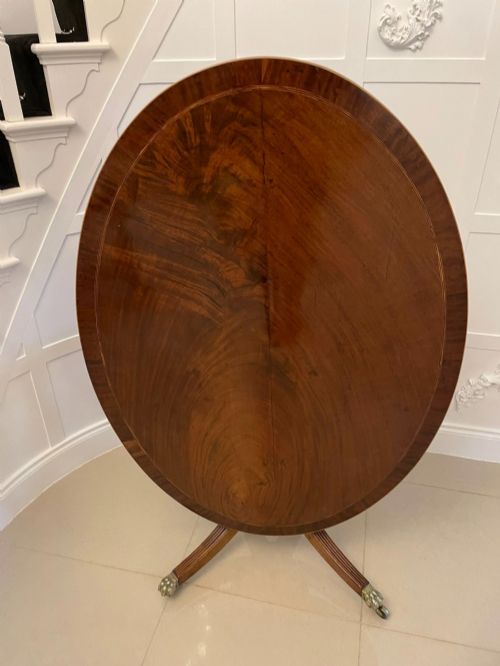
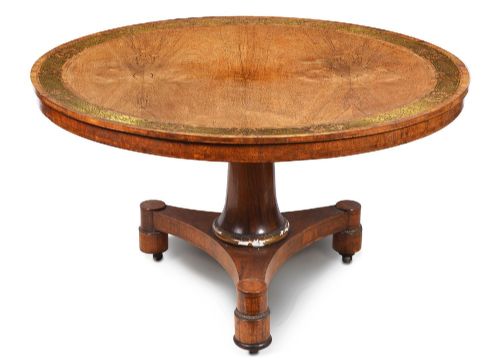
Cabinet makers utilised dense primary timbers including mahogany, walnut, and rosewood, often enhancing table tops with flame mahogany veneer, burr yew, or satinwood banding. Brass inlay and stringing frequently accent the borders and pedestals of Regency examples.
The pivoting mechanism relies on a clever catch and block arrangement fixed beneath the single-piece or segmented top, allowing the surface to rotate and lock into a vertical position. Turned pillars descend to tripod legs, frequently terminating in brass castors or pad feet.
Georgian Tilt Top Centre Table Retail Price Guide 2026
Typical asking prices for georgian tilt top centre table among the pieces listed under this phrase on Sellingantiques today, from the lower quarter to the upper quarter. They describe what is for sale here now, not the wider market.
Some dining tables tilt purely so servants could squeeze past them in cramped London hallways.
Judging execution
Quality rests upon the selection of timber and the crispness of the cabinet work, particularly in the figuring of the mahogany or the precision of the brass inlay. Tables featuring single-piece tops display greater ambition than those joined from multiple boards.
The stability of the tilt mechanism and the joinery where the pedestal meets the tripod legs determine the structural integrity of the piece. Subtle details such as crossbanded borders and well-turned columns elevate standard examples into masterworks of the period.
Walker-Lancaster·Gillows·George Bullock
The Georgian Tilt Top Centre Table Glossary
- Tilt-top
- A table top hinged to a central pillar that pivots from horizontal to vertical, allowing the piece to store flat against a wall. This mechanism proved essential in smaller rooms where floor space shifted between daytime living and evening dining.
- Crossbanding
- A strip of veneer applied perpendicularly to the main grain along the border of a table top, often utilising a contrasting timber such as satinwood. This technique frames the central panel and demonstrates skilled cabinet making.
- Tripod base
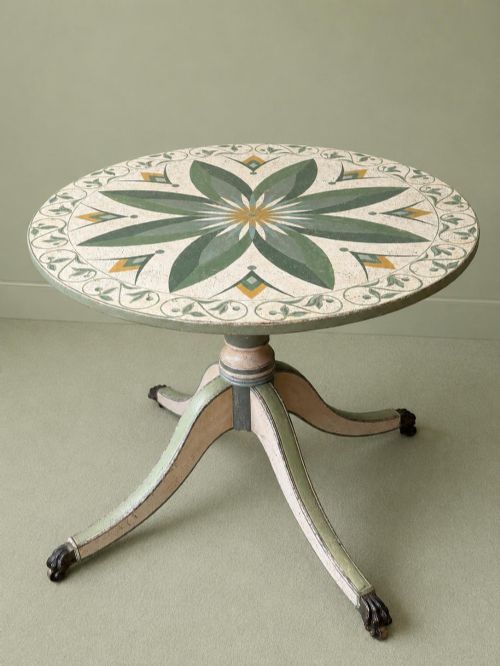
- A support structure featuring three outward-curving legs radiating from a central pillar, commonly terminating in castors or pad feet. It provides balanced weight distribution for tables that must remain stable despite a central pivot.
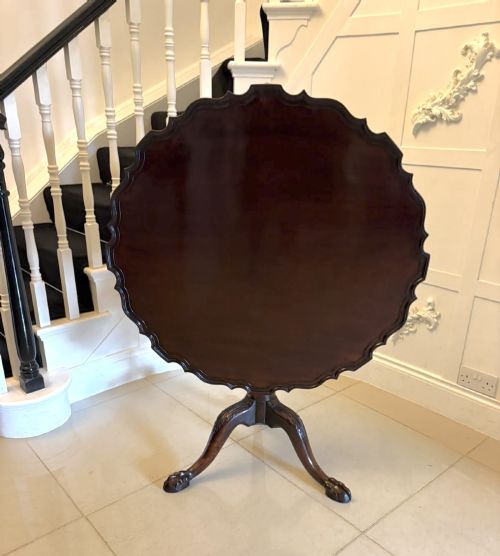
- Piecrust edge
- A carved, undulating raised border shaped around the perimeter of a circular table top, resembling pastry work. This decorative treatment demands skilled hand-carving directly into the solid timber of the top.
Georgian Tilt Top Centre Table: Frequently Asked Questions
How do you operate the tilt mechanism safely?
Release the brass catch or wooden wedge located beneath the table top, allowing the surface to pivot smoothly on its central hinge.
Support the weight of the top with one hand as you guide it from the vertical storage position down to the horizontal locked plane.
Were these tables used for dining?
Breakfast and dining tables served multiple daily functions in Georgian households, moving from morning meals to parlour activities.
Smaller occasional versions held lamps and books, while larger circular tops accommodated seated dining groups before folding away to clear the room.
How do I care for mahogany and rosewood surfaces?
Apply a traditional beeswax polish sparingly to nourish the timber and maintain a soft sheen without building up sticky layers.
Keep these tables away from direct sunlight and heat sources to prevent the veneers from drying, cracking, or lifting over time.
What distinguishes Regency tables from earlier Georgian pieces?
Regency examples frequently introduce exotic veneers such as rosewood and amboyna, paired with contrasting brass inlay or stringing.
Earlier Georgian pieces lean towards solid mahogany or figured walnut, relying on carved tripod bases and piecrust edges rather than metallic embellishments.