

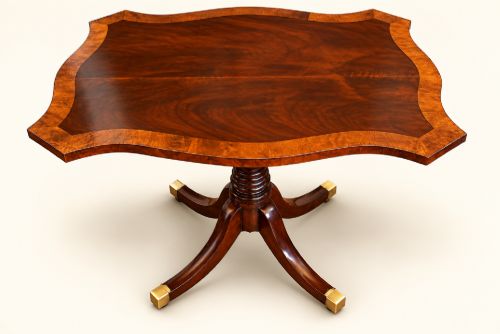
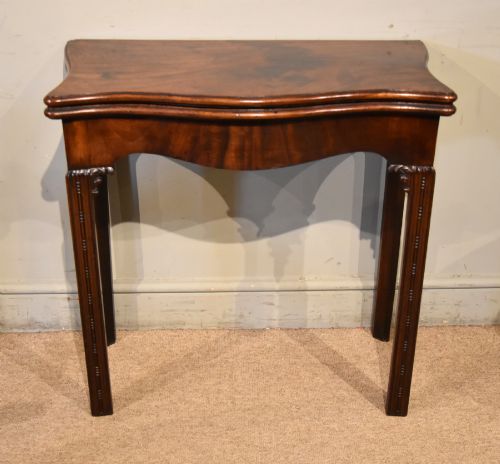
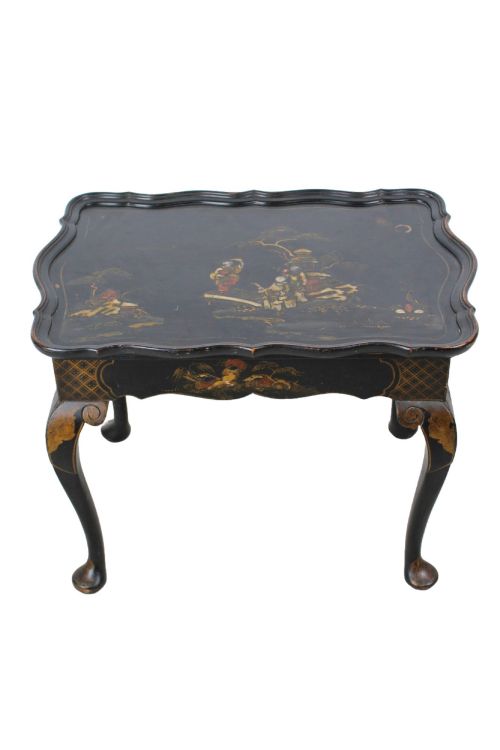
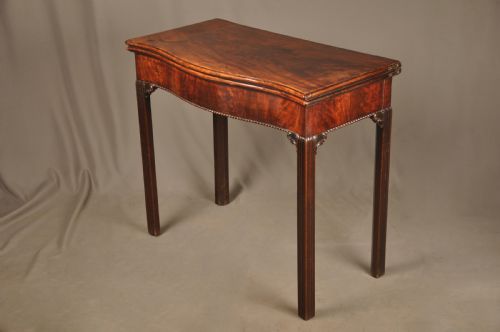



Serpentine Top Tea Table
A serpentine top tea table is a refined surface with an undulating edge, built to hold porcelain during the social rituals of Georgian and Victorian parlours.
Serpentine Top Tea Table
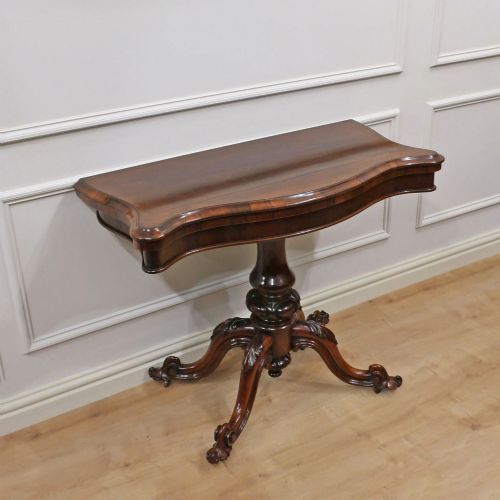
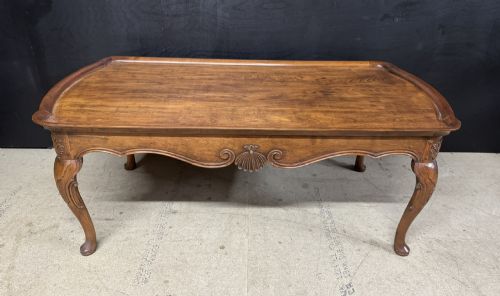
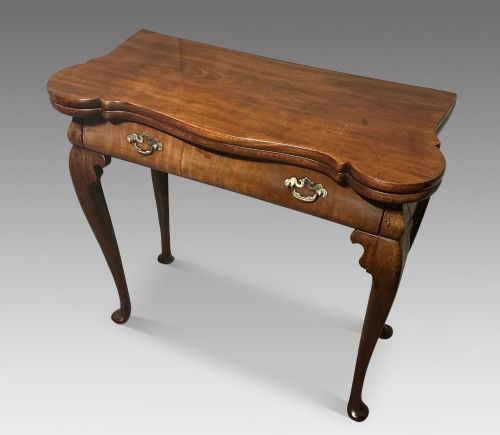
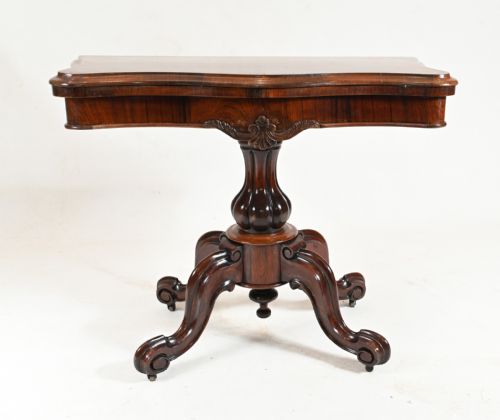
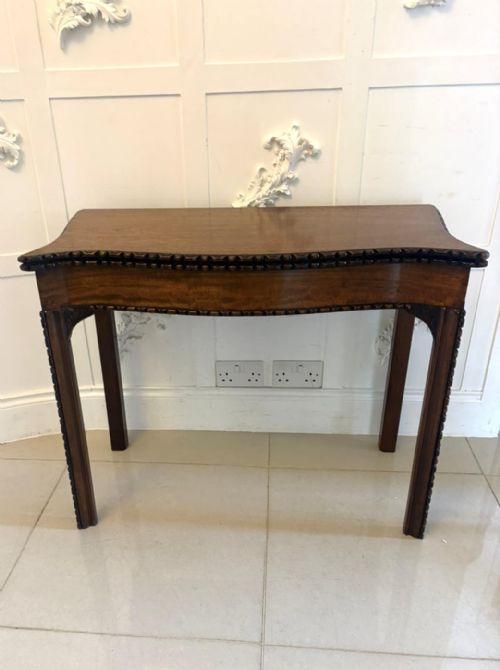
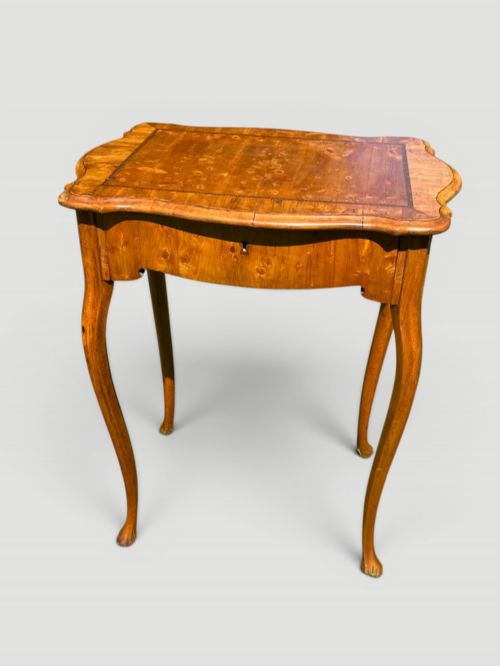
A serpentine top tea table displays a distinct undulating profile to its edge, curving outward in the centre and inward at the corners, or vice versa. These pieces served primarily for the formal serving of tea in upper-class homes, doubling frequently as card tables with folding leaves.
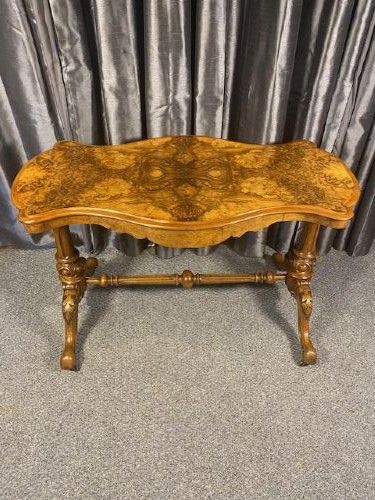
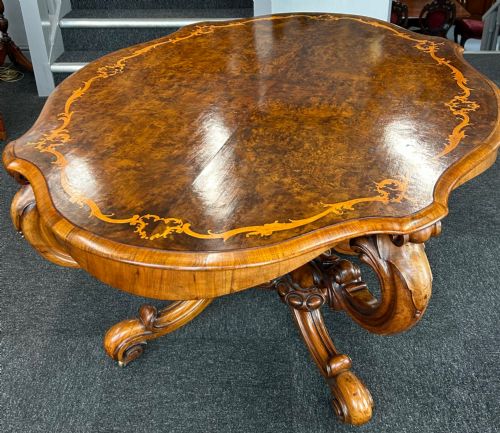
The versions most commonly met on this page belong to the Georgian and Victorian eras, ranging from 18th-century mahogany examples to mid-19th-century burr walnut interpretations. Makers adapted the form across decades, resulting in variations that served as side tables, games tables, or occasional surfaces.
Makers often constructed these tables with clever pivoting mechanisms or fold-over tops to conceal green baize playing surfaces beneath the timber. The serpentine outline required considerable woodworking skill to shape the timber rails and matching tops precisely.
Materials and construction methods
Cabinetmakers utilised dense timbers such as mahogany, Cuban mahogany, walnut, and burr walnut, often applying decorative veneers over secondary woods to create striking figured surfaces. Selected pieces incorporate brass hardware, ormolu mounts, and delicate marquetry inlays.
Shaping the curved serpentine edge demanded expert hand-sawing and planing of solid timber margins to match the contours of the frieze and legs. Joiners employed sturdy frame construction with internal pivot hinges or gate legs to support the heavy folding leaves characteristic of tea and card tables.
Serpentine Top Tea Table Retail Price Guide 2026
Typical asking prices for serpentine top tea table among the pieces listed under this phrase on Sellingantiques today, from the lower quarter to the upper quarter. They describe what is for sale here now, not the wider market.
Many tables retain faint traces of green baize beneath their folding leaves, whispering of centuries-old wagers played out over tea.
Factors separating standard examples from superior ones
The quality of a serpentine top tea table rests largely on the choice of timber grain, particularly the depth of figure found in burr walnut or the rich warmth of Cuban mahogany. Superior execution shows in the crispness of the hand-carved mouldings and the seamless alignment of the serpentine edge when the table stands closed.
Construction integrity defines the upper tier, visible in smooth swivel mechanisms, tight joints, and original timber blocking beneath the top. Pieces that retain their original patination and undisturbed surfaces command greater appreciation than those with heavy modern intervention.
Gillows·Chippendale·Hepplewhite
The Serpentine Top Tea Table Glossary
- Serpentine
- A curved line that bends outward then inward, creating a gentle undulating edge along the top and frieze of the table. This contour is characteristic of refined 18th-century and Victorian cabinet work.
- Fold-over
- A table top designed on a hinge to double its surface area when opened for tea or card games. The pivoting leaf often reveals a concealed well or a baize-lined playing surface.
- Burr walnut
- A highly prized wood harvested from walnut tree growths, displaying intricate, swirling grain patterns. Cabinetmakers utilised this timber extensively for decorative veneers on Victorian tables.
- Marquetry
- The art of applying small pieces of veneer to form decorative patterns and pictorial designs on furniture surfaces. This technique appears on French-influenced tables found within the selection.
- Frieze
- The horizontal band of wood running directly beneath the top edge of the table. On these pieces, the frieze follows the undulating serpentine curve.
Serpentine Top Tea Table: Frequently Asked Questions
How were these tables used originally?
These tables served the polite society of the 18th and 19th centuries as central pieces for afternoon tea and evening card games.
The fold-over top allowed households to save space in the parlour, opening up only when guests arrived for social gatherings.
How do I tell Georgian from Victorian examples?
Georgian examples typically employ solid mahogany with restrained lines, characteristic of 18th-century cabinetmaking traditions.
Victorian pieces often showcase heavily figured burr walnut, rosewood, or exotic veneers, reflecting the revival styles popular during the 19th century.
How do I care for antique wood surfaces?
Antique timber surfaces require protection from direct sunlight, excessive heat, and sudden changes in humidity that can cause splitting.
Regular dusting with a dry cloth and occasional application of traditional wax helps preserve the natural lustre and historical patination of the wood.