
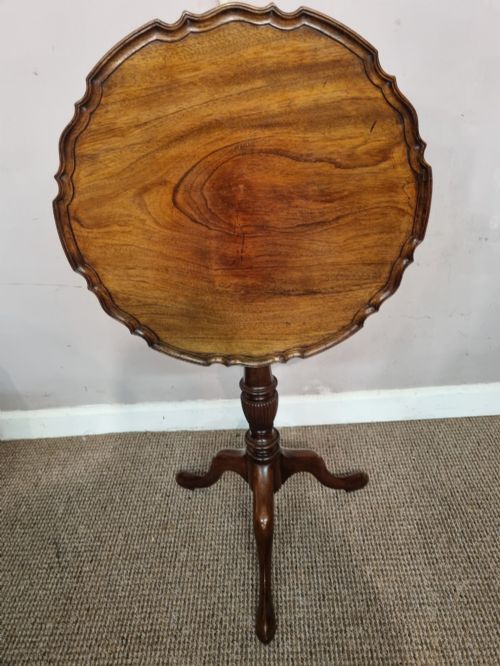
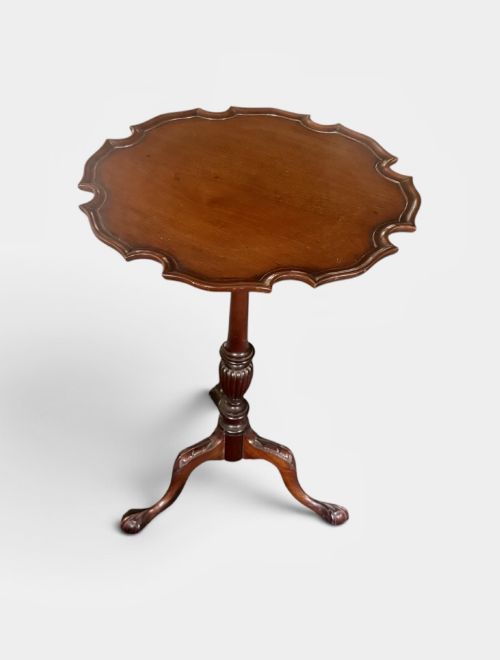
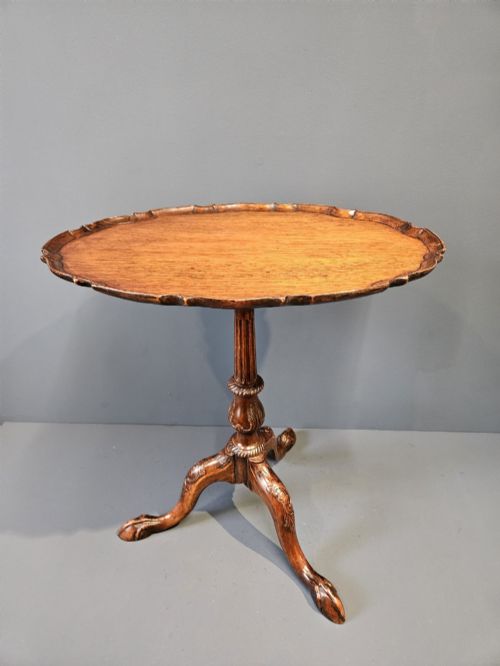
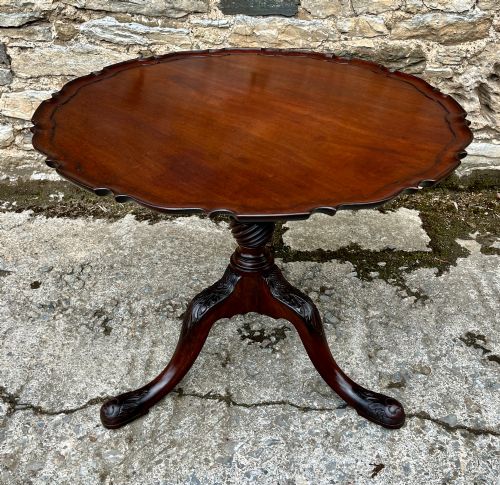
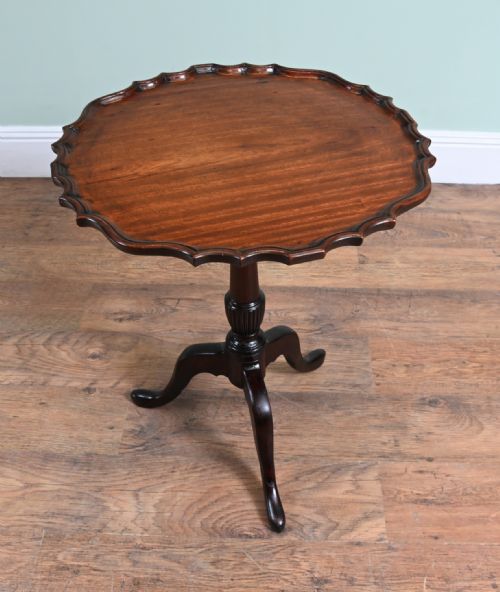


Chippendale Pie Crust Table
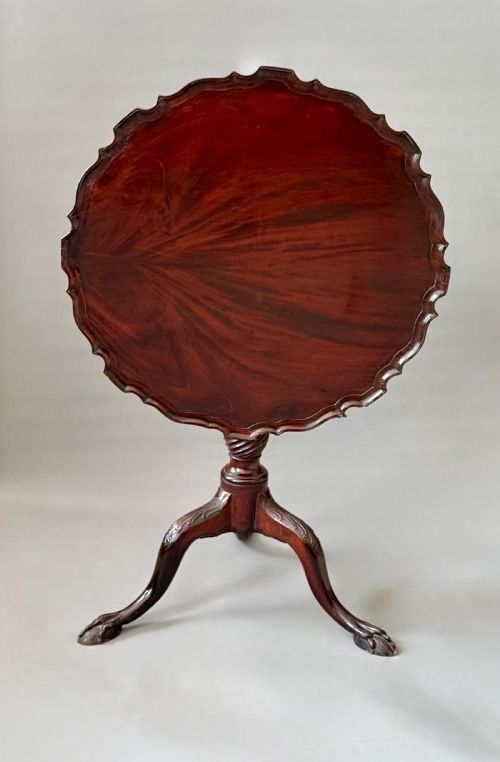
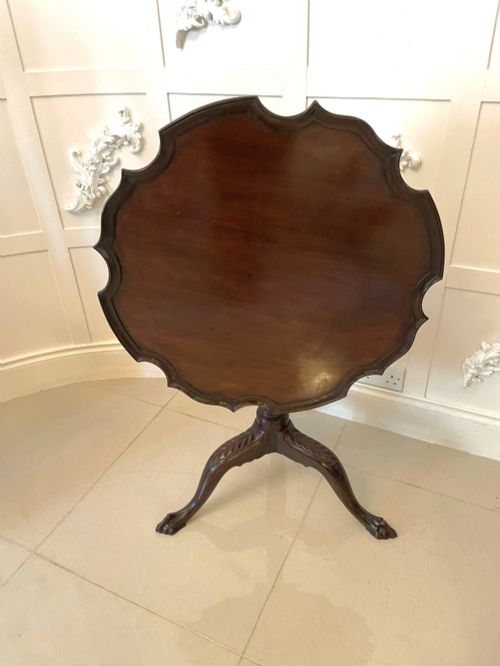
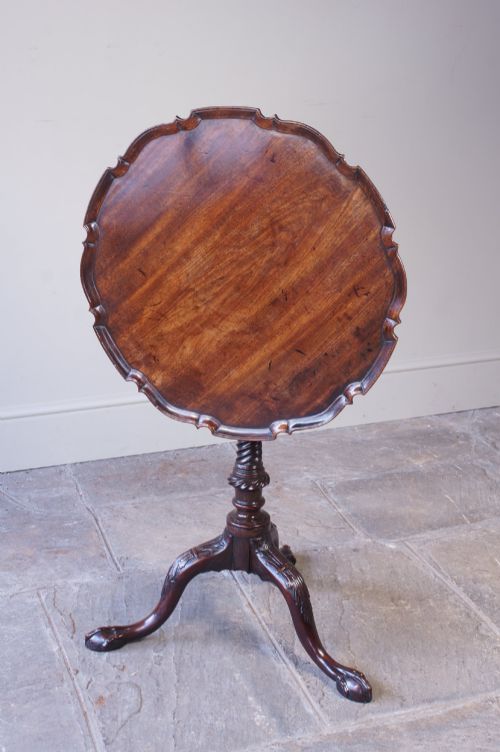
A chippendale pie crust table brings refined 18th-century cabinetmaking into a room through its characteristically carved, raised rim and stable tripod base.
Chippendale Pie Crust Table
When searching for a chippendale pie crust table, a buyer examines round or oval timber tables featuring an undulating, raised border carved directly from the solid wood. These pieces primarily function as tea, wine, supper or occasional tables, standing on a central pillar supported by three legs. The selection spans authentic 18th-century George III examples alongside later revivals from the Victorian, Edwardian and 20th-century periods.
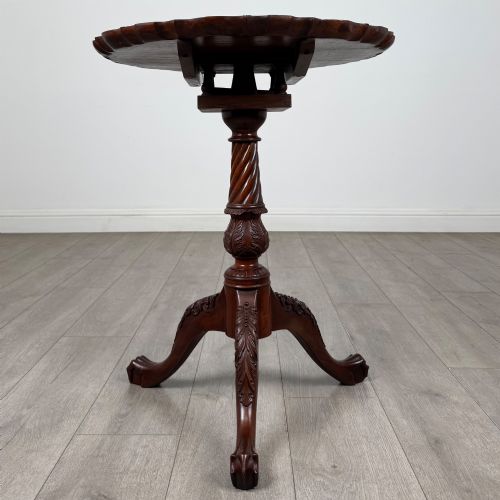
The most common formats met on this page are tilt-top and snap-top tables, where the surface pivots vertically for storage when not in use. Many incorporate a birdcage mechanism beneath the top, allowing the surface to rotate as well as tilt. Occasional tables and coffee table adaptations also appear across the inventory.
Origins trace principally to English workshops, encompassing both original period pieces and subsequent revival interpretations in the Chippendale style. Materials and proportions vary according to the decade of manufacture, ranging from solid mahogany to figured walnut.
How they were made
Makers constructed these tables predominantly from mahogany and walnut, occasionally utilising figured veneer on the top surfaces or solid timber for structural elements. Brass components appear selectively, primarily within pivoting mechanisms or hardware.
The distinctive rim required meticulous hand-carving, shaping the solid edge of the wooden top into curves resembling pastry crusts. Joinery combined traditional turning for the central pedestal and legs with precise pivot joints for the tilting top.
Some Edwardian afternoon teas survived thanks entirely to a well-carved mahogany rim.
What varies in quality
Quality rests in the depth and crispness of the carved rim and the proportion of the tripod legs. Fine examples display fluent, hand-chiselled mouldings on the pie crust edge rather than shallow, mechanical shaping.
The integrity of the tilt mechanism and the stability of the central pillar dictate practical excellence. Superior pieces maintain a firm connection between the top and base without excessive play in the pivot joint.
The Chippendale Pie Crust Table Glossary
- Pie crust edge
- A raised, carved border with alternating curves and points resembling pastry crust. This decorative rim kept tea cups and tableware from sliding off the surface during use.
- Tilt-top table
- A table with a hinged top that pivots to a vertical position. This allowed the furniture to be stored flat against a wall when not serving tea or supper.
- Tripod base
- A support structure consisting of three curved legs radiating from a central pedestal. It provided stable footing on uneven floors common in older domestic interiors.
- Birdcage
- A wooden framework beneath the table top that enables the surface to both rotate and tilt. It connects the top to the central column through a small box-like assembly.
- Snap top
- A variant of the tilt mechanism incorporating a small wooden catch or latch. This device locks the surface securely in the horizontal position during use.
Chippendale Pie Crust Table: Frequently Asked Questions
What were they used for?
These tables served primarily for serving tea, wine or supper in Georgian parlours and drawing rooms. The raised rim prevented precious porcelain cups from sliding off.
Between meals, the surface tilted vertically so the table could rest compactly against the wall, freeing up floor space.
How do I tell an 18th-century table from a revival?
Authentic 18th-century examples show the subtle tool marks, timber shrinkage and patina associated with age. The construction methods and secondary woods match the period of manufacture.
Revival pieces from the Edwardian era or the 1920s tend to use more uniform machinery shaping and cleaner, newer timber inside the joints.
How do I live with a tilt-top table?
Place the table where its pivoting top can be appreciated, either displayed flat for holding books and lamps or tilted against a wall as a decorative panel.
Keep the timber away from direct heat sources and strong sunlight to protect the polish and prevent the solid wood top from warping.
What is a birdcage mechanism?
A birdcage is an ingenious wooden construction fitted beneath the table top. It allows the surface to rotate fully in a horizontal circle as well as tilt downward.
This added convenience let guests adjust the table angle or position without moving the heavy tripod base.