


Pie Crust Wine Table
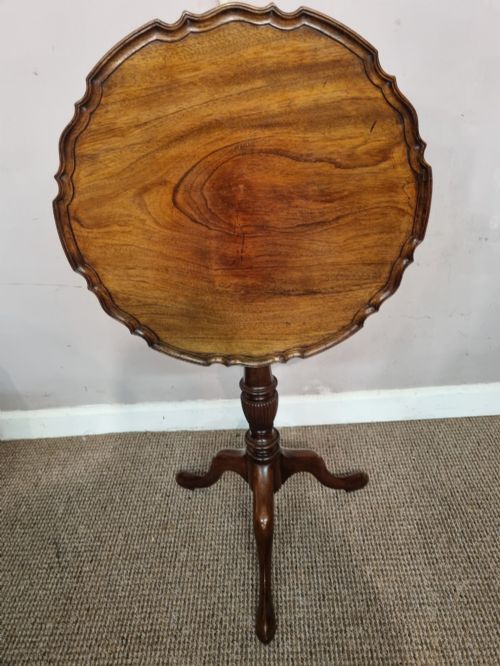
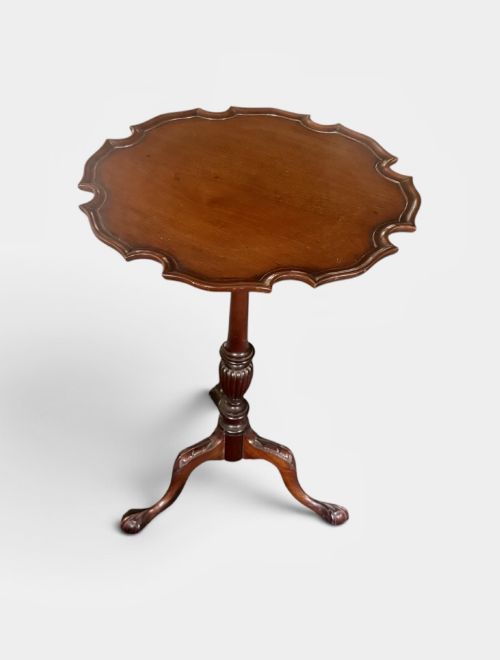
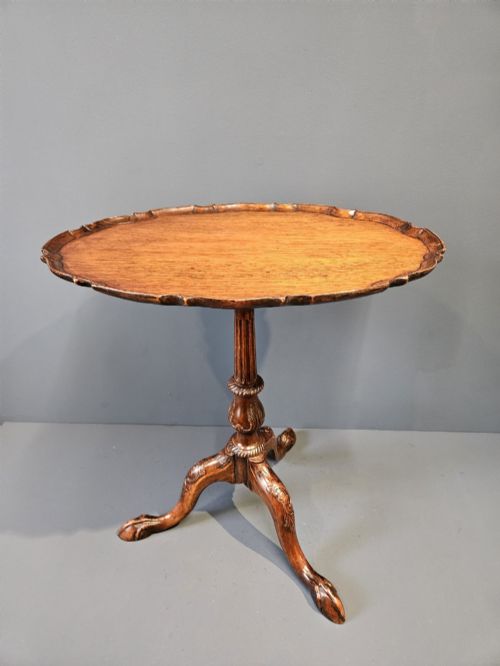
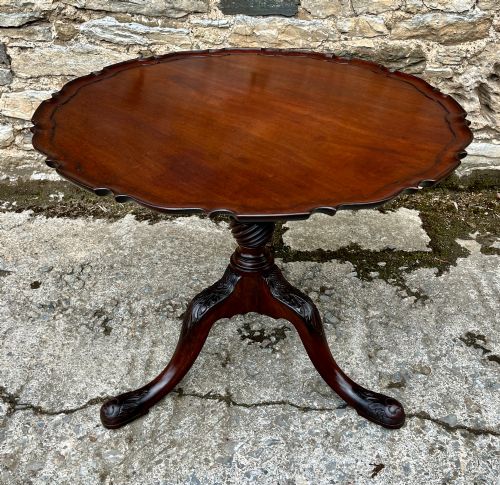
A pie crust wine table brings carved distinction to a room, offering a small surface raised on a pillar and tripod base.
Pie Crust Wine Table
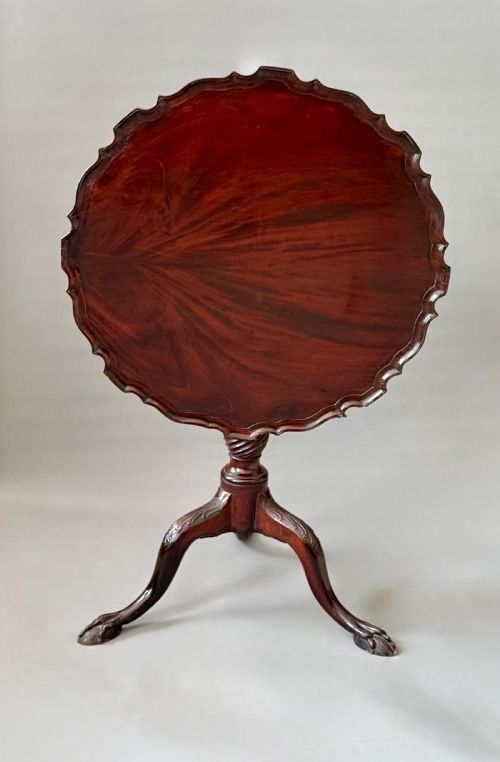
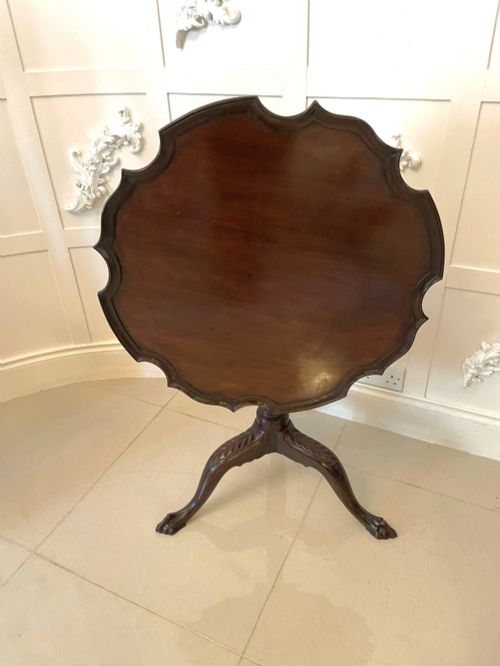
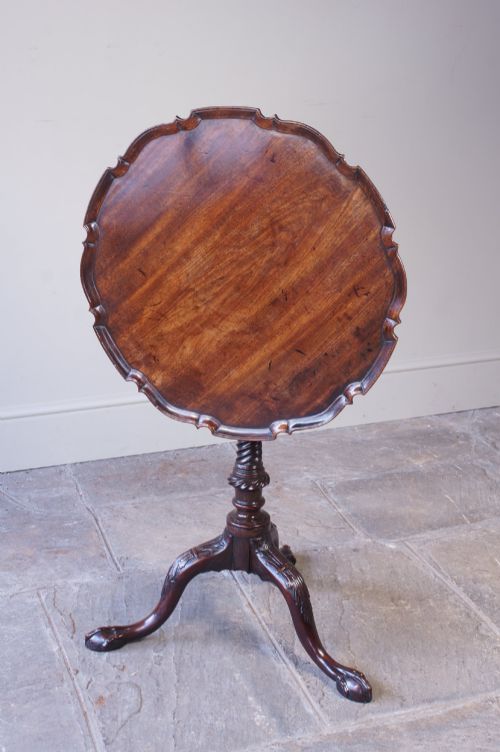
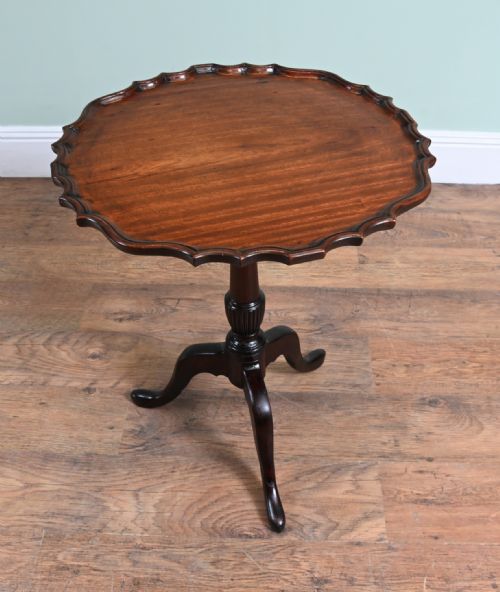
A pie crust wine table stands as a compact occasional piece, typically featuring a circular or oval top with a raised, scalloped rim that resembles pastry work. When searching for a pie crust wine table, buyers encounter forms ranging from authentic 18th Century George III examples to Edwardian and later revival pieces.
The primary formats span tripod occasional tables, tilt-top variants that fold away when not in use, and specific side or lamp tables. Mahogany and walnut dominate the offerings, matched with tripod bases that support the small column and shaped top.
How they were made
Cabinet makers constructed these tables predominantly from timber such as mahogany, oak, and walnut, often selecting burr or figured veneers for the top surface. The characteristic raised rim required careful manual carving from solid wood stock or shaping directly from thick planks to achieve the distinct curved edge.
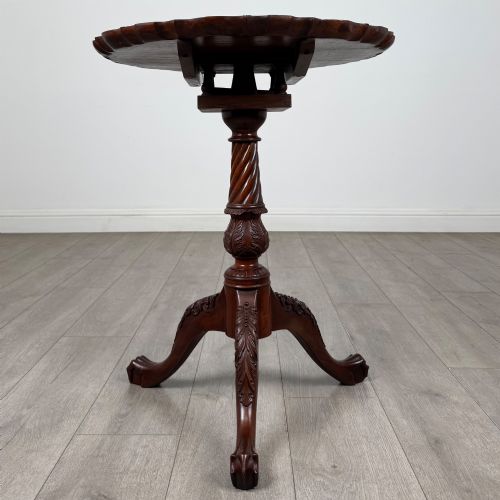
Many examples incorporate a bird-cage mechanism or a tilt-top function beneath the surface, allowing the top to pivot and snap upright against the central pedestal. Brass fittings and components occasionally appear on mechanisms and fastenings, while turned columns join the top to three splayed legs.
Listings feature woods spanning solid mahogany, oak, walnut, burr walnut, and figured walnut alongside brass hardware.
What varies in quality
Quality rests significantly on the crispness and depth of the carved rim, where sharper, more fluid scalloping distinguishes superior cabinet work from plain or softer moulding. The choice of timber also dictates grade, with densely figured walnut and rich, well-grained mahogany marking the finer end of the spectrum.
Proportion and stability define the construction standard, particularly in how securely the tilt mechanism locks into place and how evenly the tripod legs bear weight. Original 18th Century craftsmanship commands attention for its joinery integrity compared to later revival items.
Gillows
The Pie Crust Wine Table Glossary
- Pie-crust edge
- A decorative raised border carved with small, continuous curves resembling pastry crust. This profile defines the top surface of the table.
- Tilt-top
- A hinged mechanism allowing the table surface to pivot upright for storage. It is also known as a snap-top or tip-top table.
- Tripod base
- A central pillar supported by three diverging legs. This configuration provides stability on uneven floors.
- Bird-cage
- A rotating wooden frame beneath the table top that permits the surface to both tilt and revolve. It represents a mark of finer Georgian construction.
- Occasional table
- A small, portable piece designed for specific, intermittent use rather than permanent placement. These include wine, lamp, and side tables.
Pie Crust Wine Table: Frequently Asked Questions
What is a pie crust wine table used for?
These tables served historically for holding small items like wine glasses, tea equipment, or lamps beside seating. Today they function as compact accent pieces in living spaces.
Their small footprint allows them to fit easily into corners or beside armchairs as display surfaces.
How do I identify a Georgian pie crust table?
Authentic Georgian pieces date from the 18th Century and typically feature solid mahogany construction with hand-carved rims and patinated surfaces. Look for traditional joinery methods and tilt-top mechanisms.
Revival versions from the Edwardian era or the 1920s imitate these earlier styles but display different timber seasoning and machine-assisted carving.
What does tilt-top mean on these tables?
A tilt-top incorporates a hinge beneath the surface that lets the table top pivot vertically. This allowed historical households to store the furniture flat against a wall when not in use.
Many examples use a catch or a bird-cage mechanism to secure the top in the horizontal position.
Are these tables sturdy enough for daily use?
The tripod base design offers reliable stability on level floors, though the small surface area is intended for light items rather than heavy loads. Care should be taken when tilting the top to avoid straining the hinge.
Placed appropriately, they withstand normal daily placement of cups, books, and small lamps.