



Tiered Corner Shelving
Tiered corner shelving provides adaptable display space, uniting practical storage with elegant room optimisation.
Tiered Corner Shelving
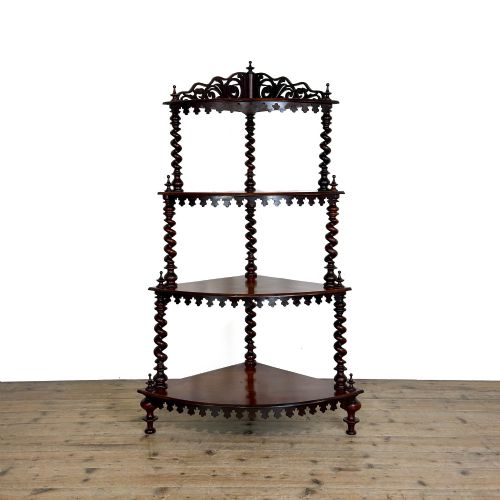
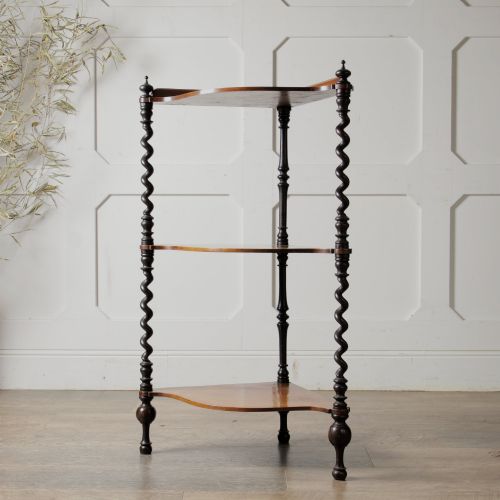
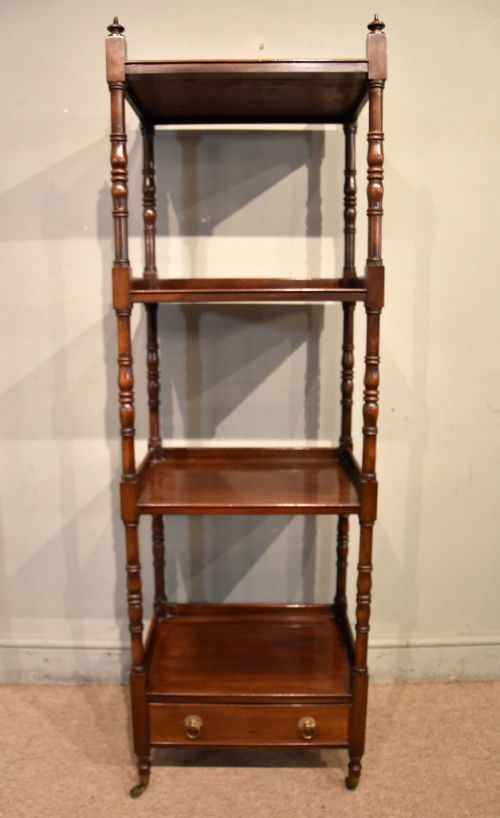
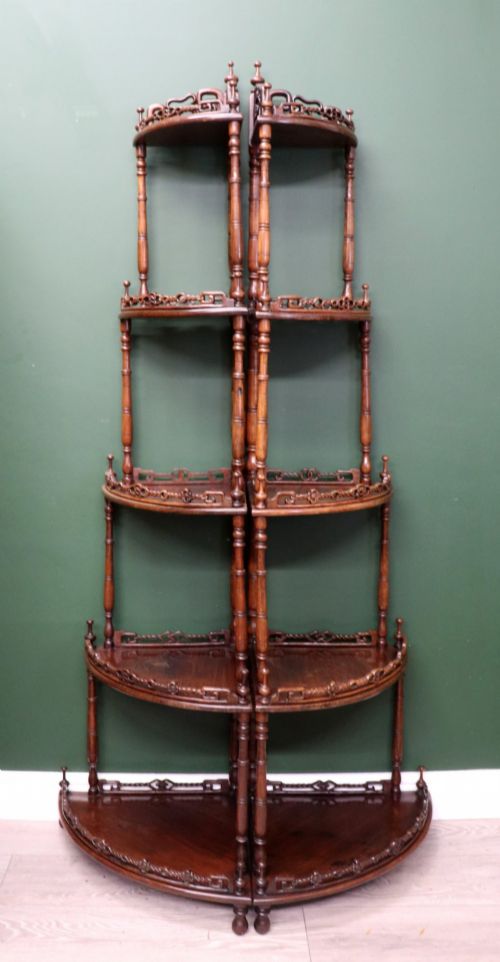
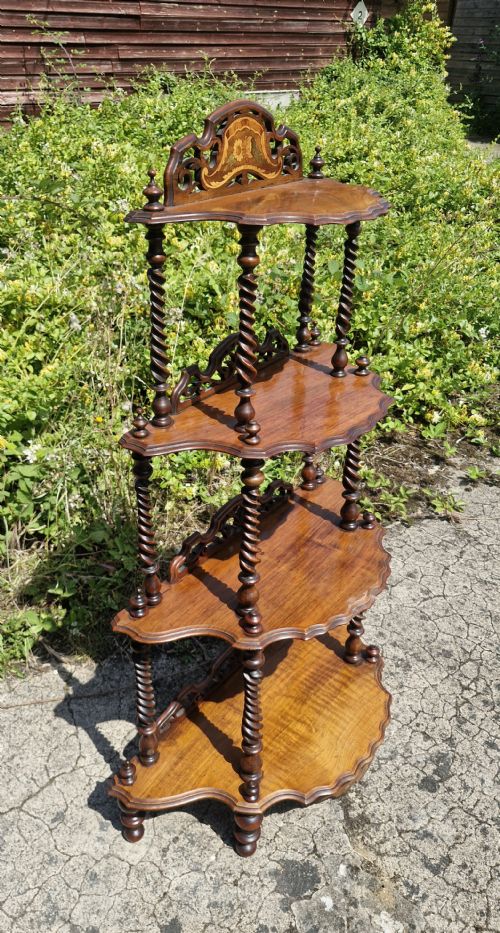
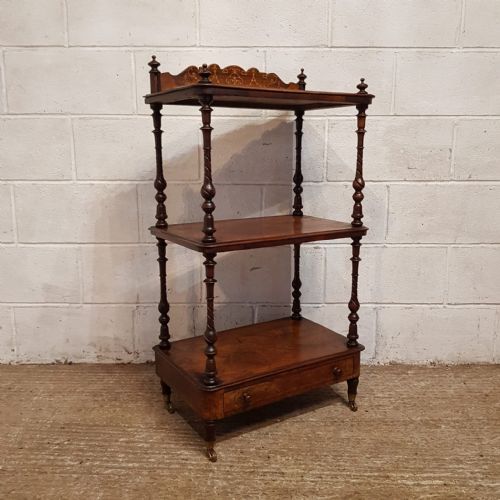
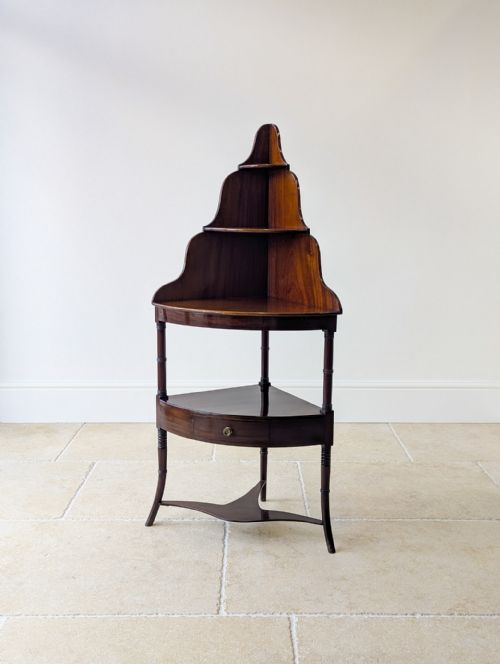
Tiered corner shelving primarily takes the form of corner whatnots, etageres, and display stands designed to utilise neglected room junctions.
The pieces appearing on this page span the Georgian, Regency, and Victorian periods, with 19th-century examples forming the majority of the selection.
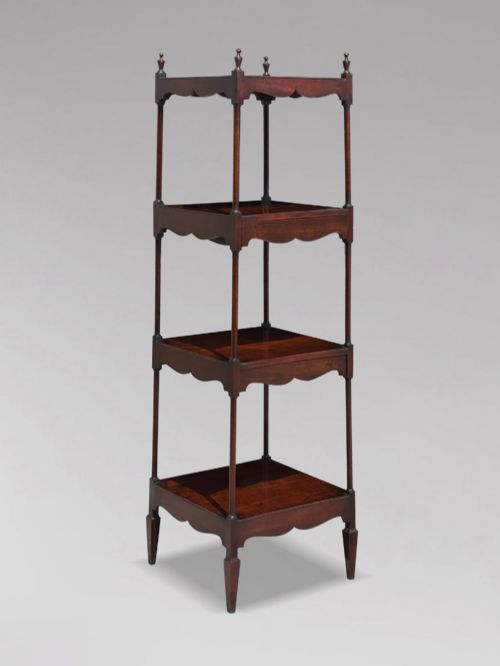
Makers fashioned these units in various tier counts, often incorporating specific shapes like demi-lune formats or tapering structures.
Distinctions in craftsmanship
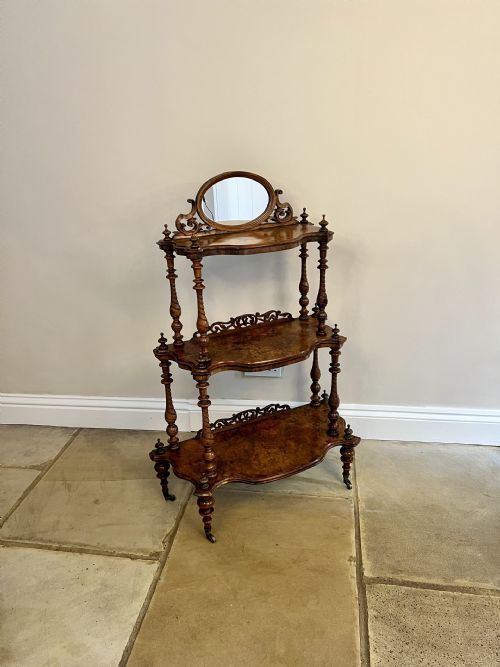
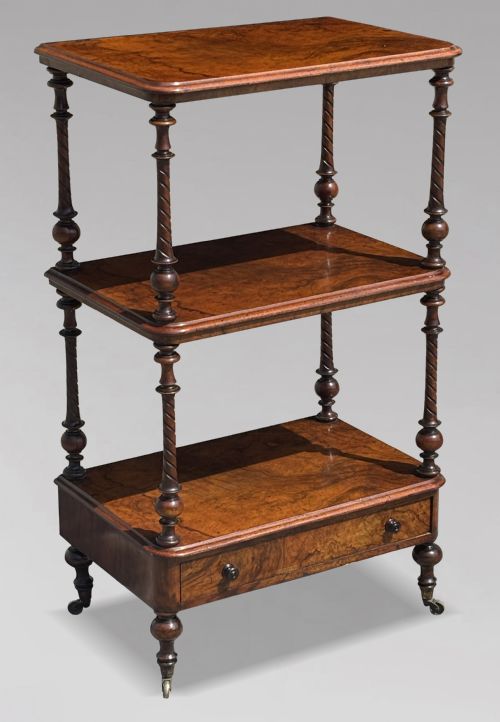
Quality rests in the selection of timber veneers, where highly figured burr walnut or rich rosewood elevate the visual impact above plain mahogany.
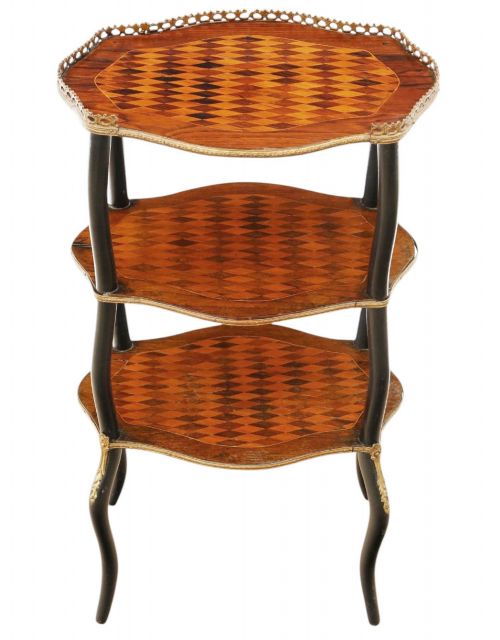
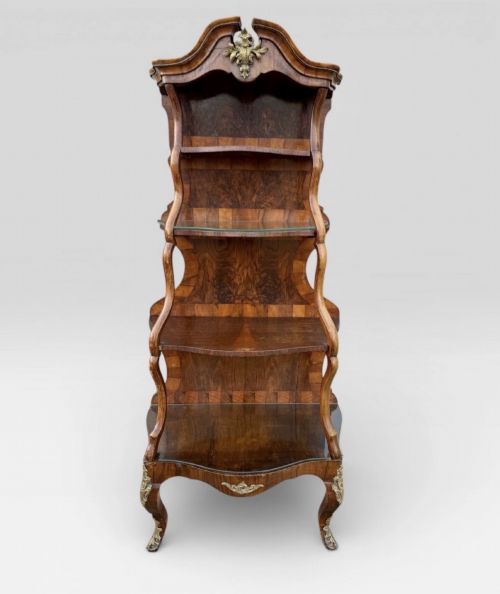
The refinement of turned uprights, precise inlay work, and the integration of mirror glass or brass mounts separate standard items from superior examples.
Proportional harmony across multiple tiers dictates the structural success of each unit.
Listings feature pieces spanning the Georgian, Regency, and Victorian periods, constructed from mahogany, walnut, burr walnut, rosewood, and ebonised wood.
The Tiered Corner Shelving Glossary
- Whatnot
- A movable set of open shelves used for displaying ornaments or books. This term appears interchangeably with etagere across many listings.
- Etagere
- A piece of furniture consisting of a set of open shelves for displaying small objects. French in origin, it gained popularity in various nineteenth-century revivals.
- Barley twist
- A type of turning resembling a twisted rope used for upright supports. It adds strong vertical movement to nineteenth-century pieces.
- Demi-lune
- A half-moon shape used for console tables and corner fitments. This curved profile softens the hard angles of a room.
- Parquetry
- Geometric mosaic woodwork used for decorative surface patterns. It demonstrates high levels of joinery skill on top surfaces.
Tiered Corner Shelving: Frequently Asked Questions
What is tiered corner shelving used for?
These units serve primarily to display ornaments, china, and small collections while making efficient use of awkward room corners. Their open tiers keep objects visible from multiple angles.
Historically, they populated Victorian and Georgian sitting rooms as functional display furniture rather than heavy storage cabinets.
How do I identify a Victorian piece?
Victorian examples frequently employ burr walnut, rosewood, or mahogany, often featuring rich grain patterns and darker finishes. Details like barley twist turnings and inlaid parquetry are common markers of this era.
Later Victorian pieces from around the late nineteenth century also introduce ebonised woods and mirrored backs.
What is the difference between a whatnot and an etagere?
In practical terms, antique dealers and makers used both terms to describe multi-tiered open shelving units. Etageres often carry a slightly more decorative connotation linked to French revival styles.
Both forms share the essential purpose of tiered display and utilise similar turnings and timber construction.
How do I care for antique wood shelves?
Maintain the timber by keeping pieces away from direct heat sources and strong sunlight, which can dry out rosewood and walnut veneers. Regular dusting with a soft, dry cloth preserves the polished surface.
Avoid excessive moisture and modern chemical polishes that can degrade nineteenth-century finishes.