

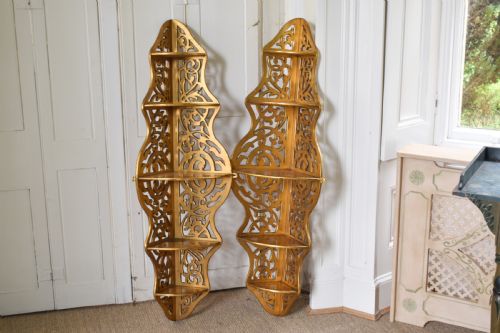
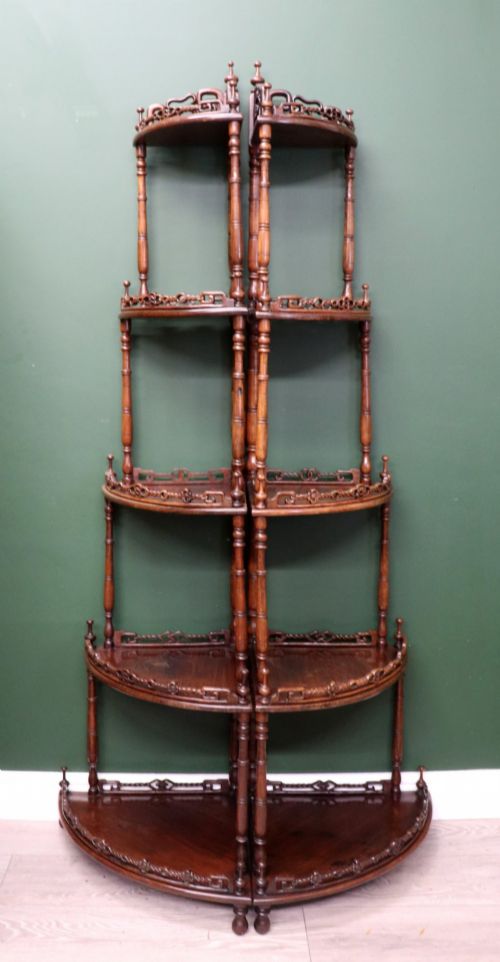
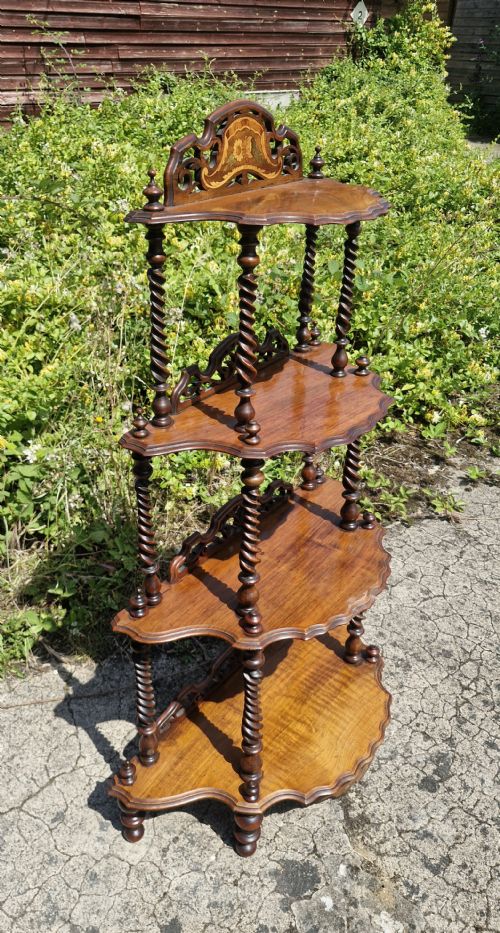
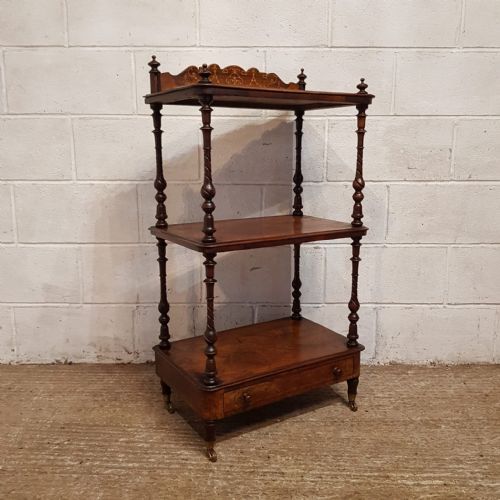
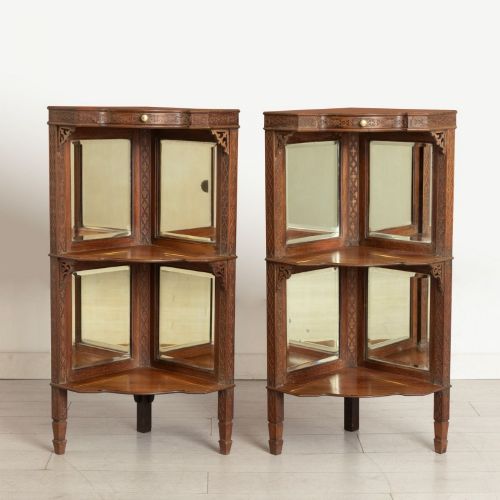


Carved Corner Shelf
A carved corner shelf turns dead vertical angles into useful display space using timber, marquetry and glass.
Carved Corner Shelf
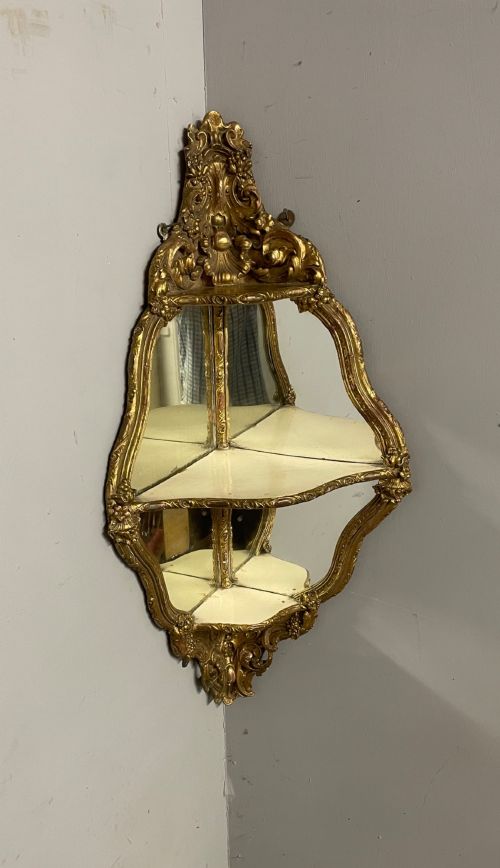
A carved corner shelf makes use of unutilised room junctions by mounting or standing display tiers in domestic interiors. When searching for a carved corner shelf, buyers encounter multi-tiered whatnots, hanging display brackets and floor-standing corner cabinets dating primarily from the Victorian era alongside Georgian and Edwardian examples.
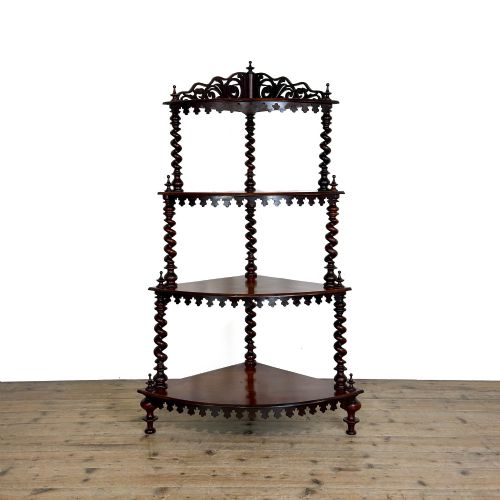
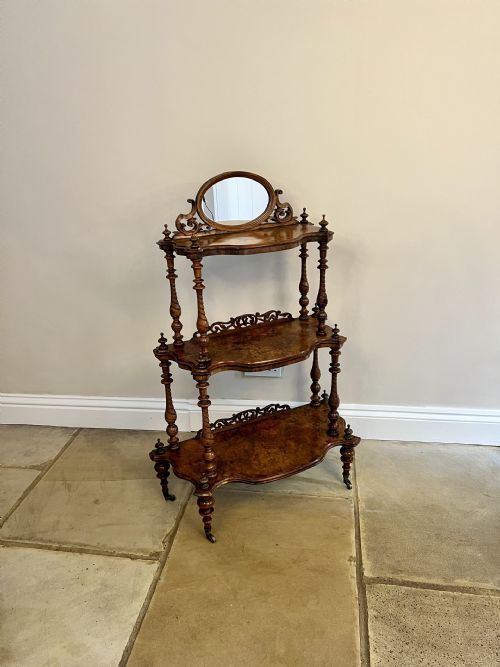
The material palette of these pieces relies heavily on figured timbers such as burr walnut and mahogany, accented with marquetry inlay, brass mounts and occasional glass panels. Forms range from simple three-tier hanging units to elaborate freestanding cupboards featuring barley twist supports or mirrored backs.
Materials and construction methods
Cabinet makers utilised dense hardwoods including walnut, mahogany, rosewood and oak as the foundational structure for these display units. Timber selection focused on rich grain patterns, particularly burr walnut veneers, which were frequently paired with contrasting marquetry inlay.
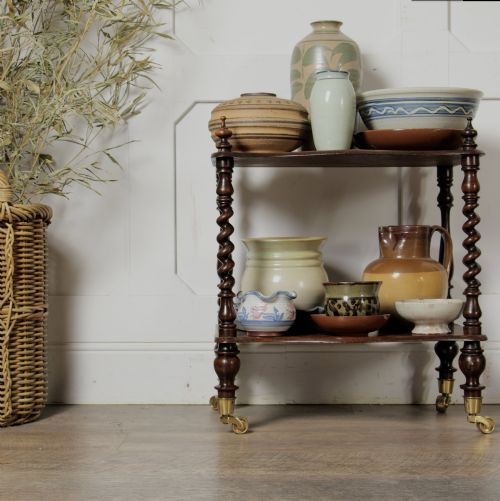
Joinery techniques incorporated carved architectural mouldings, turned uprights like barley twist columns, and fitted shelves secured to sturdy backboards. Surface finishing relied on hand-applied polish that highlighted the natural depth and tone of the wood.
The furniture spans from eighteenth-century pine cabinets through Victorian whatnots to Edwardian occasional tables.
Distinguishing craftsmanship and finish
Quality rests in the selection and matching of wood veneers, where superior examples exhibit symmetrical burr walnut figuring across tiers and doors. Plain timber grounds and careless veneer patching indicate standard commercial production rather than exhibition work.
Carved details reveal the hand of the maker through crisp depth and clean undercut foliage rather than soft, moulded resin or dull machine finishing. Structural rigidity in multi-tiered whatnots and secure joints at wall mountings further separate robust pieces from fragile items.
Edwards & Roberts·Liberty & Co.
The Carved Corner Shelf Glossary
- Whatnot
- An open multi-tiered piece of furniture designed for displaying ornaments, books or bric-a-brac. These items became popular during the Victorian period for maximising corner spaces.
- Marquetry
- Decorative veneer work forming geometric or floral pictures by fitting together contrasting pieces of wood. Craftsmen often applied this technique to cabinet doors and shelf surfaces.
- Barley Twist
- A turned wooden column resembling the spiral twists of a barley sugar stick. This decorative support is frequently seen on Victorian display stands.
- Ormolu
- Gilded bronze ornamentation mounted onto furniture surfaces. Makers utilised these metallic accents on French and English cabinets during the nineteenth century.
- Demi-Lune
- A half-moon shape with a curved front and a flat back designed to sit flush against a wall. This profile appears on console tables and corner display units.
Carved Corner Shelf: Frequently Asked Questions
How do I hang a wall shelf?
Hanging corner shelves require sturdy wall fixings suited to the specific masonry or plasterboard construction of the room. The weight of dense hardwoods like mahogany or walnut means brackets must anchor securely into studs or solid brick.
Position the shelf at a height that prevents accidental head bumps while ensuring the display surface remains easily accessible. Check that the back panels sit flush against both adjoining walls to distribute the load evenly.
How do I clean antique walnut?
Dust antique walnut furniture regularly with a soft, dry cloth to prevent grit accumulation in carved recesses and veneer seams. Avoid modern silicone sprays, which leave a buildup that attracts dust and degrades old polish over time.
Apply a traditional microcrystalline wax sparingly once or twice a year to nourish the timber and protect the finish. Buff gently with a clean cloth to restore a soft, natural sheen to the surface.
Are these pieces solid wood?
Many Victorian and Edwardian display pieces combine solid structural framing with decorative wood veneers applied over secondary timbers. Burr walnut and figured mahogany were expensive, so cabinet makers used veneers to showcase dramatic grain patterns while keeping weights manageable.
Solid wood construction appears more frequently in structural elements like turned uprights, mouldings and early pine cabinetry. Inspecting the edges and underside reveals whether a surface relies on veneer or solid construction.