


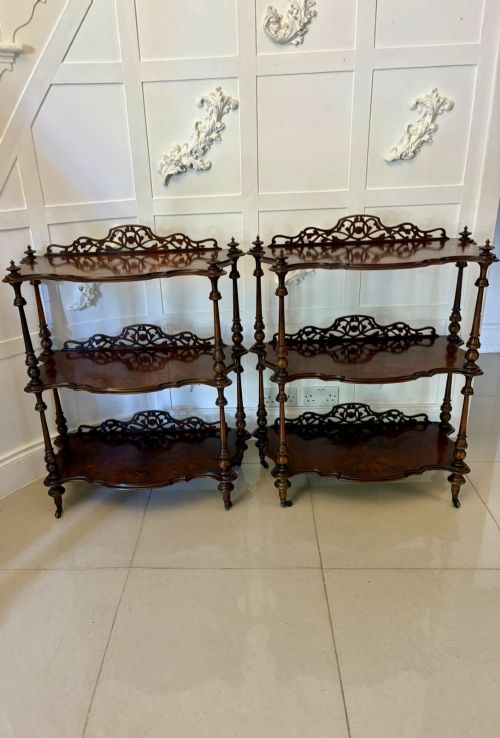
Open Shelf Display Stand
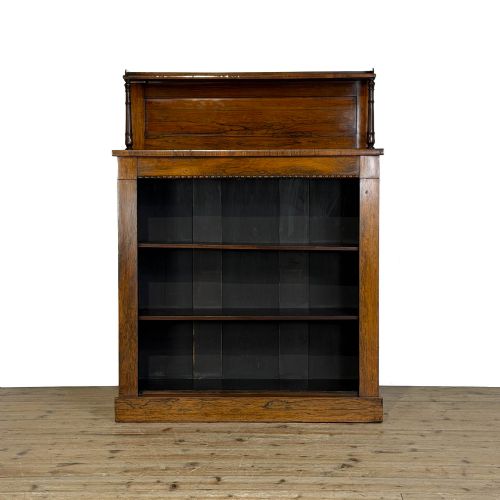
An open shelf display stand offers tiered platforms for books and objects, spanning the Georgian, Victorian and Edwardian periods.
Open Shelf Display Stand
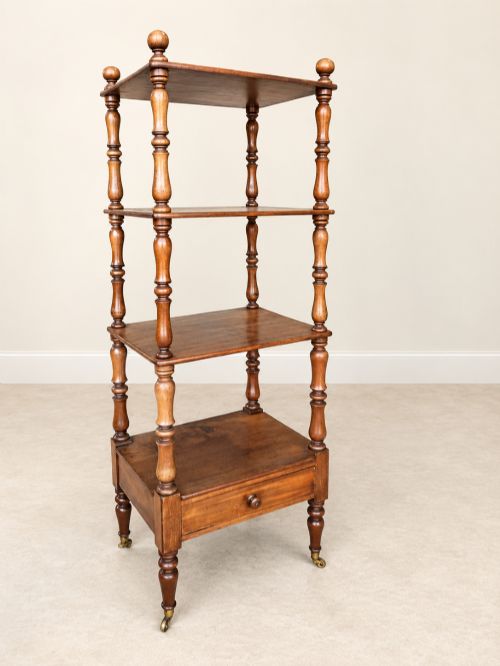
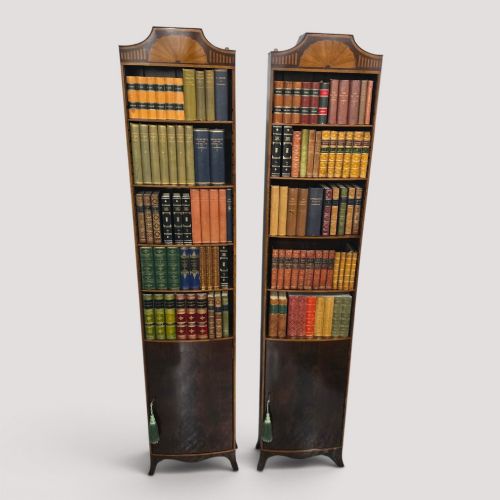
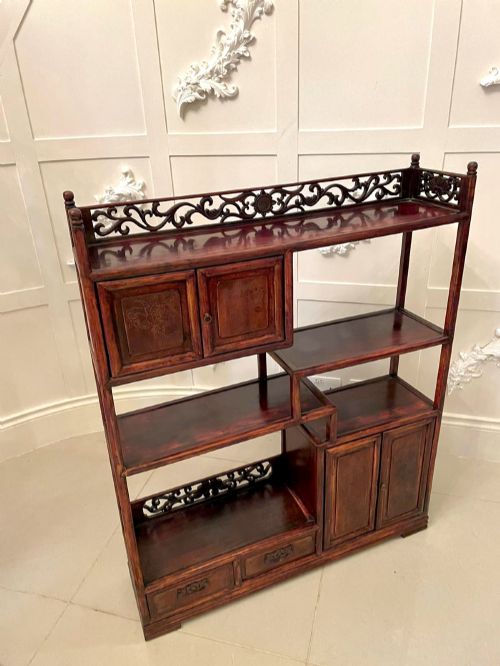
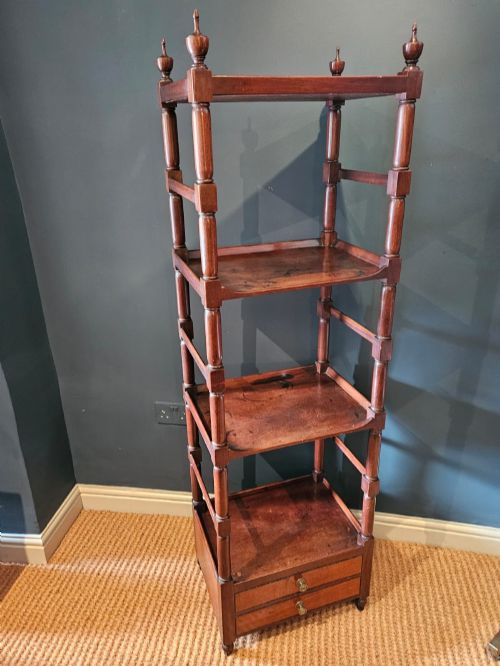
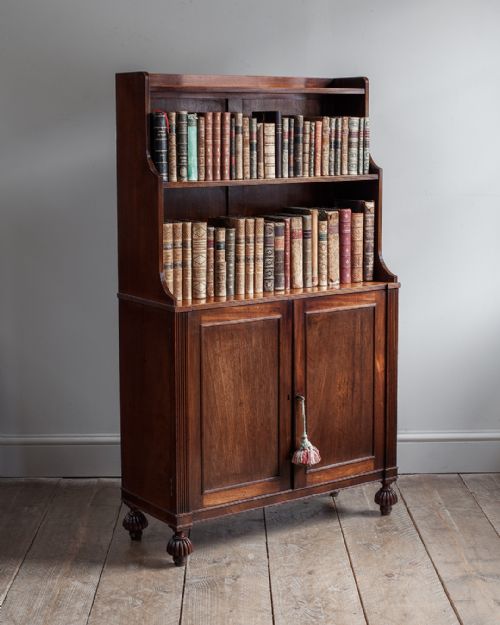
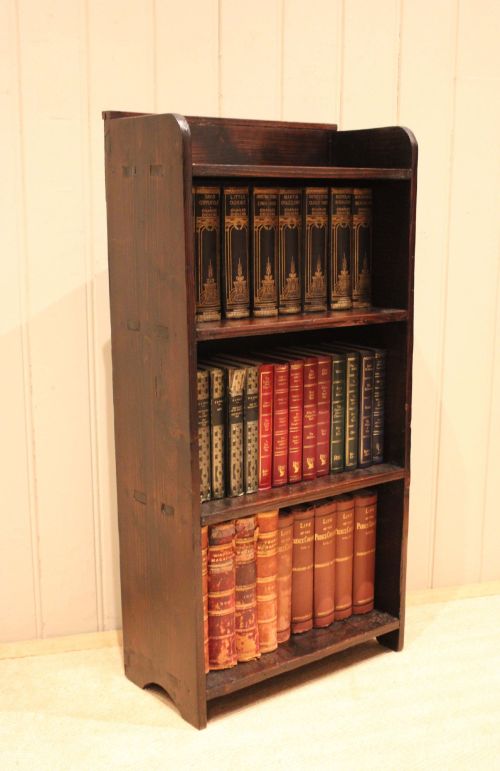
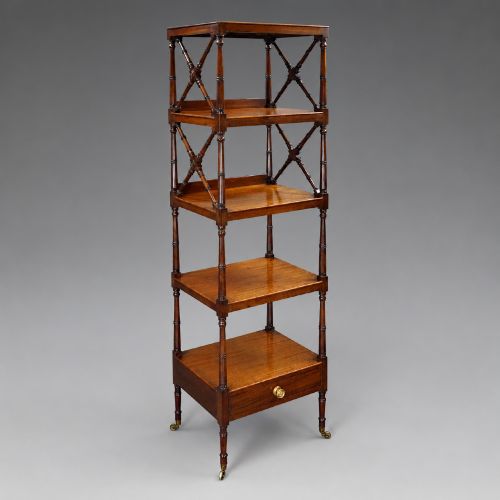
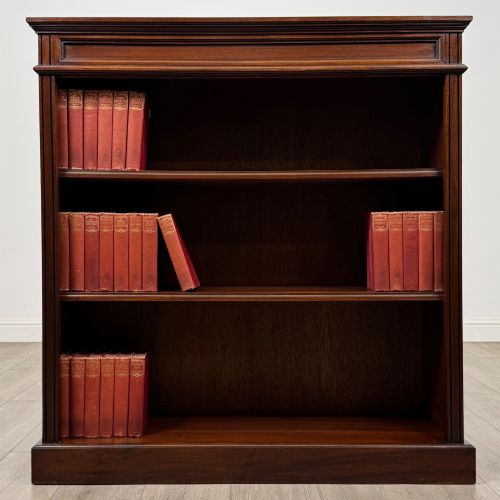
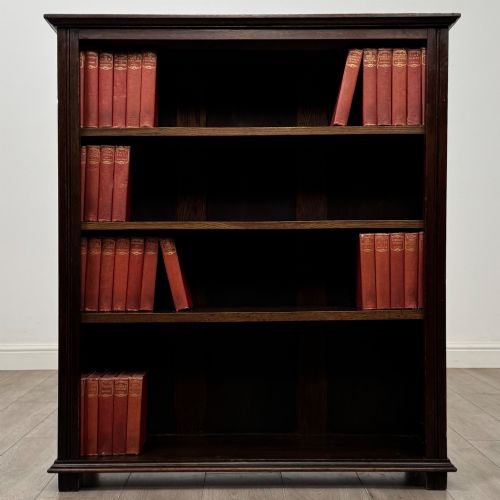
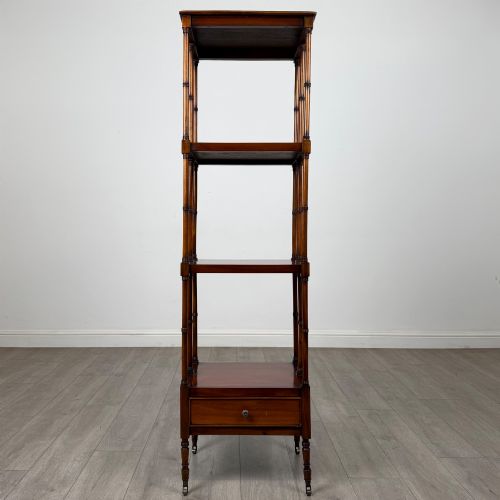
An open shelf display stand encompasses bookcases, whatnots, etageres, and tiered stands designed to present books and decorative items without doors. These pieces emerge in forms ranging from compact corner shelves to large library bookcases across the Georgian, Regency, Victorian, and Edwardian periods.
The versions met most frequently on this page include mahogany and oak open bookcases alongside multiple tiers of whatnots and etageres. Makers from the nineteenth and early twentieth centuries utilised varied woods like rosewood, walnut, and pine to build these elevated platform units.
Materials and construction
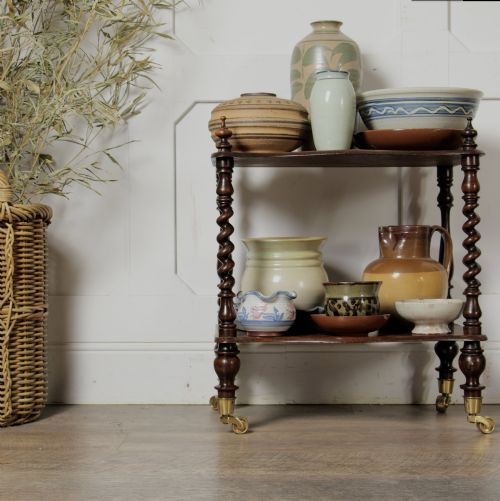
Cabinet makers utilised dense hardwoods such as mahogany, oak, walnut, rosewood, and padauk, often pairing them with brass castors or turning timber into barley twist columns. Pieces range from carved teak and satinwood to rustic pine.
Construction relies on open shelving tiers, adjustable shelf mechanisms, and tiered vertical supports seen in etageres and what-nots. Workshops applied inlaid details, carved panels, and serpentine shaping to walnut and mahogany structures.
Some nineteenth century whatnots doubled as music stands, keeping scores close to hand while guests admired the walnut grain.
What separates the tiers of quality
Quality rests upon the selection of timbers, from plain pine and oak to figured burr walnut, satinwood, and padauk. Dense grain, rich colour, and substantial weight distinguish superior examples from simpler utilitarian items.
Execution of detail defines the finer pieces, seen in crisp carving, serpentine shaping, adjustable shelf mechanisms, and integrated brass castors. Proportion and balance across multiple tiers separate standard production items from distinguished design work.
Gabriel Viardot·Gillows
The Open Shelf Display Stand Glossary
- Whatnot
- A tiered movable stand with open shelves designed for displaying ornaments or books. These pieces commonly feature three or four levels supported by turned columns.
- Etagere
- A piece of furniture consisting of a number of open shelves for displaying small articles. French examples frequently incorporate turned legs and varied wood veneers.
- Waterfall bookcase
- A set of open shelves that steps back progressively from bottom to top. This design creates a sloping profile reminiscent of cascading water.
- Corner shelf
- A storage unit shaped to fit directly into the angle of a room. These units make efficient use of corner space using open or cabinet configurations.
Open Shelf Display Stand: Frequently Asked Questions
Where should I place an open shelf display stand?
These stands suit living rooms, studies, and hallways where books and decorative objects require accessible placement. Corner versions fit neatly into unused angles of a room.
Free-standing bookcases and etageres function effectively against walls or as room dividers depending on their finished backs.
Can the shelves be adjusted on these stands?
Certain Victorian and Edwardian bookcases feature adjustable shelf mechanisms to accommodate books of varying heights. Fixed shelves remain common on earlier Georgian what-nots and tiered stands.
Checking the interior sides of the upright supports reveals whether peg holes or rack systems allow for movement.
What woods were commonly used for these stands?
Mahogany and oak dominate the selection across the Georgian, Victorian, and Edwardian periods. Walnut, rosewood, burr walnut, and satinwood appear on more decorative pieces.
Rustic pine and teak serve in country or colonial pieces, while brass elements frequently appear on castors.