
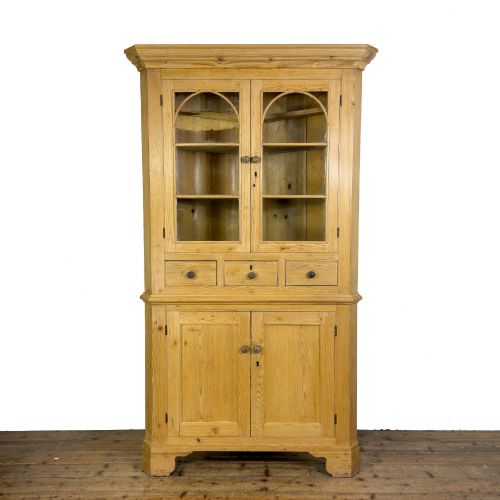
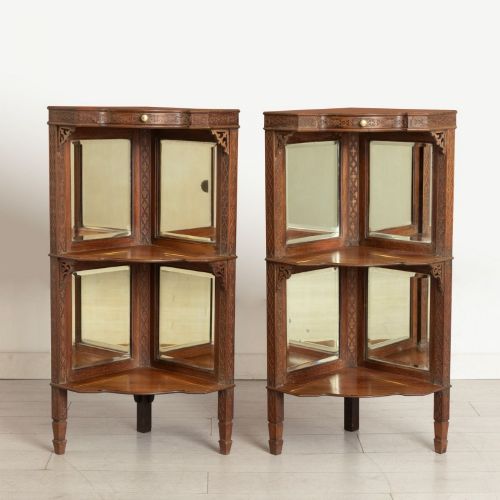


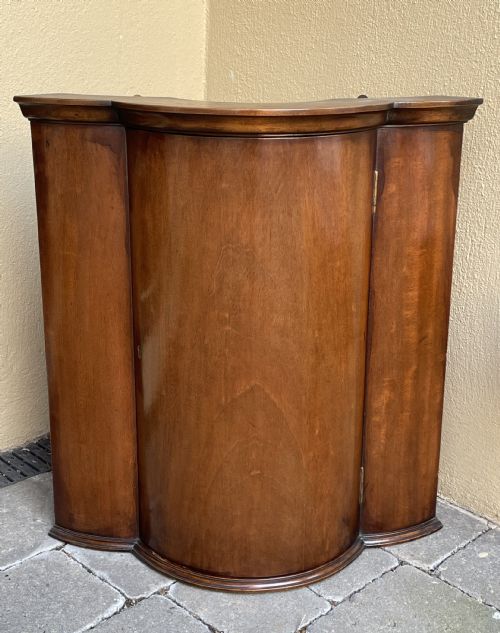


Victorian Corner Display Unit
A victorian corner display unit makes use of awkward angles, holding books, china or small objects upon stacked tiers of timber.
Victorian Corner Display Unit
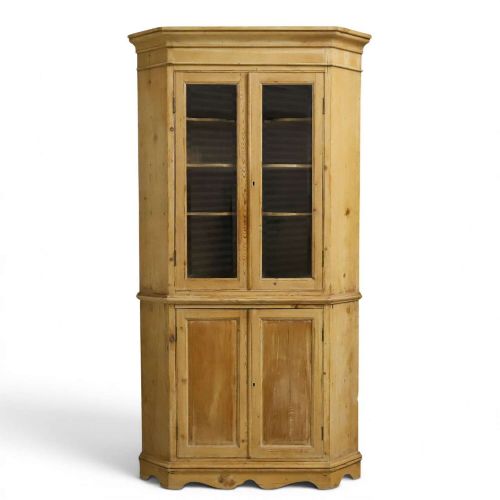
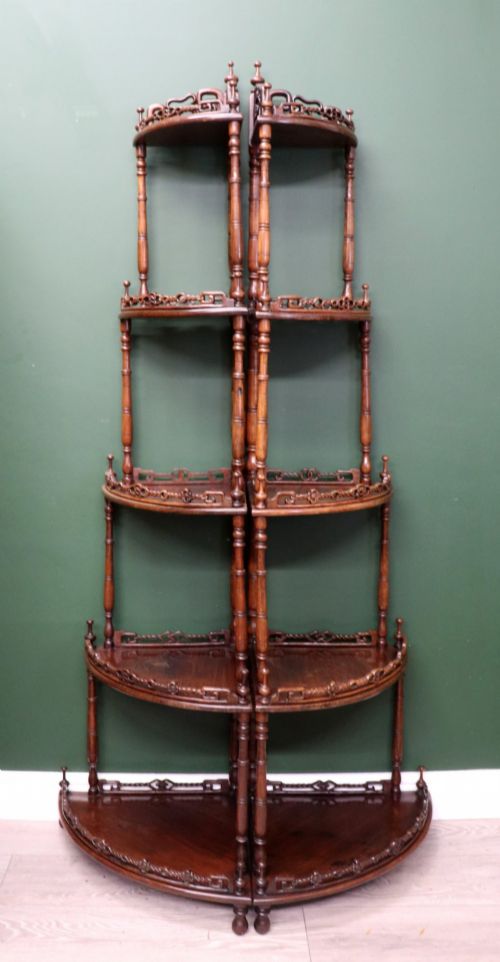
A victorian corner display unit turns unused room junctions into focal points, appearing in various formats such as tiered whatnots, glass-fronted cabinets and open shelving units. The evidence shows these pieces surface frequently from the nineteenth century in forms designed to stand on the floor or hang upon a wall.
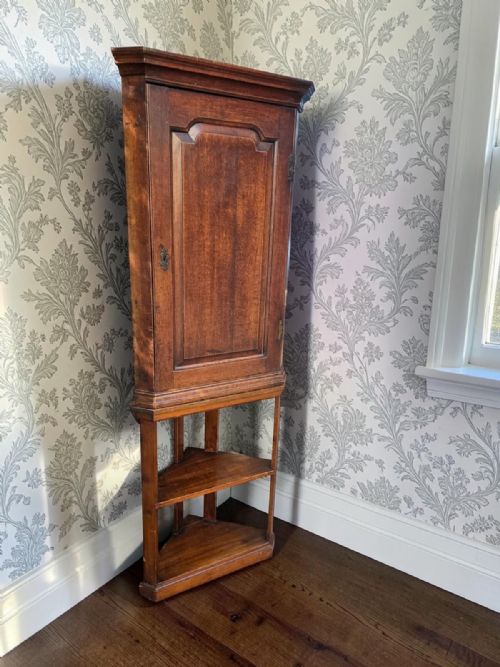
Makers shaped these items to fit snugly into ninety-degree corners, saving floor space while offering multiple levels for ornaments. The listings reveal formats ranging from simple pine cupboards to multi-tiered burr walnut and mahogany structures.
Most examples hail from the Victorian era, though variations stretch from eighteenth-century roots to Edwardian revivals. Buyers encounter everything from rustic country pine to formal inlaid rosewood and bamboo models.
How They Were Made
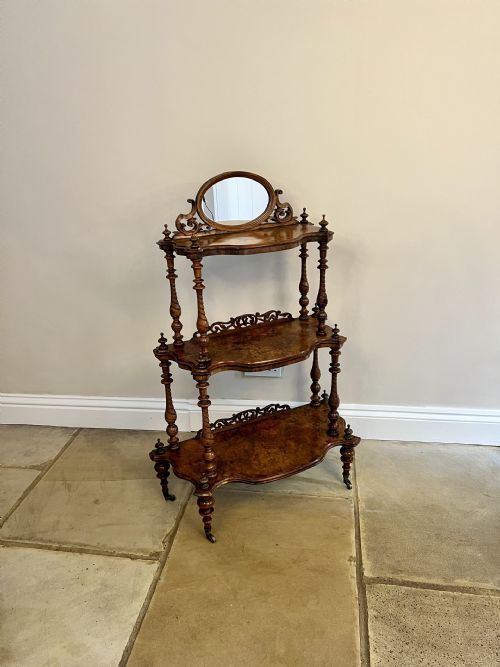
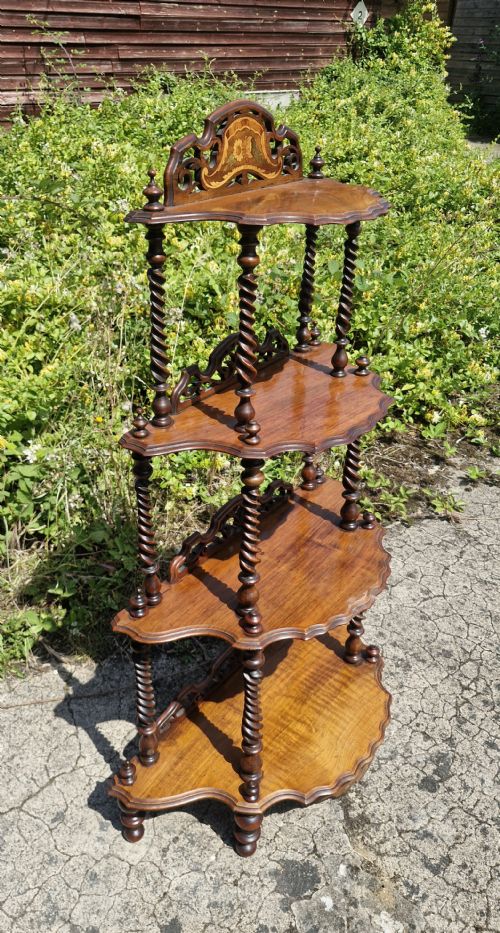
Cabinet makers utilised dense hardwoods like mahogany, walnut and rosewood alongside softer timbers such as pine and oak. Finer pieces employed decorative veneers like burr walnut and birdseye maple, often enhanced with intricate marquetry or Sorrento inlay.
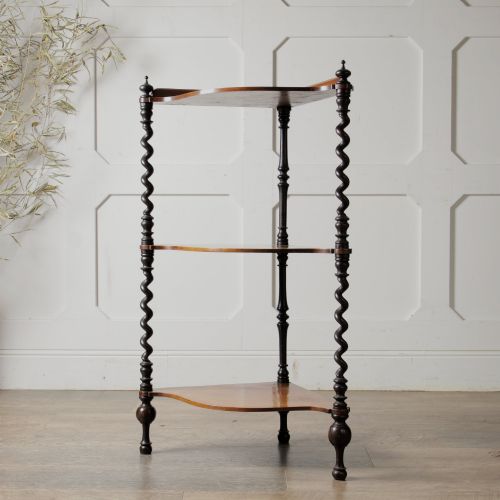
Structural elements relied on traditional joinery, supported by turned barley twist columns, brass fittings and glass doors. Some elaborate examples incorporated carved details, mirrored backs and multiple tiers linked by slender upright supports.
One cheerful survivor even combines bamboo with an aesthetic period sensibility, proving Victorians loved botanical novelty.
What Varies in Quality
The choice of timber and veneer dictates much of the distinction, with highly figured burr walnut and rich rosewood sitting at the upper end compared to basic pine. Selection of grain and symmetry in inlaid patterns show the hand of a more accomplished workshop.
Construction methods and decorative ambition also divide the standard pieces from exhibition items. Elaborate turnings, carved motifs, mirrored panels and documented cabinet makers elevate an object far beyond utilitarian shelving.
Edwards & Roberts·Goodhall, Lamb and Heighway of Manchester
The Victorian Corner Display Unit Glossary
- Whatnot
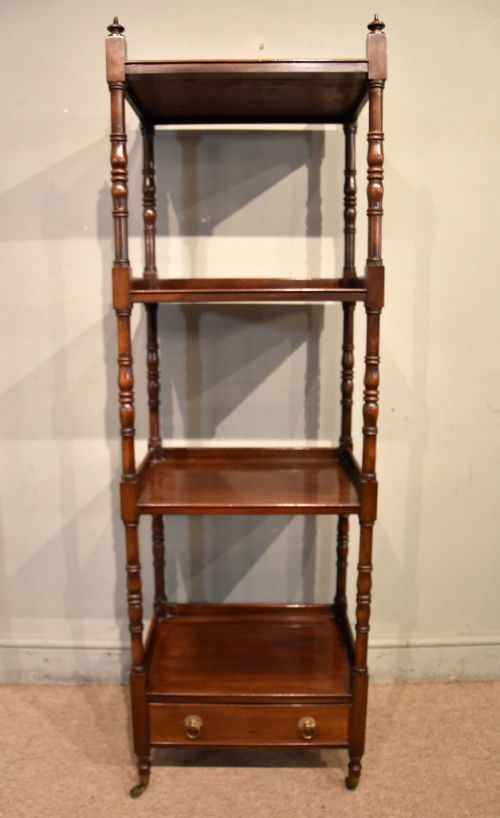
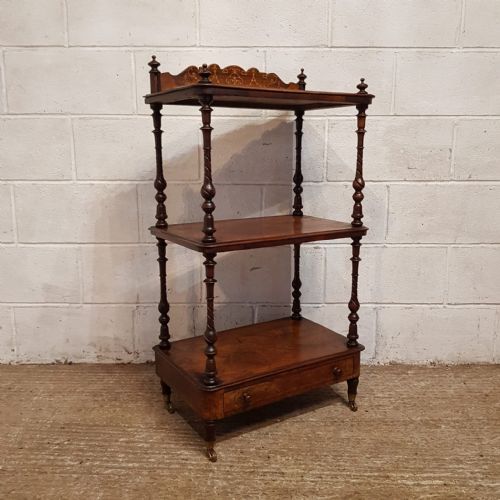
- An open piece of furniture with shelves for displaying ornaments or books. This form gained immense popularity throughout the nineteenth century.
- Burr walnut
- Timber taken from a walnut tree's growth wart, producing intricate swirling grain patterns. Cabinet makers prized this wood for high-end Victorian veneering.
- Barley twist
- A type of furniture leg or support carved in a spiral shape resembling twisted barley sugar. It appeared frequently on mid-Victorian tables and whatnots.
- Etagere
- A set of open shelves for displaying small objects, similar in function to a whatnot. The term derives from French furniture traditions.
- Marquetry
- Decorative veneer work arranged in pictorial or geometric patterns using various woods. Craftsmen applied this technique to cabinet doors and shelf surfaces.
Victorian Corner Display Unit: Frequently Asked Questions
What is a whatnot?
A whatnot is an open shelving unit designed specifically to hold and display ornaments, books and small decorative items.
These pieces typically feature multiple tiers supported by turned columns or uprights, standing independently or fitting into room corners.
How were corner cupboards used?
Corner cupboards served to store and display household possessions while making efficient use of awkward room angles.
Enclosed versions with wooden or glass doors kept prized china dust-free, while open variants allowed quick access to everyday objects.
Are these units freestanding or wall-mounted?
The listings include both freestanding floor units and wall cabinets designed to be hung at height.
Freestanding models often utilise multiple tiers or a two-part form, whereas wall-hung variants provide storage without occupying floor space.