
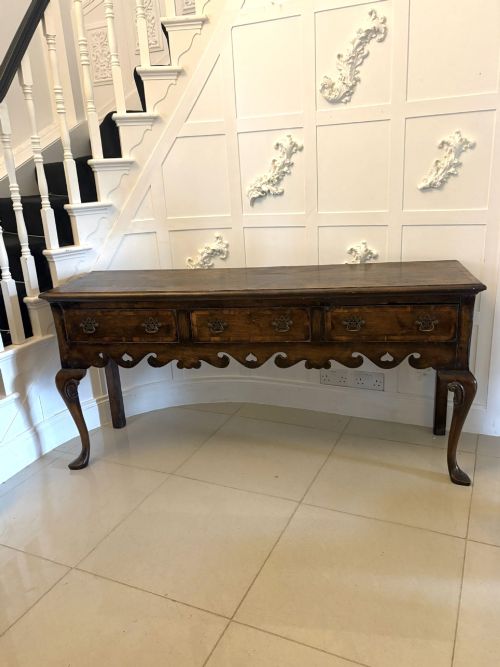
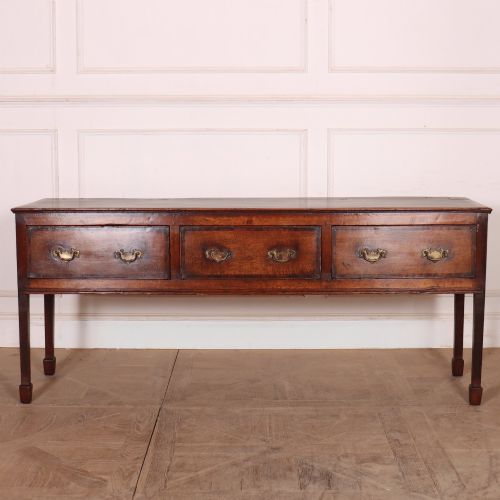

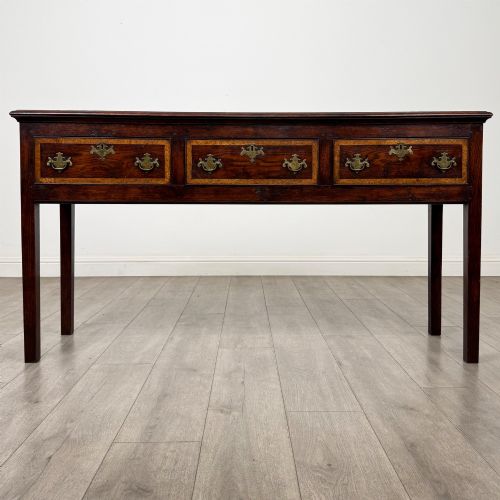
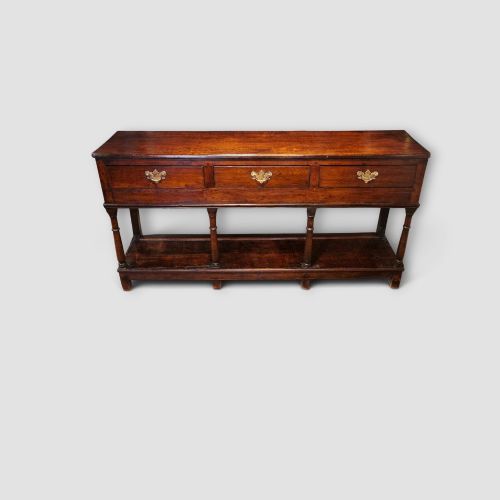
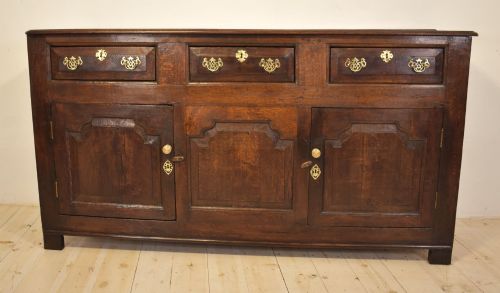
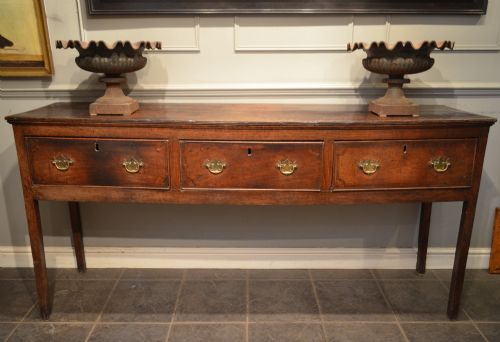
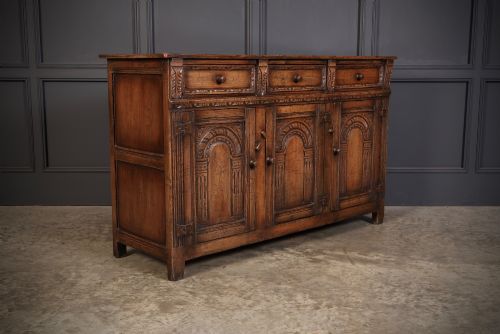
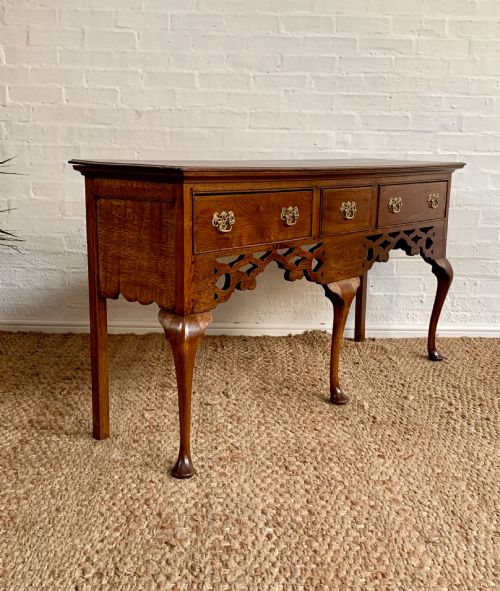
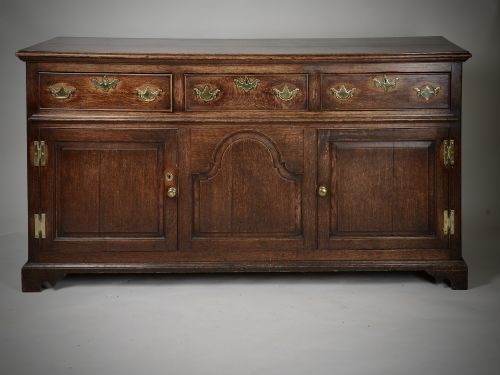
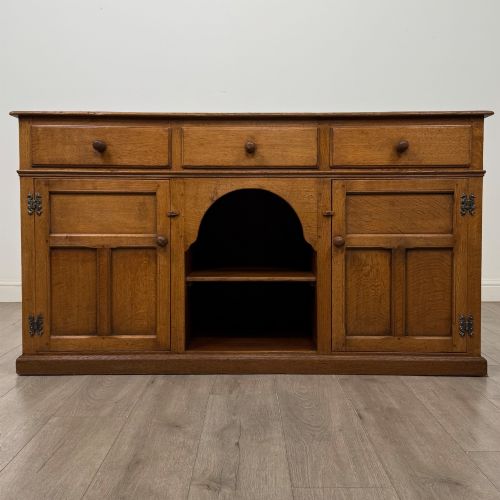
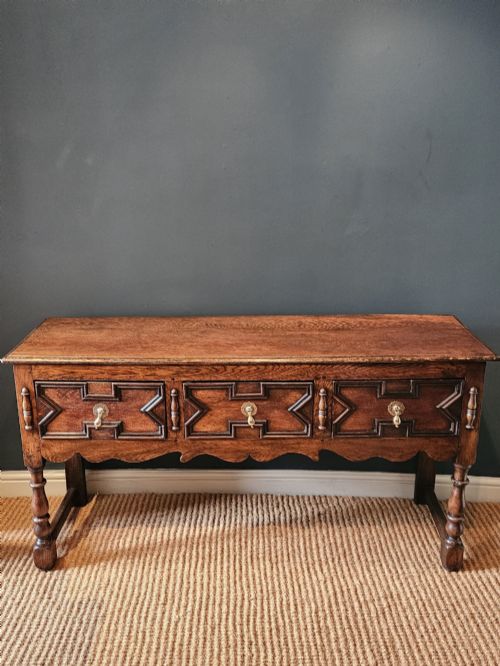
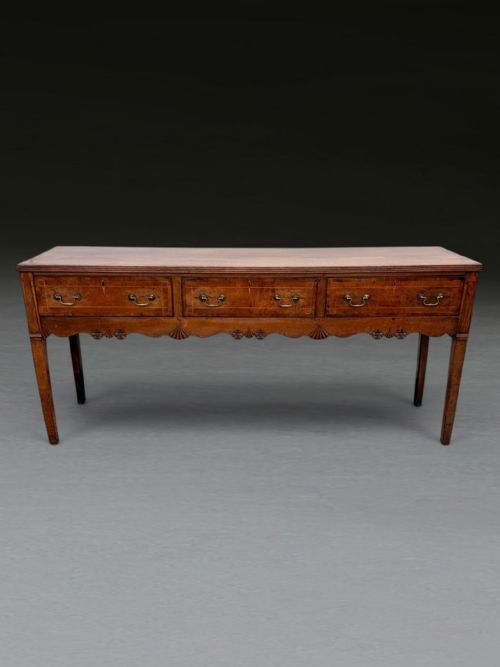
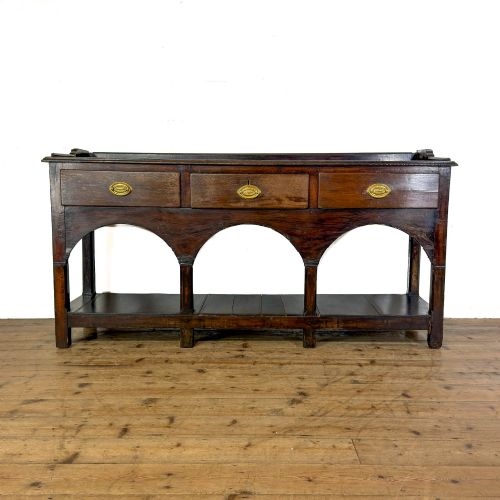
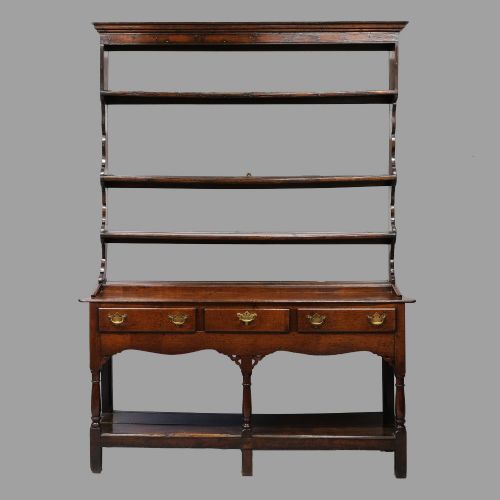
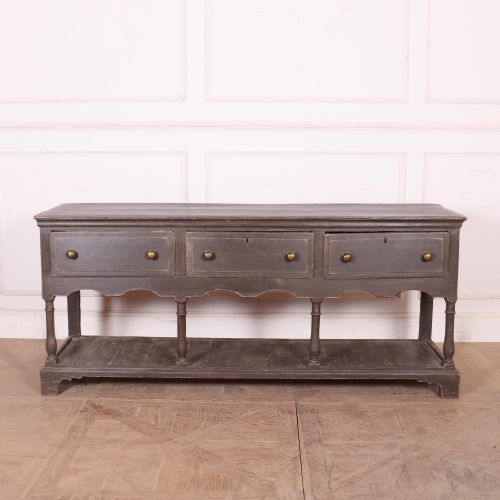
Three Drawer Oak Sideboard
A three drawer oak sideboard provides sturdy utilitarian storage, pairing heavy timber construction with accessible drawer organisation for everyday service.
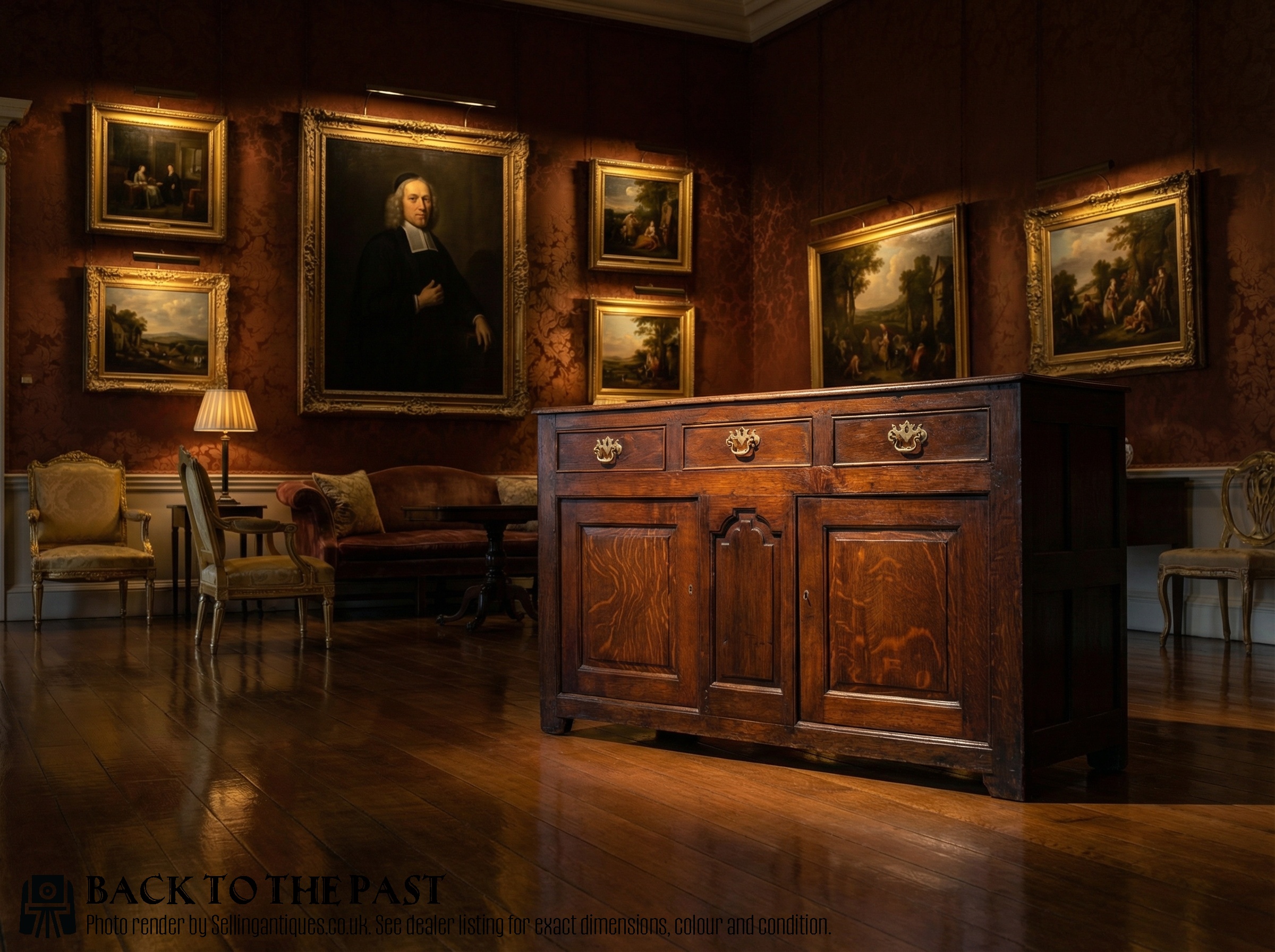
Three Drawer Oak Sideboard
A three drawer oak sideboard combines deep surface utility with lower tier storage, originating primarily from domestic vernacular workshops across the eighteenth and nineteenth centuries. These low dresser bases and serving tables were built for functional service in dining spaces and kitchens.
Most examples encountered here date from the Georgian period through to the Edwardian era, constructed in solid oak with practical timber boards. Regional pieces frequently incorporate potboards or open lower shelves beneath the tier of three drawers.
Makers often drew upon English country, Welsh vernacular, and French provincial traditions, resulting in pieces varying from unadorned utilitarian benches to carved revival forms. The underlying form remains steadfastly focused on horizontal surface space and straightforward drawer access.
What varies in quality
The distinction between ordinary and exceptional examples rests upon timber selection, surface patination, and the crispness of structural joinery. Pieces retaining their original boards, unblemished brass hardware, and integrated potboards command greater appreciation from collectors.
Proportion and regional character dictate desirability, where restrained country craftsmanship meets balanced proportions. Altered drawer configurations or replaced top boards diminish the integrity of the piece, separating honest domestic survivals from heavily restored examples.
Three Drawer Oak Sideboard Retail Price Guide 2026
Typical asking prices for three drawer oak sideboard among the pieces listed under this phrase on Sellingantiques today, from the lower quarter to the upper quarter. They describe what is for sale here now, not the wider market.
Current listings demonstrate a prevalence of 18th-century and Georgian pieces constructed primarily in solid oak with occasional painted timber and brass hardware.
The Three Drawer Oak Sideboard Glossary
- Dresser base
- A low freestanding table or cabinet featuring surface workspace and lower drawers, lacking the towering plate rack of a full kitchen dresser. This form constitutes the primary archetype for a sideboard.
- Potboard
- An open lower shelf fitted between the legs of a dresser base, traditionally utilised for storing heavy pots and crockery. It provides essential horizontal bracing near the floor.
- Geometric moulded
- A decorative front treatment utilising applied timber moulding strips to create rectangular panels on drawer faces. This technique is typical of earlier seventeenth and eighteenth-century joinery.
- Vernacular
- Furniture built by regional craftsmen following local traditions rather than metropolitan academic designs. These pieces prioritise practical domestic utility over formal stylistic adherence.
- Dovetail
- An interlocking joint formed by interlocking wedge-shaped fingers, utilised extensively in period drawer construction. Hand-cut dovetails indicate traditional cabinet-making methods.
Three Drawer Oak Sideboard: Frequently Asked Questions
What is a three drawer oak sideboard?
A three drawer oak sideboard is a low utilitarian furniture piece designed for domestic storage and surface service, combining a row of three drawers with a tabletop.
Originating largely in eighteenth and nineteenth-century workshops, these pieces frequently feature lower potboards and served practical functions in kitchens and dining rooms.
How do I date an antique oak sideboard?
Dating relies on examining construction methods, hardware types, timber patination, and regional style characteristics across the piece. Hand-cut joinery details and original brass handles provide reliable clues to the manufacturing period.
Comparing the board thickness and secondary woods like pine or fruitwood helps narrow the era from the Georgian period to later revivals.
What is the difference between a dresser base and a sideboard?
A dresser base traditionally originated in the kitchen as a functional workspace with drawers and sometimes a potboard, while a sideboard developed primarily for the dining room for serving food.
Over time, terminology merged as similar low oak configurations were utilised interchangeably across various domestic interiors.
How do I care for antique oak furniture?
Maintain antique oak by applying traditional beeswax sparingly to nourish the dry timber and protect the historical surface patination. Keep pieces away from direct heat sources and sudden humidity shifts to prevent timber splitting.
Clean surfaces gently with a soft dry cloth rather than modern chemical polishes that strip the finish.