
Three Drawer Console
A three drawer console brings practical surface space and neat storage to a hallway or sitting room without dominating the room.
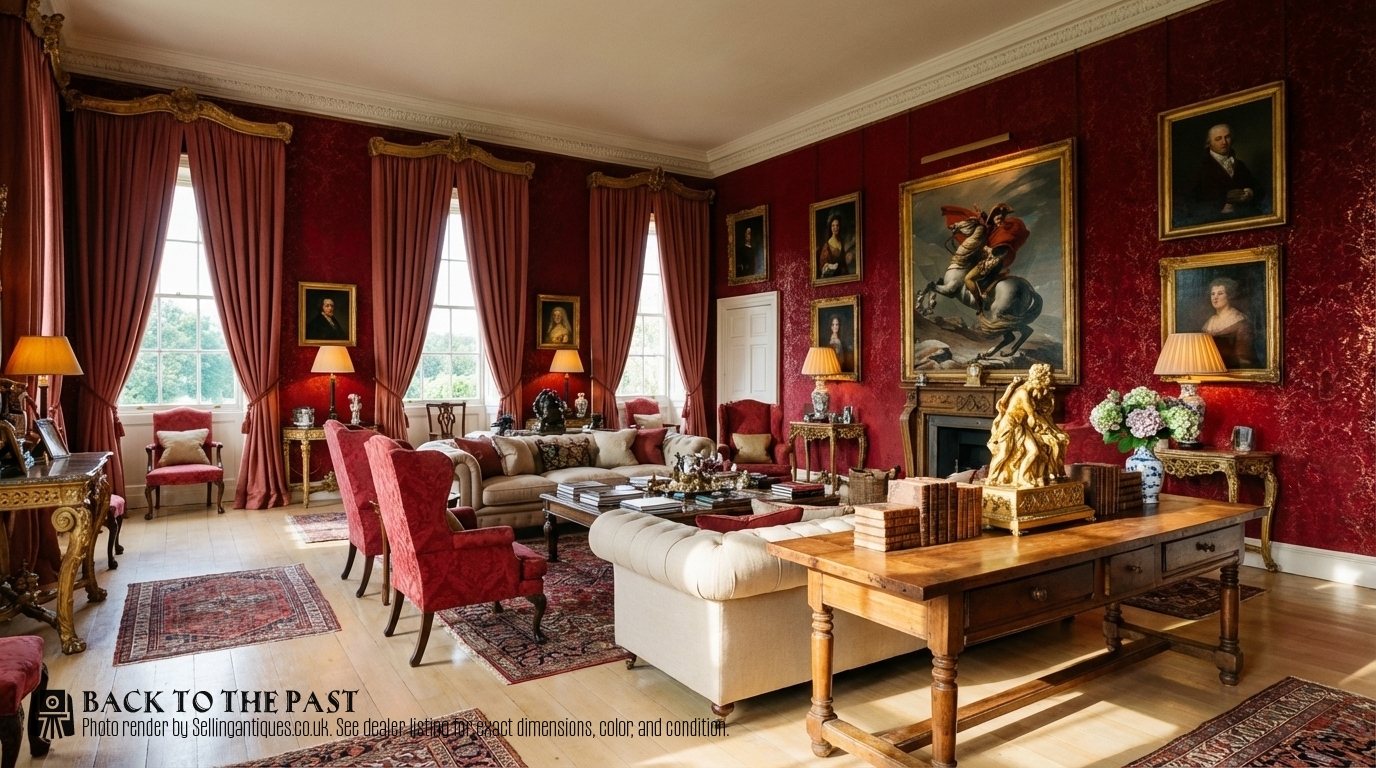
Three Drawer Console
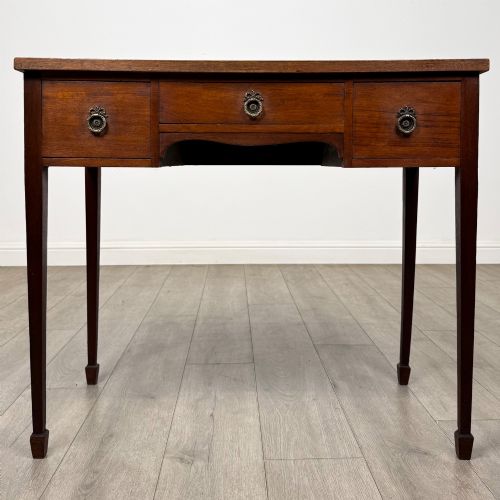
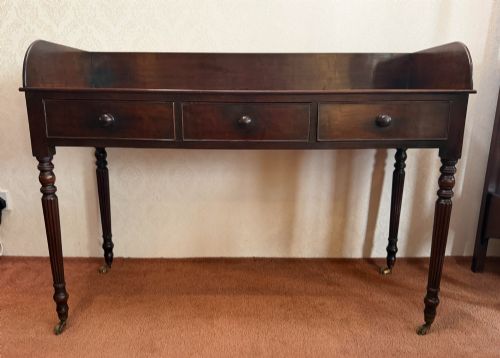
A three drawer console is a versatile table form that appears across the Georgian, Victorian, and Edwardian periods. These pieces serve multiple functions as side tables, serving tables, lowboys, and dresser bases depending on their regional origins and proportions.
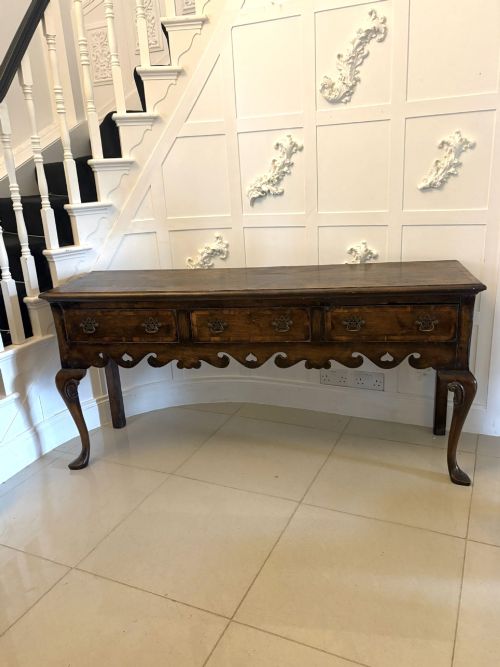
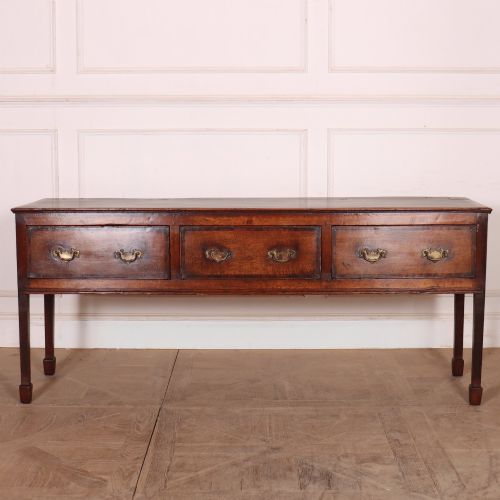
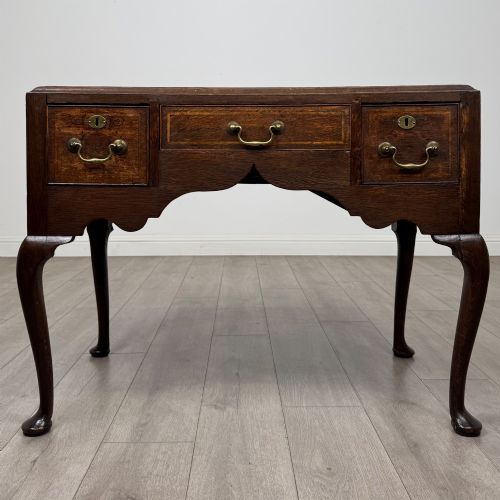
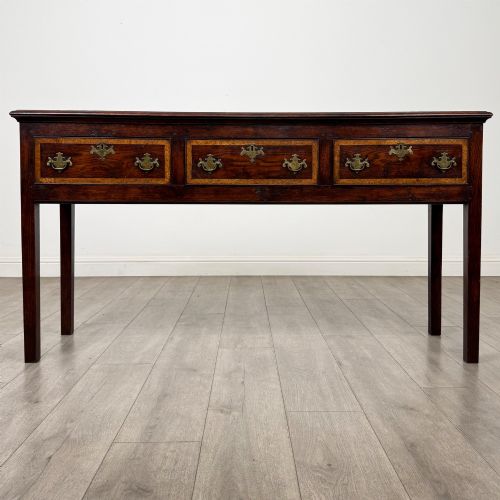
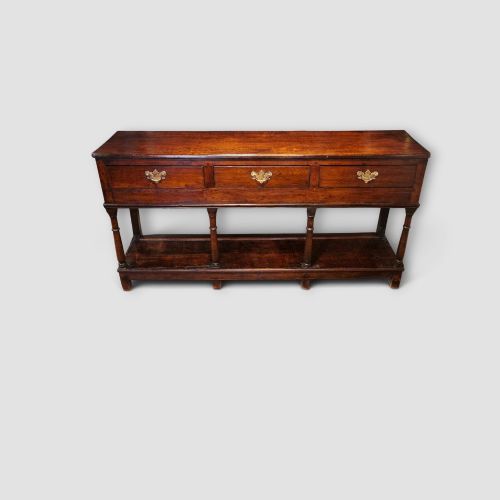
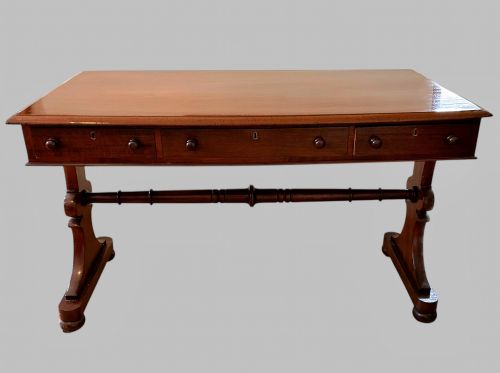
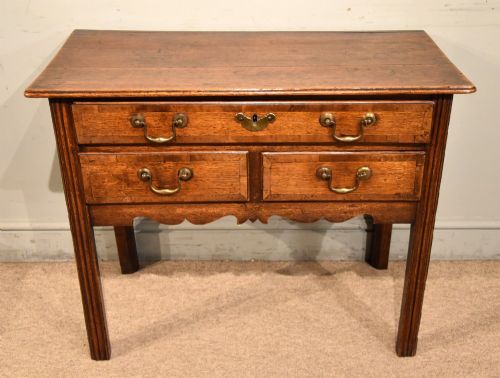
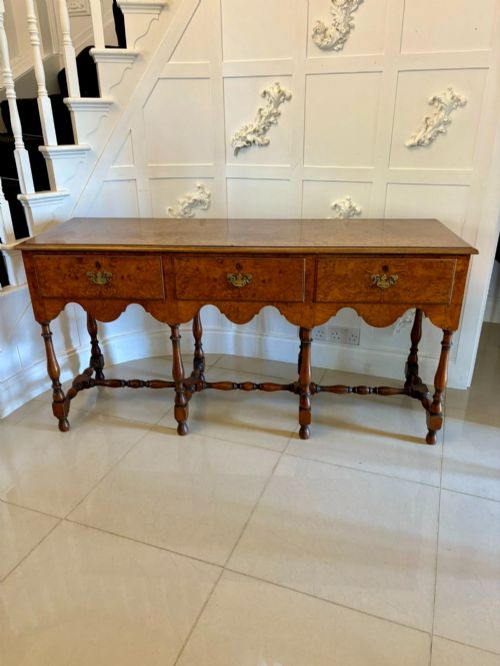
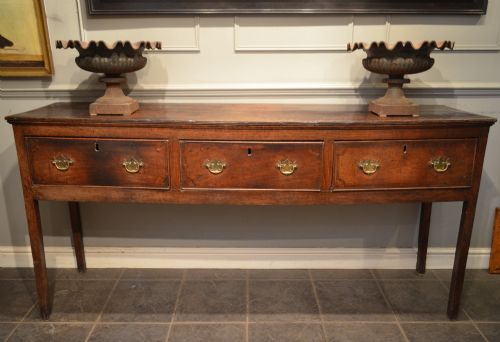
The version most commonly met on this page is the oak or mahogany dresser base or lowboy, often featuring three drawers arranged in a row beneath the main surface. Walnut, pine, and painted wood also occur regularly across the selection.
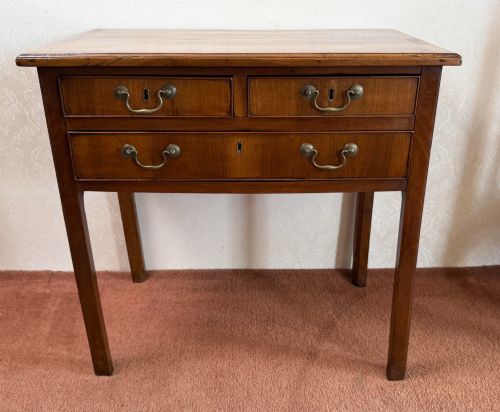
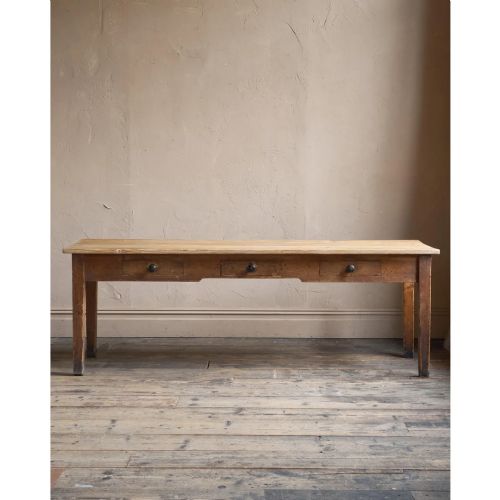
Examples range from formal Georgian walnut lowboys with feather banding to rustic English country and farmhouse dresser bases. The form adapts easily from a country kitchen prep table to a refined hall or writing table.
Materials and construction
Cabinet makers relied heavily on native timbers such as oak, elm, and walnut for earlier pieces, shifting towards mahogany and pine in later periods. Solid construction methods, including pegged joints and hand-cut dovetails on the drawers, define the traditional manufacture of these tables.
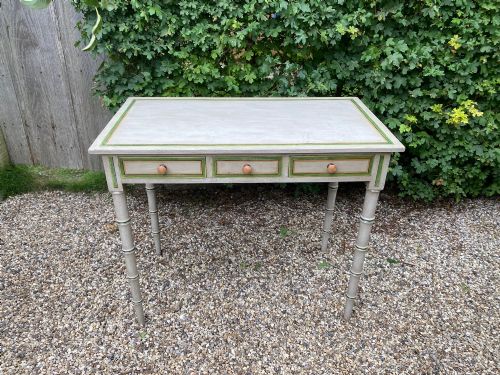
Secondary woods like sycamore and pine often appear in drawer linings and internal framing, while surface treatments range from clear wax finishes to painted faux bamboo and traditional painted schemes.
Several dairy prep tables have swapped their original butter-pails for decorative lamps and car keys.
Judging quality and character
Quality rests primarily on the choice of timber and the crispness of the cabinet work, particularly around the drawer construction and leg junctions. Pieces featuring figured veneers like burr walnut or select mahogany command attention for their visual depth.
Proportion and restrained detail separate standard utilitarian tables from finer examples. The integration of original brass hardware and the preservation of a rich, patinated surface elevate the standing of any piece.
The Three Drawer Console Glossary
- Lowboy
- A small dressing or side table typically featuring one or more rows of drawers and slender legs. This form gained popularity during the early Georgian period.
- Dresser base
- A lower sideboard or server portion of a traditional kitchen or dining room dresser, often fitted with three drawers. These provide substantial surface area and under-counter storage.
- Feather banding
- A decorative inlay technique using contrasting veneers laid in a herringbone pattern around the edges of drawer fronts. This ornament signals finer cabinet work.
- Potboard
- An open lower shelf built between the legs of a dresser base, originally intended for storing pots and pans. It adds structural stability to the lower frame.
- Cabriole leg
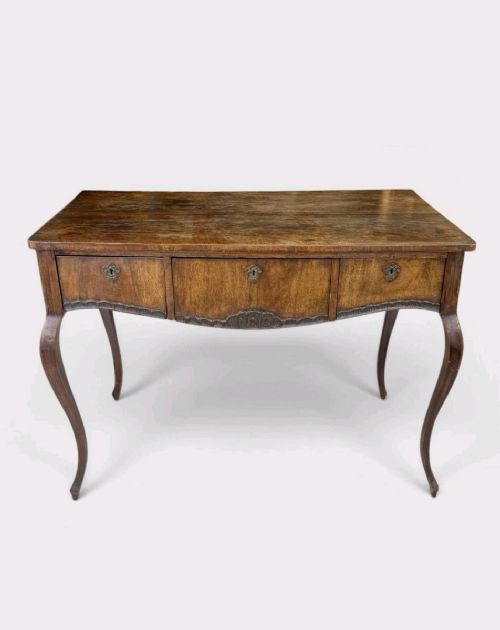
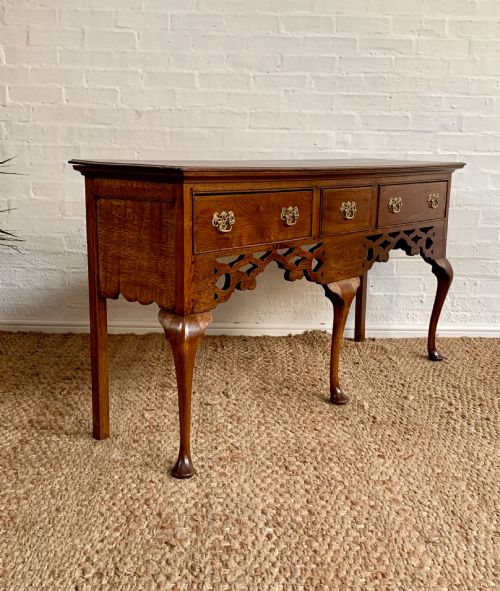
- A furniture leg that curves outward in a convex arc and tapers inward in a concave arc, ending in a pad or foot. The design draws inspiration from animal limbs.
Three Drawer Console: Frequently Asked Questions
Where should I place a three drawer console?
These tables suit narrow hallways, living rooms, and dining spaces where surface area is needed without a bulky footprint. Their shallow depth allows them to sit comfortably against walls without blocking walkways.
They also function effectively as dressing tables or writing desks in bedrooms. Placing one beneath a mirror or painting creates a balanced focal point in a room.
How do I distinguish a lowboy from a dresser base?
Lowboys are generally more refined, lighter in scale, and often feature cabriole or square legs designed for formal rooms like parlours or bedrooms. Dresser bases originate from country houses or kitchens and tend to be sturdier, occasionally including a potboard shelf.
Both forms utilise three drawers, but the overall proportions and timber selection usually indicate whether a piece belonged to the parlour or the scullery.
Are these tables sturdy enough for daily use?
Solid timber construction makes these tables remarkably resilient for everyday living. Oak, mahogany, and walnut frames endure regular weight on the top surface and frequent opening of the drawers.
Maintaining a simple wax polish protects the wood from daily wear. Avoiding placement near direct heat sources preserves the stability of the older timber.
How can I tell the period of a wooden console?
Period identification relies on observing the timber species, drawer construction methods, and leg styles. Earlier pieces from the eighteenth century often show hand-sawn timber marks and pegged joints, while later nineteenth and twentieth-century examples display machine-sawn elements.
Hardware styles and secondary woods inside the drawers also provide reliable clues to the decade of manufacture. Comparing the patination across the surfaces helps confirm the age of the piece.