




Green Pine Table
A green pine table brings honest utility and painted character to a room, offering robust timber construction finished in enduring colour.
Green Pine Table
When you search for a green pine table, you encounter a diverse selection of practical domestic furniture spanning several centuries. The material evidence ranges from 18th century pieces to early 20th century examples, encompassing dining tables, work tables, console tables, and washstands. These items originate from British, French, and Scandinavian workshops, reflecting varied rural traditions.
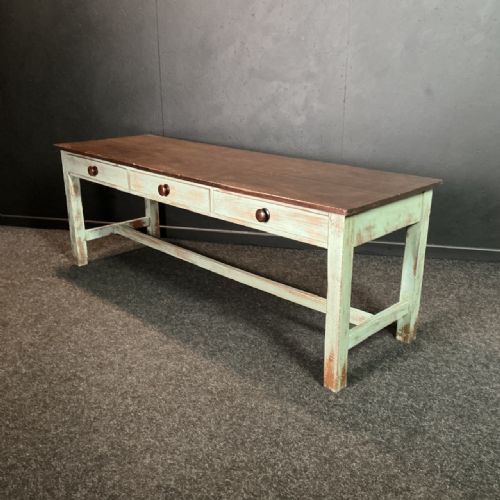
The most common forms on this page include sturdy kitchen and dining tables, low lamp tables, and substantial dresser bases equipped with drawers. Many examples retain original or early painted surfaces in distinct green shades, often associated with English country house, rustic farmhouse, and Scandinavian country styles. Side tables and specialised pieces like dropleaf tables and writing desks also appear regularly.
Materials and construction
These pieces are constructed primarily from solid pine timber, selected for its workability and strength in everyday furniture. Joinery methods rely on traditional pegged joints, dovetails, and sturdy framing designed to withstand heavy domestic use. Metal elements such as brass handles and cast iron bases appear on specific forms like industrial garden tables and tavern tables.
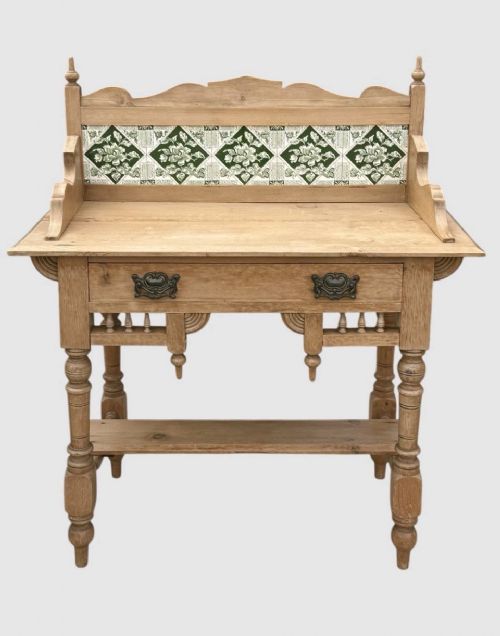
Surfaces are finished with applied paint, often laid down over bare wood in multiple layers to create durable protection. Over generations, this paint develops a distinctive crackle and patina through natural wear. Ceramic components, such as tile gallery backs on washstands, integrate with the wood and metal to complete the construction.
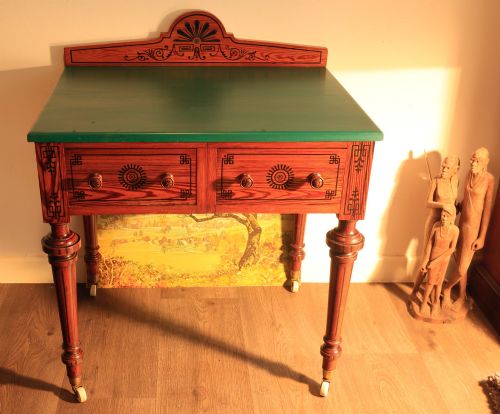
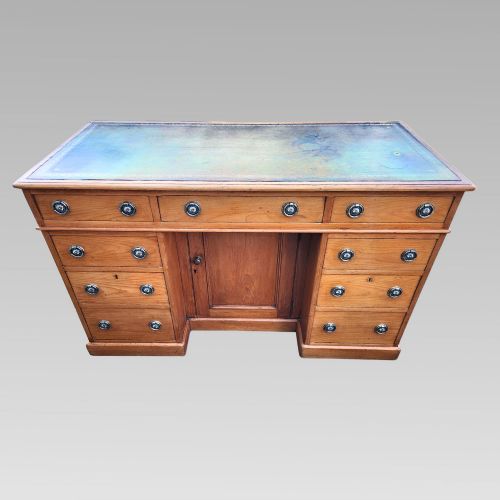
Listings feature pine tables finished in green paint alongside related forms like washstands, desks, and dressers from 18th to early 20th century periods.
Assessing quality and authenticity
Quality in these pieces rests heavily on the integrity of the timber and the survival of the original painted surface. Tables that retain their authentic, untransformed green paint without excessive modern repainting command greater interest from collectors. The balance of proportions, from the thickness of the pine top to the turnings of the legs, separates superior vernacular items from standard utility work.
Construction details also dictate the grade of a piece, specifically the tightness of the joinery and the depth of the patination. Well-executed dovetails in drawers and stable, wobble-free frames indicate careful workshop origin, whether the piece emerged from an English country house or a Swedish provincial workshop.
The Green Pine Table Glossary
- Dresser base
- A low sideboard unit featuring drawers and sometimes cupboards beneath a solid wooden top, historically used for food preparation and storage in large kitchens.
- Console table
- A narrow table designed to stand against a wall, frequently utilised in hallways or reception rooms where floor space is limited.
- Cricket table
- A small, lightweight three-legged table originating in British rural traditions, named for its resemblance to a traditional cricket stool.
- Slagbord
- A traditional Scandinavian dropleaf table supported by swinging wooden gates or legs, useful for adjustable seating arrangements.
- Patina
- The surface sheen and softening of colour developed on wood and paint over decades of handling, cleaning, and exposure to light.
Green Pine Table: Frequently Asked Questions
How do I date a green pine table?
Dating relies on examining the construction methods, tool marks left on the timber, and the composition of the paint layers. Hand-cut dovetails, square-headed nails, and timber shrinkage patterns help establish the century of manufacture.
Style indicators also provide clues, as Victorian washstands, Edwardian industrial pieces, and 18th century dresser bases each possess distinct structural characteristics. Comparing the piece to known vernacular forms narrows down the period further.
Are painted finishes original?
Determining originality involves looking for wear patterns that match the age of the underlying wood, such as thinning paint around handles and edges. Microscopic inspection or solvent tests can reveal later overpainting.
Many country pieces were repainted periodically during their working lives, so an early or historic painted surface is often valued just as highly as factory-original coats.
How should I care for a painted pine surface?
Protect the painted finish by keeping the furniture away from direct sunlight and maintaining stable indoor humidity levels to prevent timber movement. Dust gently with a dry or slightly damp soft cloth.
Avoid harsh chemical cleaners, abrasive scrubbers, or modern furniture polishes that can soften historic paint layers and alter the natural patina.
Can I use a pine table for daily dining?
Pine is a softer wood that records the history of use through dents, scratches, and stains, which many owners embrace as part of the character. Using table runners, placemats, and coasters helps protect historic surfaces from moisture and heat rings.
Sturdy construction makes these tables fully functional for everyday meals, provided you clean spills promptly and avoid overloading fragile joints.