


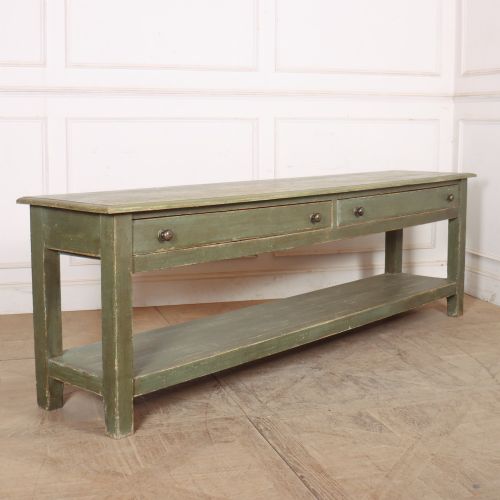


Green Painted Console
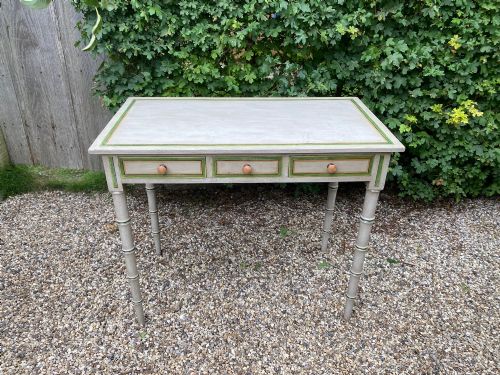
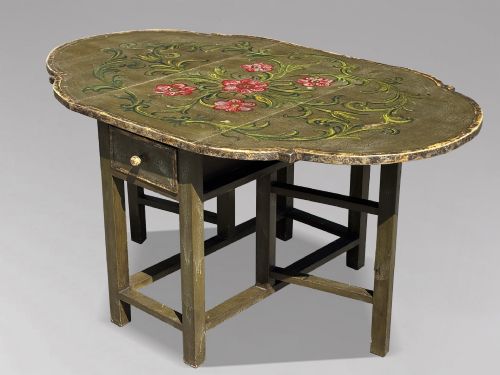
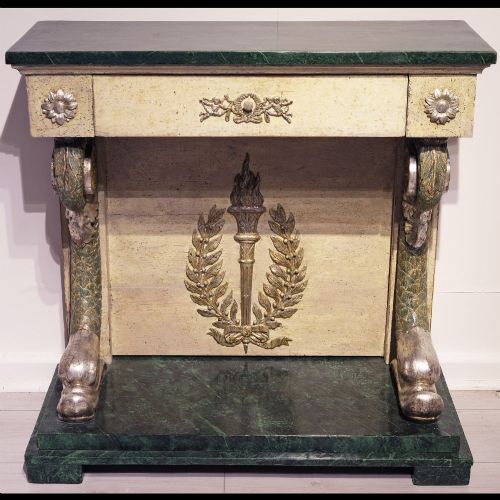
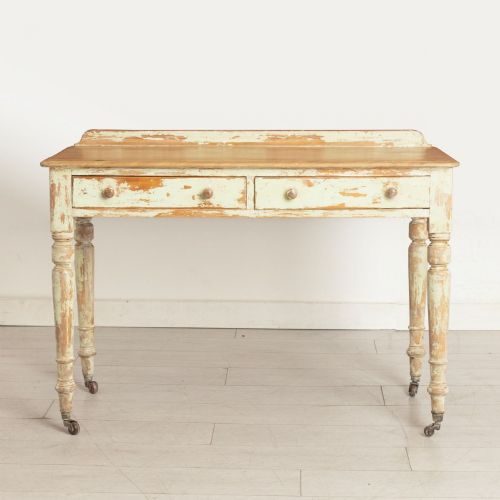
A green painted console brings colour and architectural line to a hallway, drawing the eye with painted pine, wood, and marble surfaces.
Green Painted Console
A green painted console is a narrow table designed to stand against a wall, frequently serving as a console table, side table, or serving table. The selection spans periods from the eighteenth century through the early twentieth century, offering forms intended for both utility and display.
The regional origins of these pieces vary widely across European traditions, incorporating English country styles, French provincial furniture, and Scandinavian country or Gustavian designs. Buyers frequently encounter rectangular console tables alongside demi-lune shapes, drop-leaf tables, and long pine formats with drawers.
Makers and workshops across Italy, France, Sweden, and England produced these tables using local softwoods and hardwoods, finished with decorative paint schemes. Their practical utility ranges from narrow hall surfaces to serving tables and writing desks.
How they were made
Carpenters constructed these tables primarily from pine, oak, and birch, employing traditional joinery methods suited to domestic furniture. Painted finishes were applied over wood, sometimes incorporating gilt details or faux bamboo turnings.
Many surfaces feature inset marble or specimen marble tops, while others utilise verdigris copper, zinc, or solid timber boards. Paint layers often weathered over decades, producing patinated surfaces that reflect their age and origin.
Listings feature pieces from the eighteenth and nineteenth centuries alongside early twentieth-century examples, constructed in pine, painted wood, and marble.
What varies in quality
Quality depends upon the integrity of the original timber frame and the survival of early or original painted surfaces. Tables featuring specialised tops, such as inset marble or decorative carving, demonstrate higher craftsmanship than standard utility pieces.
Proportion and regional detailing distinguish simpler farmhouse furniture from refined Neoclassical or Gustavian examples. The harmony between the structural form and the character of the painted finish determines the overall distinction of the piece.
Pauly et Cie
The Green Painted Console Glossary
- Console
- A table designed to be fixed or placed flat against a wall, often supported by two front legs. These tables frequently feature decorative carving or painted finishes.
- Demi-lune
- A half-moon shape used for console and side tables intended to sit flush against a wall. This form allows the table to occupy minimal floor space in narrow hallways.
- Gustavian
- The Swedish interpretation of French Neoclassical style, characterised by restrained carved ornament and pale painted finishes. Pieces from this tradition emphasise symmetry and clean lines.
- Potboard
- A lower slatted shelf incorporated into the base of serving tables and dresser bases, traditionally used for storing pots and domestic utensils. It provides structural stability to large furniture forms.
- Serpentine
- A furniture front or top curving outward in the centre and inward at the sides. This contour requires skilled carpentry and adds movement to the piece.
Green Painted Console: Frequently Asked Questions
Where should I place a console?
These narrow tables suit hallways, entryways, and reception rooms where floor space is limited. Their shallow depth allows them to sit against walls without obstructing pathways.
They also function effectively beneath mirrors or artwork in living spaces and dining rooms, providing a surface for lamps and decorative objects.
How do I care for painted wood?
Dust surfaces regularly with a soft, dry cloth to prevent the accumulation of dirt. Avoid harsh chemical cleaners that can damage historic painted finishes.
Keep wooden furniture away from direct heat sources and strong sunlight to prevent the paint from drying, cracking, or fading over time.
How do I identify a Gustavian piece?
Gustavian furniture displays neoclassical restraint, featuring pale grey, cream, or green painted surfaces with subtle fluting or carved rosettes. Swedish makers adapted French styles to suit lighter, simpler interiors.
Look for balanced proportions, tapered legs, and construction in pine or birch beneath the painted layers.