
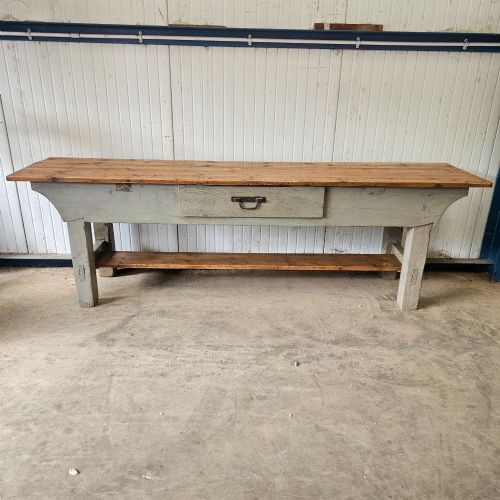
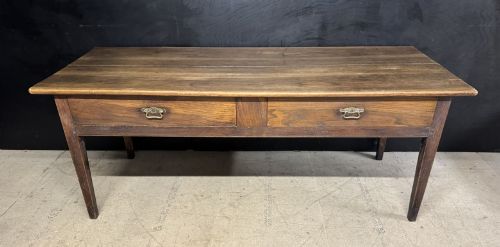
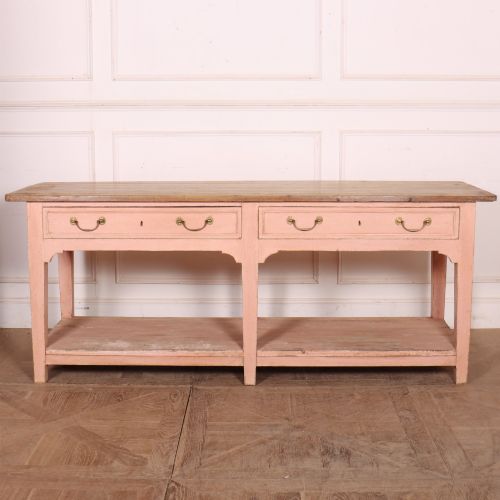
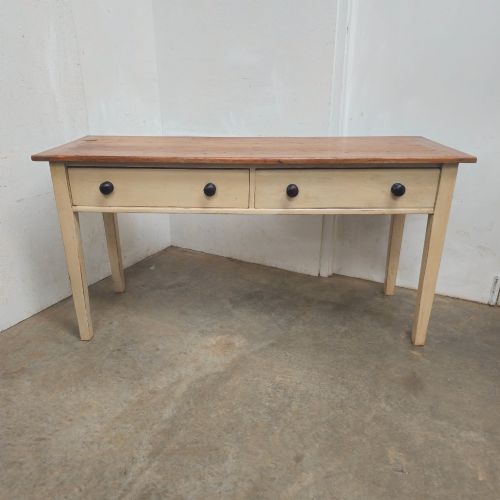




Farmhouse Server Table
These farmhouse server table examples offer honest utility and sturdy timber construction, making them a practical addition to any rustic interior.
Farmhouse Server Table
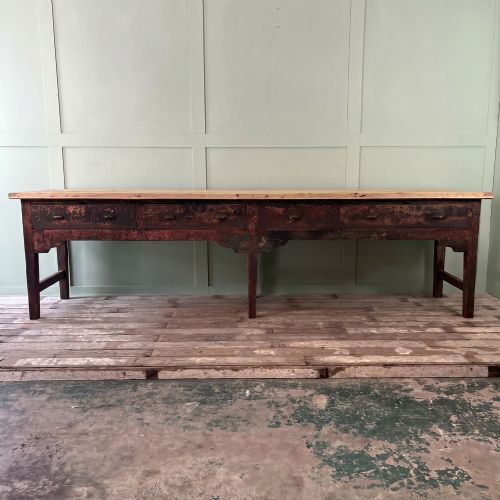
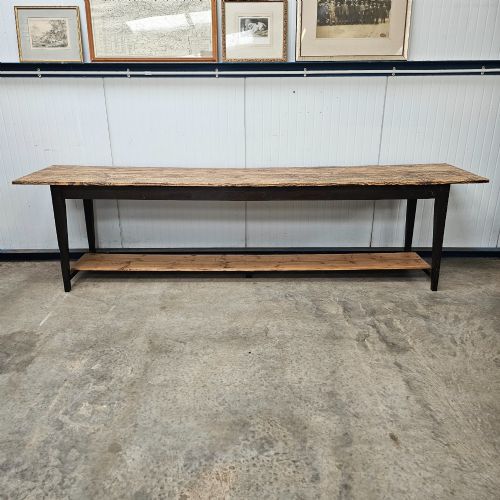
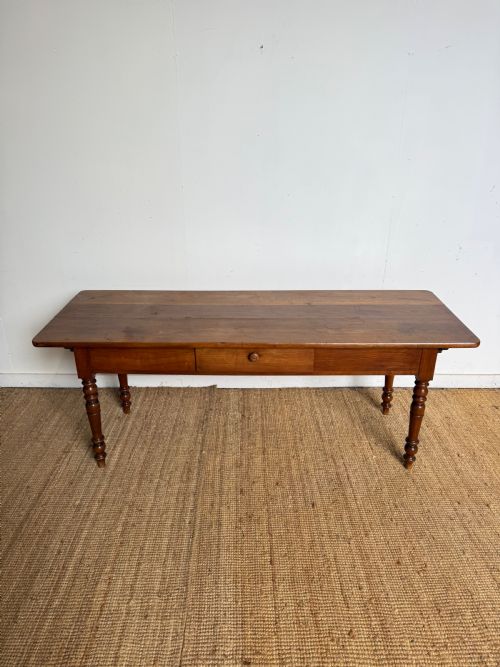
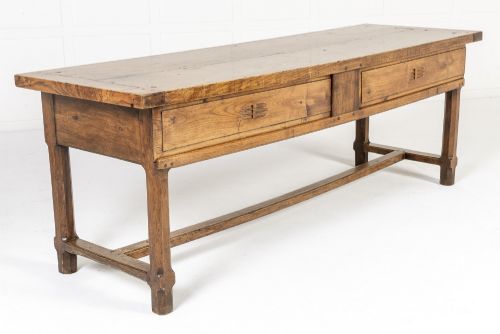
A farmhouse server table brings robust everyday surfaces into modern spaces, drawing on traditional forms designed for domestic work. When you search for this phrase, you encounter long serving tables, narrow potboard servers, and heavy preparation boards built for hard use.
The pieces on this page span the eighteenth and nineteenth centuries, taking shape as English country tables, French provincial consoles, and Victorian kitchen furniture. Pine and oak dominate the selection, often accompanied by fruitwood and cherrywood variants with practical drawers or lower potboards.
How they were made
Constructed from solid timber such as pine, oak, cherrywood, and fruitwood, these tables rely on straightforward joinery suited to heavy daily domestic tasks. Many feature scrubbed wooden tops designed to withstand constant cleaning and food preparation.
Makers incorporated functional elements like brass hardware, iron fittings, and lower pot-shelves or potboards to store kitchen wares. Painted finishes appear frequently, adding protective layers and distinctive patination to the underlying wood.
Pine and oak are the most frequent timbers found across these listings, alongside occasional cherrywood and fruitwood.
What varies in quality
Proportion and timber selection set finer examples apart from standard utility furniture, particularly in long harvest tables and manor house servers. The thickness of the top boards and the integrity of the underlying frame dictate the overall durability.
Original surface treatments, such as untouched historic paint or deep patination built through decades of use, elevate the character of a piece. Structural balance and the retention of original brass or iron details also influence how successfully a table sits in a room.
The Farmhouse Server Table Glossary
- Potboard
- A lower shelf fitted beneath a table or dresser base, traditionally used for storing pots and pans. This open platform adds considerable stability to long wooden frames.
- Prep table
- A heavy-duty work surface originally utilised for kneading bread or preparing food in large domestic kitchens. These tables usually feature thick timber tops designed for demanding tasks.
- Console table
- A narrow table designed to stand against a wall, frequently utilised as a serving surface in dining spaces. They offer useful surface area without occupying excessive floor space.
- Patina
- The surface sheen and colour developed over decades through handling, polishing, and natural wear. It serves as a visual indicator of age and consistent use.
Farmhouse Server Table: Frequently Asked Questions
How were farmhouse server tables used?
These tables served as central work surfaces for food preparation, baking, and the general management of a busy household. Their robust construction allowed them to handle heavy daily labour in kitchens and dairies.
Over time, many transitioned into dining rooms and hallways to act as serving stations or display surfaces. Their practical height and sturdy frames made them adaptable to various domestic tasks.
How do I care for a wooden server table?
Protect the timber surface by using coasters and mats to prevent moisture rings and heat damage from hot dishes. Regular dusting with a dry cloth keeps the surface clean without stripping the historic finish.
Applying a suitable wax occasionally helps nourish older pine and oak without creating an artificial gloss. Avoiding direct sunlight preserves the natural colour and prevents the timber from drying out.
Are these tables suitable for everyday dining?
Many examples provide ample surface area and comfortable clearance for daily meals, depending on their height and width. Narrow console versions work better as serving ledges rather than primary seating tables.
Checking the knee clearance beneath the drawers helps determine if a specific piece functions comfortably for seating. Most kitchen and harvest variants accommodate chairs easily.
How do I distinguish between French and English styles?
French provincial and country examples frequently employ fruitwood or cherrywood alongside painted pine, showcasing softer lines and cabriole or tapered legs. English pieces more commonly feature solid oak or scrubbed pine with straightforward, utilitarian framing.
Hardware choices also offer clues, with different regional preferences in iron and brass fastenings. The overall proportions reflect the distinct domestic traditions of each region.