


Terracotta Prayer Mat
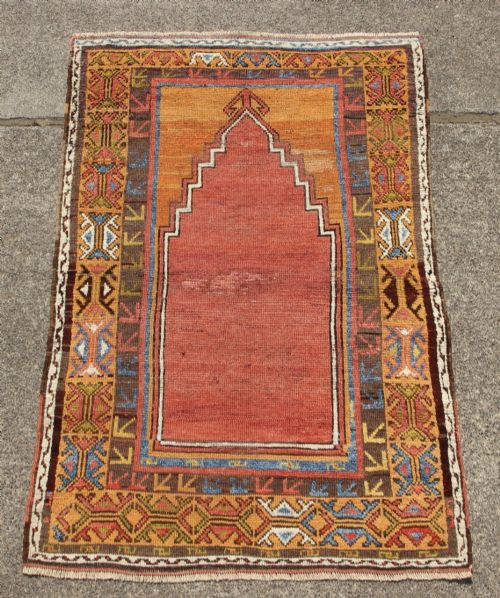
A terracotta prayer mat is a woven textile featuring the architectural niche of the mihrab, created for individual devotion.
Terracotta Prayer Mat
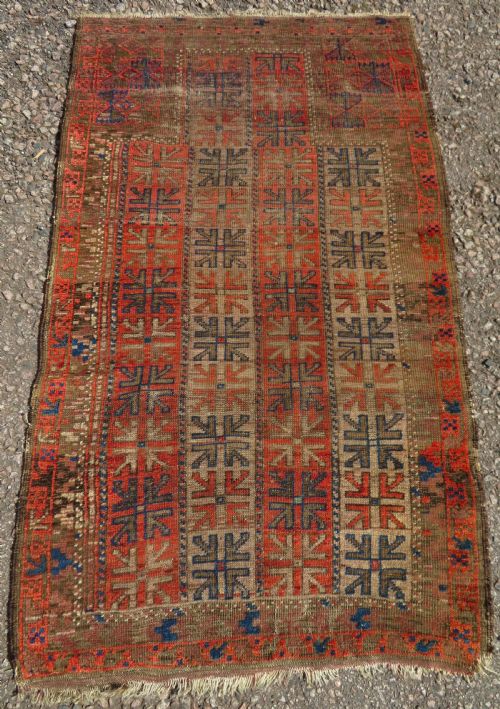
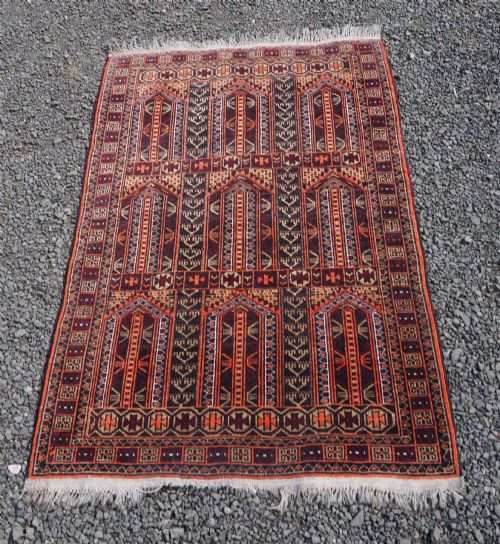
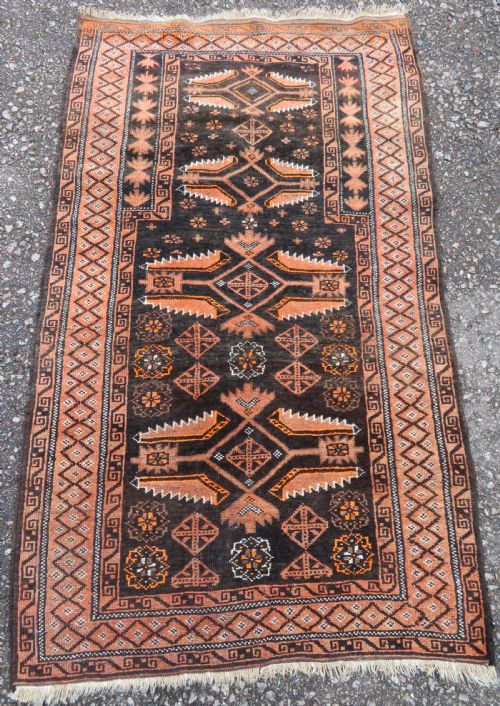
When searching for a terracotta prayer mat, a buyer is examining hand-knotted village and tribal rugs produced across Anatolia, the Caucasus, and Central Asia. These textiles are defined by their distinct prayer format, which typically incorporates a pointed arch or mihrab directing the user toward Mecca.
The specimens seen here span from the mid eighteenth century into the early twentieth century, originating from weaving centres such as Konya, Milas, Ghiordes, and various Afghan and Baluch tribal regions.
Most examples encountered on this page take the form of village or tribal area rugs, woven in wool with regional motifs that reflect the cultural traditions of their makers.
Materials and Construction
The textiles on this page rely primarily on wool, hand-spun wool, and occasional silk thread, often dyed using natural colourants to achieve rich terracotta and earthy tones.
Weavers knotted these materials onto wool or cotton foundations, employing traditional village and nomadic techniques that resulted in durable pile carpets designed for daily devotional use.
Some weavers included dates and inscriptions directly inside the rug, leaving a quiet signature in the wool.
Distinctions in Quality
The standard of a prayer rug depends heavily on the fineness of the knotting, the crispness of the architectural niche design, and the depth of the natural dyes used in the field and borders.
Early Anatolian pieces from regions like Ladik or Konya often demonstrate superior wool quality and sophisticated colour saturation, whereas later tribal pieces display more rustic charm and varied village interpretations.
The Terracotta Prayer Mat Glossary
- Mihrab
- The arched niche found on prayer rugs, symbolising the direction of prayer towards Mecca. Its shape often helps identify the specific weaving region.
- Prayer Rug
- A small format carpet designed for personal devotion, traditionally featuring a central arch or multiple niches.
- Natural Dyes
- Colourants derived from plants, insects, and minerals rather than synthetic compounds. They yield the rich, mellow tones seen in older textiles.
- Pile
- The cut loop surface of a rug formed by individual knots tied to the warp threads. Its density affects both handle and durability.
- Warp
- The vertical foundation threads stretched tightly on the loom before knotting begins. Weft threads are inserted across them to secure the structure.
Terracotta Prayer Mat: Frequently Asked Questions
How do I use a prayer rug at home?
These antique textiles function well as small floor coverings in low-traffic areas or as decorative wall hangings to protect the pile from heavy wear.
Mounting a rug on a wall requires a proper sleeve or Velcro system to distribute the weight evenly across the upper edge without damaging the wool.
How can I tell a Turkish rug from an Afghan one?
Turkish examples from regions like Milas or Konya frequently employ lighter terracotta fields with floral borders and distinct prayer arches.
Afghan and Baluch pieces tend to feature darker wools, geometric motifs, and multiple mihrab designs known as seh mihrab.
What does a double niche mean?
A double niche design incorporates prayer arches at both ends of the textile rather than a single directional point.
This unusual layout appears in specific village and nomadic pieces from Central Asia and Anatolia.
How do I date an antique prayer rug?
Dating relies on assessing the structural materials, the complexity of the natural dye palette, and stylistic markers specific to nineteenth-century village production.
Written dates or inscriptions sometimes appear directly within the weave of Turkmen and Caucasian pieces.