


Caucasian Mihrab Rug
A caucasian mihrab rug brings tribal wool weaving and arched prayer designs into a room, offering distinct regional patterns from the Caucasus.
Caucasian Mihrab Rug
A caucasian mihrab rug is a woven tribal floor covering featuring the distinctive arched prayer niche known as the mihrab. These pieces originate from the Caucasus region and date across the nineteenth and early twentieth centuries, spanning periods from about eighteen fifty to nineteen twenty.
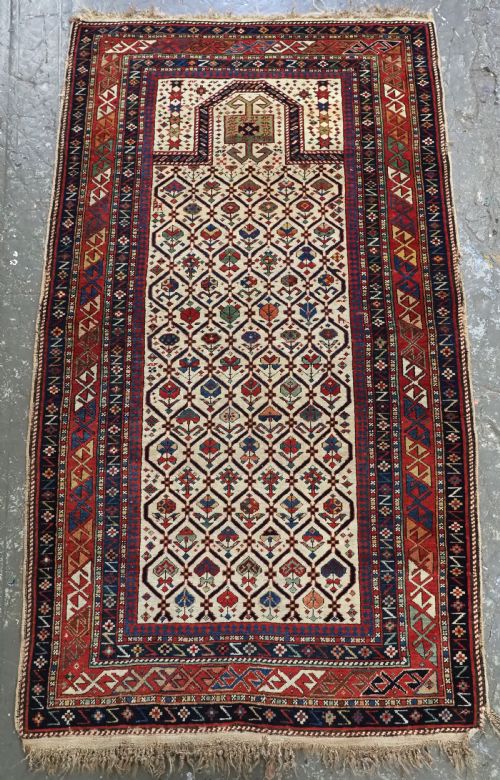
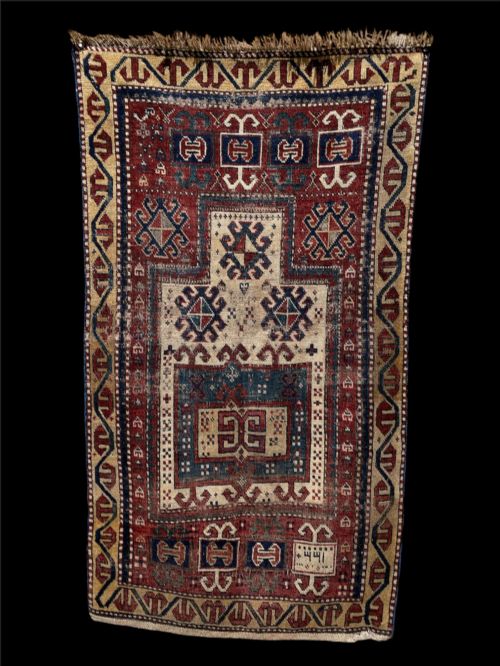
Buyers will encounter specific regional styles such as Dagestan, Gendje, Kazak, Fachralo, Marasali, and Shirvan prayer rugs. These examples display varied ground colours including ivory, yellow, and blue, often ornamented with floral lattice or small boteh designs.
How they were made
These rugs are handwoven using wool for the pile and foundation yarns, frequently combined with cotton elements. Artisans knotted the wool by hand to build dense, durable surfaces designed for daily use.
Weavers utilised traditional tribal techniques passed down through generations in the Caucasus. Natural materials dictate the texture and weight of each individual piece.
Current listings span periods from eighteen fifty to nineteen twenty, featuring wool and cotton materials across Dagestan, Gendje, Kazak, Marasali, and Shirvan types.
What varies in quality
The fineness of the wool knotting and the crispness of the geometric or floral lattice design distinguish superior examples. Ground colour choices, such as scarce yellow or blue fields, also influence the character of the weaving.
The integrity of the original condition and the clarity of the mihrab arch structure separate finer regional pieces from standard production. Distinctive stylistic attributes reflect the specific workshop traditions of origins like Dagestan or Marasali.
The Caucasian Mihrab Rug Glossary
- Mihrab
- The arched niche design in a prayer rug that symbolises a doorway or direction. It forms the focal point of the upper field.
- Boteh
- A stylised almond or pear-shaped motif of Persian origin. It appears frequently across tribal Caucasian weaving.
- Pile
- The upright yarn loops that form the usable surface of the rug. It is traditionally spun from sheep wool.
- Lattice
- An open, repeating network pattern of intersecting lines or floral forms. It creates a structured grid across the ground of the rug.
Caucasian Mihrab Rug: Frequently Asked Questions
What is a caucasian mihrab rug?
A caucasian mihrab rug is a handwoven tribal carpet featuring an arched prayer niche design. These pieces originate from nineteenth and early twentieth century Caucasus.
They reflect specific regional weaving traditions including Dagestan, Shirvan, and Gendje styles. Each piece employs wool and sometimes cotton materials.
How were these prayer rugs used?
These rugs served primarily as portable prayer mats for daily devotion. The arched mihrab design indicated the direction of prayer.
Over time, collectors and homeowners also used them as decorative floor coverings or wall hangings. Their distinct patterns brought tribal warmth into interior spaces.
How do I live with an antique rug?
Place the rug in low-traffic areas to preserve the wool pile and natural foundations. Use a suitable underlay to prevent slipping and reduce friction against the floor.
Keep the rug away from direct sunlight to protect the ground colours from fading. Gentle, regular care ensures the handwoven structure remains stable.
How do I tell regional styles apart?
Regional styles are distinguished by specific design motifs, colour palettes, and structural characteristics. Dagestan and Shirvan examples often feature ivory grounds with floral lattice patterns.
Other traditions like Kazak or Gendje display bolder geometric arrangements or scarce yellow and blue fields. Comparing the knotting and secondary ornaments clarifies the origin.