



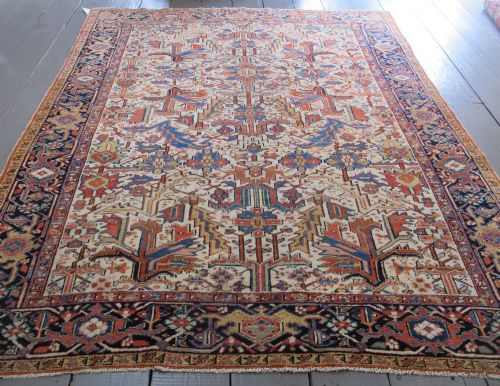
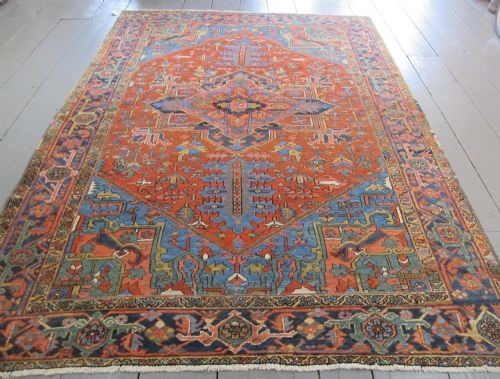
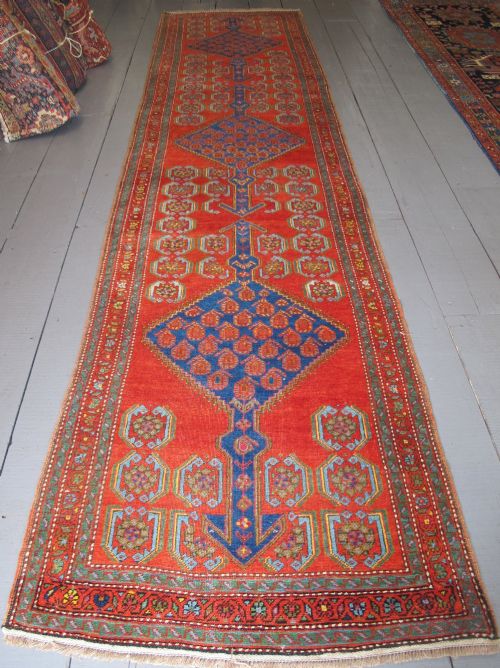


Terracotta Heriz Rug
A terracotta heriz rug anchors a room with geometric power, offering durable wool construction and centuries of Persian weaving tradition.
Terracotta Heriz Rug
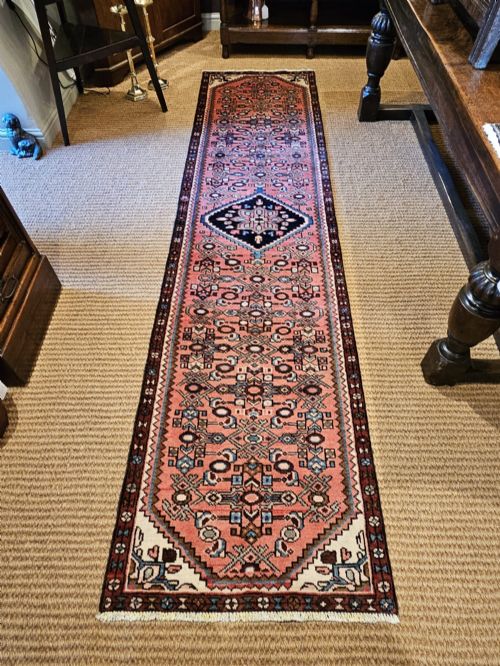
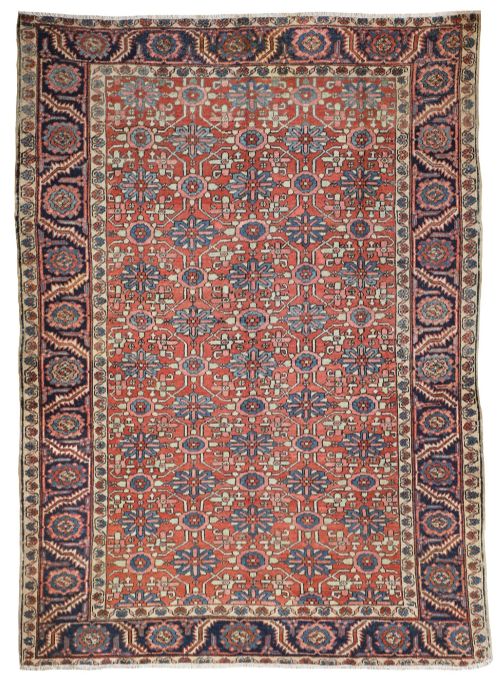
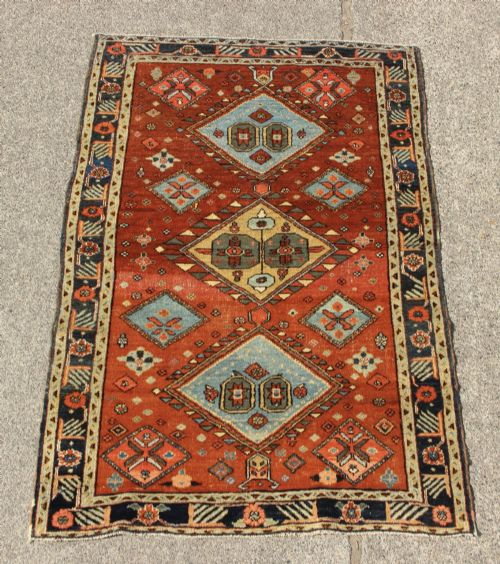
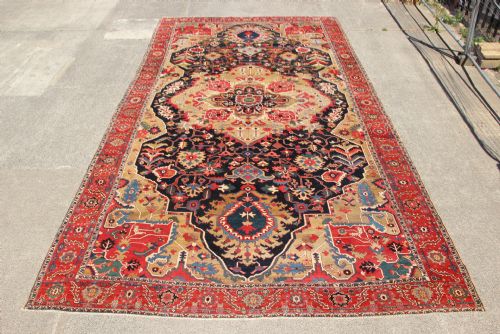
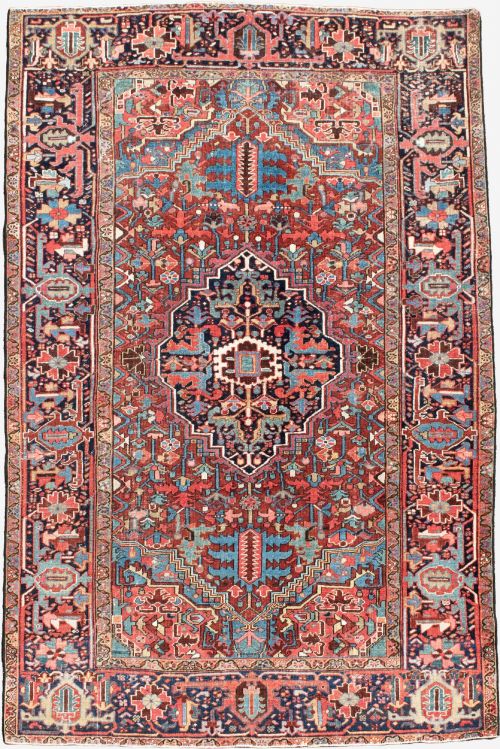
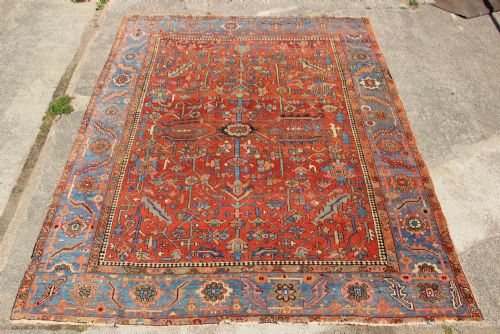
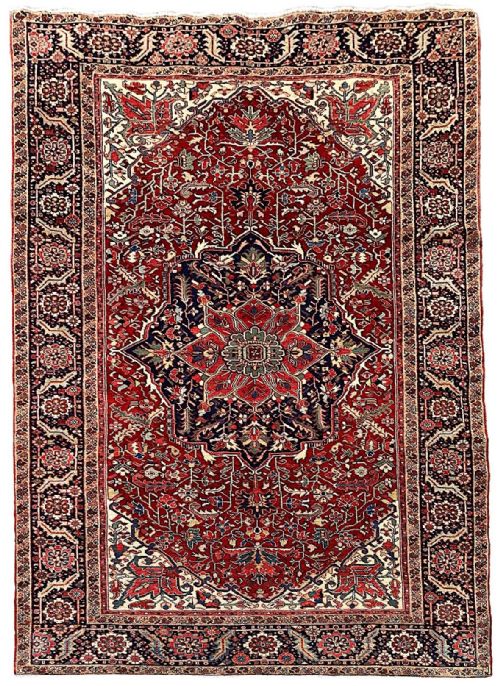
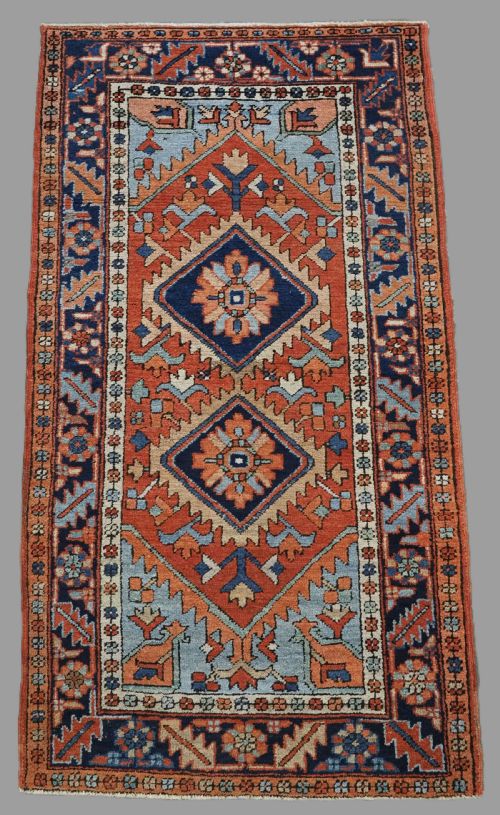
A terracotta heriz rug represents a distinct class of large carpets, room-size rugs, runners, and compact bag faces woven in north-west Persia during the nineteenth and early twentieth centuries. These floor coverings emerge from regional towns and villages including Heriz, Serapi, Bakshiash, Karaja, and Gorevan, spanning production dates from eighteen-fifty to nineteen-thirty.
The most frequent examples encountered here are antique Heriz carpets and rugs featuring characteristic terracotta grounds alongside geometric medallions and traditional Persian motifs. Buyers seek these pieces for their architectural layouts, robust wool foundations, and ability to ground traditional or contemporary interiors.
How they were made
Weavers constructed these carpets using wool and hand-spun wool piled onto a sturdy cotton warp, ensuring structural longevity and resilience under heavy foot traffic. Natural dyestuffs provided the characteristic terracotta, ivory, and sky-blue hues that define the regional palette.
The hand-knotting technique allowed for precise geometric drafting, creating firm, dense piles characteristic of Persian village and town workshops from this era.
Nomadic weavers occasionally repurposed storage bags into small mats, leaving us antique bag faces to puzzle over today.
What varies in quality
Knot density and precision of line separate the standard village production from exceptionally fine workshop pieces, such as early Serapi carpets. The clarity of the terracotta ground and the subtlety of secondary shades in the medallion dictate visual success.
Structural integrity of the cotton warp and wool pile determines long-term durability, distinguishing heavy country house carpets from smaller runner formats.
The Terracotta Heriz Rug Glossary
- Heriz
- A town in north-west Persia renowned for producing durable carpets with bold geometric medallions. These rugs often feature terracotta fields and sturdy cotton foundations.
- Serapi
- A sub-style associated with earlier Heriz production, typically displaying more open designs and delicate coloration. Collectors prize these older pieces for their artistic refinement.
- Bakshiash
- A neighbouring village style known for earthy tones and idiosyncratic, spaced designs predating standard Heriz geometrics. They offer an alternative aesthetic within the north-west Persian tradition.
- Warp
- The vertical threads stretched across the loom that form the foundational skeleton of the rug. Cotton warp provides dimensional stability in these heavy carpets.
- Bag face
- The functional front panel of a nomadic storage bag, repurposed as a small decorative mat. These smaller formats preserve authentic tribal weaving patterns.
Terracotta Heriz Rug: Frequently Asked Questions
Where were these rugs made?
These floor coverings originate from north-west Persia, specifically the town of Heriz and surrounding districts including Serapi, Bakshiash, and Karaja.
Local workshops and village weavers produced them across the nineteenth and early twentieth centuries for domestic use and export.
How do I clean a wool rug?
Regular gentle vacuuming without a beater bar removes loose dirt from the hand-spun wool pile without damaging the cotton foundation.
Professional specialist cleaning is essential for addressing deep soil or spills to protect the natural dyes.
Are these carpets suitable for heavy traffic?
The dense wool pile and sturdy cotton warp construction make these pieces exceptionally resilient for everyday domestic use.
Placing a quality underlay beneath the carpet prevents slippage and reduces friction against hard flooring.
How do I tell a Serapi from a Heriz?
Serapi carpets generally date to the nineteenth century and exhibit looser, more open geometric designs with softer terracotta and ivory tones.
Standard Heriz pieces from the early twentieth century typically present bolder, tighter medallion structures and heavier outlining.