
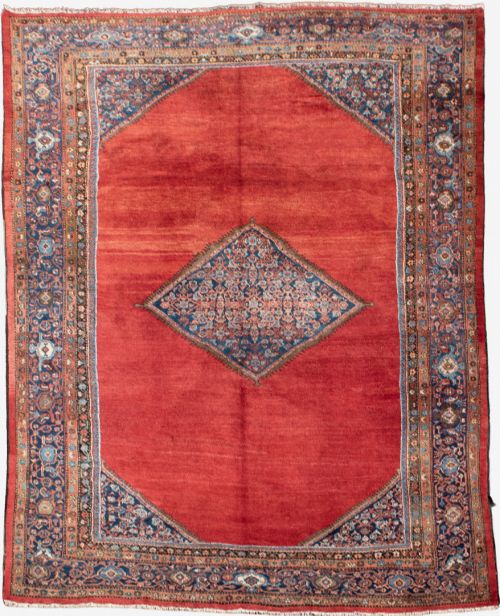
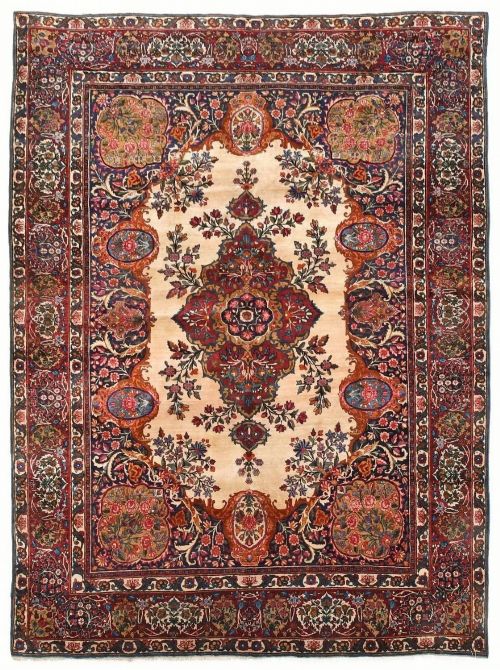


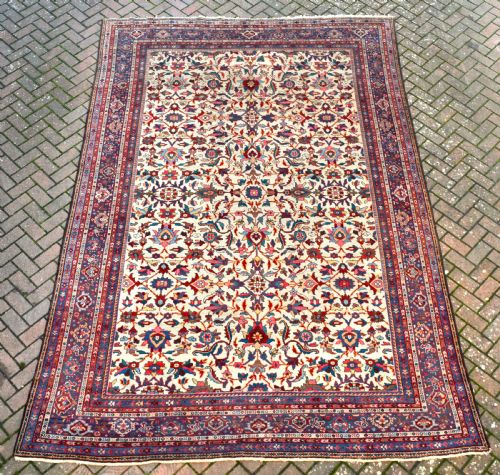


Persian Room Size Carpet
When you search for a persian room size carpet, you are looking at substantial floor coverings woven across nineteenth and early twentieth century workshops.
Persian Room Size Carpet
A persian room size carpet brings anchor and warmth to large spaces through traditional regional weaving styles. Buyers searching this phrase encounter nineteenth and early twentieth century room-sized floor coverings from specific weaving centres like Heriz, Mahal, Tabriz, and Kirman.
The selections most frequently met on this page date from the late nineteenth century up to the 1930s. These pieces encompass geometric village designs and finely detailed city formats, spanning dimensions that suit spacious drawing rooms and country house interiors.
How They Were Made
These carpets combine hand-spun wool pile foundations knotted onto sturdy cotton warps and wefts. Artisans utilised natural and early aniline dyes to build lasting colour fields across intricate medallion and all-over field patterns.
Weavers employed asymmetrical or symmetrical knots tied by hand, determining the density and crispness of the final design. The outer edges were routinely overcast by hand to secure the structure against fraying during daily use.
Persian Room Size Carpet Retail Price Guide 2026
Typical asking prices for persian room size carpet among the pieces listed under this phrase on Sellingantiques today, from the lower quarter to the upper quarter. They describe what is for sale here now, not the wider market.
Many antique country house carpets absorbed decades of fireside chatter and piano practice before ever reaching the market.
What Varies in Quality
Quality rests upon the fineness of the knotting and the precision of the design execution. Tightly packed knots allow intricate curvilinear patterns to hold their clarity, whereas coarser weaves suit the bold, geometric lines characteristic of village productions.
The depth and integrity of the dye palette further separate standard examples from finer works. Consistent saturation across the wool pile and harmonious natural colour ageing indicate superior materials and skilled dye work.
Ziegler And Co·Hajji Jalili
The Persian Room Size Carpet Glossary
- Warp
- The vertical threads stretched tightly on the loom that carry the foundation of the carpet. The exposed fringes at either end of the carpet are the ends of these warps.
- Weft
- The horizontal threads passed across the warps between rows of knots to bind the structure together. They help determine the rigidity and handle of the textile.
- Medallion
- A central ornamental design motif placed in the middle of the carpet field. This focal ornament often incorporates floral or geometric symmetry.
- Field
- The background area of the carpet enclosed by the border. The field can display an open plain colour or a dense arrangement of repeating motifs.
Persian Room Size Carpet: Frequently Asked Questions
Where were these large carpets made?
These floor coverings originated in distinct weaving towns, villages, and tribal regions across Persia and neighbouring areas such as India and Anatolia. Each production centre maintained its own distinct palette and drawing style.
City workshops produced refined, intricate florals, while rural districts favoured bold geometric medallions and robust structures suited for heavy domestic use.
How do I care for an old carpet?
Regular gentle vacuuming without a rotating brush roll prevents dust accumulation within the wool pile. Professional cleaning tailored for antique textiles preserves the integrity of the natural dyes.
Keeping the carpet out of direct, harsh sunlight prevents uneven fading across the wool field. Using a quality underlay provides cushioning and reduces friction against the floorboards.
How can I tell a Heriz from a Mahal?
Heriz carpets typically display bold, rectilinear medallion designs with robust geometric corner spandrels. The wool is known for its heavy, durable handle.
Mahal carpets tend to feature softer, more relaxed all-over floral patterns on expansive grounds. Their overall drawing is frequently less rigid than that of a northern Heriz.
What defines room size dimensions?
Room size specifications generally indicate floor coverings starting around three metres in length, designed to anchor substantial living spaces. These larger formats accommodated generous nineteenth and early twentieth century interior layouts.
Dimensions vary based on whether the piece originated from a village loom or a larger city workshop. Measuring the intended floor space carefully ensures the carpet sits correctly within the room boundary.