


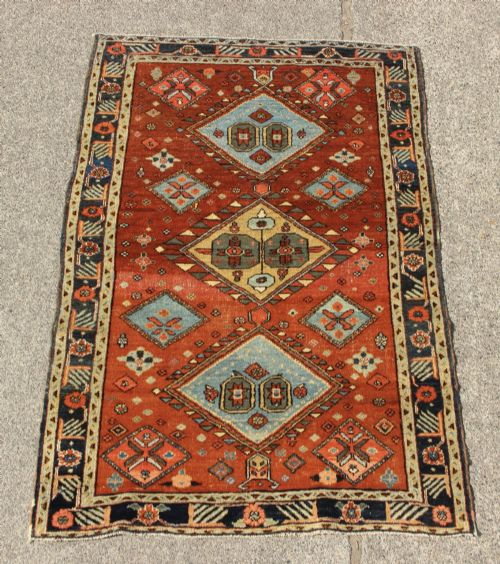
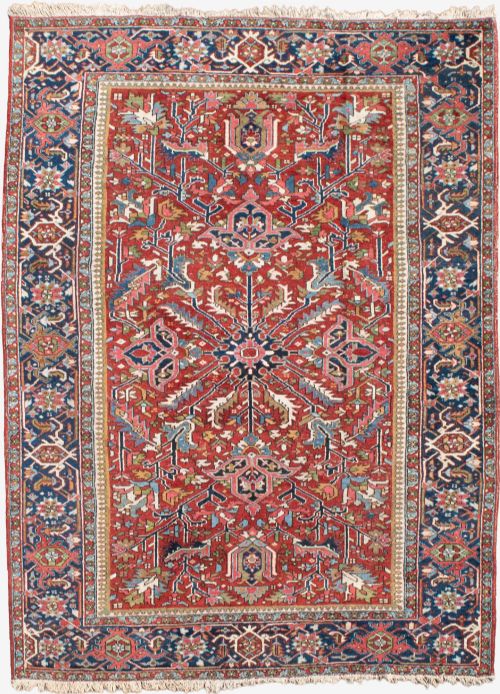

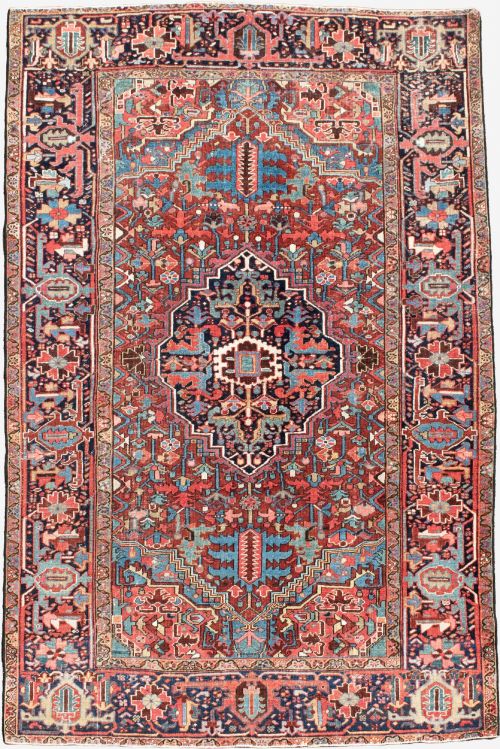
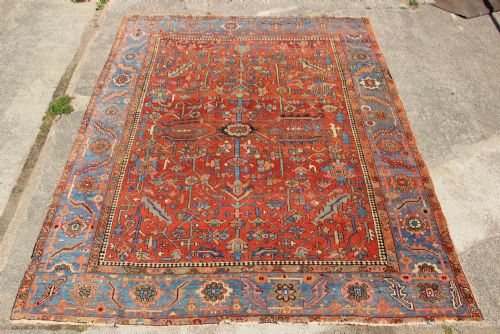
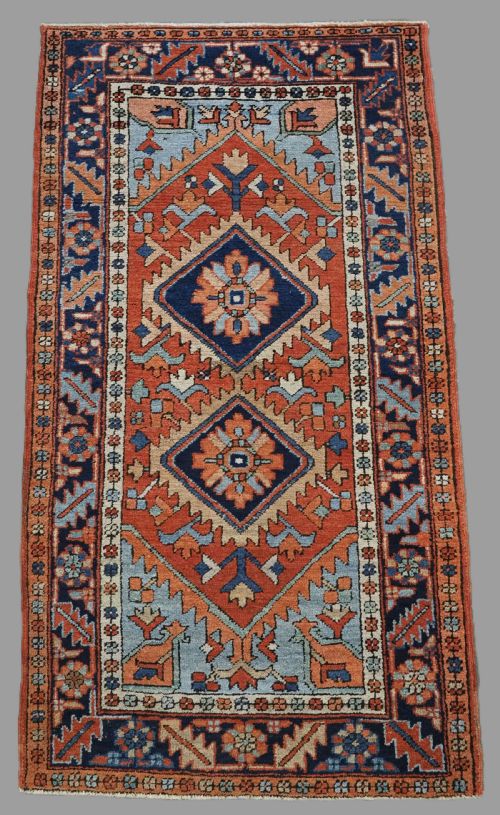
Vintage Heriz Area Rug
A vintage heriz area rug brings bold geometric motifs and rich natural dyes from North-West Persia directly into a room.
Vintage Heriz Area Rug
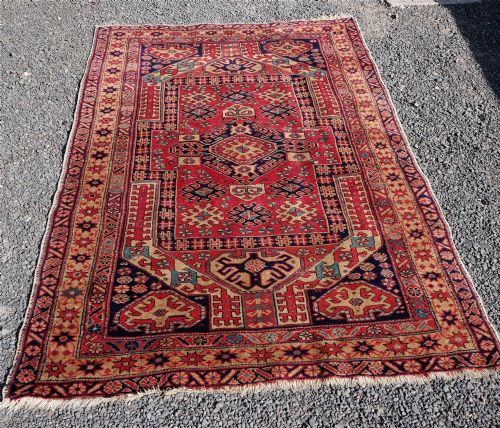
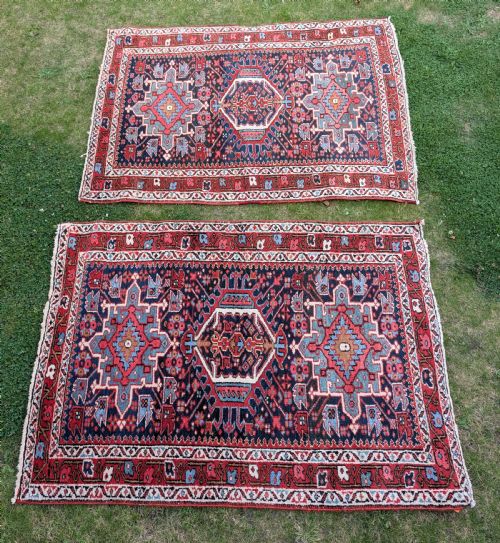
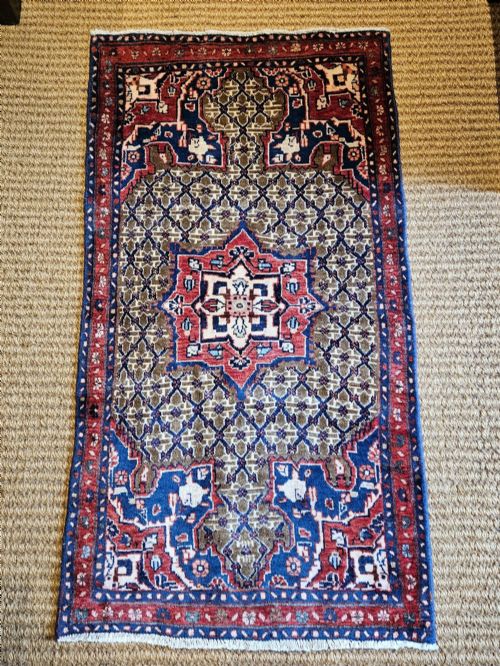
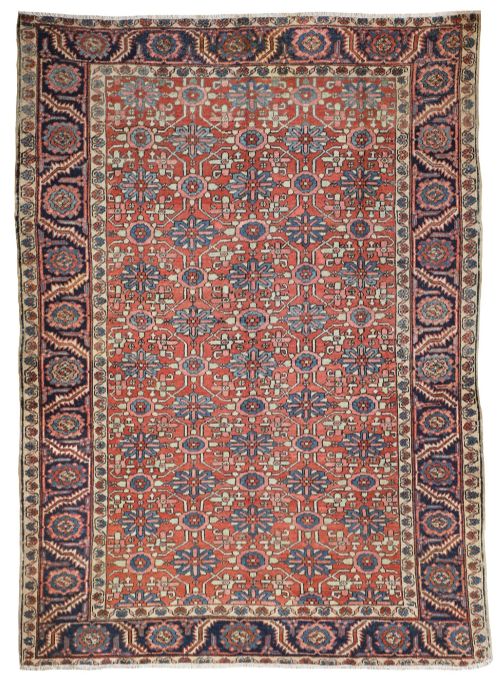
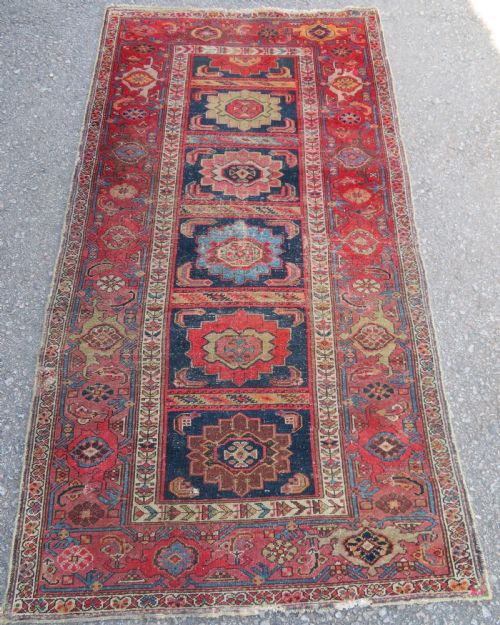
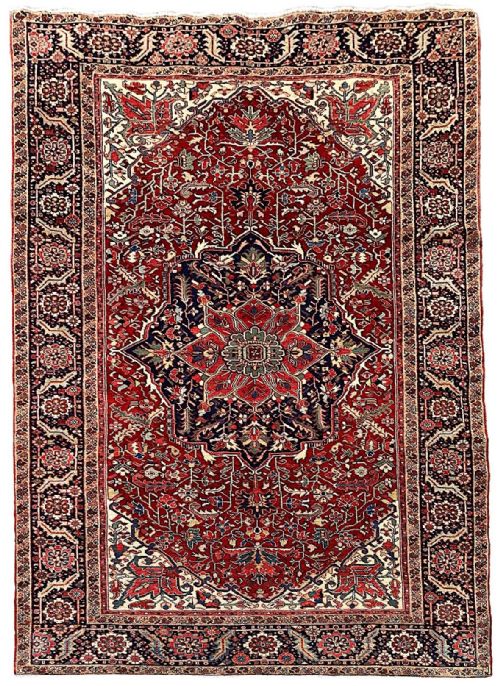
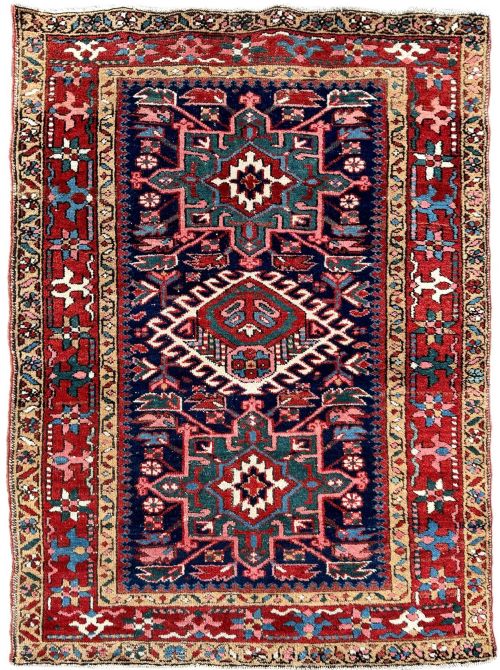
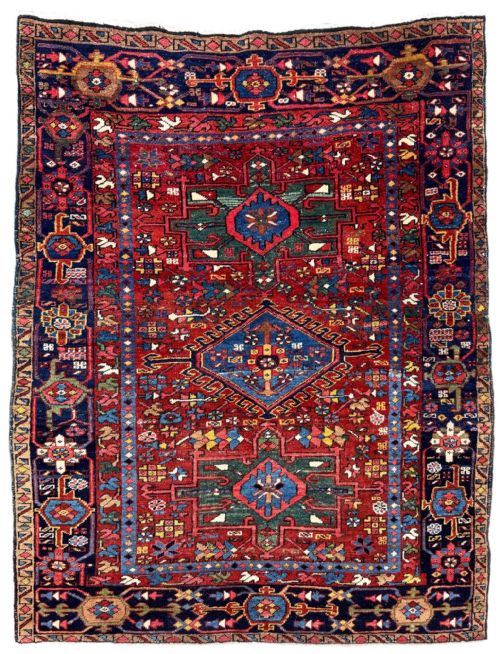
A vintage heriz area rug is a traditional hand-knotted floor covering originating from the Heriz region of North-West Persia. These pieces date across several decades, with examples spanning from the late nineteenth century through to the 1930s.
The selection here includes various formats, ranging from hearth-sized pieces and small carpets to room-sized examples. Related Persian village weaves from nearby districts such as Karaja, Bakshaish, and Ahar also appear alongside core Heriz designs.
Buyers encounter formats labelled as rugs, long rugs, and large carpets. The typical construction accommodates both intimate seating areas and substantial entertaining spaces.
How they were made
These floor coverings utilise hand-spun wool knotted firmly onto a cotton foundation, often incorporating a cotton warp for structural stability. This traditional method creates a dense, resilient pile designed to withstand heavy foot traffic over generations.
Weavers in the region employed rich colour palettes, producing distinctive ivory ground pieces and colourful patterned fields. The knotting technique allows for sharp, architectural medallions and geometric floral motifs that characterise the regional style.
Vintage Heriz Area Rug Retail Price Guide 2026
Typical asking prices for vintage heriz area rug among the pieces listed under this phrase on Sellingantiques today, from the lower quarter to the upper quarter. They describe what is for sale here now, not the wider market.
Some weavers clearly grew tired of strict symmetry halfway through, leaving charming little wool signature quirks hidden within the corner spandrels.
What varies in quality
The visual strength of the central medallion and the crispness of the geometric drawing distinguish finer examples. Pile depth and wool quality also fluctuate, affecting the tactile weight and resilience of the surface.
Subtle variations in dye saturation and the complexity of the secondary borders separate standard village production from superior workshop carpets. The integrity of the outer edges and the precision of the hand-weaving reveal the skill of the original maker.
The Vintage Heriz Area Rug Glossary
- Heriz
- A rug-weaving region in North-West Persia known for durable carpets featuring bold geometric medallions. These pieces often display strong architectural lines rather than curved floral patterns.
- Serapi
- An older style associated with Heriz carpets, typically dating from the nineteenth century. They display more spacious designs and softer, muted colour palettes.
- Karaja
- A style originating from a village near Heriz, known for smaller formats and repeating geometric motifs. These rugs share similar wool and dye characteristics with their larger neighbours.
- Bakshaish
- An early Persian village style featuring stylized, abstract designs and earthy tones. These carpets precede many standard Heriz productions and display great artistic freedom.
- Warp
- The vertical threads stretched on the loom that carry the tension of the weave. In these rugs, cotton warp threads provide a stable foundation for the wool pile.
Vintage Heriz Area Rug: Frequently Asked Questions
Where were these rugs made?
These floor coverings originate from North-West Persia, specifically the town of Heriz and surrounding villages.
Production also encompasses nearby weaving centres such as Karaja, Bakshaish, and Ahar within the same region.
How do I date a Heriz rug?
Dating relies on structural analysis, wool quality, and dye characteristics observed across different periods. Pieces span from the mid-nineteenth century through the early twentieth century.
Earlier examples often exhibit softer palettes and looser geometry, while later twentieth-century rugs show tighter mechanical precision.
What is the difference between Heriz and Serapi?
Serapi carpets represent an earlier, finer, and more spacious manifestation of Heriz weaving. They typically feature open fields and muted, harmonious vegetable dyes.
Standard Heriz carpets generally display denser geometry, more robust colouring, and heavier overall construction.
Are these rugs suitable for heavy traffic?
The dense hand-spun wool pile and sturdy cotton foundations make these carpets exceptionally durable. They were originally built to endure generations of domestic use.
Placing an appropriate underlay beneath the rug helps protect the foundation fibres from premature wear.