



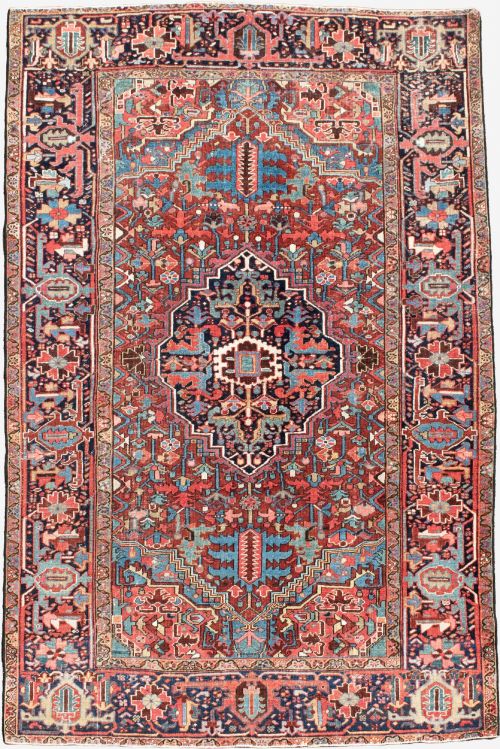
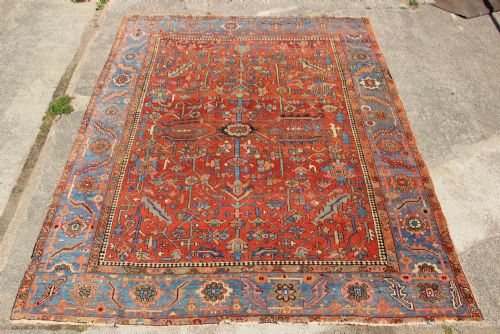
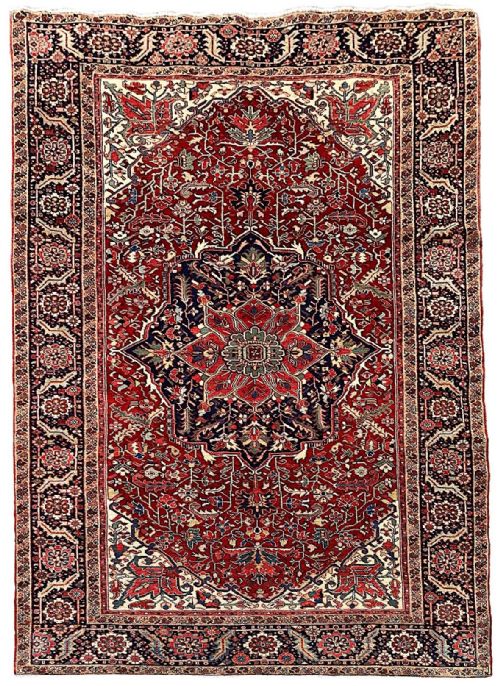
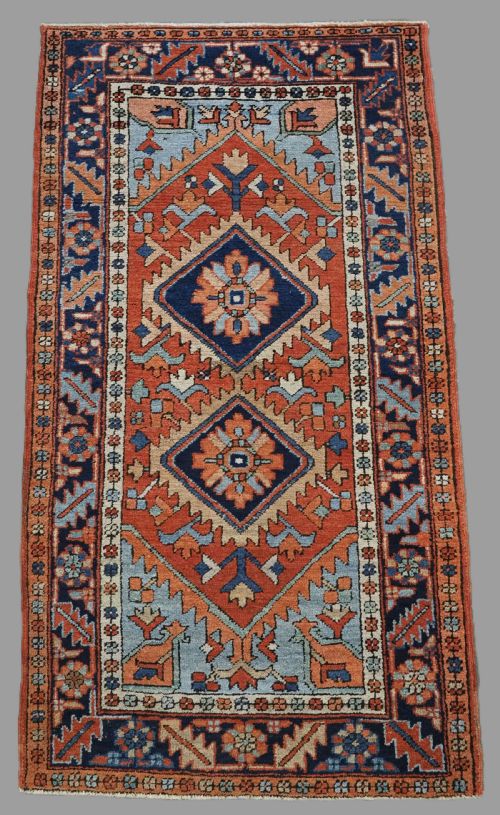
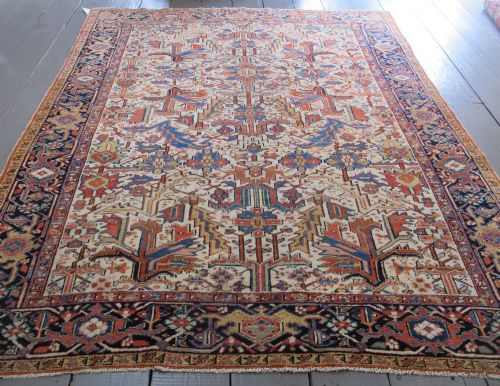
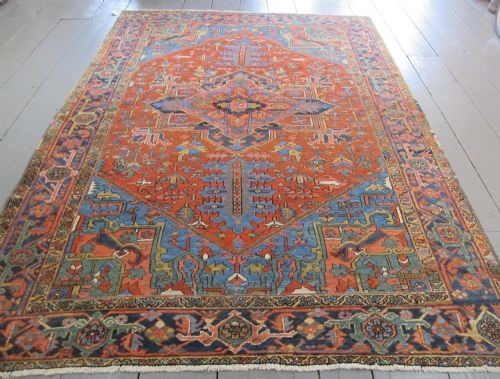
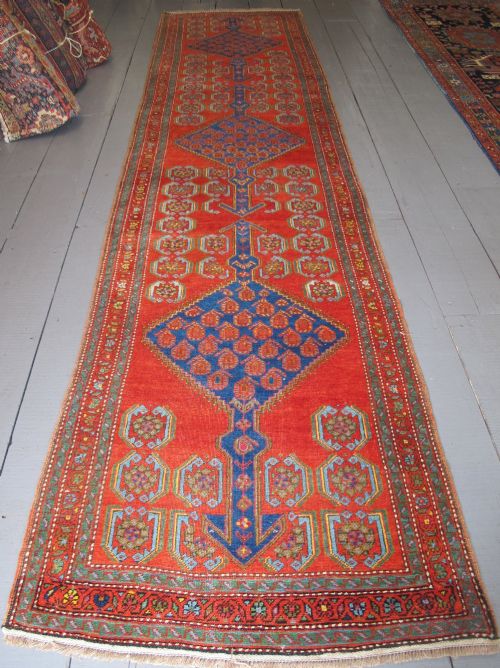


Terracotta Heriz Carpet
A terracotta heriz carpet delivers durable wool pile and bold geometric medallions suited to anchoring high-traffic rooms.
Terracotta Heriz Carpet
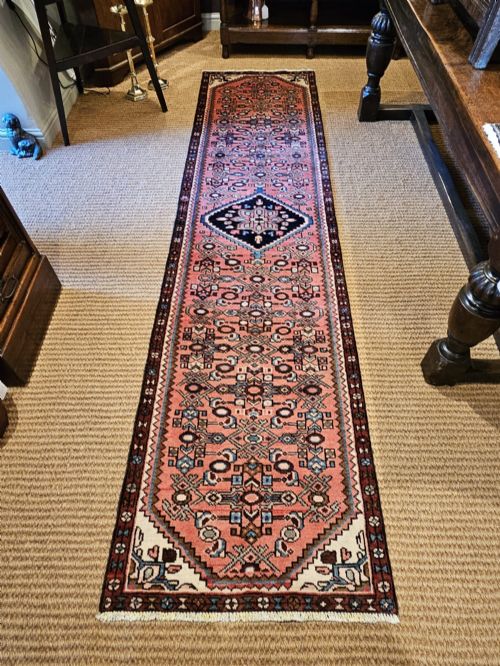
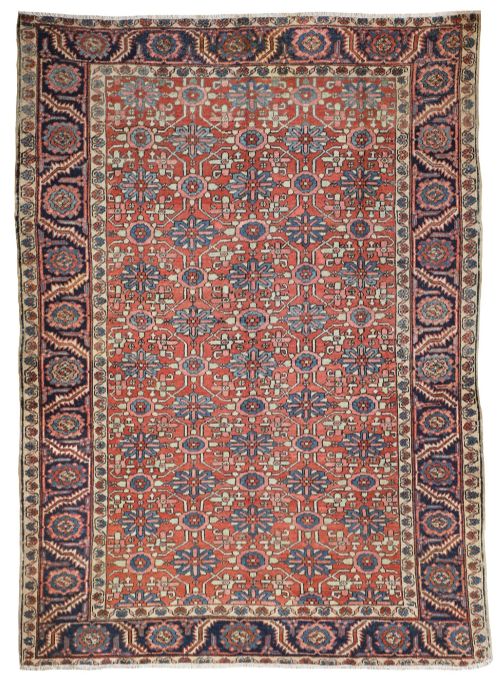
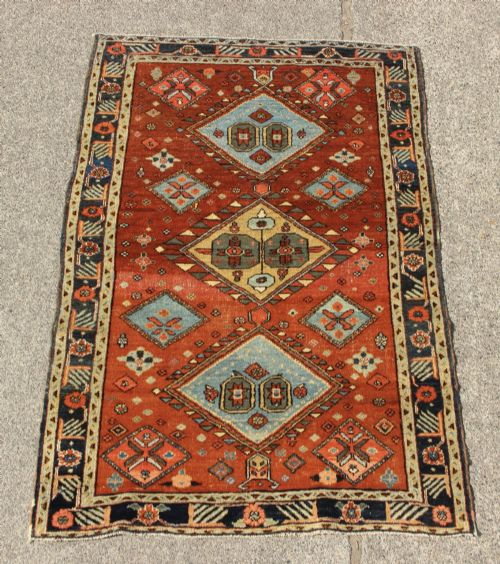
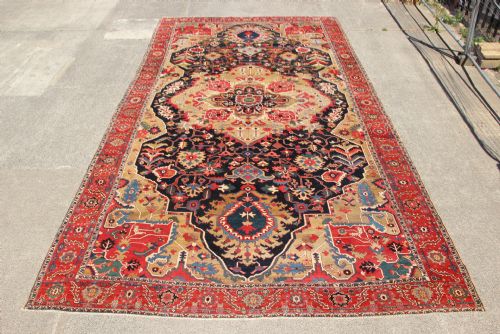
A terracotta heriz carpet is a substantial hand-knotted textile originating from north-west Persia, built for heavy domestic use. These heavy-wearing floor coverings typically display striking geometric centre medallions set against rich red or terracotta fields.
Most examples encountered on this page span from the late nineteenth century through to the early decades of the twentieth century. They range from smaller area rugs and long runners to very large room-sized carpets.
Materials and Construction
These carpets rely on sturdy cotton warps combined with thick wool pile, often utilising hand-spun wool for durability and depth of tone. The traditional knotting technique secures dense rows of pile onto the foundational cotton grid.
Natural dye traditions provide the characteristic terracotta, ivory, and blue ground colours seen across the weave. This robust construction accounts for the survival of large carpets across generations of use.
Terracotta Heriz Carpet Retail Price Guide 2026
Typical asking prices for terracotta heriz carpet among the pieces listed under this phrase on Sellingantiques today, from the lower quarter to the upper quarter. They describe what is for sale here now, not the wider market.
Listings feature pieces spanning from the mid-nineteenth century through the 1930s, constructed in wool, cotton, and hand-spun wool.
Factors That Separate Examples
Knot density and fineness of the geometric drawing distinguish master-woven carpets from simpler village productions. Tighter knot counts allow for sharper rendering of the characteristic angular floral motifs and medallions.
The condition of the original wool pile and the uniformity of the terracotta ground field determine desirability. Intact original borders and minimal past restoration also elevate an example within its period.
The Terracotta Heriz Carpet Glossary
- Warp
- The stationary vertical strings stretched on the loom that form the foundational skeleton of the carpet. Cotton warp threads provide structural stability for the wool pile.
- Medallion
- The prominent central ornamentation dominating the field of the carpet. This geometric focal point draws the eye across the terracotta background.
- Runner
- A long, narrow format of rug specifically proportioned for corridors, hallways, and staircases. These elongated pieces maintain traditional village patterns scaled down in width.
- Serapi
- A sub-type of carpet from the Heriz region known for more open designs and subtle spacing. These pieces generally date from the nineteenth century and command strong collector interest.
Terracotta Heriz Carpet: Frequently Asked Questions
How do I clean an antique Heriz carpet?
Professional specialist washing is recommended for antique wool carpets to protect natural dyes and fragile cotton foundations.
Regular gentle vacuuming without a rotating beater bar helps remove grit from the pile between washes.
Where were these carpets made?
These textiles were woven in the Heriz region located in north-west Persia, encompassing various surrounding villages and towns.
Local workshops utilised durable materials suited to the mountainous climate and traditional weaving methods passed through generations.
How do I date an old carpet?
Dating relies on examining structural clues such as wool texture, dye palettes, selvedge construction, and the specific style of the geometric drawing.
Comparing knot regularity and materials against documented pieces from the nineteenth and early twentieth centuries helps narrow the period of origin.
Will a large carpet suit modern flooring?
Large room-sized carpets anchor open-plan spaces and provide warmth and acoustic damping over hardwood or stone floors.
Using an appropriate underlay prevents slipping and protects the antique cotton foundation from premature wear against hard surfaces.