



Oversized Area Rug
An oversized area rug anchors a large room with grand scale, deep colour and centuries of woven tradition.
Oversized Area Rug
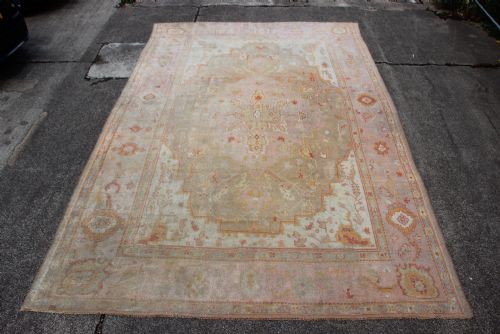
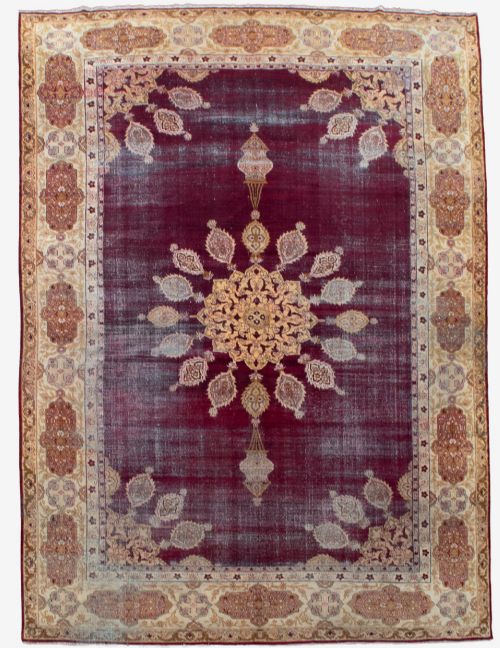
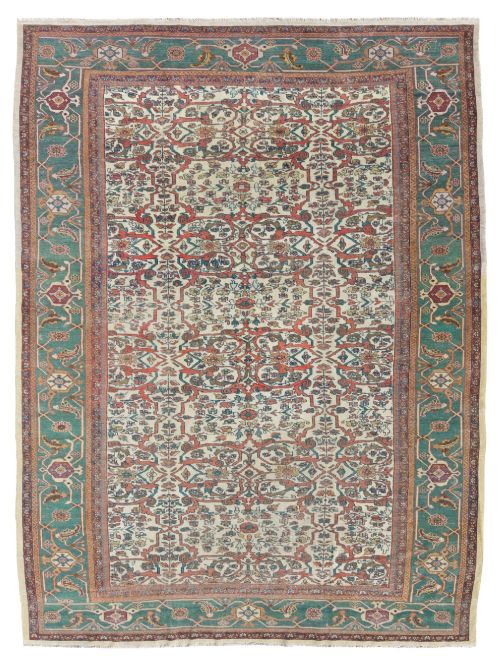
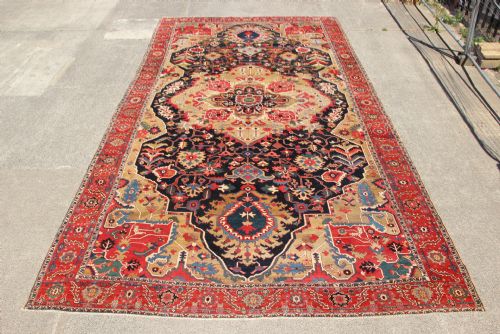
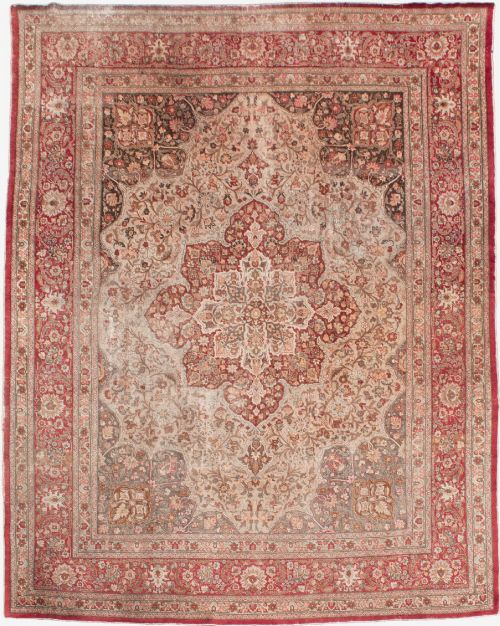
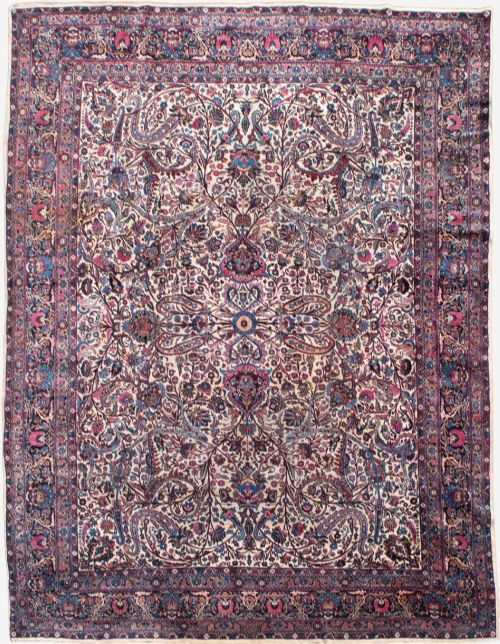
An oversized area rug provides substantial floor coverage for expansive spaces, drawing on designs originating from traditional Persian, Ottoman and regional weaving centres. These large carpets date from the late nineteenth century and the early decades of the twentieth century, capturing historical patterns scaled for country houses and reception rooms.
Buyers encountering this selection will frequently find monumental Oushak, Heriz, Mahal, Sultanabad and Kirman carpets. These pieces span dimensions exceeding four or five metres in length, utilising generous proportions designed to anchor vast architectural interiors.
How they were made
These carpets are constructed primarily using wool pile knotted onto sturdy cotton foundations. The natural resilience of wool allows the dense pile to withstand heavy footfall while maintaining rich saturation of colour across large surface areas.
Weavers employed hand-knotting techniques to execute intricate medallion and floral compositions. Natural and early aniline dyes provided the deep palettes seen in the golden fields, pale blues and muted reds characteristic of the period.
Oversized Area Rug Retail Price Guide 2026
Typical asking prices for oversized area rug among the pieces listed under this phrase on Sellingantiques today, from the lower quarter to the upper quarter. They describe what is for sale here now, not the wider market.
Several of these carpets measure well over five metres, requiring entire country house drawing rooms just to stretch their legs properly.
What varies in quality
Quality in these carpets rests upon knot density, the precision of the drawing and the harmony of the dye palette. Finer knotting permits sharper definition in curvilinear floral designs and complex geometric medallions.
The integrity of the wool foundation and the balance of secondary colours across a vast field separate exceptional workshop pieces from standard room-size productions. Even wear and natural softening of the pile contribute to the desirability of older examples.
Ziegler and Co
The Oversized Area Rug Glossary
- Oushak
- A Turkish carpet style known for large-scale floral motifs, muted colour palettes and a softer wool texture. These pieces often feature pale blue or golden fields.
- Heriz
- A Persian carpet type distinguished by bold geometric medallions, angular corner spandrels and robust cotton foundations. They originate from the Northwest region of Persia.
- Sultanabad
- A nineteenth-century commercial carpet style produced in Persia, characterised by oversized, spaced floral designs and soft, subdued vegetable dyes.
- Kirman
- A Persian carpet from the southern region, noted for intricate pictorial or floral patterns, fine knotting and refined colour schemes.
Oversized Area Rug: Frequently Asked Questions
How do I place an oversized area rug?
Position the rug to anchor the primary furniture grouping in a large reception room or open-plan space, leaving an even border of exposed flooring around the edges.
Ensure heavy tables or seating rest fully on the carpet to maintain stability and balance the scale of the room.
How do I identify an Oushak carpet?
Look for large-scale, simplified floral motifs set against a pale or golden field, executed in a softer wool pile with muted secondary colours.
Turkish Oushaks typically display a more relaxed weave and lighter pastel dye palette compared to traditional Persian room-size carpets.
What is a Heriz carpet?
A Heriz carpet is a large Persian rug featuring a prominent central geometric medallion and sturdy, robustly knotted wool pile.
These pieces are easily recognised by their strong angular lines and brick-red or navy blue fields designed for heavy domestic use.
How should I care for a wool carpet?
Vacuum the rug gently on a low suction setting without a rotating brush roll to protect the vintage wool pile from unnecessary friction and fibre loss.
Rotate the carpet periodically to ensure even exposure to natural light and foot traffic across its expansive surface.