


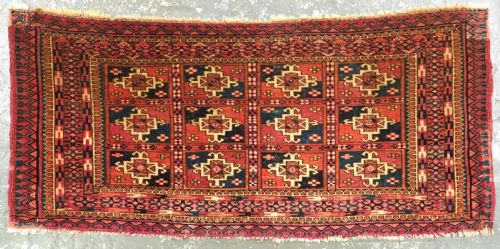
Tekke Turkmen Carpet Fragment
These tekke turkmen carpet fragment examples are woven fragments of tribal rugs offering a direct connection to nineteenth-century nomadic weaving traditions.
Tekke Turkmen Carpet Fragment
When you search for tekke turkmen carpet fragment, you are looking at surviving sections of tribal weaving produced in Central Asia during the eighteenth and nineteenth centuries. These pieces typically originate as fragments of larger bags, known locally as torbas, chuvals or mafrashes, which served practical functions in nomadic dwellings.
On this page, you will most frequently encounter torba and chuval faces or smaller fragments exhibiting traditional tribal designs. They arrive categorised under rugs and textiles or tribal art, reflecting their transition from functional nomadic possessions to decorative wall hangings.
How They Were Made
These textiles are constructed primarily from wool, utilising natural dyes to achieve deep saturated colour palettes across the wool and linen foundations. Weavers employed tight knotting techniques to produce very fine weaves capable of holding intricate geometric patterns.
The construction relies on traditional tribal methods developed by Central Asian nomads, resulting in durable structures that survive today primarily as isolated fragments rather than complete carpets.
The listings here span the eighteenth and nineteenth centuries, featuring wool textiles created by nomadic groups using natural dyes.
What Varies in Quality
Quality in these fragments is determined by the density and precision of the weave, with finer knots allowing for sharper geometric drawing and clearer design execution. The vibrancy, depth and condition of the natural dyes also set superior examples apart from standard work.
The presence of specific design motifs, such as multiple principal güls or rarer secondary patterns, elevates the visual interest of a piece. The structural integrity of the remaining wool and foundation further dictates how successfully the fragment preserves its original character.
The Tekke Turkmen Carpet Fragment Glossary
- Torba
- A small utilitarian bag face produced by nomadic tribes for domestic storage. These pieces are frequently encountered today as surviving rectangular fragments.
- Chuval
- A large storage bag woven by tribal groups, of which surviving faces display principal medallion motifs. They form a significant portion of available Central Asian textile fragments.
- Gül
- An octagonal primary medallion motif repeated across tribal carpets and bag faces. Different tribal groups utilised distinct gül designs to signal identity and lineage.
- Mafrash
- A rectangular storage box or bedding bag panel woven in nomadic communities. Fragments of these pieces typically display structured side designs.
- Natural Dyes
- Organic colouring agents derived from plants and minerals used in nineteenth-century weaving. They produce complex, varied hues that age with considerable depth.
Tekke Turkmen Carpet Fragment: Frequently Asked Questions
What is a tekke turkmen carpet fragment?
A tekke turkmen carpet fragment is a surviving piece of a larger nomadic textile, such as a storage bag face or trapping, produced in Central Asia during the nineteenth century. These remnants preserve the intricate tribal designs and fine wool knotting of the original items.
Collectors and decorators often mount these textile sections as wall hangings to display the tribal artistry up close. They offer a tangible link to the weaving traditions of the Merv Oasis and surrounding regions.
How were these fragments used originally?
Nomadic groups utilised the complete woven pieces primarily as storage bags, tent furnishings and household containers within yurt dwellings. They served both practical organisational purposes and decorative functions within daily tribal life.
Over time, wear or damage led to the division of these large textiles into smaller sections. The surviving faces were preserved independently because of their compelling geometric patterns and fine wool work.
How do I care for a textile fragment?
Protect textile fragments from direct sunlight to prevent natural dye fading and fibre degradation. Mount them securely on appropriate conservation supports or breathable backing fabrics to distribute weight evenly.
Avoid moisture and professional wet cleaning unless handled by a specialist textile conservator. Gentle surface dusting with low suction through a mesh screen is usually sufficient for routine maintenance.
How can I tell the age of a fragment?
Age is assessed by examining the wool quality, the complexity of the natural dye palette and the precision of the weave structure. Nineteenth-century examples typically display characteristic tribal drawing styles and organic colour variations.
Comparing the specific gül motifs and structural fragments to documented historical pieces helps narrow down the probable decade of production. Finer knot counts and specific structural quirks often point towards earlier nineteenth or eighteenth-century origins.