


Red Turkmen Mafrash
These red turkmen mafrash pieces are woven tribal storage bags that bring rich Central Asian nomadic history into a modern room.
Red Turkmen Mafrash
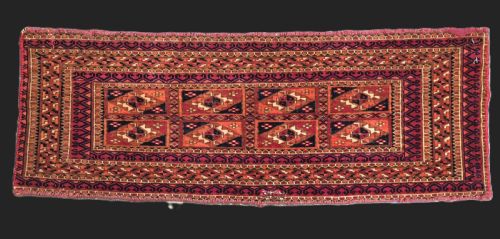
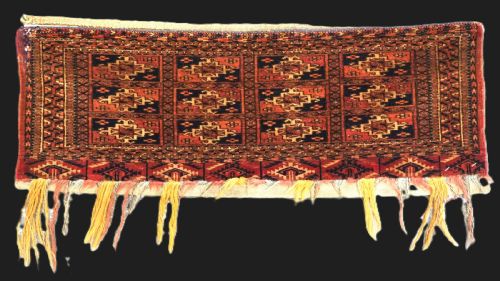
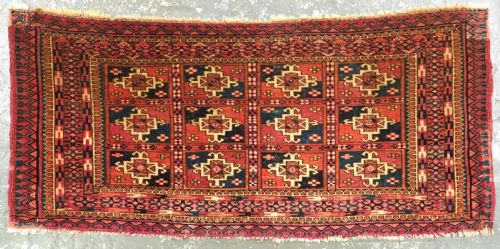
A red turkmen mafrash is a tribal textile container originally used by nomads for packing belongings during migration. The selections here include complete bags with plain weave backs, full faces, and fragments from various nineteenth-century decades.
The objects span multiple tribal groups such as the Tekke and Yomut, alongside regions like the Merv Oasis. Forms range from torba faces to banded flatweave designs and three-panel tree motifs originating across Central Asia.
Materials and construction
These textiles rely principally on wool combined with natural dyes to create their deep red colour palettes and intricate geometric patterns. Linen elements also appear within the construction of these tribal weaves.
Weavers utilised techniques encompassing flatweave structures and pile knotting to produce durable storage containers designed for daily nomadic life. Natural dyeing methods yielded the rich tones visible across the surviving faces and complete bags.
Listings feature wool and natural dyes across periods spanning the eighteenth century to nineteen-ten.
Assessing quality and survival
Quality rests on the crispness of tribal designs like the aina gul or nine gul motifs and the saturation of natural dyes. Completeness heavily influences character, distinguishing intact pieces with original plain weave backs from single faces and fragments.
The tightness of the weave and the preservation of the wool pile dictate the structural integrity of each container. Age further distinguishes the pieces, ranging from eighteenth-century examples to later nineteenth-century variations.
The Red Turkmen Mafrash Glossary
- Mafrash
- A rectangular storage bag or chest panel produced by nomadic tribes for household organisation and transport. These containers formed an essential part of a tent's furnishings.
- Torba
- A smaller tribal bag often associated with mafrash pieces, used for wall storage inside a yurt. They display similar knotting and wool qualities.
- Flatweave
- A textile made by interlacing warp and weft threads without creating a pile surface. This technique produces durable, thin panels.
- Gul
- A medallion pattern repeated across Turkmen carpets and bags to identify specific tribal groups. Each design carries traditional regional significance.
- Plain weave
- A simple grid construction where warp and weft threads cross alternately. It frequently forms the back panels of storage bags.
Red Turkmen Mafrash: Frequently Asked Questions
How were mafrash bags used?
Nomadic families packed bedding, clothing, and household possessions inside these heavy wool containers during seasonal migrations. When stationary, they functioned as storage chests inside tents.
Their sturdy construction protected belongings from dust and dampness during transit across the landscape.
How do I live with one?
These textiles adapt well to modern interiors as wall hangings or displayed flat on surfaces where foot traffic remains minimal. Their rich red tones complement both traditional and contemporary spaces.
Protecting them from prolonged direct sunlight preserves the natural dyes used by the nomadic weavers.
How do I tell periods apart?
Earlier pieces from the eighteenth century or mid-nineteenth century often display specific wool characteristics and worn structures reflecting extended utility. Later nineteenth-century examples into the early twentieth century show shifts in banded flatweave designs.
Examining the tribal motifs, such as aina gul variations, helps place the textile within its historical era.