
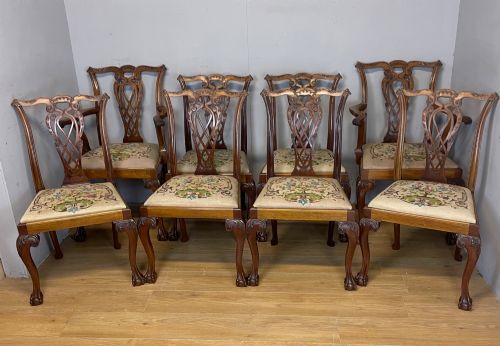
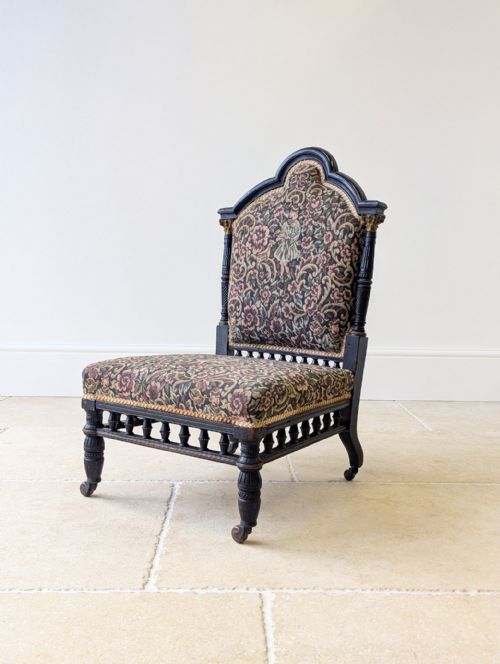
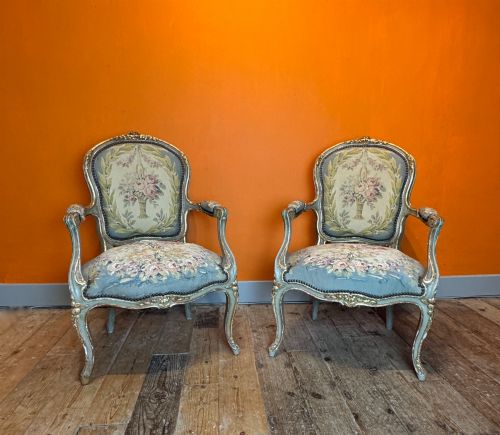
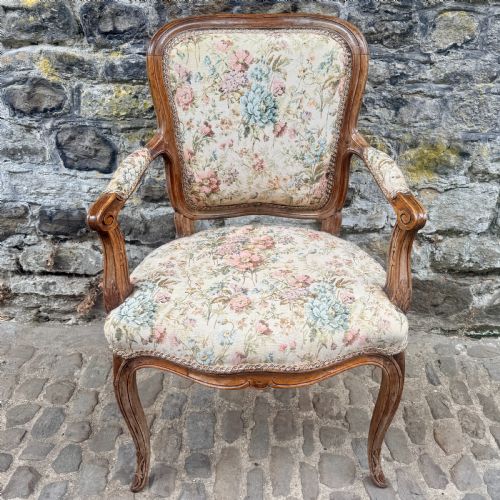
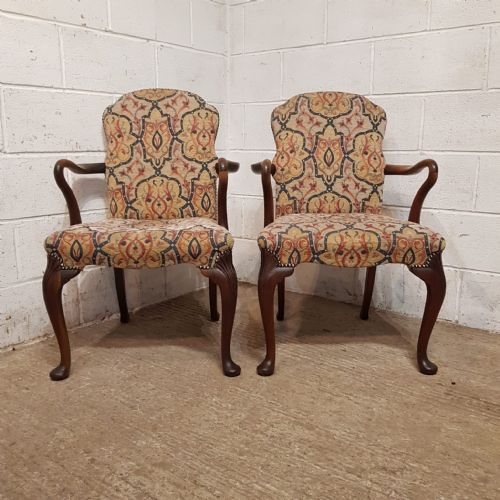
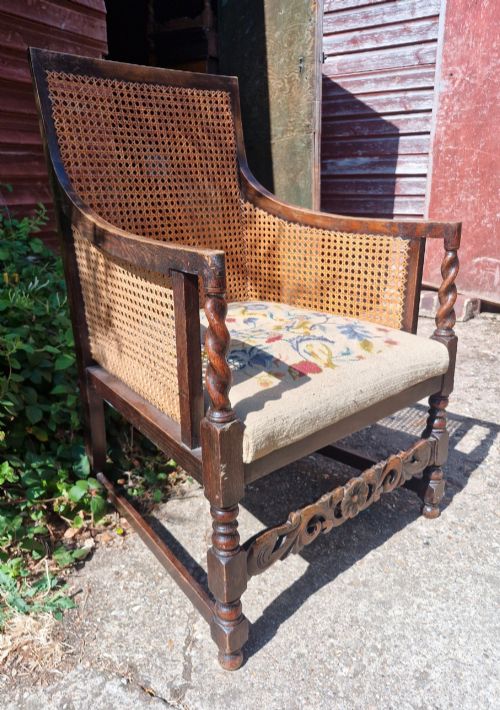
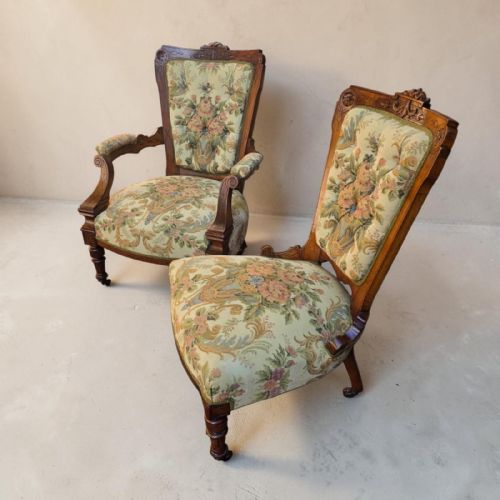
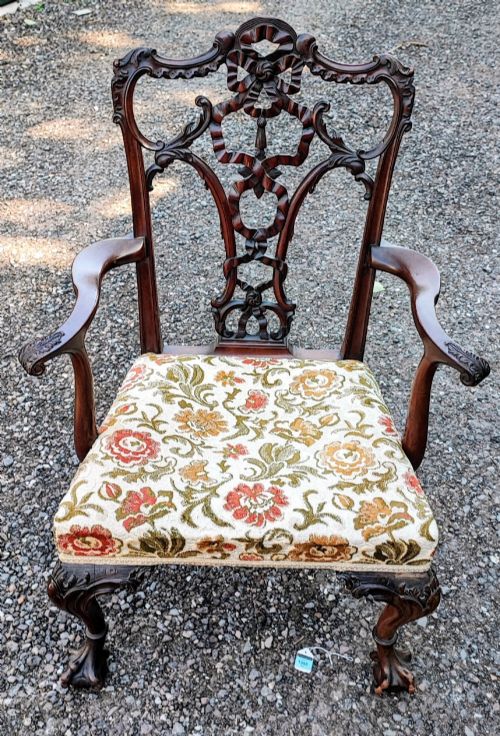
Tapestry Carved Armchair
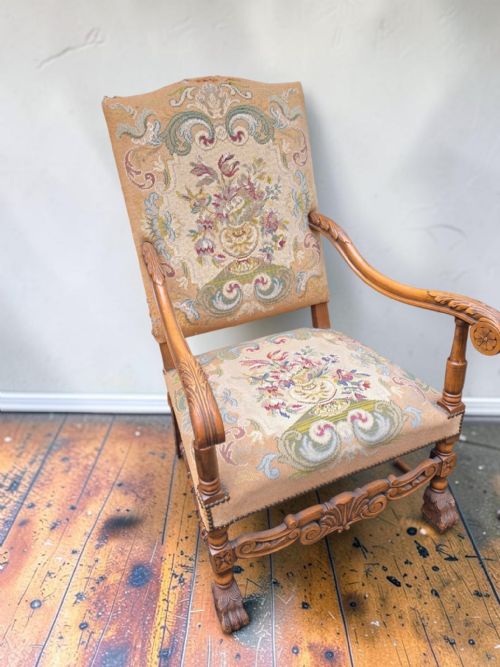
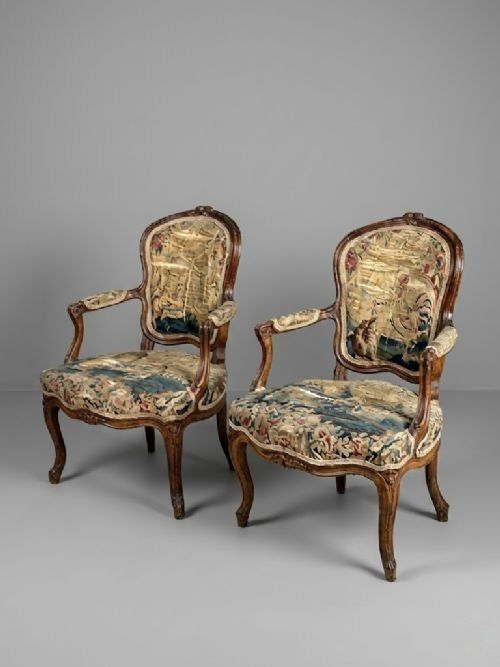
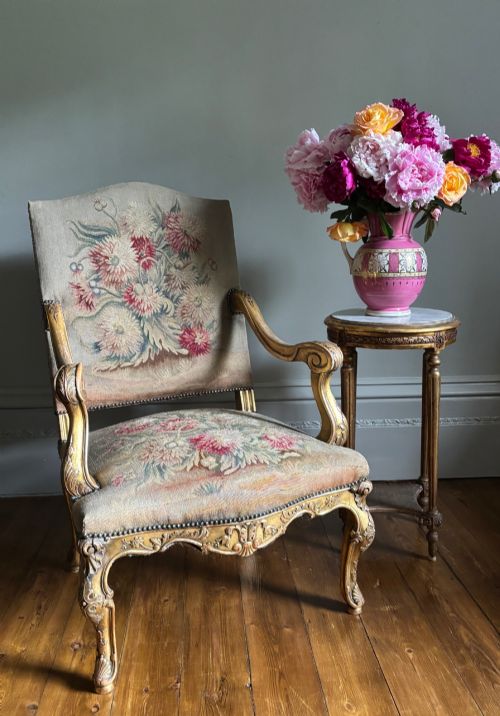
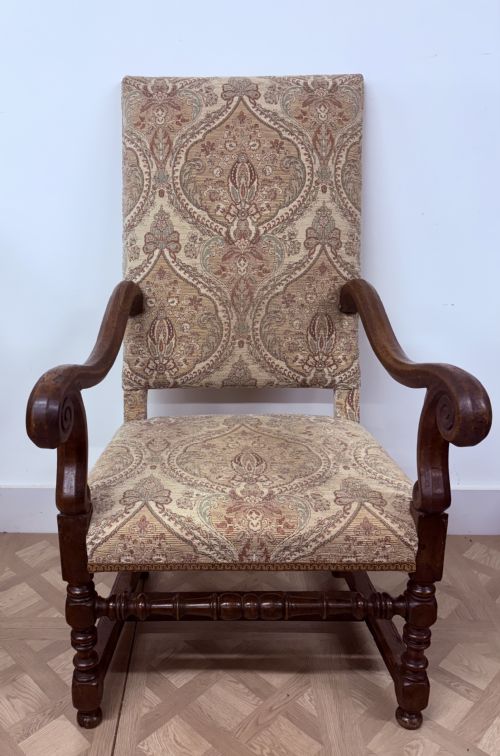
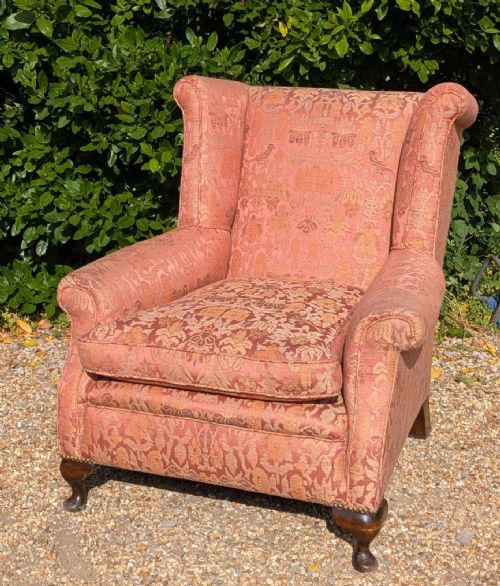
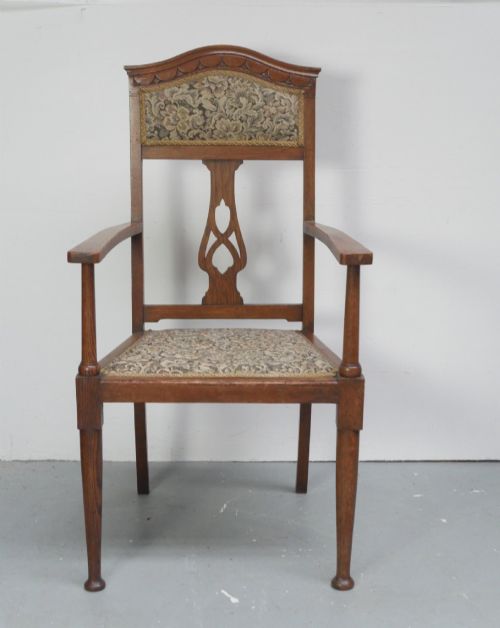
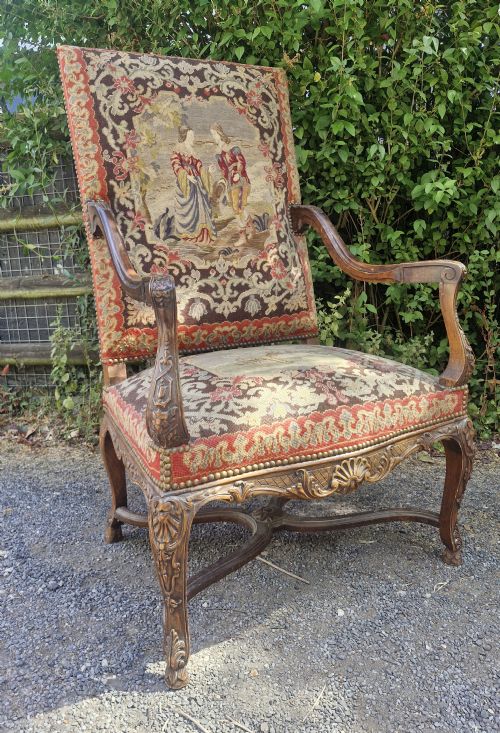
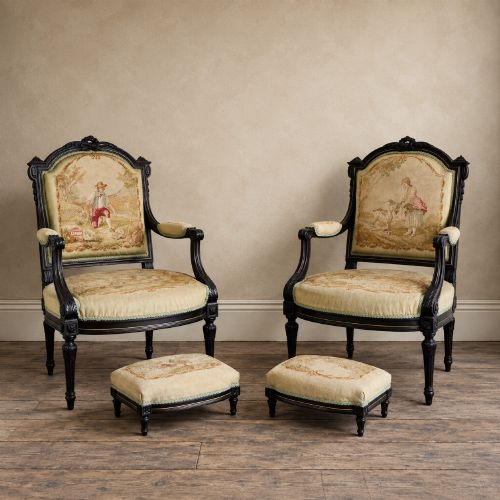
A tapestry carved armchair brings together sturdy carved woodwork and woven textile panels to create a substantial seat with distinct historical character.
Tapestry Carved Armchair
A tapestry carved armchair combines a solid wooden frame with textile upholstery, often featuring hand-worked needlepoint or woven tapestry panels. These seating pieces span multiple periods from the seventeenth century through to the early twentieth century, reflecting various revival styles.
The most common examples encountered on this page originate from nineteenth-century French and English workshops, utilising walnut or oak frameworks. Buyers will find both imposing open armchairs, known as fauteuils, and heavier library or salon variants.
The integration of carved detailing on the wooden armrests and legs distinguishes these seats from standard upholstered furniture. Carvings often take the form of floral motifs, scrolls, or structural framing that accentuates the textile panels.
Materials and construction methods
Frames are constructed primarily from dense hardwoods like walnut, oak, and mahogany, chosen for their structural strength and ability to hold intricate hand-carved details. Joinery relies on traditional pegged or dowelled joints to support the weight of the sitter.
Upholstery incorporates wool or silk tapestry, needlepoint, and fabric panels, frequently secured with decorative brass tacks or bordering. Padding often consists of traditional stuffings enclosed within the wooden framework.
Selected nineteenth-century models incorporate hidden carved angels peering out from the armrests.
Distinctions in craftsmanship
The depth and crispness of the hand-carving on the wooden framework separate standard production from finer examples. Superior pieces display fluid, deeply undercut foliage or structural elements rather than shallow, mechanical shaping.
The integrity and density of the woven tapestry or needlepoint panels dictate the overall caliber of the seating. Tightly worked threads with well-preserved coloration indicate a higher standard of original manufacture and material selection.
Warings
The Tapestry Carved Armchair Glossary
- Fauteuil
- An open-armed French armchair with an exposed wooden frame. These chairs typically feature upholstered arm pads and seats.
- Needlepoint
- A type of canvas work embroidery used for upholstery panels. It is stitched by hand using wool or silk threads.
- Carver chair
- A traditional term for an armchair, often matching a set of smaller dining or side chairs. They feature elevated armrests designed for comfortable seating.
- Bergere
- An enclosed upholstered armchair with a wooden frame. The sides are frequently filled with cane work or upholstered panels.
- Giltwood
- Wood that has been coated with a thin layer of gold leaf. This finish appears frequently on formal French salon armchairs.
Tapestry Carved Armchair: Frequently Asked Questions
How were these armchairs used historically?
These armchairs served as prominent seating in formal parlours, libraries, and drawing rooms. Their sturdy frames and upholstered panels provided comfortable seating for reading, conversation, or reception rooms.
In larger country houses and chateaux, pairs or matched sets were arranged around reception spaces to demonstrate status and taste.
How do I care for antique tapestry upholstery?
Antique tapestry and needlepoint upholstery require gentle maintenance to preserve the historical fibres. Regular light vacuuming through a protective mesh helps remove dust without disturbing the threads.
Keeping these chairs away from direct sunlight prevents the natural dyes in the wool and silk from fading over time.
How can I tell the period of an armchair?
Dating an armchair involves examining the timber species, construction joinery, and the style of the hand-carved ornamentation. Different eras favoured specific silhouettes, from heavy seventeenth-century oak forms to lighter nineteenth-century revival styles.
The integration of the tapestry panels and the tools used to shape the frame also offer clues regarding the approximate date of manufacture.