


Walnut Curule Chair
A walnut curule chair brings sculptural X-frame geometry and striking folding-form seating to any room.
Walnut Curule Chair
A walnut curule chair takes its defining X-frame silhouette from ancient Roman folding seats, translated through centuries into versatile armchairs, accent chairs, and stools. You will encounter nineteenth-century interpretations spanning Victorian, Gothic Revival, and Moorish Revival styles.
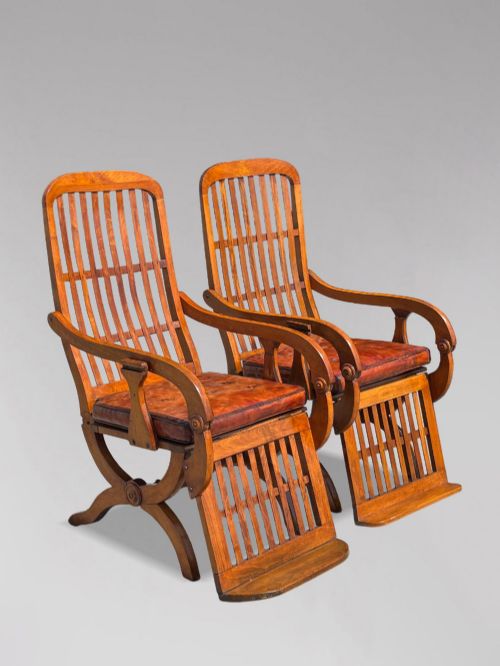
Makers adapted the cross-frame structure into reclining armchairs, window seats, and folding chairs using solid walnut, burr walnut, and fruitwood. Many examples incorporate armrests, open arm designs, or backrests adapted for domestic comfort.
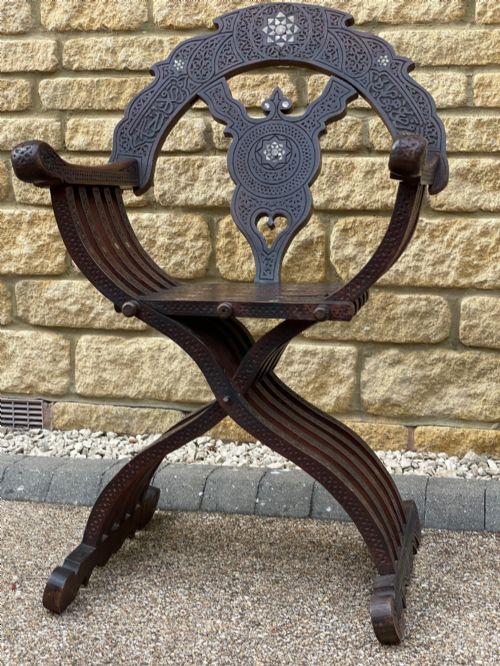
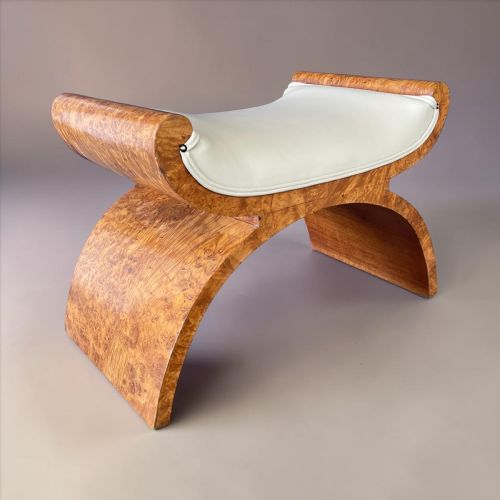
The aesthetic range stretches from heavy European revivalism with carved hunting dog heads to intricate Middle Eastern and Syrian pieces featuring nacre-shell inlay. Spanish hip-joint chairs and Art Deco stools further broaden the forms you will find on this page.
How they were made
Carpenters constructed the structural X-frames from dense walnut or fruitwood, utilising precise joints to allow folding actions or ensure rigid support for open armchairs and stools. Woodcarvers shaped the frames with relief work, Neoclassical motifs, or architectural Gothic details.
Surface ornamentation involved intricate hand-inlay techniques using mother-of-pearl, bone, and nacre-shell to create geometric Middle Eastern patterns across the wood. Upholstery traditions employed green leather, tapestry fabric, and brass studwork fastened directly to the frames.
Materials recorded across the inventory include walnut, burr walnut, leather, tapestry fabric, brass, bone, and mother-of-pearl.
What varies in quality
The distinction between standard production and superior craftsmanship lies in the depth of the woodwork and the precision of the joinery. Fine examples display crisp hand-carving on the walnut frame, from figural dog heads to balanced architectural mouldings.
Surface embellishment dictates much of the visual distinction, particularly in Syrian and Middle Eastern pieces where the density and neatness of mother-of-pearl and bone inlay elevate the visual impact. The integrity of the folding mechanism and the quality of original leather or tapestry upholstery further separate ordinary items from exceptional ones.
Harry and Lou Epstein
The Walnut Curule Chair Glossary
- Curule
- A folding cross-frame seat form originating in ancient Rome that defines the X-shaped profile of these chairs. It provides a distinct architectural silhouette.
- X-frame
- A structural furniture base formed by intersecting diagonal timbers that create an X shape from the side view. This geometry underpins folding chairs and window stools.
- Nacre-shell
- Iridescent inner shell material used for decorative inlay work on Middle Eastern and Syrian wooden furniture. It creates shimmering geometric patterns against the dark walnut.
- Hip-joint chair
- A traditional seating form constructed with interlocking turned wooden components rather than standard glued joinery. It represents a specific regional woodworking tradition.
- Gothic Revival
- A nineteenth-century design movement that reinterprets medieval architectural motifs and pointed arches in domestic furniture. Pieces from this style feature heavy carved walnut and serious proportions.
Walnut Curule Chair: Frequently Asked Questions
What is a walnut curule chair?
A walnut curule chair is a seat built with an X-shaped folding or cross-frame structure made from walnut timber. These pieces range from Gothic Revival armchairs to Syrian inlaid folding seats.
Craftsmen across Europe and the Middle East adapted the ancient Roman X-form into domestic seating throughout the nineteenth century. They function today as decorative accent chairs, window stools, or occasional armchairs.
How do I style a curule chair?
The strong architectural lines of a curule chair make it an effective accent piece in both traditional and contemporary interiors. Place an X-frame stool beside a fireplace or use an open armchair as a reading seat.
Because many examples feature detailed woodcarving or mother-of-pearl inlay, they stand out best when given space to be viewed from the side. Leather-upholstered and fabric-covered versions also pair easily with standard living room upholstery.
Are these chairs actually folding?
Some walnut curule chairs retain their functional folding mechanism, particularly Middle Eastern and Spanish folding chair variants. Others are built as rigid, fixed armchairs or window stools modelled on the same cross-frame geometry.
Inspect the pivot points and side frames to determine if an individual piece was designed to collapse for travel or storage. Many nineteenth-century interpretations prioritized structural stability over portability.
How do I identify a Syrian inlaid chair?
Syrian and Middle Eastern curule chairs from around nineteen-hundred are distinguished by intricate surface decoration using mother-of-pearl, bone, and nacre-shell. These materials form complex geometric tile patterns across walnut or fruitwood frames.
Such pieces often take the form of low folding chairs or occasional armchairs with Moorish Revival influences. The dense mosaic inlay sets them apart from plain European revival furniture.