




19th Century Corner Chair
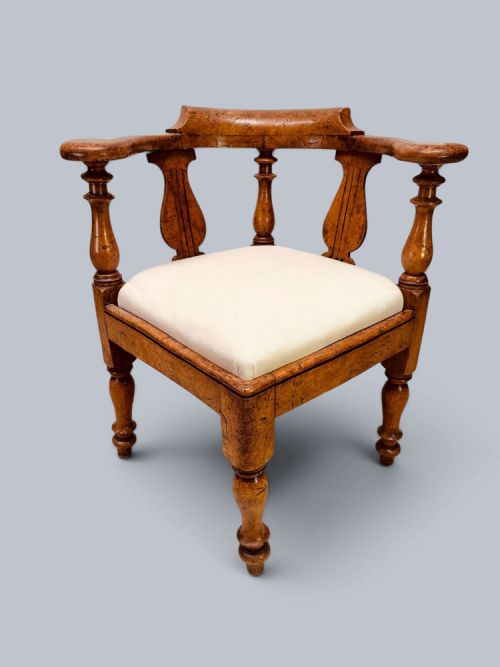
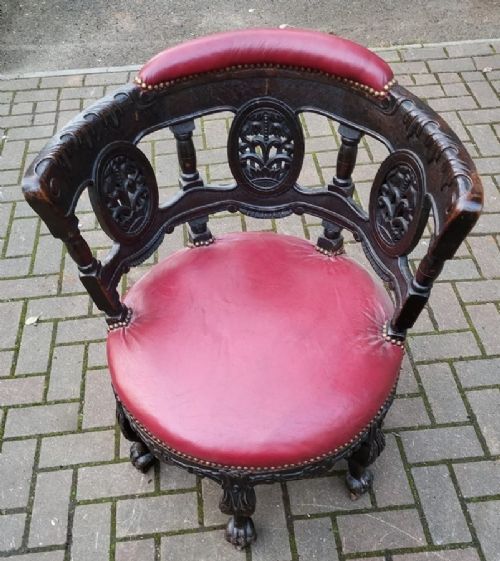
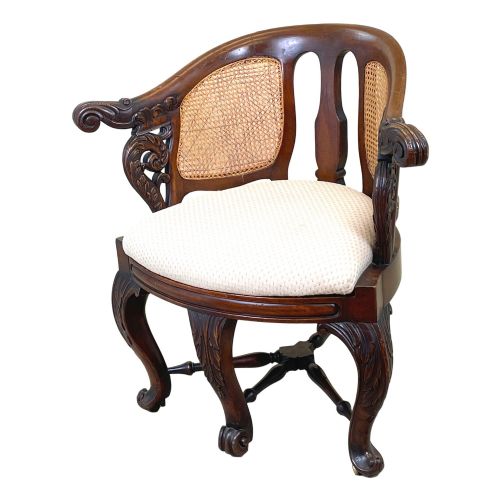
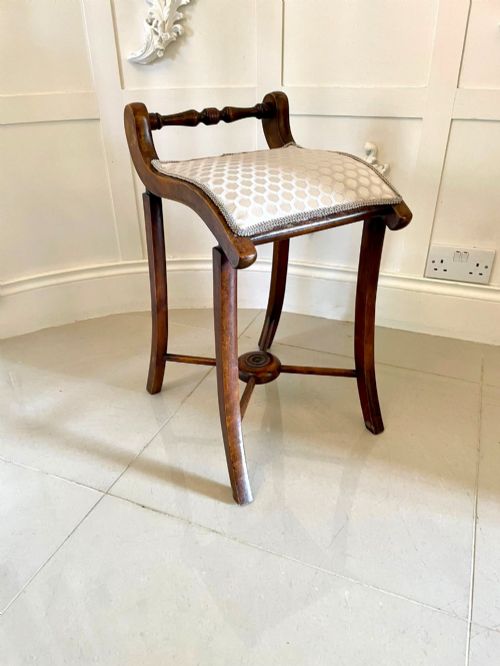
These 19th century corner chair examples bring compact seating to tight rooms, offering turned frames and upholstered seats handed down through generations.
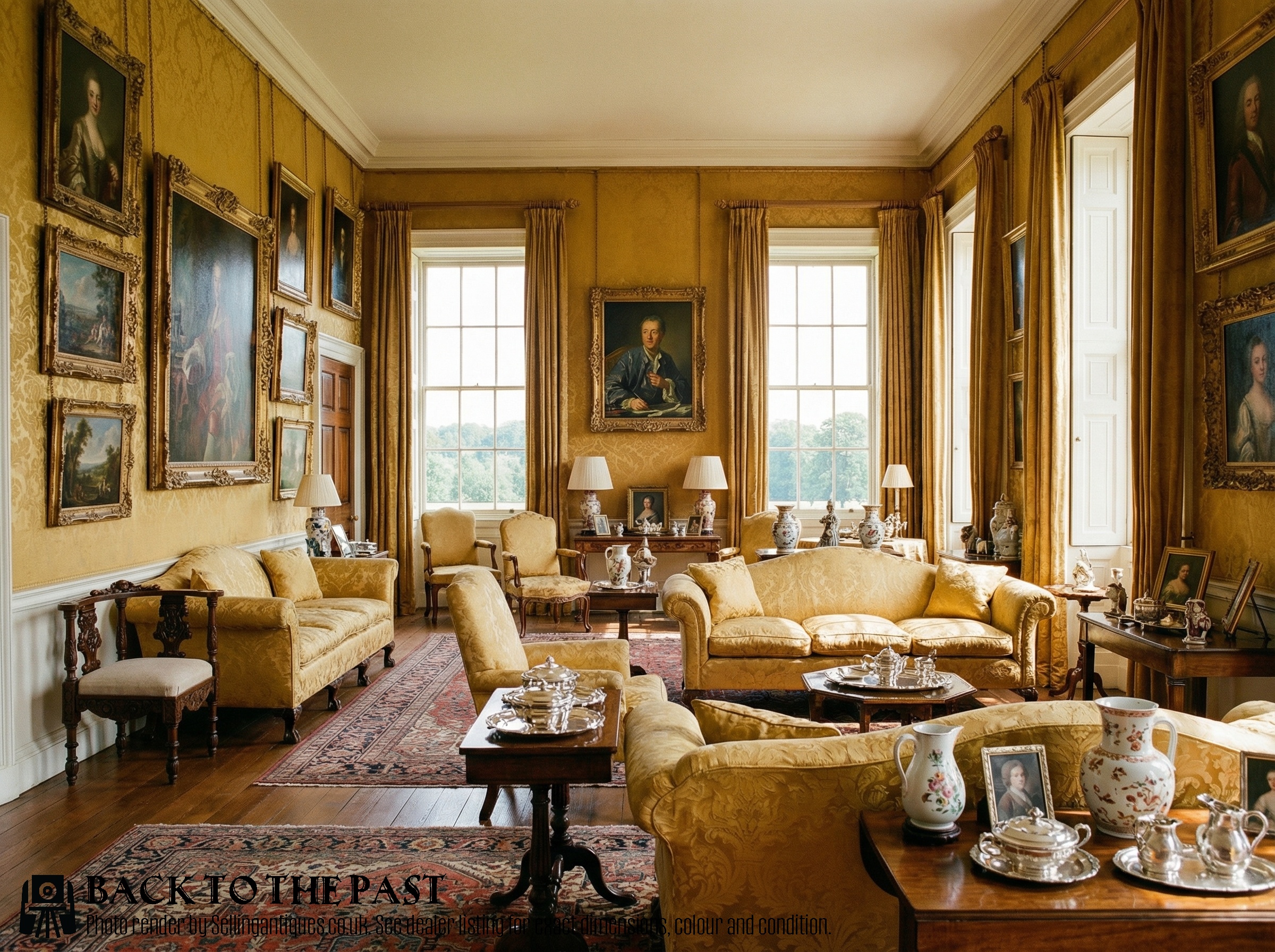
19th Century Corner Chair
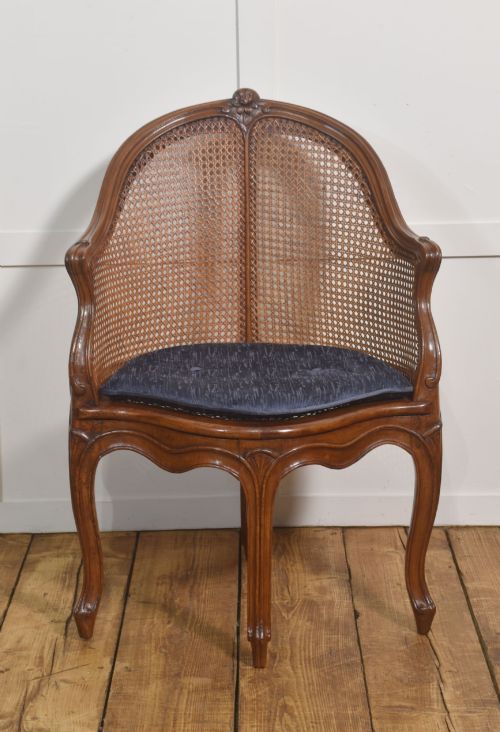
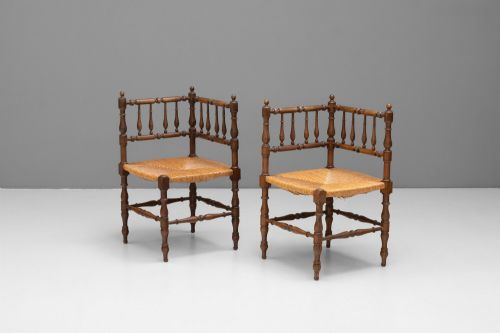
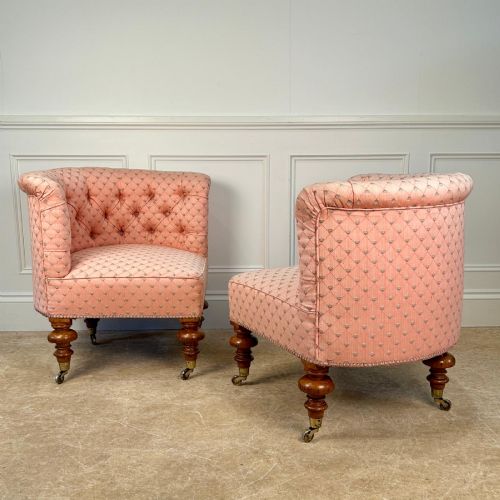
Makers produced these pieces in diverse regional idioms, ranging from English country turners' models with rush seats to French Louis XV and Rococo Revival styles. Buyers encounter both single armchairs and matched pairs intended for bedrooms and studies.
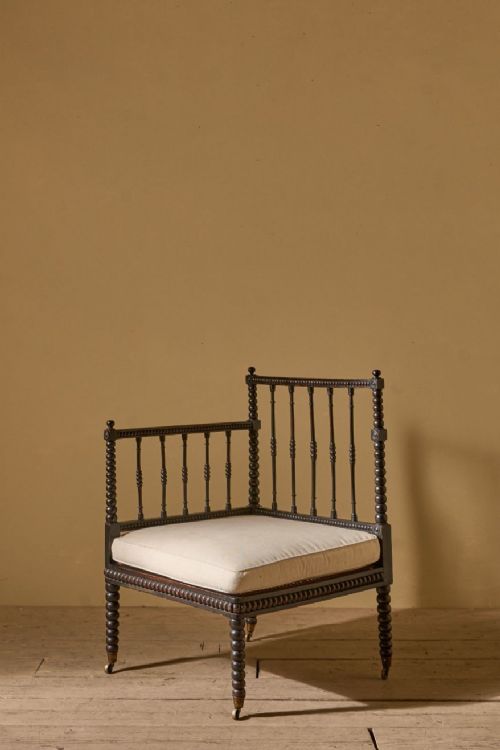
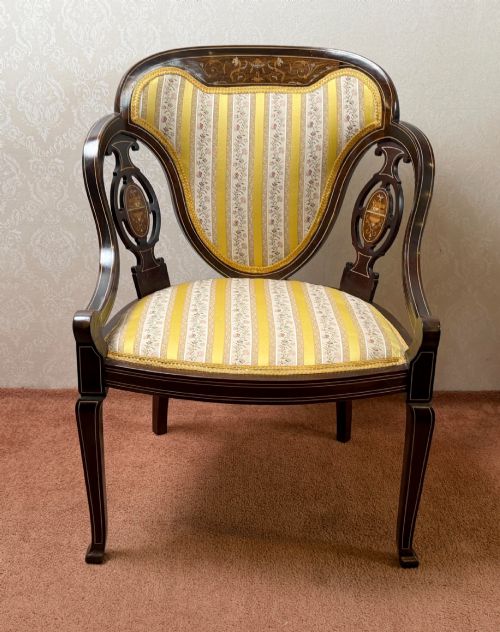
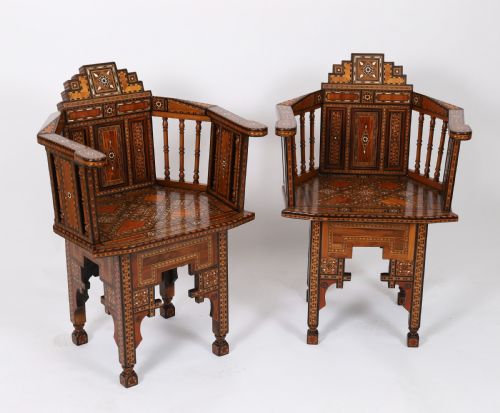
Variants span from simple bobbin-turned elbow seats to heavily carved Victorian armchairs and inlaid Levantine pieces. The form bridges the gap between occasional seating and structural room furniture.
Materials and construction methods
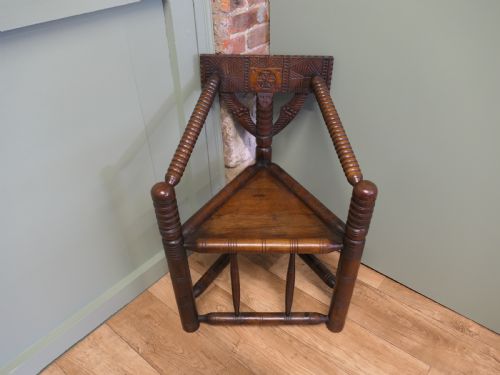
Workshops relied heavily on solid oak, walnut, and beech for structural durability, often employing lathe-turned bobbin members. Joinery utilised pegged mortise and tenon joints to withstand the stress placed on corner posts.
Surfaces received various treatments, from ebonised finishes to intricate parquetry and bone inlay found on Levantine and Moorish pieces. Seating surfaces combined drop-in panels, cane webbing, and traditional upholstery covered in modern or period fabric.
19th Century Corner Chair Retail Price Guide 2026
Typical asking prices for 19th century corner chair among the pieces listed under this phrase on Sellingantiques today, from the lower quarter to the upper quarter. They describe what is for sale here now, not the wider market.
Estate-made corner chairs often reveal quirky hand-carved tool marks hidden beneath the seat rails where only the maker looked.
Assessing craftsmanship and finish
Quality rests in the crispness of the turning and the depth of the timber carving, distinguishing workshop pieces from mass-produced output. Superior examples retain original surface patination and tight joinery without excessive wobble in the corner posts.
The sophistication of secondary materials, such as bone inlay and detailed parquetry, elevates certain chairs above standard country variants. Original rush or cane work also distinguishes better-preserved survivors.
Miles & Edward's
The 19th Century Corner Chair Glossary
- Bobbin turning
- A type of woodturning that produces a series of rounded spheres resembling beads on a string, common on 19th-century frames. This decorative technique added texture to structural uprights and stretchers.
- Turner's chair
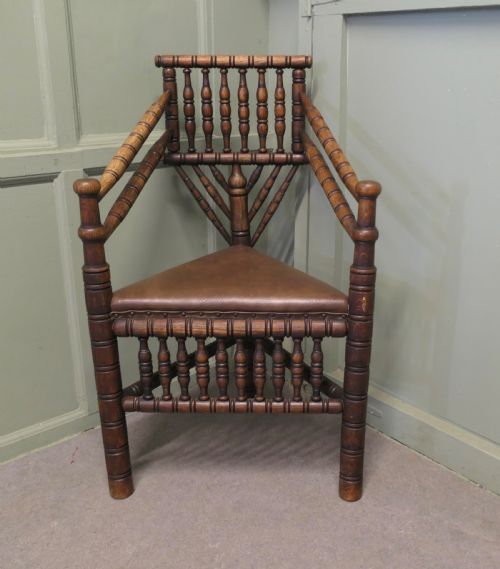
- A sturdy seat constructed entirely from turned wooden members, sometimes called a round chair or Saxon chair. These heavy pieces feature triangular seats supported by intricate spindle work.
- Parquetry
- Geometric wood mosaic work used for decorative surface patterns on furniture panels. Craftsmen fitted small pieces of contrasting timber together to create intricate tabletops and chair backs.
- Drop-in seat
- A removable upholstered frame that fits into a rebated opening in the chair rails. This design made reupholstery straightforward for makers and owners alike.
- Ebonisation
- A chemical or pigment process applied to cheaper timbers to imitate expensive ebony. Makers utilised this finish to achieve a sleek, dark surface on decorative occasional furniture.
19th Century Corner Chair: Frequently Asked Questions
Where did people put corner chairs?
These chairs were traditionally placed in the corner of a room, study, or bedroom to utilise awkward spaces efficiently. Their diagonal footprint allowed them to sit flush against two adjacent walls.
In period interiors, they also functioned as writing chairs or occasional seating pulled out for gatherings.
Are rush seats original?
Many country-style examples feature woven rush seats that wear out over generations of use. Replacement rush work is common and carried out by traditional craftspeople to maintain usability.
Originality depends on the tightness of the weave and the colour of the natural reed material.
What is an old saxon chair?
An old saxon chair refers to a heavy turned wooden seat constructed with multiple spindles and a triangular base. These pieces draw on earlier vernacular traditions revived during the Victorian era.
They are easily identified by their solid timber construction and prominent turned arm rails.
How do I care for antique timber?
Keep wooden frames away from direct heat sources and drastic humidity changes to prevent the timber from splitting. Regular dusting with a dry cloth protects the original surface finish.
Avoid heavy silicone polishes that build up over time and dull the natural grain.